
Carpet Knowledge
Understanding the Criteria for Assessing and Pricing Handwoven Carpets
Apr 16, 202214 min readIran Carpet Company
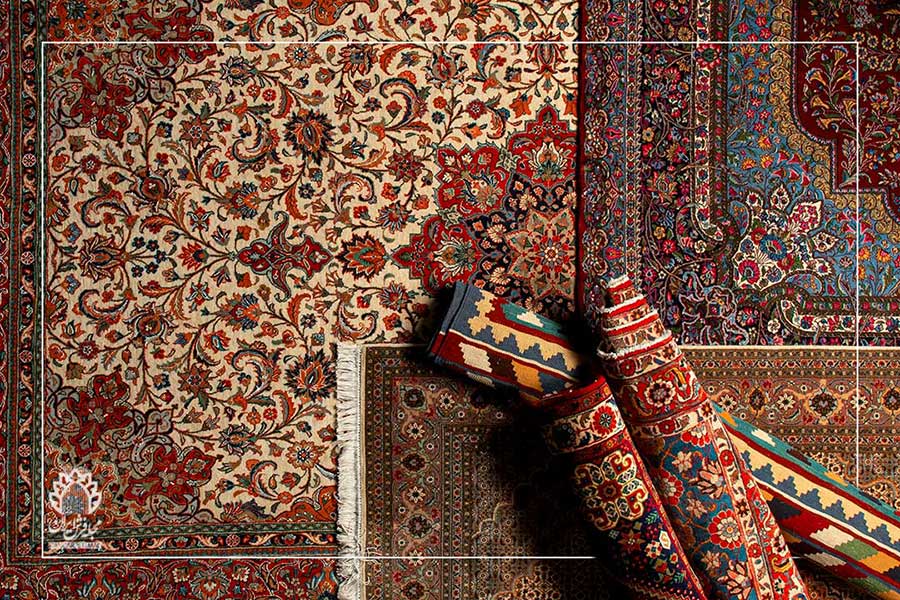
Although the primary reason for buying a handwoven carpet is its practical use, it can also be a valuable investment. Whether you are buying a carpet simply to use or with investment in mind, its price influences your ability to choose and exercise your personal taste. It is only natural, then, to look for the best price. Yet even if you know exactly what kind of carpet you want, encountering the market and seeing price differences—even among seemingly similar examples—can be confusing.
You may have noticed that one of two carpets woven at the same time, in the same place and by the same group of weavers can command a much higher price, despite having the same knot count, similar materials and exactly the same dimensions. Among the most important reasons may be the carpet’s artistic expression and message, or the technique chosen to weave it. As a buyer, if you are unaware of these factors, you may well wonder what accounts for the difference in price. It is natural to hesitate and question a purchase when a similar carpet costs much less and you do not have enough information.
On the other hand, you may wish to sell your carpet for any number of reasons, and as a seller, you will naturally want to secure the best possible price. Whether you are buying or selling, you are looking for a fairer price for your transaction. This is where pricing and assessment prove their value.
There is no need to worry. The good news is that the process need not be as confusing as it may seem!
Experts and seasoned professionals know the market inside out and understand the finer points of carpets. They know which carpets are worth buying and, in step with the latest trends, offer buyers and sellers sound recommendations and fair assessments, impartially considering the best interests of both parties.
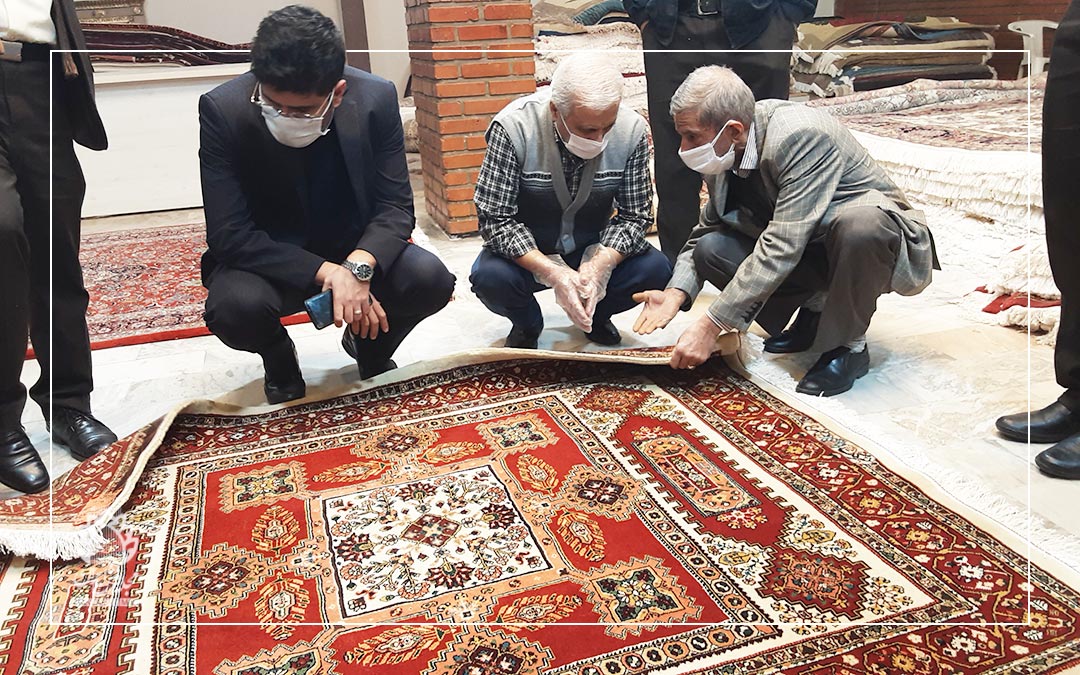
But on what basis do experts set prices, and what criteria do they consider when assessing a carpet? Understanding these points can guide you as you buy or sell a handwoven carpet. In general, after a carpet’s technical assessment, its final price is determined by considering its base price, artistic quality, and comparison with similar carpets in the same style. Let us take a closer look:
It is natural for a carpet’s price to rise as its dimensions increase. The larger the carpet, the more raw materials, labour and time are required to weave it. A longer weaving period also means that capital remains tied up for longer. Once completed, a large-format carpet may also take longer to sell, since it has a smaller market of potential buyers. In other words, if two 30-raj carpets in 6- and 12-square-metre sizes have the same quality and the same design, colour and weave specifications, the smaller carpet will have a lower price per square metre. As noted, large-format carpets have a particular clientele. Weaving them also calls for specific expertise, experience and skill. Such carpets are often custom-made by leading producers.[i]
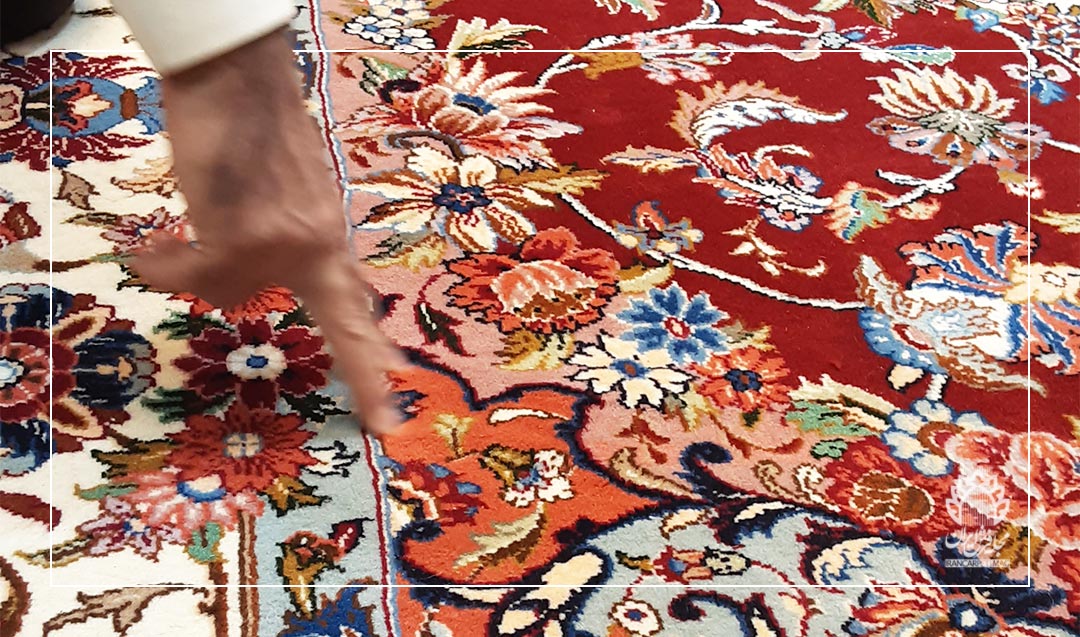
The types of dyes used, the range of colours and the success of their combination all affect a carpet’s price. Unlike natural dyes, which are always a winning choice, a wide range of colours will not fare well in the price competition unless the combination is visually appealing. In addition, various issues that may arise before, during or after weaving can lower a carpet’s value. These include streaking caused by careless dyeing; an unevenly coloured ground caused by buying too little pile wool initially and replenishing the supply in several batches[ii]; and colour fading or bleeding, which may result from poor dye fixation during dyeing, exposure of the woven carpet to sunlight or improper washing.
The quality, design, motifs, colours and reputation of Iranian carpets vary considerably according to their style and provenance. In general, carpets from better-known weaving regions and urban workshop carpets—which are often custom-made and woven under continuous supervision—tend to be of higher quality and price than village and nomadic carpets.
Alongside their good quality, the better-known regions are each popular with admirers of their particular style, and it is not possible to rank one above another. They do, however, have an advantage over less familiar regions. For example, carpets from Azerbaijan, Markazi Province, Isfahan, Sistan, Chaharmahal and Bakhtiari, Khorasan, Fars, Kashan, Kerman, Hamadan and Yazd are all well known, adding to their value. Each of these carpet-weaving regions also includes urban, village and nomadic weaving centres, some of which are more renowned than others within the same region. For example, in addition to Tabriz in Azerbaijan, Osku is an urban weaving centre in the region, though it is not especially well known. By contrast, Heris, Garavan, Bakhshayesh and Mehraban—village weaving centres in Azerbaijan—enjoy international renown.
Beyond the factors already mentioned, some designs, including the Mahi (fish) design, are particularly well known. Certain weavers, designers and carpet producers also add to a carpet’s value. Examples include Amuoghli, Mokhmalbaf and Saber in Khorasan; Shahrukhi, Deylmaghani and Arjomand in Kerman; Haj Jalili, A’la-baf and Sedqiyani in Azerbaijan; Mohtasham and Dabir al-Sana’e in Kashan; Mahdiei and Seirafian in Isfahan; Zolnoori and Miri in Fars; and Rajabian and Erami in Qom. In commercial terms, the value created in this way is known as “brand value.”
Another point worth noting is that each region or weaving centre may be especially well known for a particular type of carpet. For example, Bijar is known for its “iron” carpet; Ravar is Iran’s national city of carpet weaving; Sirjan is its national city of kilim weaving; Meybod is its national city of Zilou weaving; and Qaleh Ganj is its national city of mat weaving.
The refinement, precision, complexity and authenticity—or innovation—of a design and its motifs usually contribute to a higher price. For example, the time and care required to weave Kerman’s Sabzikar carpets are considerably greater than for plain-ground Kerman carpets. In Sabzikar carpets, as the saying goes, there is not even room to drop a needle: delicate, intricate and colourful designs and motifs cover the entire carpet. The weaver of such a work undoubtedly devotes more time and care to the task, since the design must be consulted constantly.
As another example, kilim designs are simpler than those of knotted carpets, follow a more limited range of repeating geometric patterns and do not have gradations of colour. These factors make them easier to weave and quicker to complete. As a result, a kilim is generally priced well below a knotted carpet with intricate designs and motifs and a wider range of colours. Some types of kilim, however, such as Shiriki-Pich and Souzani, have more complex motifs and may even feature finer designs than some carpets.
In addition, at different times, some carpets become more popular with interior designers and attract greater interest from buyers because of their particular style, design or colour.
Another consideration is the authenticity and innovation of a carpet’s design. Authentic designs continue to have their admirers in many cases. The authentic designs of each region express and reflect its particular culture and worldview. For example, the well-known Bagh (Golestan, or flower garden) design evokes one of the most fundamental ideas in Iranian culture: the Garden of Paradise. The distinctive visual principles found in Iranian designs are rooted in this very idea of the garden—a subject too extensive to explore here.
For example, design divisions based on multiples of six, twelve or twenty-four; the shapes of medallions; the number of borders; and other features reflect a twelve-part pattern, one of the foundations of Iranian systems of division, which created rectangular and square networks threaded with water channels. The Chaharmahal and Bakhtiari Kheshti designs, the incomparable Iranian hunting scenes, and the medallion-and-corner (Lachak-Toranj) and Mahi dar Ham designs are each, in their own way, reminders of the Iranian garden and Garden of Paradise. Even when rich in motifs, authentic Iranian designs possess an ordered complexity that brings multiplicity into unity, as if seeking to make that ideal, celestial garden flourish on earth, in the material world.
It follows that authentic designs reflecting this outlook have greater value. The same is true of designs that successfully innovate while adhering to the principles of Iranian design. Drawing on those principles and on authentic carpets as models, Iran Carpet Company has also introduced innovations, often in its use of colour and motifs, offering a fresh perspective while preserving the authenticity of the carpets produced under this distinguished name.
 Raw Materials
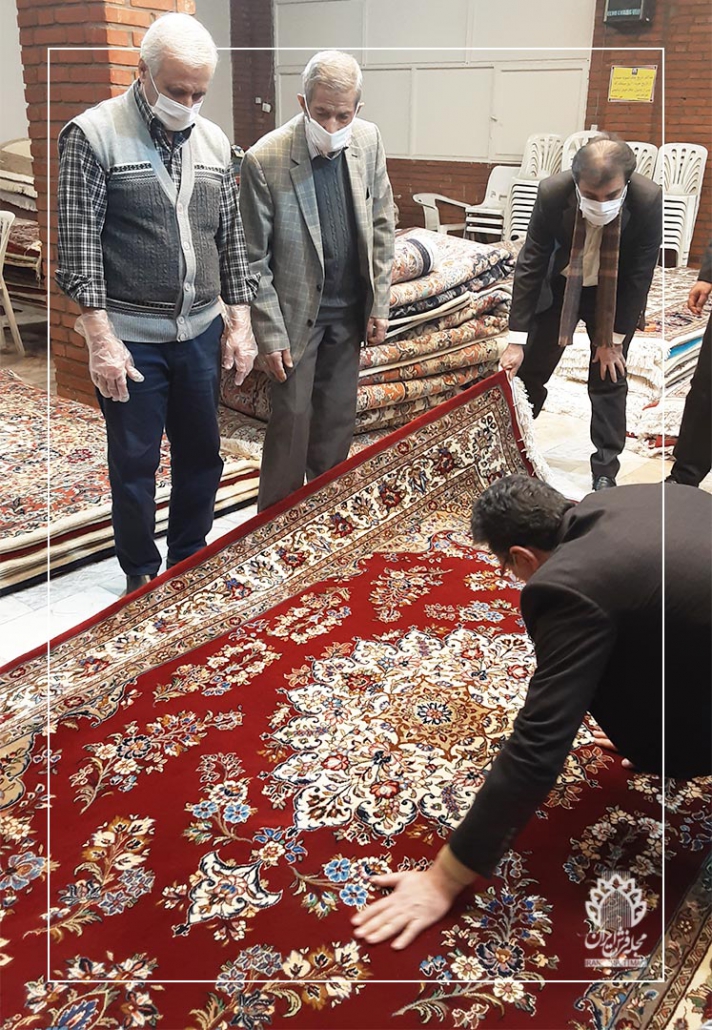
The type, quality and suitability of the materials used, as well as how they are produced, are among the factors that affect a carpet’s final cost. Carpets are woven with natural animal fibres such as wool and silk, and natural plant fibres such as cotton yarn. Each fibre is available in different qualities and may be spun and used by hand or by machine. These fibres are used in the carpet’s warp, weft and pile, and affect its price.
The finer the carpet and the higher its knot count, the finer its warp threads. Cotton is used more often than silk or wool for the warp and forms the structure of most urban-woven carpets, but it is not used for the pile of handwoven carpets. Wool warps are common in nomadic and village weavings, while silk warps are suited to fine carpets.
The better, more suitable and higher-grade the fibres used in weaving, the greater the carpet’s value. The way the fibres are prepared and dyed also has a direct effect on the carpet’s price. A carpet made with hand-spun fibres and natural vegetable dyes is more valuable than one made with machine-spun fibres or fibres coloured with chemical dyes.
Zilou, gabbeh, kilim, jajim, knotted carpets and other woven types command different prices. Some types can be woven more quickly and therefore naturally cost less to produce, resulting in a lower price.
In general, a higher knot count (raj), or greater knot density, increases a carpet’s price. The greater the number of knots woven within a given area, the finer the carpet and, in customary terms, the higher its raj. This requires finer yarn and a more skilled weaver. For example, weaving fine, luxurious carpets with silk fibres and the work of a skilled weaver both add to the carpet’s value and final price.
By age, Iranian handwoven carpets are classified as new[iii], old[iv], semi-antique[v] or antique[vi]. In general, a new carpet is more valuable than a used one, while a semi-antique or antique carpet with exceptional or rare features from its era is more valuable still. Clearly, the greater the age of an antique carpet in good condition and of high quality, the more its value increases. Many antique carpets are unique, handmade works of art that cannot be reproduced even with machine techniques. The way their materials have aged and their present condition often attest to the quality, durability and history of an authentic Iranian carpet.
Even a new carpet may have flaws, often arising during weaving, when it is removed from the loom, or through finishing or washing. Old and antique carpets may have worn or torn areas, bleeding colours, fading or moth damage. Naturally, an intact, undamaged carpet is more expensive than one that is worn or flawed. Loose weaving, missed knots and paired-knot weaving also reduce a carpet’s value. It is worth remembering, however, that in addition to being handwoven, an Iranian carpet is often a work of art; its flaws should not necessarily be judged in an overly mechanical or rigid way.
 Market Comparison
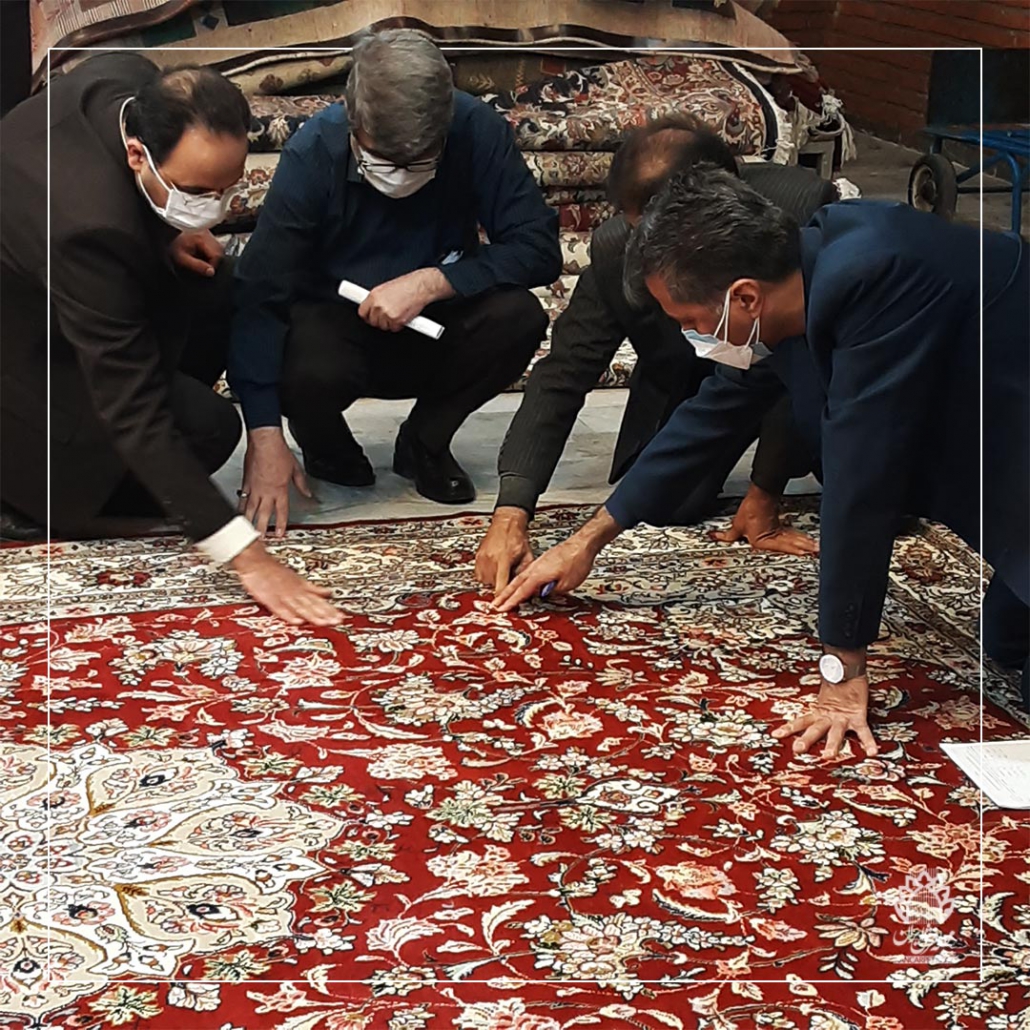
When buying or selling, consciously or unconsciously, we compare examples as part of the selection process. One important point is that, in general, one carpet’s value cannot be considered superior to another’s. Therefore, when comparing the prices of handwoven carpets, it is essential to compare a carpet with one from the same style—that is, Tabriz with Tabriz, not Isfahan. Each uses its own techniques, weaving methods, raw materials and, simply put, weaving tradition. Moreover, comparing workshop carpets with nomadic carpets is unhelpful, since differing working conditions result in different prices.
Two carpets of identical size, materials and technical quality, woven at the same time by the same team, may nevertheless have very different prices. In such cases, it is the message and artistic expression that determine the price. A design’s ability to convey a particular message, whether symbolically or more overtly, can add to its value. The chosen weaving technique, the combination of colours, and the motifs used can also give a carpet a distinctive expression.
As explained above, pricing is a specialised undertaking, and drawing on the opinions of expert assessors and experienced professionals is a reliable, logical way to evaluate a handwoven carpet. As a respected name with a distinguished and trusted history, Iran Carpet Company has always sought to work with skilled weavers, designers and dyers, preserve the quality of its woven carpets, strengthen its position as a renowned name in Iranian carpets, and ensure that carpet assessments are accurate and fair.
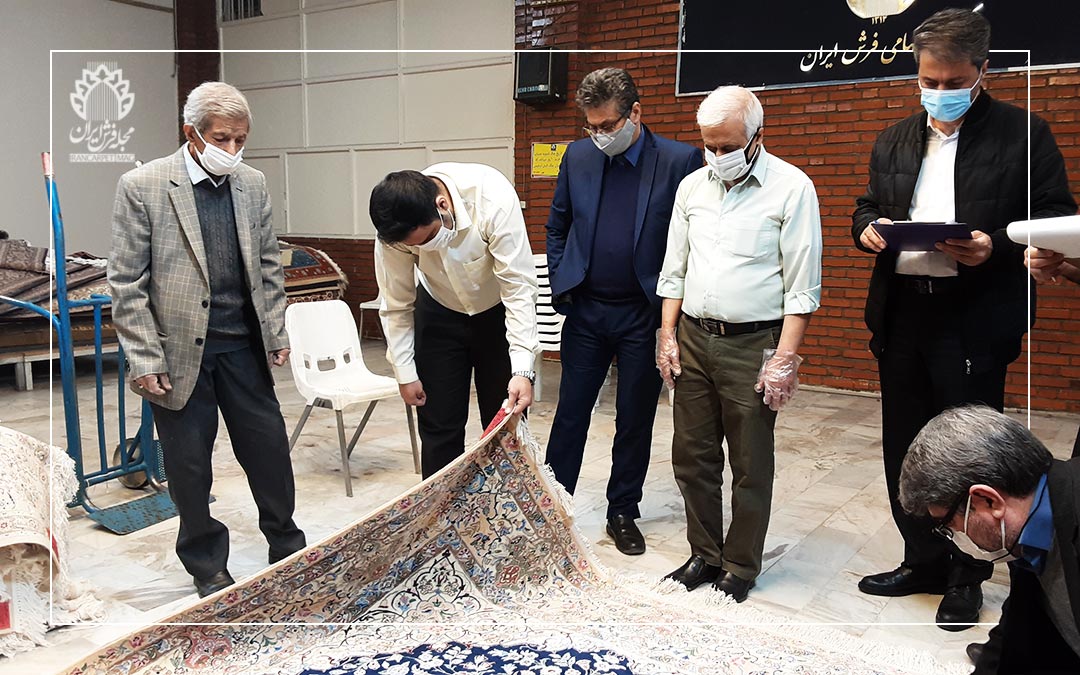
The measures taken by Iran Carpet Company, which led to the establishment of its Assessment Unit, have helped it remain a trusted authority in carpet assessment and pricing since its founding in 1935. At the Assessment Unit, the most experienced specialists provide their professional opinions following an assessment meeting and using assessment forms, and a fair price is determined for the carpet. The unit’s expert commission comprises official judicial experts in carpets, weaving and production specialists, and commercial experts.
Compiled by: Fa’ezeh Qaderi Master’s-level specialist in handwoven carpets
[i] Producing and delivering large-format carpets is a speciality of Iran Carpet Company, which takes pride in creating exceptional masterpieces of this kind. These include the carpet for the Sultan Qaboos Grand Mosque, the carpet for the reception hall of Al Alam Palace in Muscat, and the carpet for the Sheikh Zayed bin Sultan Al Nahyan Mosque in Abu Dhabi. [ii] Pile wool obtained later may be dyed in a different vat and therefore differ in colour from the earlier wool. [iii] New carpets: carpets woven within the past 5 years. [iv] Old carpets: carpets woven between 5 and 25 years ago. [v] Semi-antique carpets: carpets woven between 25 and 60 years ago. [vi] Antique carpets: carpets woven 60 to 250 or more years ago that possess particular cultural and artistic value.
 Carpet Knowledge
Did you know how widely goats are used in weaving traditions? This article explores the goat’s role in Iranian carpet weaving—from goat hair to its place in traditional textiles and related symbols.
 Carpet Knowledge
As long as carpets have existed, so too have the challenges of washing them and cleaning them properly without causing damage. Owning an Oriental carpet was a sign of success in society and in one’s profession; keeping it clean, however, was another matter.
 Carpet Knowledge22
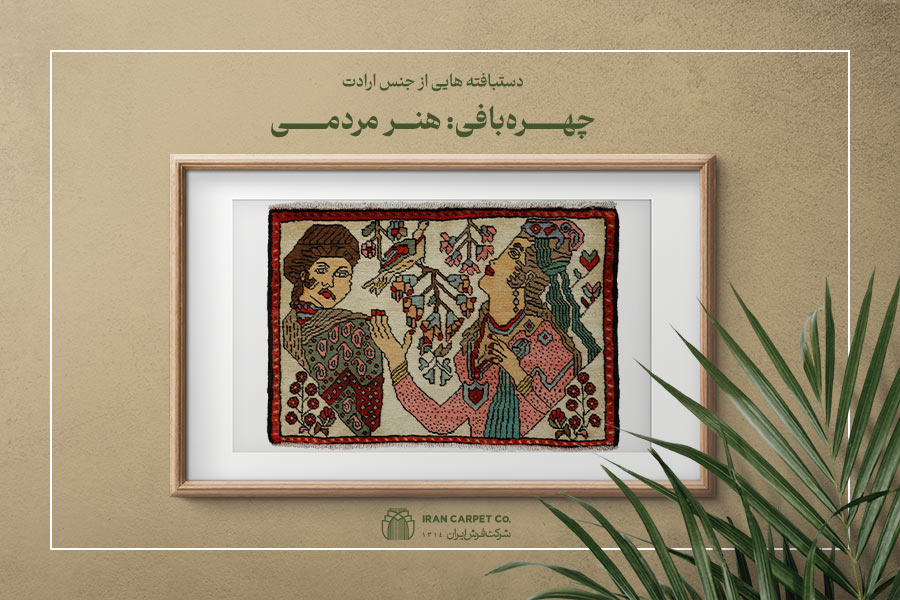
You may have seen portrait carpets like the ones in this article mocked on social media. In fact, these carpets were not woven for sale or display; they were made out of devotion to the people portrayed.