Portrait Weaving: A Folk Art
In 2012, a well-intentioned elderly woman named Cecilia Giménez, from the village of Borja near the Spanish city of Zaragoza, decided to restore a church mural titled “Ecce Homo: Christ with the Crown of Thorns.” The work had been painted in 1930 by the little-known Spanish artist Elías García Martínez (1858–1934).
Giménez knew nothing about painting and was unfamiliar with the techniques of portraiture. So, as you might imagine, her attempt did not go well at all, and Christ’s face was ruined. Ever since, this clumsy restoration has repeatedly made people laugh, and has even become more famous than the original painting. Some social media users have also renamed it from “Ecce Homo” (“Behold the Man”) to “Ecce Mono” (“Behold the Monkey”). Even so, no one doubts Ms. Giménez’s good intentions or deep faith.
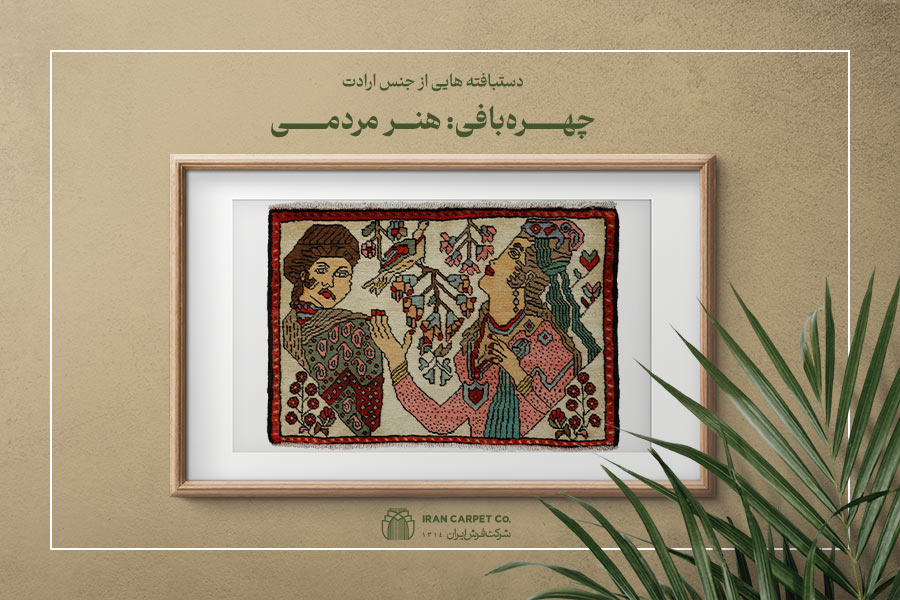
You may have seen portrait carpets like the ones pictured below mocked on social media. These reactions are, in some ways, similar to those prompted by Ms. Giménez’s attempt to restore Christ’s face.
Carpet weaving may be Iran’s most popular art, and these portrait carpets are another expression of this folk art. Weavers make these small carpets out of devotion to the person whose likeness they portray, drawing on their deep beliefs and often using leftover pile wool.
These carpets were not woven for sale or public display. From the past to the present, they have been kept in a corner of the weavers’ homes and, according to their beliefs, were meant to bring the household blessings, spiritual presence, a sense of connection, or a lasting remembrance. It is better to assess these portrait carpets by the standards of folk art than by those of mainstream art and the conventions taught in universities.
Davood Shadlou Faculty Member, Carpet Department, Shiraz University of Art
Photo Album (22)
Related Reading
All Journal & Blog Carpet Knowledge
The Role of the Goat in Carpet-Weaving Traditions
Did you know how widely goats are used in weaving traditions? This article explores the goat’s role in Iranian carpet weaving—from goat hair to its place in traditional textiles and related symbols.