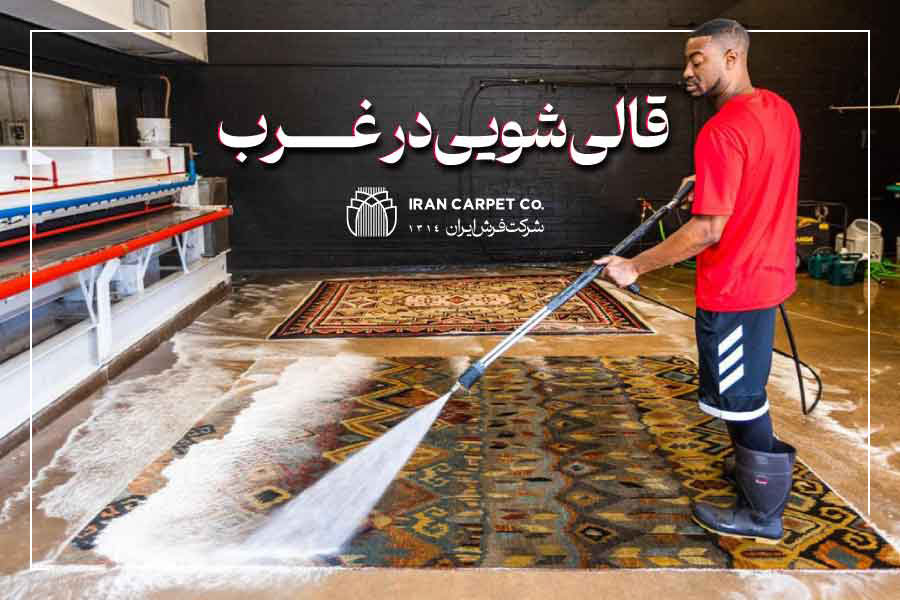
Carpet Cleaning in the West (From the Nineteenth to the Twentieth Century)
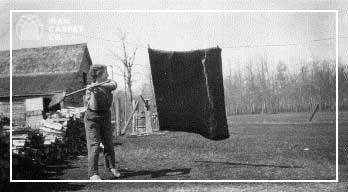
For hundreds of years, the most effective way to clean carpets was to hang them up and beat them with an iron or wooden rod.
In the early nineteenth century, Oriental carpets became fashionable in Europe and America, attracting great interest among the wealthy and even the middle classes and rural communities. They were used to adorn grand rooms. Owning an Oriental carpet was a sign of success in society and in one’s profession; keeping it clean, however, was another matter. Most of the work fell to servants, who swept away dust and soot from the fireplace with brooms and damp cloths. The problem was that sweeping scattered the fine soot particles, leaving stains on the carpets.
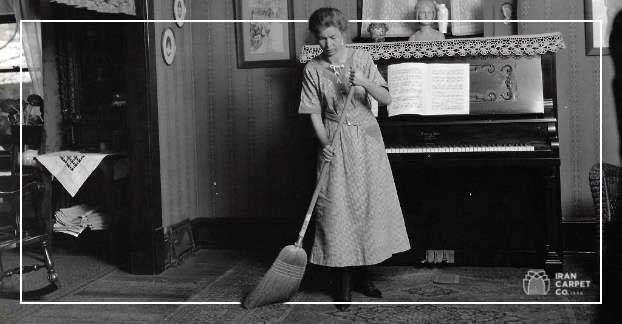
1800
One of the most common ways to keep carpets clean in the early nineteenth century was to spread heavy woolen floor coverings beneath tables to protect them from spilled food and drink. Sometimes these coverings were made by joining together scraps of fabric, making them less expensive than their woolen counterparts. They were used not only in dining rooms but elsewhere in the home, including children’s rooms. For example, in Edward Villiers Rippingille’s 1829 painting Three Children, a floor covering has been laid beneath the children to keep the carpet clean.
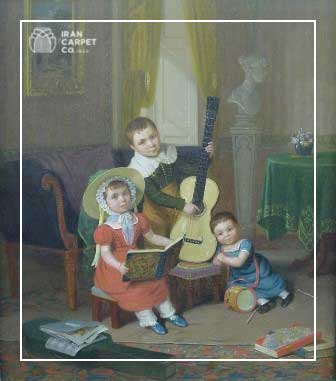 Three Children, Edward Villiers Rippingille, 1829, Bristol Museum & Art Gallery
1830
In the 1830s, homemakers began recording and systematizing the art of household management, including methods for removing stains from carpets. Judging by surviving works from the period, fresh lemon juice was commonly used to remove carpet stains.
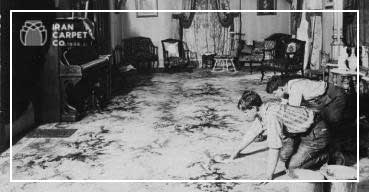
1869
Around 40 years later, carpet washing still relied largely on lemon juice, soap, and elbow grease. In 1869, however, Ives W. McGaffey invented the world’s first vacuum cleaner—although “vacuum cleaner” is a misnomer here, since this device did not run on electricity. Made of wood and canvas, it looked compact and lightweight, but was not easy to operate: its suction mechanism was manual and worked by means of a lever. Many homemakers of the day regarded it as a miracle of modern technology. An American carpet-cleaning company bought McGaffey’s patent, named the machine the Whirlwind, and sold it in Chicago and Boston for $25—a very high price at the time.
1880–1900
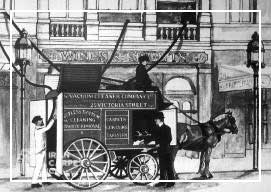
In 1899, American entrepreneur John Thurman invented the first fully motorized vacuum cleaner, which ran on gasoline. In 1901, British engineer Hubert Cecil Booth improved on Thurman’s machine and built a vacuum cleaner powered by an internal-combustion engine. Booth’s engine was large and had to be mounted on a cart pulled by a horse. Since not everyone could afford to buy one, companies were established to provide cleaning services for carpets, curtains, and tapestries. The cart would stop outside a home, its engine would be started, and long hoses would be run into the house. Dust was carried outside through pipes. It was around this time that the first specialist carpet-cleaning companies began operating. In 1903, vacuum-cleaning services cost $4 per home.
1907
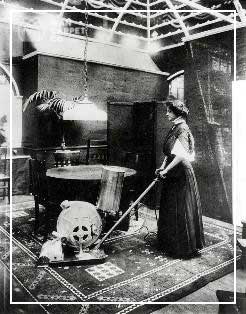
Then, in 1907, American James Spangler invented the first vacuum cleaner that truly ran on an electric motor and featured a rotating brush. His machine was revolutionary. Spangler was a janitor at a large store in Ohio. He realized that the vacuum he used to clean carpets was the source of his chronic cough, so he assembled an old fan motor and attached it to a soapbox stapled to a broom handle. By adding a pillowcase to collect the dust, Spangler created a new portable electric vacuum cleaner. He later improved his initial model. Spangler was the first to invent a replaceable cloth dust bag and built-in cleaning attachments for a vacuum cleaner.
1920 to the Present
During the 1920s and 1930s, with the outbreak of World War I and the economic depression in the United States, Oriental carpets fell somewhat out of fashion. It was only after World War II, when imports of Oriental carpets became popular again, that carpet cleaners began considering the use of chemicals to clean them. Today, it is important to use chemicals that are safe for people and pets and that are environmentally friendly.
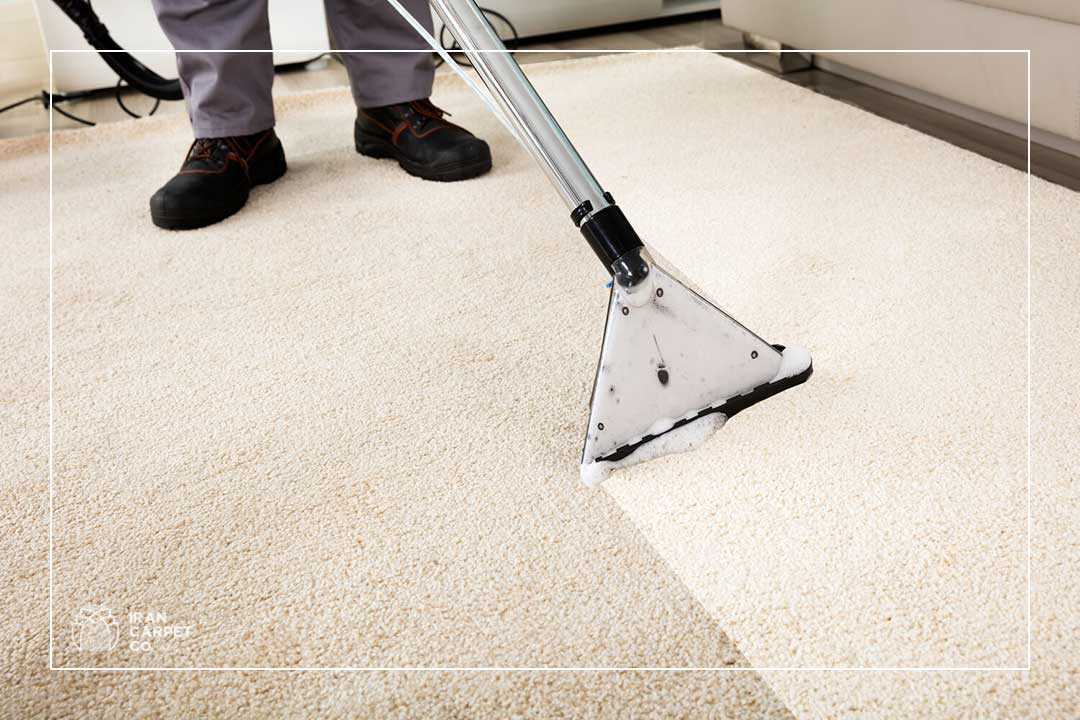
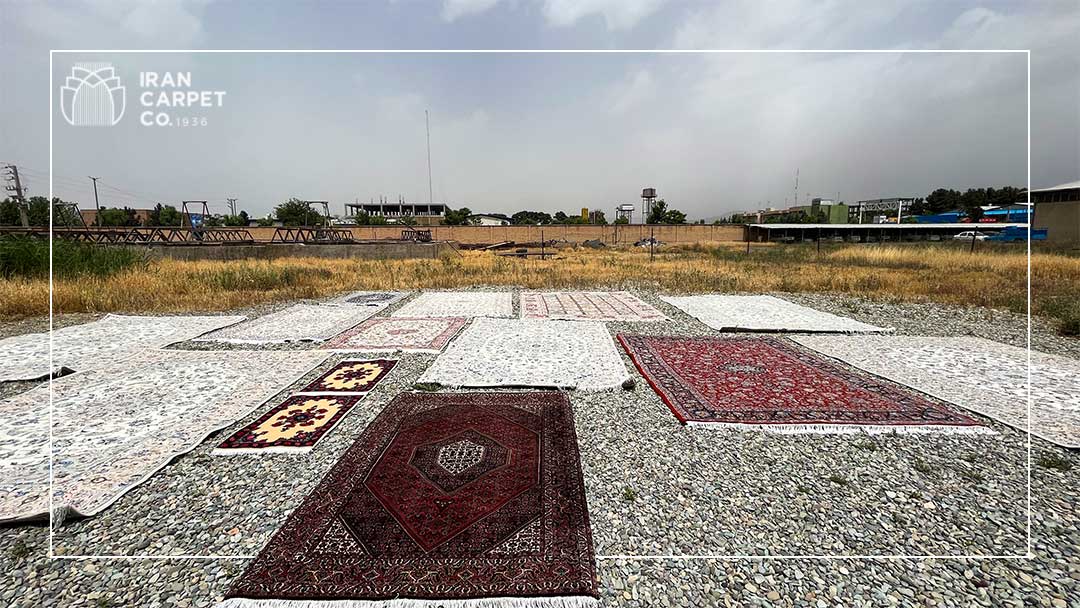
Iran Carpet Company’s carpet-cleaning service is equipped with up-to-date facilities, uses materials that do not harm carpet fibers or the environment, and is staffed by specialists ready to serve our valued customers. Services are available for all handwoven carpets, including wool and silk carpets, rugs, kilims, gabbehs, and more. Carpets made by the Company receive a special discount at this cleaning center through the services offered by our customer club. For more information, call 026-32820641.
Compiled and translated by Dr. Davoud Shadloo Faculty member, Carpet Department, Shiraz University of Art
Related Reading
All Journal & Blog Carpet Knowledge
The Role of the Goat in Carpet-Weaving Traditions
Did you know how widely goats are used in weaving traditions? This article explores the goat’s role in Iranian carpet weaving—from goat hair to its place in traditional textiles and related symbols.