What Lies Beneath a Carpet?
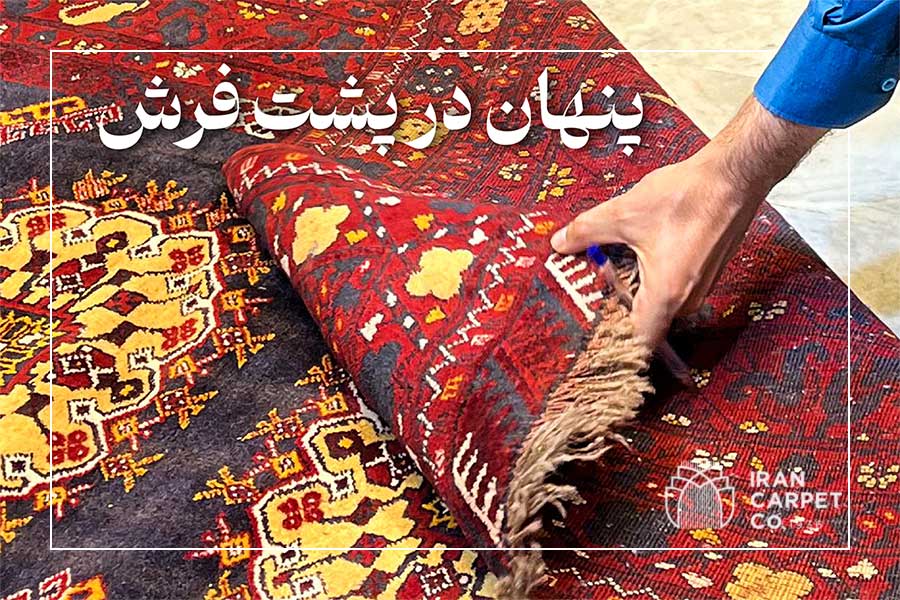
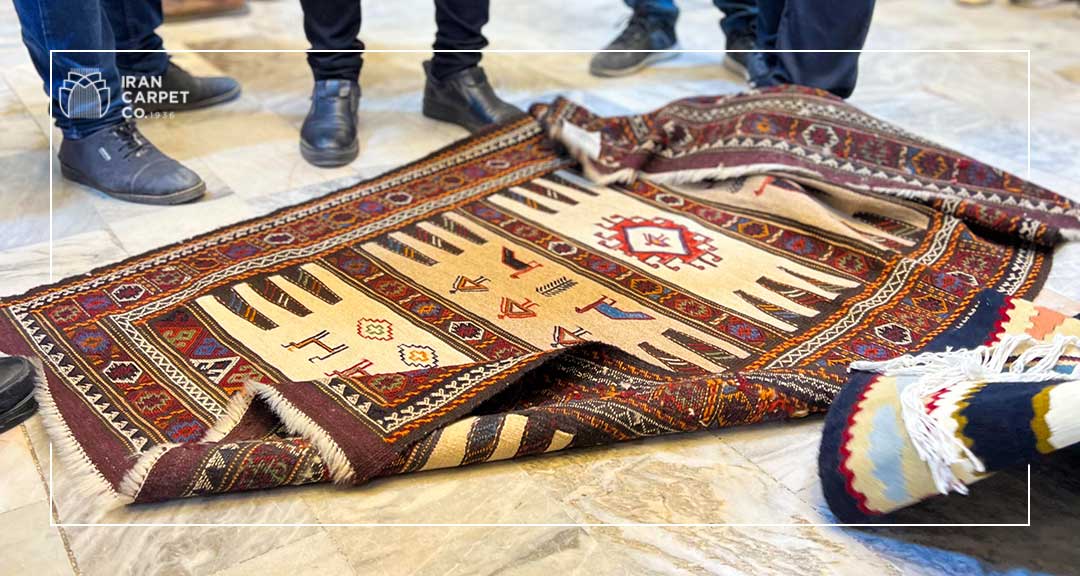
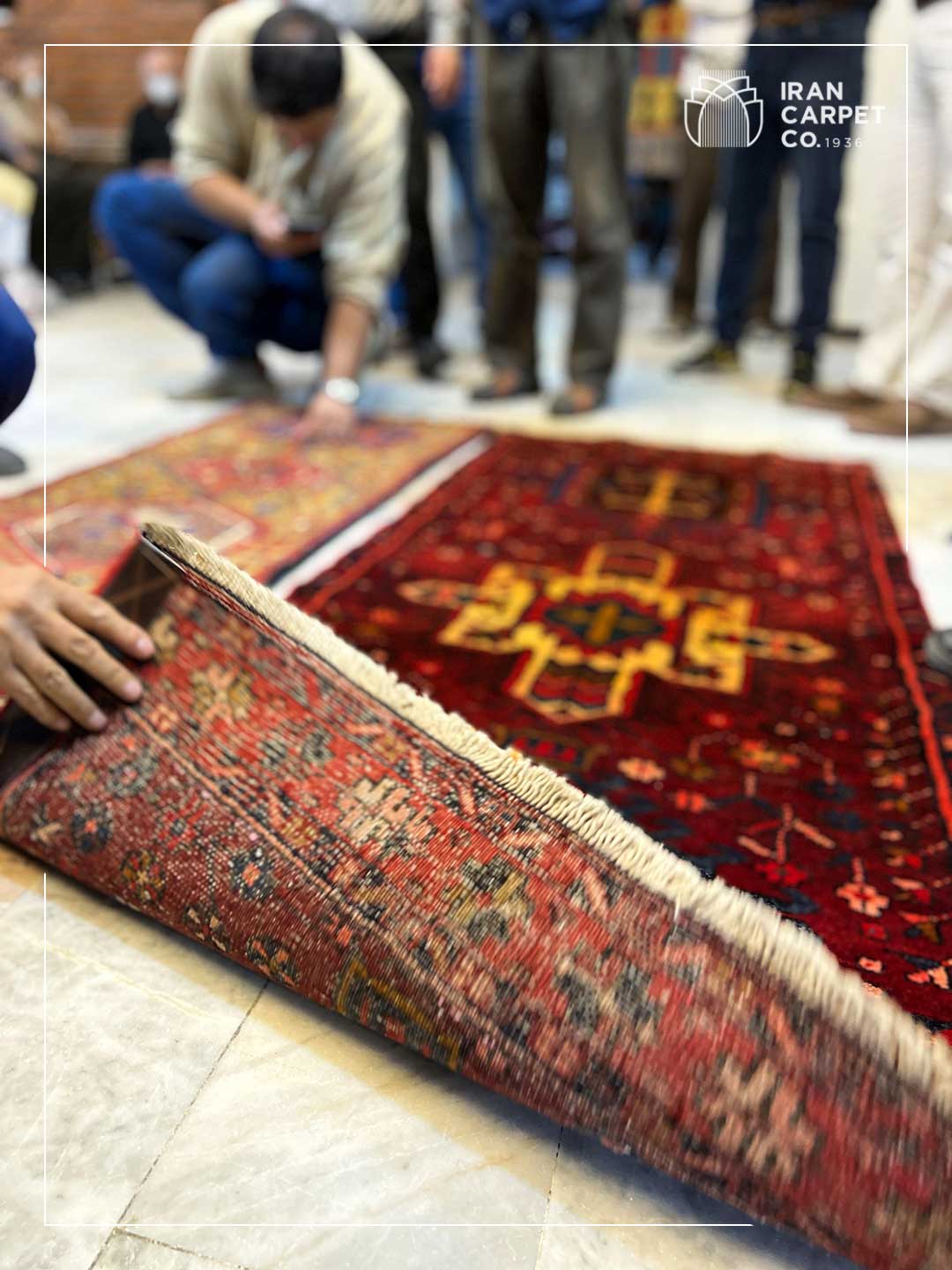
You have probably seen carpet dealers and specialists turn back a corner—or even the entire carpet—to inspect its underside. But why do they turn a carpet over, and what are they looking for? What lies hidden beneath a carpet?
Why inspect a carpet’s underside?
Assessing a carpet is essential to establishing its price and value. When buying or evaluating a carpet, it is also important to turn back part of it and examine the underside. An experienced carpet specialist can assess a carpet with ease by examining it closely. Turning it over is almost like lifting a mask to recognize the face beneath. Here are some of the reasons why inspecting a carpet’s underside matters.
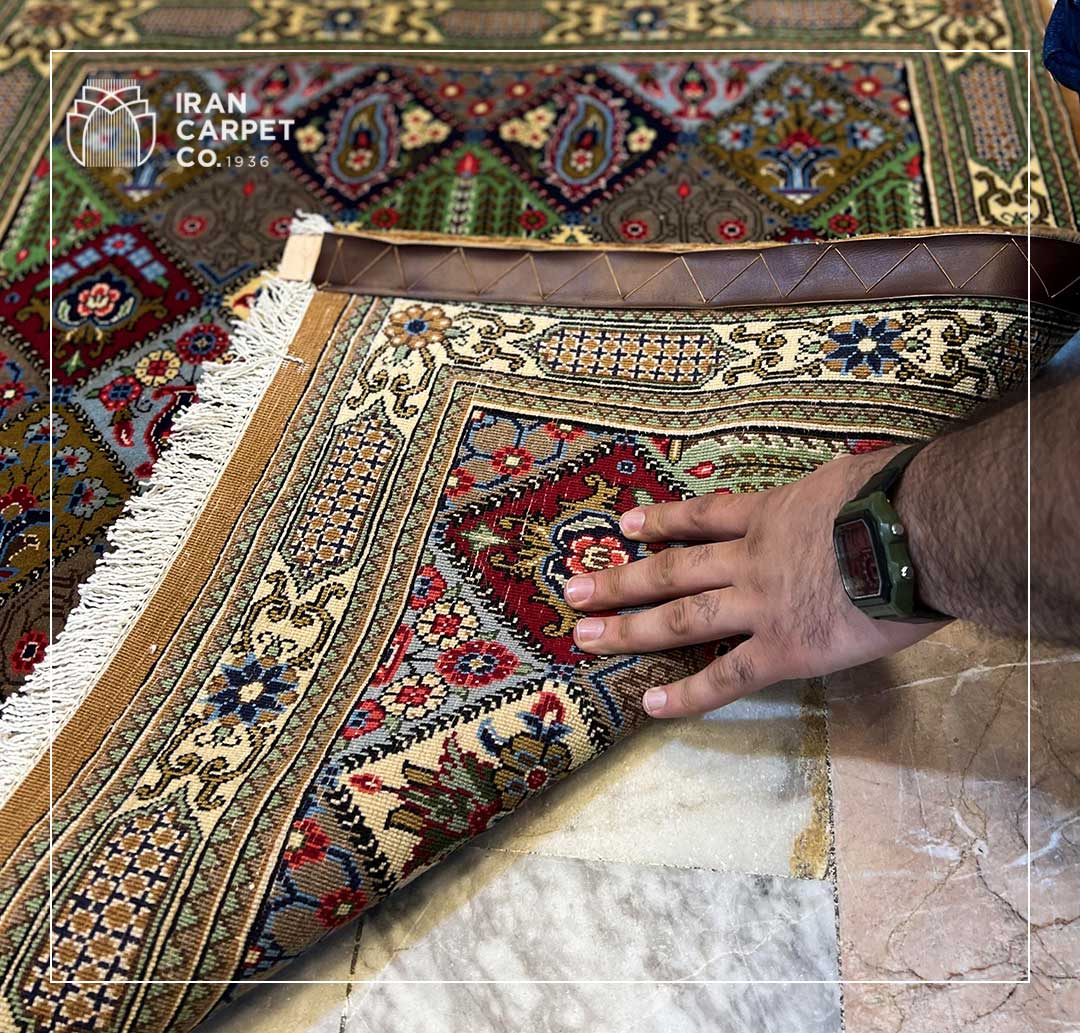
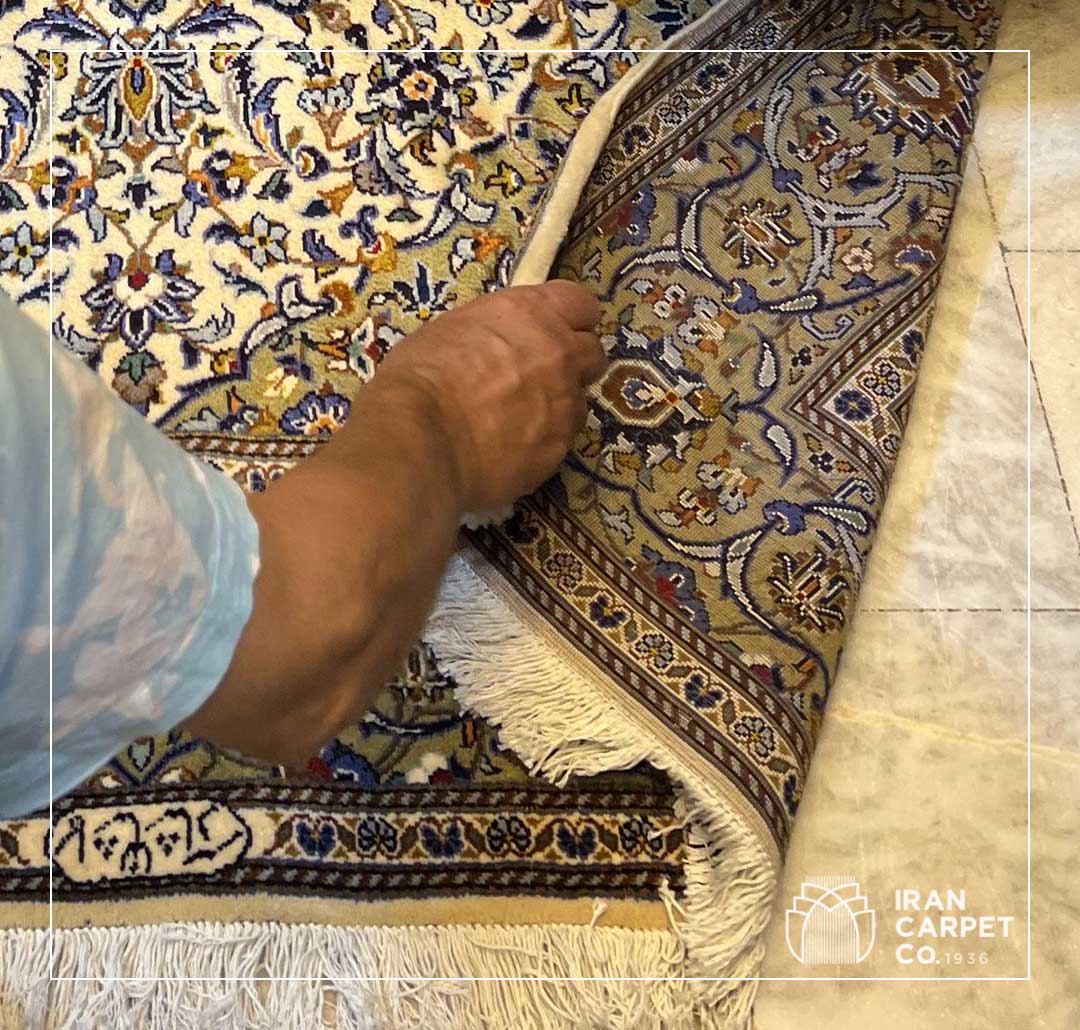
Technical assessment: Looking at the back of a carpet[i] allows you to see the technical details of its construction: the knots and structure, the type of weave, and the direction of the pile. This, in turn, can help establish where the carpet was made.
Assessing carpet quality: The underside reveals the relative quality and fineness of the weave, as well as the knot density. The finer the weave, the higher the knot density. It also reveals the way the weft is inserted, the color of the wefts, and much more. For example, if the carpet has been woven with several rows to a single weft, this is readily apparent from the back.
Repair and reweaving: Skilled restorers can repair and revive a carpet so deftly that, in many cases, the restored areas are difficult to identify by looking at the front. Even so, when you turn a carpet over, its underside may reveal clearly—or on closer inspection—which areas were damaged and how well they have been repaired and restored.
Examining carpet colors: The underside can also reveal details about the dyes used, particularly when there is a marked difference between the colors on the front and back. The colors on the front are usually paler than those on the back. This is often because exposure to sunlight fades them: unlike the underside, which rarely receives direct light, the front is frequently exposed to the sun. As a result, its colors gradually fade; if they are not natural dyes, they may also run and lose their color. An exception is when a carpet has deliberately been turned over and placed in the sun to fade its underside as well. This is done only to conceal the fact that the colors have faded. If the front is darker than the back, it is best to have a specialist inspect it, as the carpet may have been overdyed.
Helping to establish a carpet’s age: The weave on the underside can also offer clues to a carpet’s age. A relatively smooth, worn underside—or one where the colors have corroded—takes time to develop. Wear can sometimes resemble corrosion. The white weft begins to show through, appearing as small white patches or individual white knots; in more pronounced cases, white threads can be seen on the pile surface. This condition is known as exposed weft.
On many carpets with substantial pile wear, the borders or ends are also uneven or very short. Wear results from use, while corrosion affects areas woven with metallic fibers or colored with dyes containing metallic mordants. Such areas are susceptible to corrosion. Corrosion may occur across an entire carpet, but rarely in a uniform way, since different colors contain varying concentrations of metallic elements. Wear often occurs across the carpet’s surface, although some areas may have experienced less contact and remain in better condition. For this reason, examining the underside may be key to discovering that an antique carpet is much older than its relatively youthful appearance suggests.
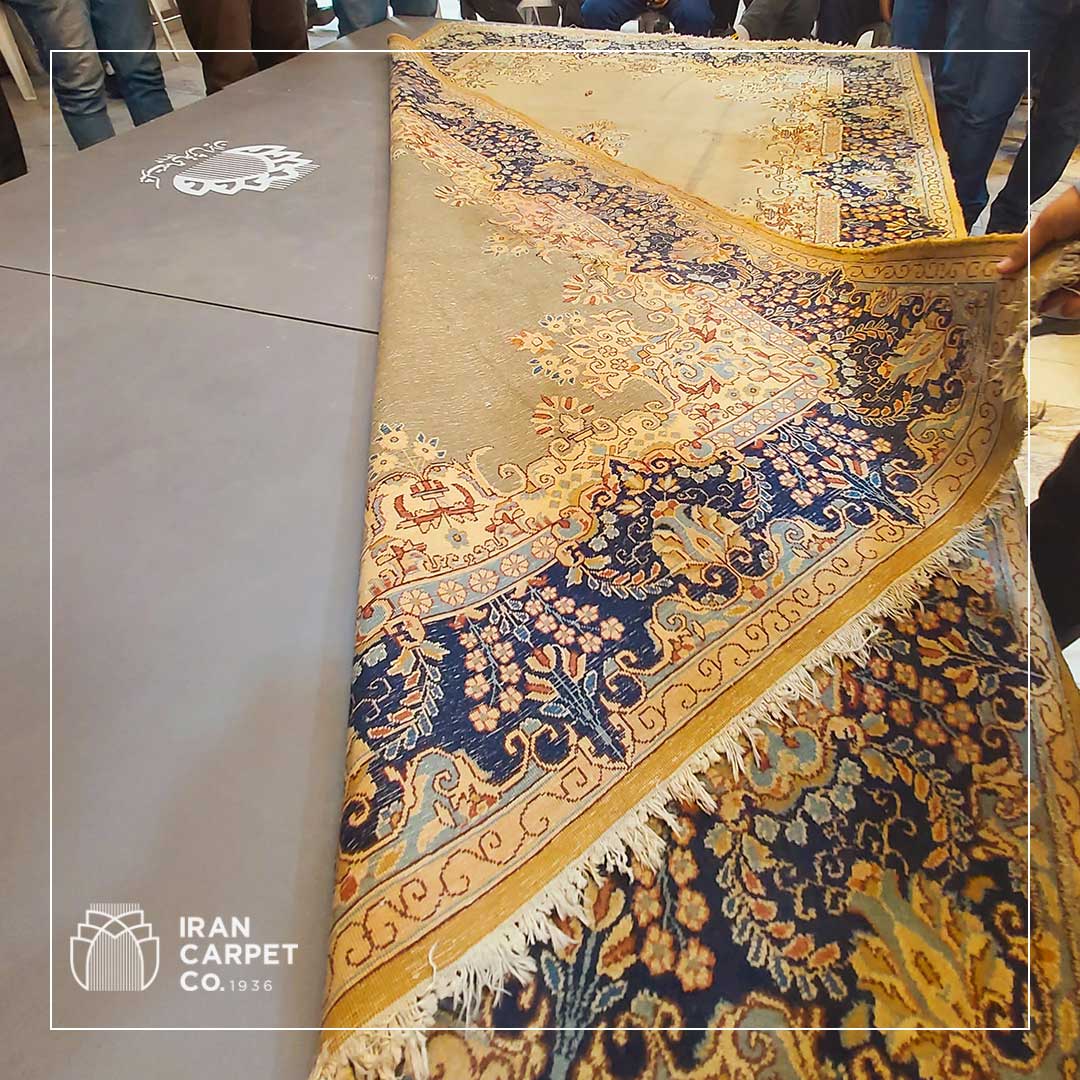
Identifying a carpet’s design and motifs: Because the underside has no pile, its design and motifs can be easier to make out—especially if wear or corrosion has affected the carpet, leaving the back in better condition. In keeping with traditions such as endowment and the veneration of certain names, inscriptions on carpets are sometimes woven in reverse. Turning the carpet over can help make their text easier to identify.
Identifying insect damage, moth damage, and other defects: Damage caused by insects or moths may be visible on the surface, but it is often especially easy to identify from the back. If it has not reached the warp, it can be repaired. The point where the pile knot joins the warp wears on the underside; sometimes the damage progresses until the pile yarn separates completely from the warp.
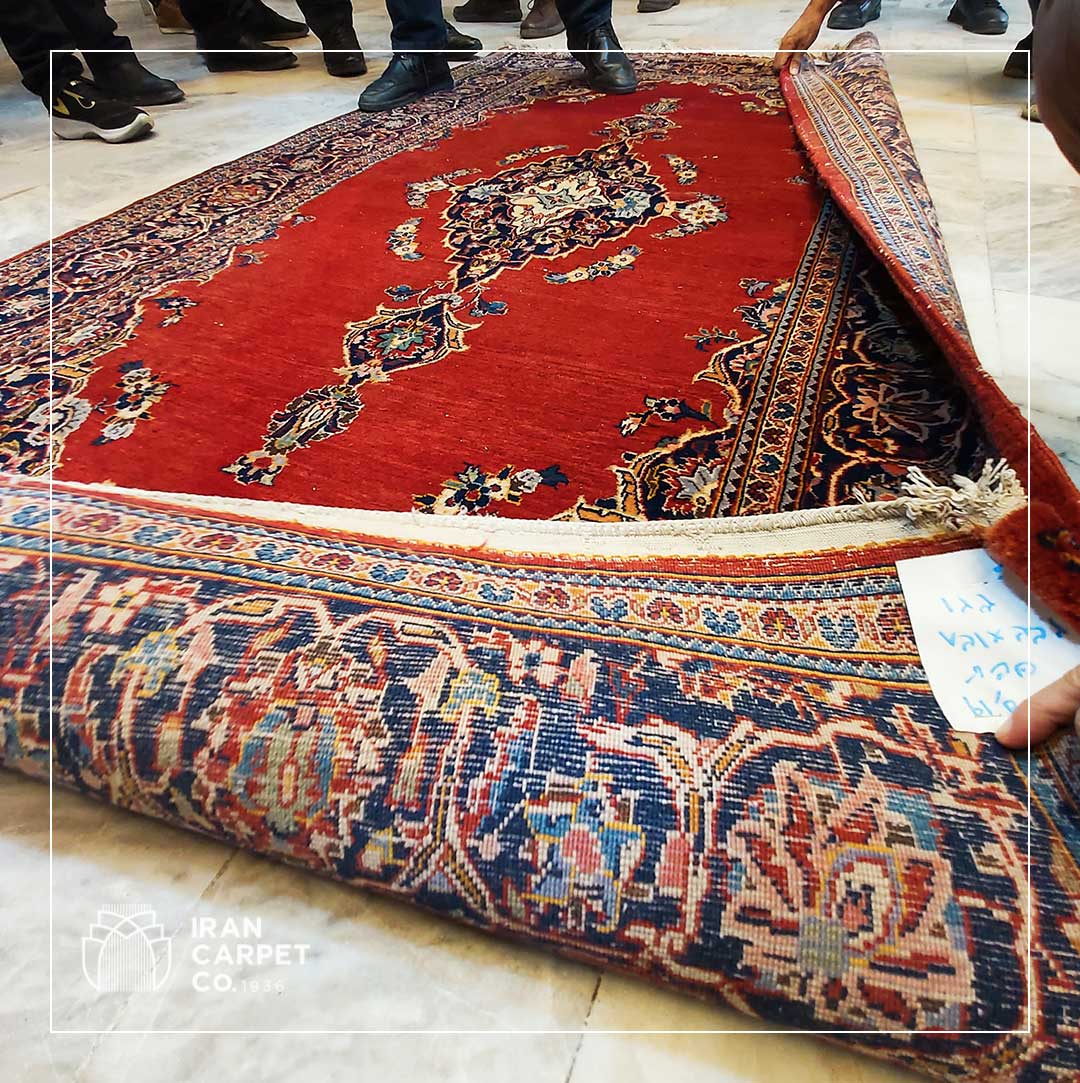
Inspecting the underside can reveal other problems, including rot caused by contact with damp floors, as well as defects related to the condition of the raw materials, warping and weaving, transportation and storage, or the way the carpet has been cared for. For example, uneven weft insertion and inadequate beating—which can result in the knots being improperly secured to the warp—may leave the underside irregular and untidy.
Iran Carpet Company holds regular carpet assessment and valuation sessions every week at its head office, attended by specialists and experts in handwoven carpets. You can also engage the Company’s assessment team solely to value your carpets, or to prepare them for the Company’s Weekly Handwoven Carpet Auctions. Get in touch with us.
[i] The underside of the carpet—the side that rests on the floor.Fa’izeh Ghaderi Senior Handwoven Carpet Specialist