
Carpet Knowledge
The Role of the Goat in Carpet-Weaving Traditions
Dec 18, 20244 min readIran Carpet Company
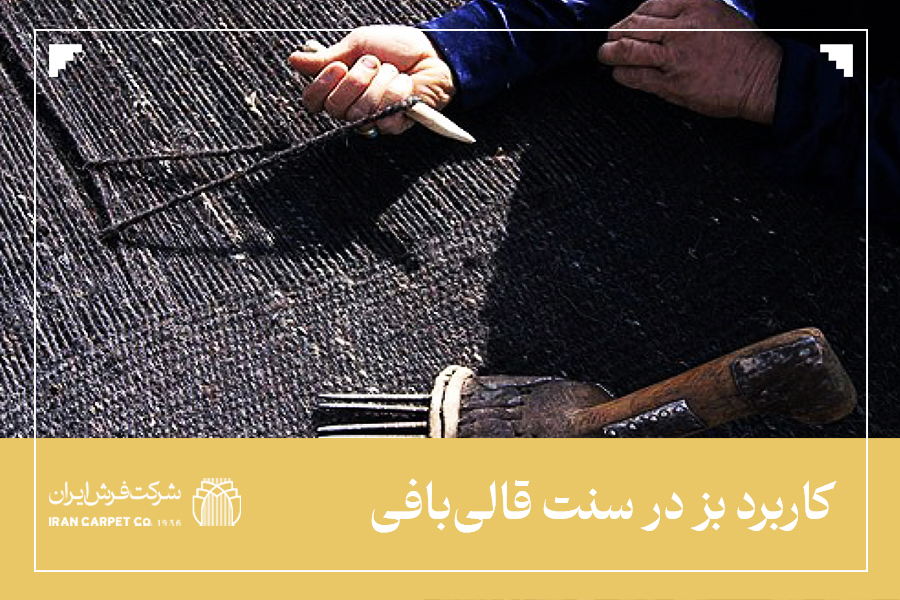
Goats have a variety of uses in carpet weaving. Here, we look at several practical applications and market expressions associated with goats and carpet weaving.
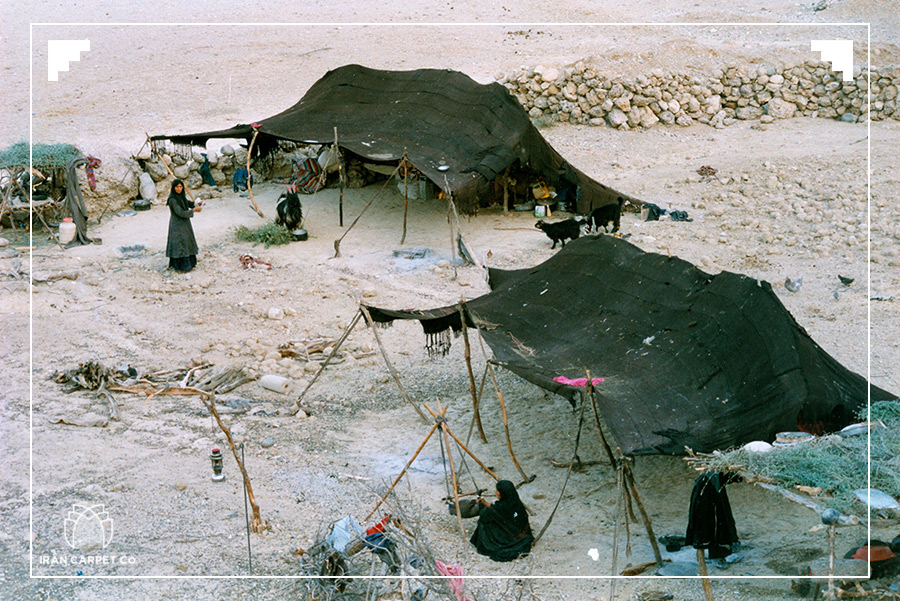
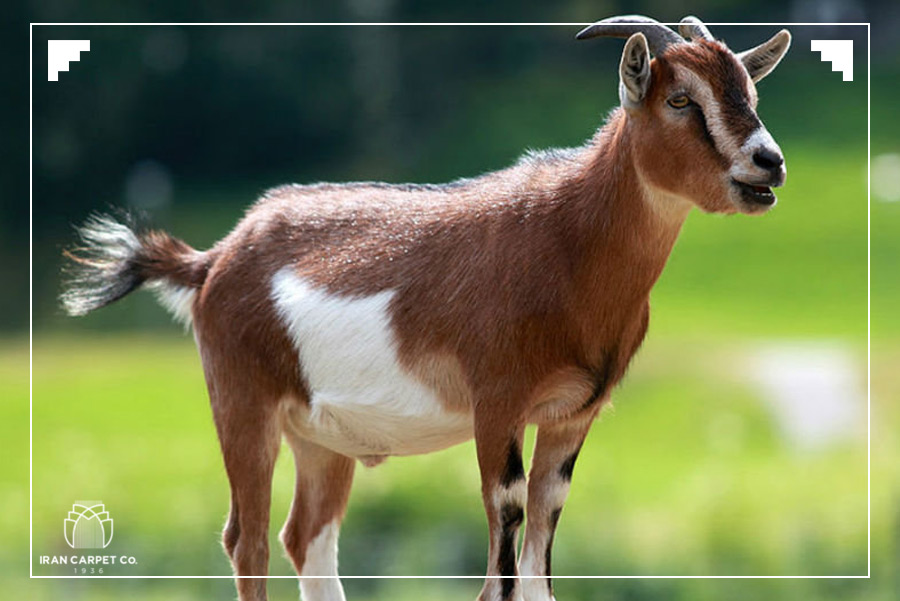
Because of its particular structure, goat hair acts as a barrier against water and damp. A woven textile made with goat hair is highly resistant to both. For centuries, many of Iran’s nomadic communities have known of this property. That is why they used goat hair to weave their black tents—their homes on the plains and in the open country. When it rains, goat hair keeps even a drop of water from passing through the tent roof, leaving the interior completely dry. Some nomads also wove goat hair around the edges of their carpets, in a border about one to two centimetres wide. If rainwater flowed across the ground, this sturdy barrier helped keep the water from reaching and soaking the carpet. Another noteworthy fact is that rodents cannot gnaw through goat hair; even moths, the chief enemy of wool fibres, cannot damage it.
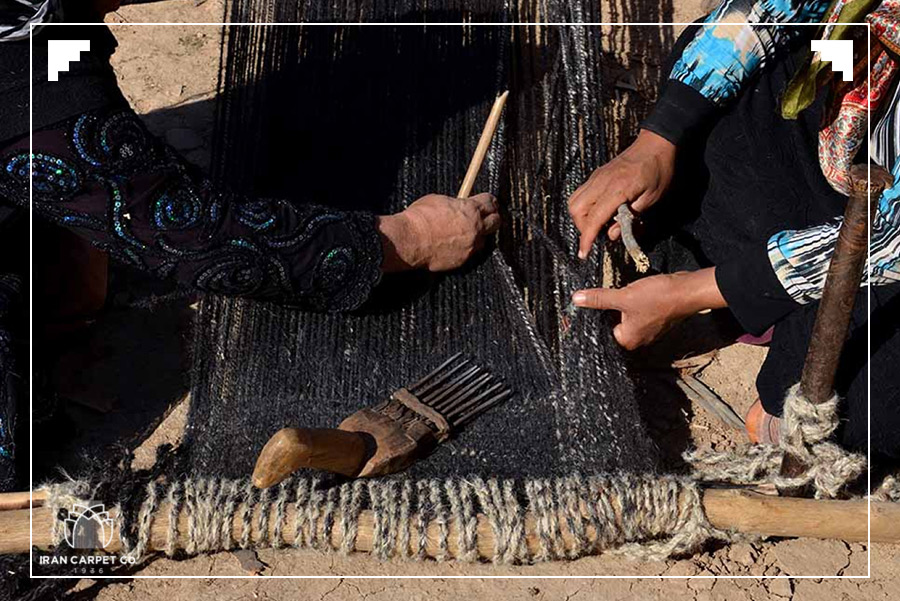
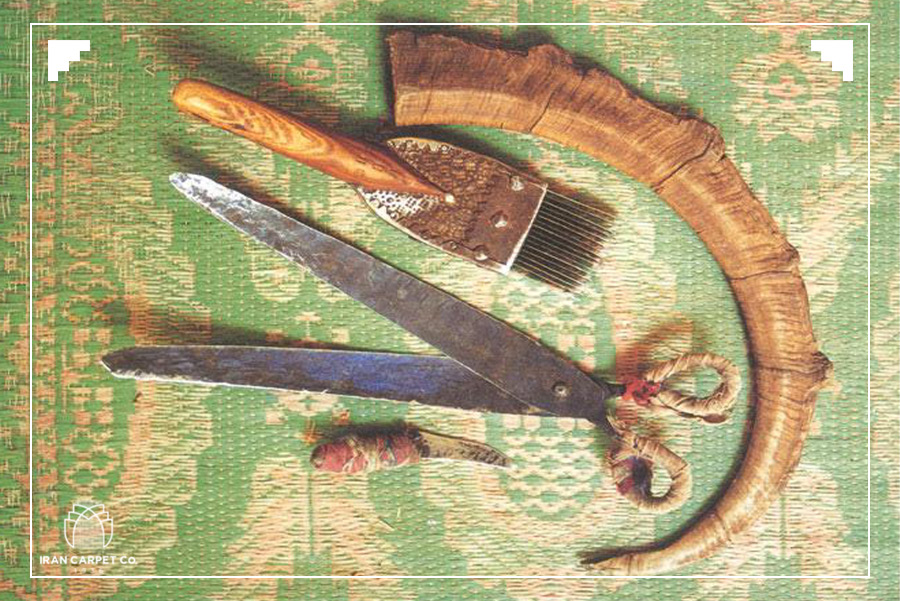
When a carpet is woven, the weft is passed through after each row of knots. A long stick called a “hāf” is used for this purpose. It is placed between the carpet’s warps and moved up and down, allowing the weft yarn to pass more easily between them. In most regions, the stick is moved by hand. Among some nomadic and rural weavers, however, whose looms are set on the ground—in other words, horizontal looms—an old tradition calls for using a goat’s horn to move the hāf up and down. The horn is curved: its back pushes the hāf forward, while its curved tip draws the stick back. For weavers in villages in southern Kerman Province, some nomadic and rural communities in Fars Province, and some nomadic and rural communities in eastern Iran, including the Baluch, Sistani, and even some Khorasani Arabs, the goat’s horn is considered one of the most important weaving tools. It is also used in weaving certain types of kilim.
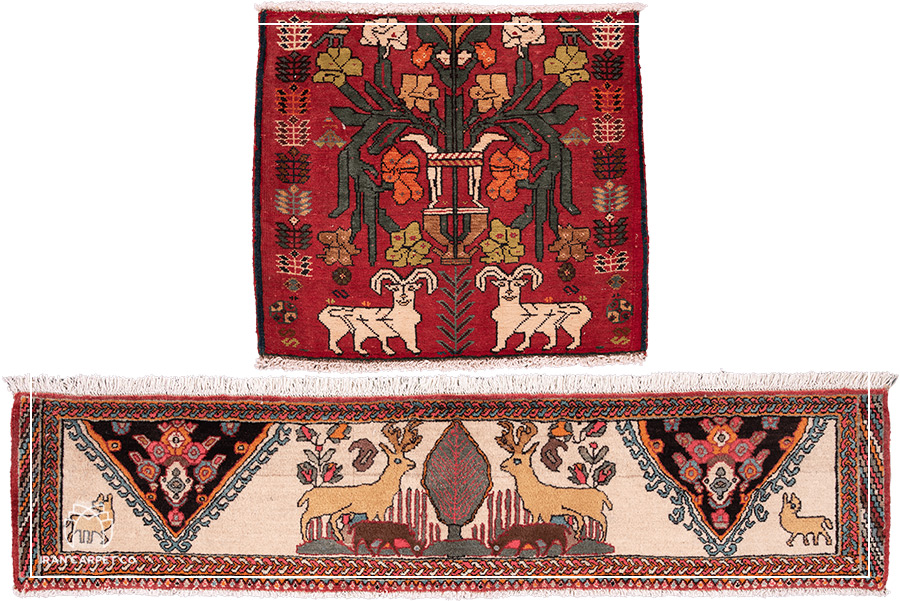
One of the oldest motifs in Iranian art depicts a tree between two goats. In some historical works, the goats are seated; in others, they stand, sometimes on their hind legs with their forelegs reaching toward the tree, as if protecting it. Some examples of this motif date back to the second and third millennia BCE. Among Iran’s carpet weavers, those in Fars Province—particularly in the Neyriz area—have a fondness for this ancient design. They weave, from memory, beautiful carpets featuring a tree known as the “Three-Trunk Tree of Fars.” This motif is common in Neyriz carpets and also appears in some Afshar tribal weavings. It may have historical roots in Mithraic and Zoroastrian thought, or perhaps derive from the Manichaean Tree of Three Trunks. Whatever its origins, the figures of goats, usually standing on either side of Neyriz’s Three-Trunk Tree, are among the oldest signs of the goat motif’s presence in carpet weaving.
Touraj Jouleh Handwoven carpet researcher
 Carpet Knowledge
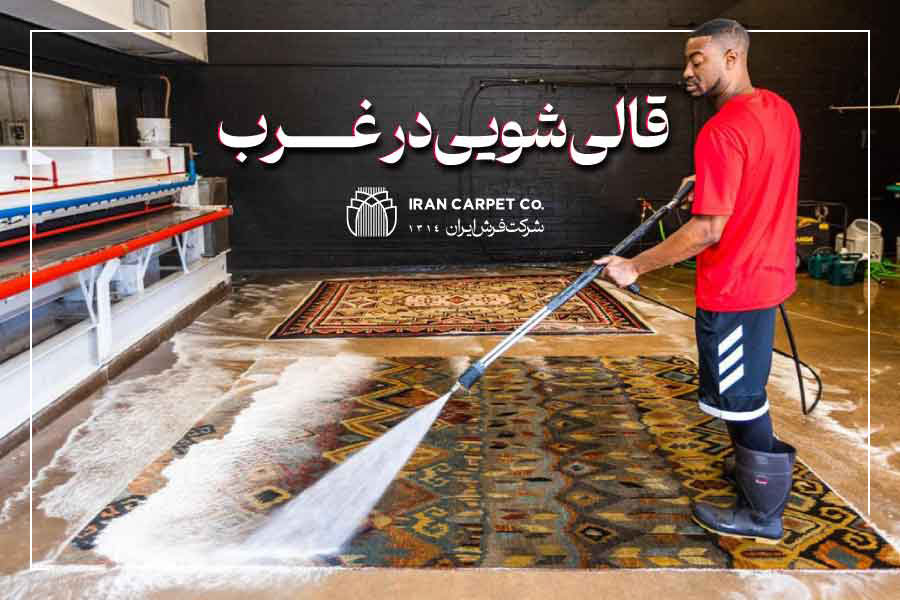
As long as carpets have existed, so too have the challenges of washing them and cleaning them properly without causing damage. Owning an Oriental carpet was a sign of success in society and in one’s profession; keeping it clean, however, was another matter.
 Carpet Knowledge22
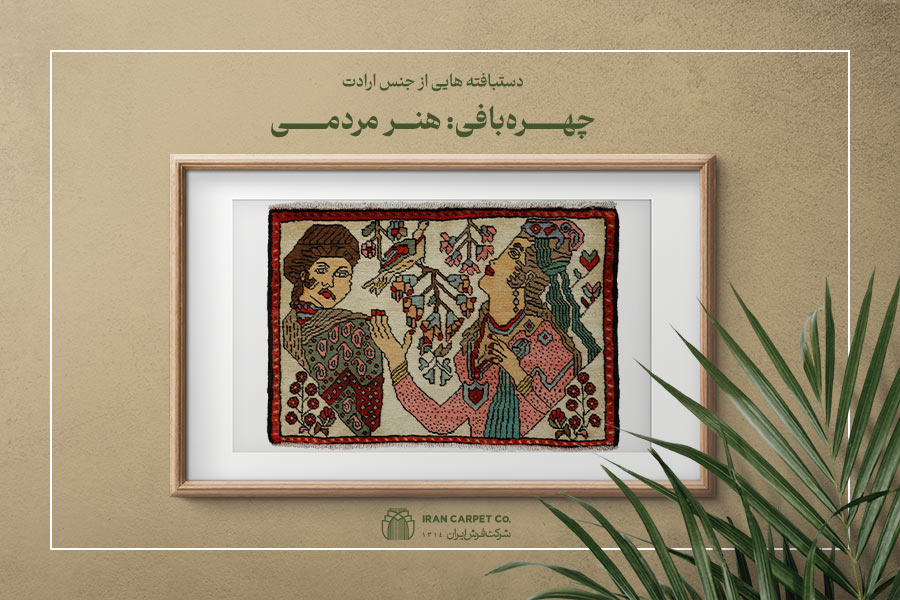
You may have seen portrait carpets like the ones in this article mocked on social media. In fact, these carpets were not woven for sale or display; they were made out of devotion to the people portrayed.
 Carpet Knowledge
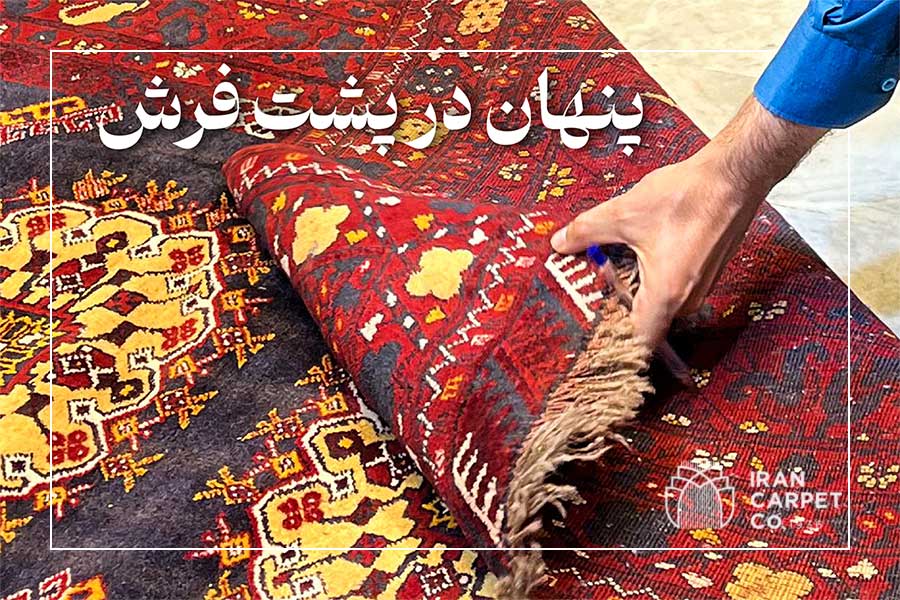
You have probably seen carpet dealers and specialists turn back a corner—or even the entire carpet—to inspect its underside. But why do they turn a carpet over, and what are they looking for? What lies hidden beneath a carpet?