Blood Drips from This Train
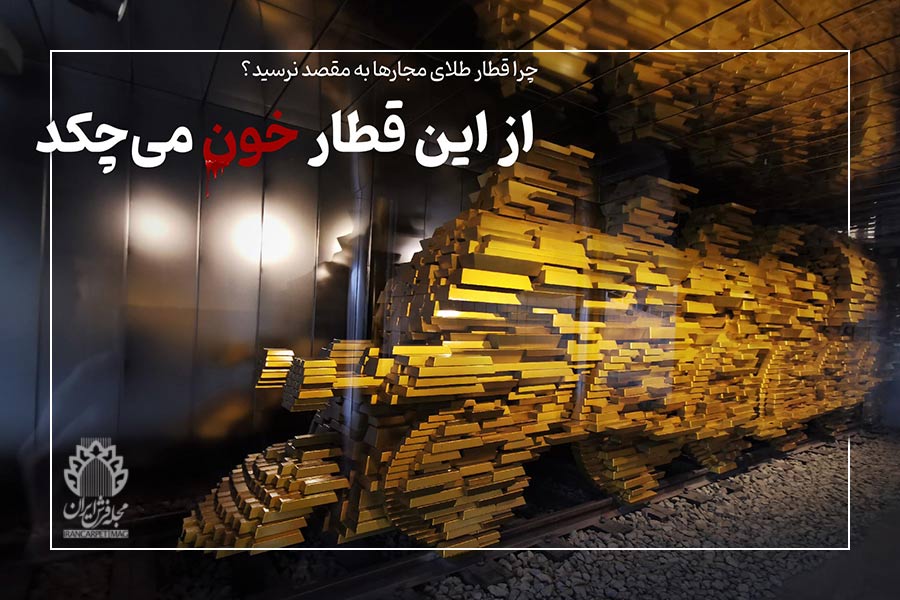
No account of the history of carpets in Hungary is complete without the tragic story of the Gold Train in 1944. During the 1930s and 1940s, Hungary’s Nazi government forced Jews to surrender all their valuables—including their carpet collections—to the National Bank, which was under Nazi control. These possessions were kept in the bank for a decade, until the Soviet Army reached Hungary’s borders.
 German aircraft flying over Budapest, January 1944
The Soviet Army was about 160 kilometers from Hungary, and Adolf Hitler had launched Operation Margarethe. The Arrow Cross Party—the fascist Hungarian government led by Ferenc Szálasi—forced some 800,000 Hungarian Jewish citizens to hand over all their valuables to government officials. These included jewelry, gold, wedding rings, antique and everyday-use carpets, and anything else of significant monetary value. The Nazis took the confiscated possessions and issued receipts, though nothing was ever returned. Most Jews were sent to forced-labor camps, particularly Auschwitz, and never walked on their carpets again. Most were murdered in the camps. For more on Nazi plunder, see our article “The Nazi’s Forgotten Carpet.”
 Auschwitz concentration camp
In late 1944, as the Soviet Army advanced, a train carrying 46 cars (15 for soldiers and provisions) set out from Hungary for Germany, loaded with valuables. Most of the goods aboard had been taken from Jews over the preceding decade and stored in the National Bank. The train was accompanied by 24 vehicles—trucks and cars—and the convoy included 213 people in all. According to various reports, its cargo included gold bars, jewelry, diamonds, pearls, watches, around 200 paintings, Persian and Oriental carpets, silverware, porcelain, furniture, fine clothing, linens, cameras, stamp collections, and foreign currency (mostly U.S. dollars and Swiss francs). The train stopped at several points to collect other looted and confiscated goods stored elsewhere. After reaching a secure location near the Hungarian-Austrian border, it remained there for 92 days while officials carefully inventoried what they listed as Hungarian state property. In 1945, the Hungarian government estimated the total value of the train’s contents at $350 million.
 German freight train, World War II
In the spring of 1945, the train resumed its journey west and entered Austria. It seems that at each stop, some of the gold and other goods aboard were transferred to trucks and hidden in mines along the route. The fate of the gold in those trucks remains unknown. The train eventually stopped in the town of Werfen, best known for its medieval Hohenwerfen Castle, on May 16, 1945, after Nazi Germany’s surrender.
There, the Allied forces first took possession of the train’s contents through the French Army, and then through the United States Army. The U.S. Army transferred some of the goods to Salzburg, but American troops looted most of the objects and other possessions. They were transferred to the United States in 1946 and auctioned in New York in 1948. According to the U.S. government, some of the goods were also given to people in need or to senior military officers. Reports, for example, say that porcelain and silverware, as well as Persian and Oriental carpets, were given to people including Major General Harry Collins, Brigadier General Henning Linden, and General Edgar A. Hume.
The ultimate fate of around 200 paintings and most of the carpets recovered from the train remains unknown. Under the United States’ official restitution policy, they were considered “cultural property” and should have been returned to their country of origin, Hungary. Austria also claimed them, however, as the paintings had been in its possession since 1953. In any case, their present whereabouts are unknown.
These events had been forgotten until 2005, when a U.S. court ruled that Washington should pay $6 million in compensation for the stolen property, adjusted for 61 years of inflation. Since many of the owners had died, it was difficult to determine exactly who had lost what. As a result, rather than being paid to the surviving families, the compensation went to Jewish organizations, mostly based in Israel. Claims over the property and court proceedings continued until 2013; in practice, the government of the occupying regime in Jerusalem received most of the compensation.
 General Dwight Eisenhower, commander of Allied forces, inspects gold bars taken from Jews by the Nazis and stored in the Heilbronn salt mine in Germany on May 3, 1945
But the Gold Train and the tragic stories surrounding it proved damaging to Hungary in every respect—including to its once-thriving carpet culture. In 2010, an exhibition was held in Budapest—we wrote about it earlier in “The Great Budapest Exhibition”—showing that Hungarian collectors can still present remarkable carpets. Perhaps carpet lovers still have many reasons to regard Budapest once more as the carpet capital of Europe.
 A view of the Oriental carpet exhibition in Budapest, 2010
Compiled by Dr. Davoud Shadlou Faculty member, Department of Carpet, Shiraz University of Arts
* The headline is taken from the title of Hossein Mortezaeian Abkenar’s novel, “A Scorpion on the Steps of the Andimeshk Railway, or This Train Is Dripping Blood, Sir.”