Symbolism of the Neyriz Tree Carpet
Among Iran’s carpet production, Neyriz tree carpets are among those that have received relatively little attention. One reason is the transformation of local ways of life and the decline of weaving in the region: production today is extremely limited, and, without exaggeration, close to zero. Another reason is the distance between us, as handwoven-carpet readers, and the myths and systems of knowledge associated with these carpets. This article presents aspects of the symbolism of this type of Iranian carpet, drawing on Dr. Cyrus Parham’s research paper, “Aspects of the Three-Trunk Tree in Iranian and Manichaean Art.”
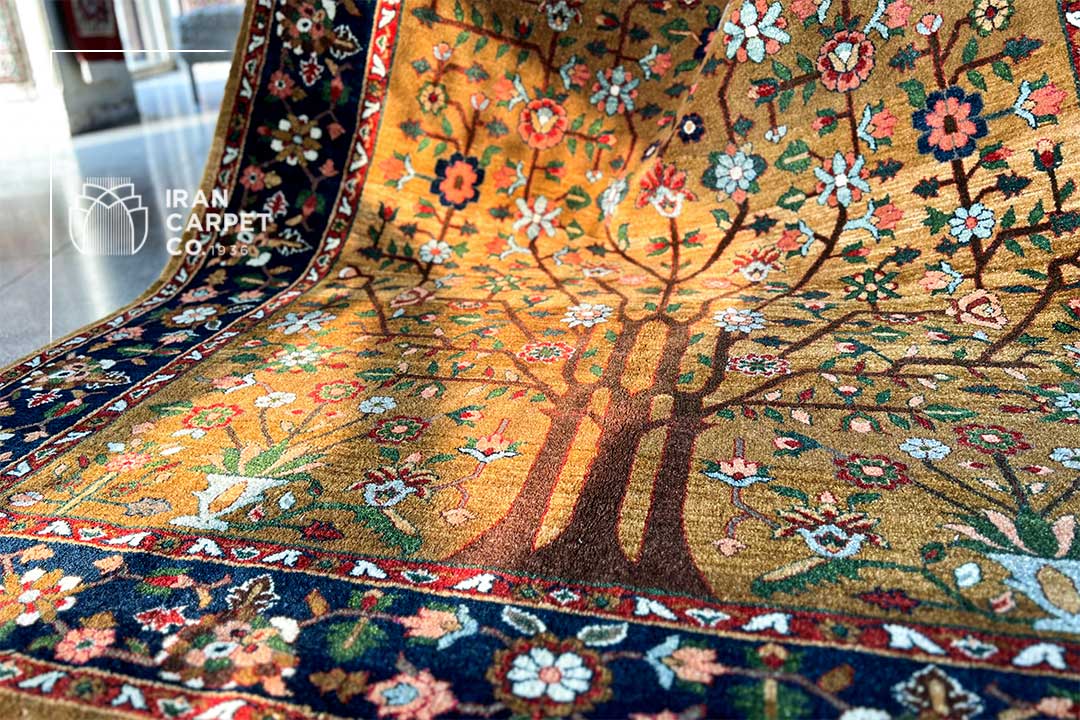
Name and description
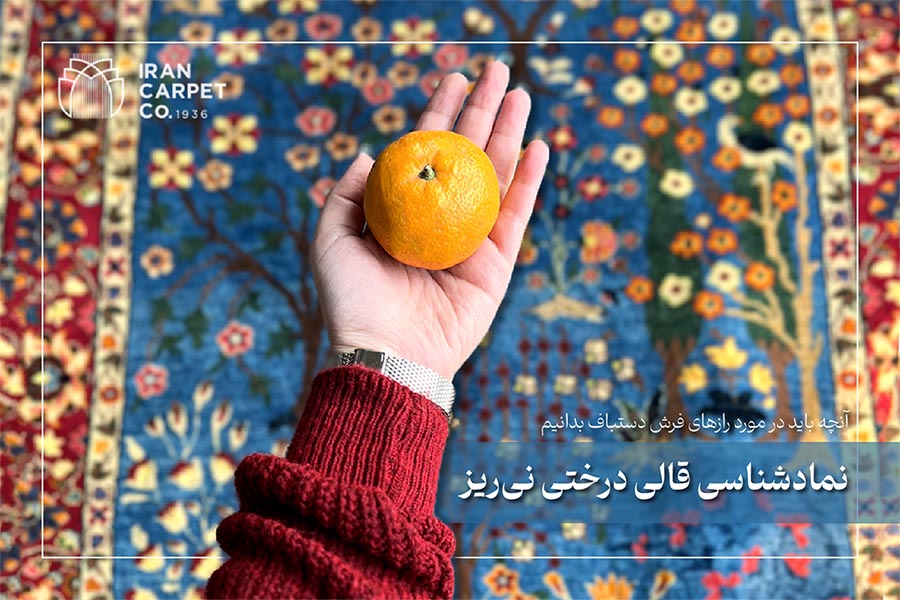
Among researchers, Neyriz tree carpets are known as “three-trunk” carpets, since the tree’s trunk is formed from three sections, sometimes aligned uniformly and sometimes arranged unevenly. In many surviving examples, the branches are numerous and densely clustered, and all bear flowers; for this reason, the design is also known as the “thousand-flowered three-trunk tree.” Alongside the flowers, various fruits appear on the branches, and sometimes several birds—three or five—are shown among them. In some examples, animals such as lions, peacocks, or goats appear at the foot of the tree, sometimes in symmetrical pairs, as guardians.
Origins As noted at the beginning of this article, these carpets originate in the Neyriz region of Fars Province, near Shiraz, particularly in the Meshkan rural district. The history of this design in Fars Province dates back to the Safavid period. The oldest surviving example of the design is found in the tilework of Khan School in Shiraz, dated 1024 AH (993 SH / 1615 CE).
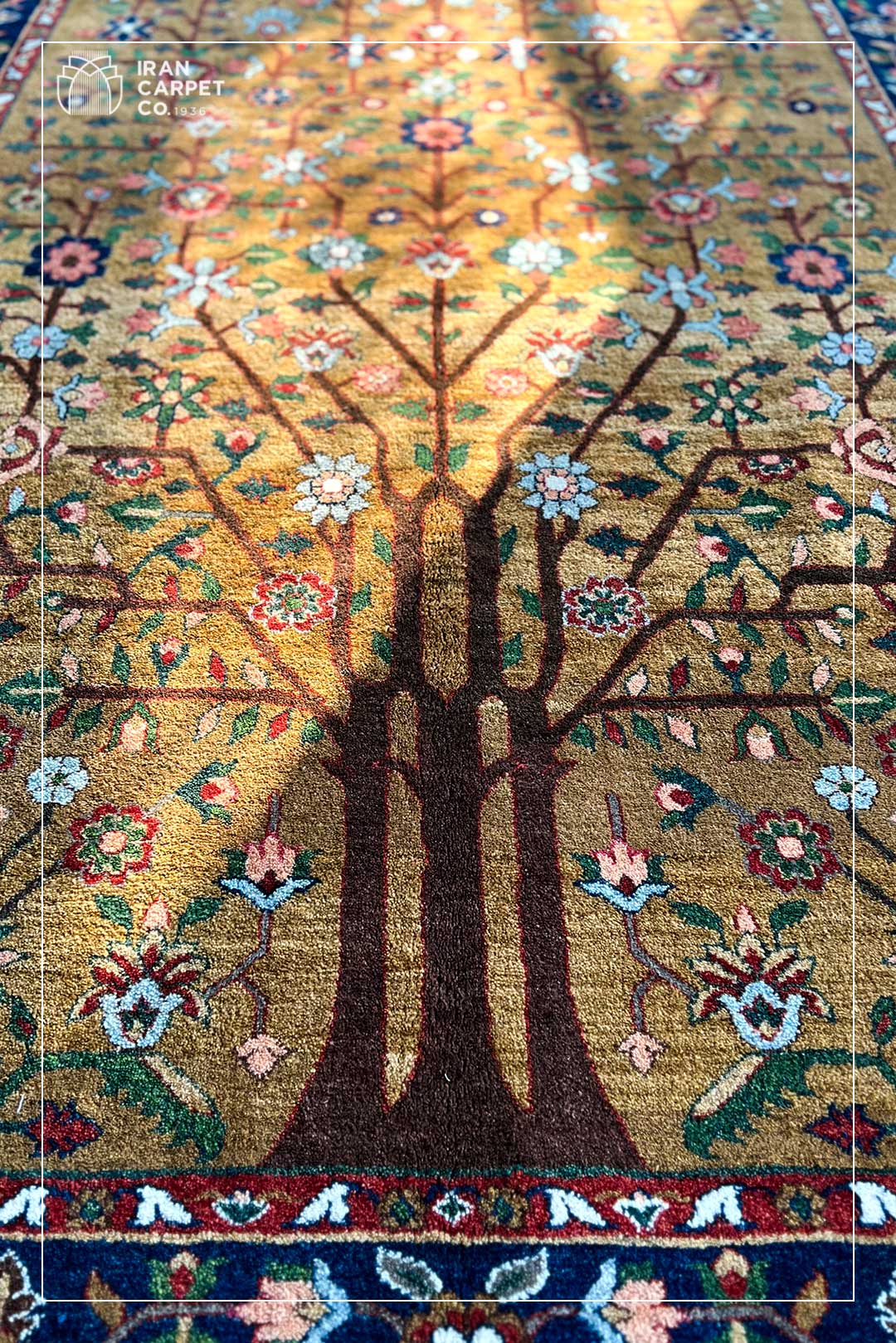
Tracing its origins
Research suggests that the underlying idea and origin of the three-trunk tree design lie beyond Iran’s political geography, yet within the broader sphere of Iranian culture. The sole surviving depiction of a three-trunk tree is in a Manichaean wall painting at the Bezeklik sanctuary in Turfan, Chinese Turkestan. This image may indicate that the three-trunk tree was one of the fundamental symbols and motifs of Manichaeism, surviving from an enduring tradition whose other traces—including other written and pictorial works of the Manichaeans of Iran—have been lost.
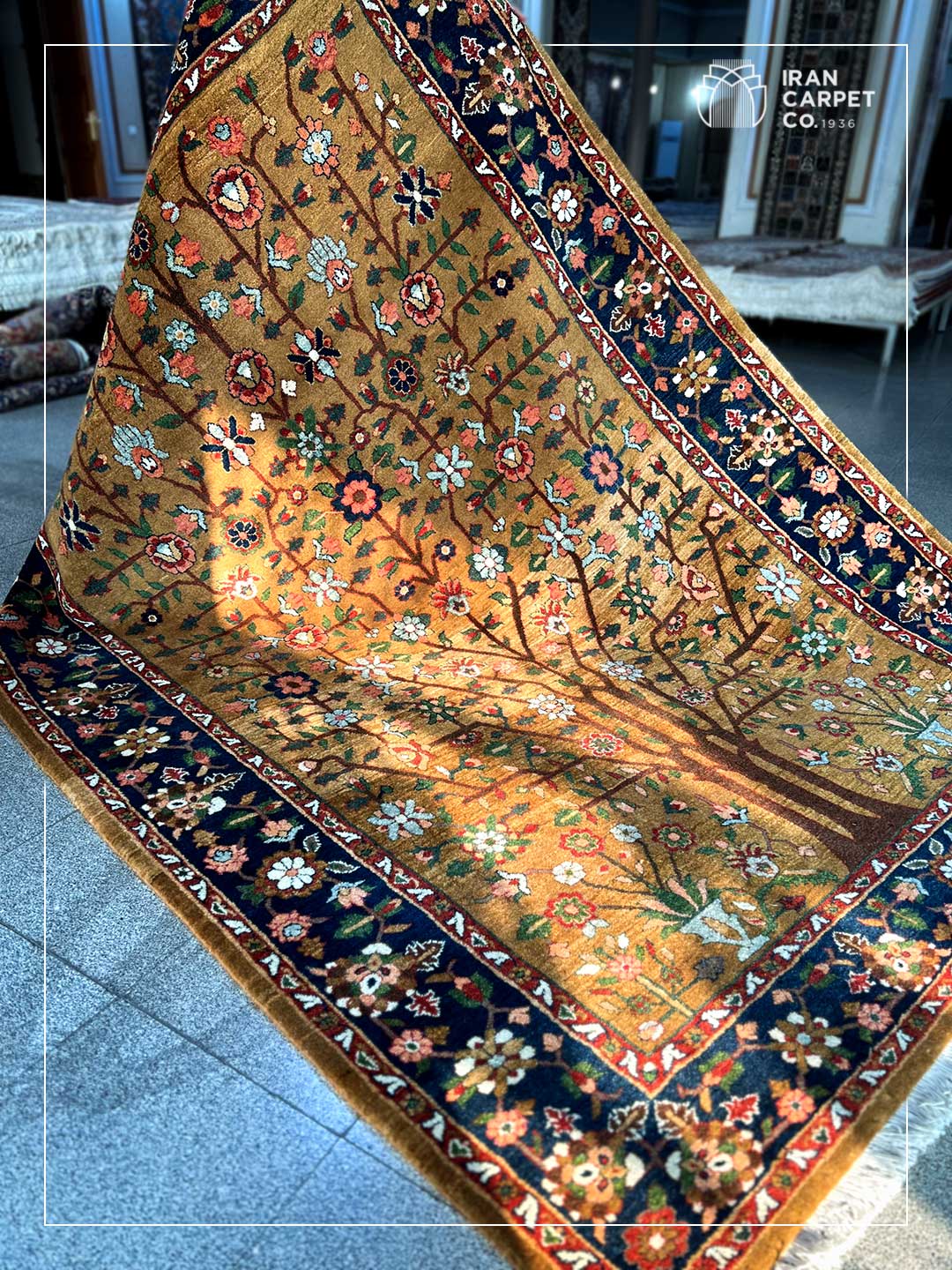
Interpretations of the Manichaean tree
Various interpretations have been proposed in attempts to decipher the Turfan three-trunk tree, most of them based on the many triads found in Manichaean thought. One interpretation sees it as a symbolic embodiment of “Light, God, and Spirit.” Another identifies it with “the Father of Greatness, the Mother of Life, and the Primal Man (Ohrmazd).” A third possibility is that it represents the three Manichaean times: past, present, and future.
The scholar of Manichaean art Klimkeit believes that this Manichaean motif may encode and symbolize the “Land of Light” or the “Realm of Light,” which in Manichaean belief encompasses three lands: the north, west, and east. The fourth land, the south, is the “Realm of Darkness.”
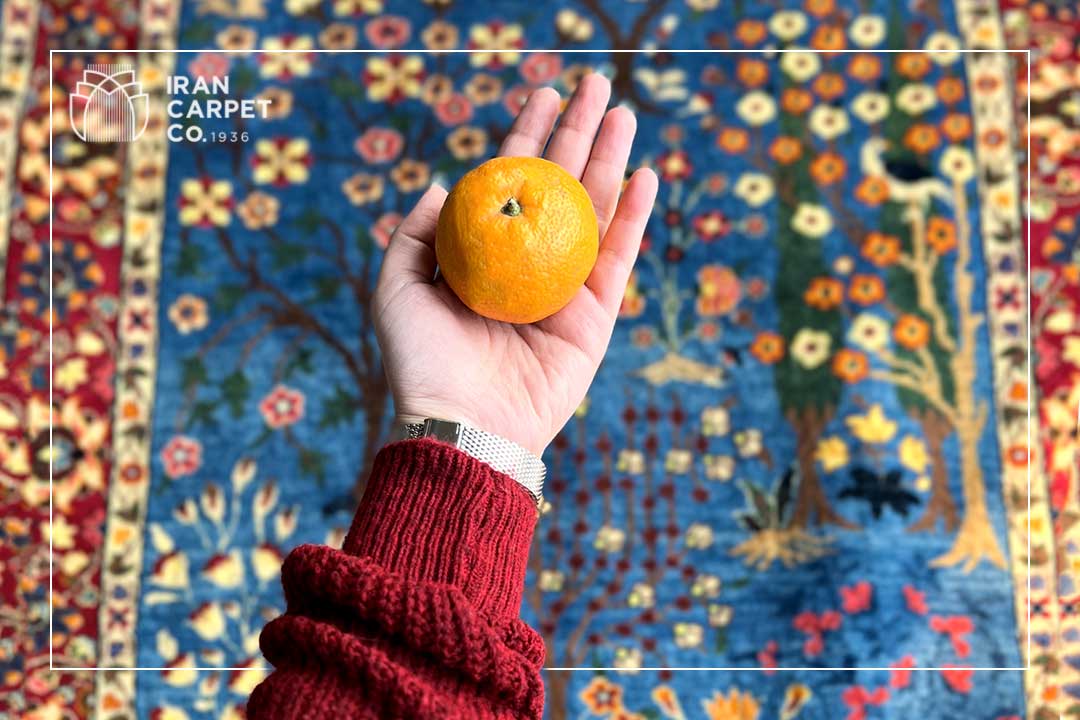
As the oldest active institution in the field of handwoven carpets, Iran Carpet Company has set out to use its production capabilities to recreate some of Iran’s overlooked carpet designs. The “Three-Trunk Tree” is among the first designs to be reproduced; examples have been made and offered through the Kashmar branch. The Production Division has sought to ensure that the resulting carpet closely resembles those made in its place of origin. At the same time, in response to the needs of contemporary buyers, the dimensions have been increased, and the carpet has been woven to an area of six square metres.
This piece is woven with hand-spun wool and natural vegetable dyes, at a 30-raj knot count (measured over 6.5 centimetres).
View more images and order this piece
Abdolhossein Qasemnejad Handwoven Carpet Specialist