Carpets of a Different Class
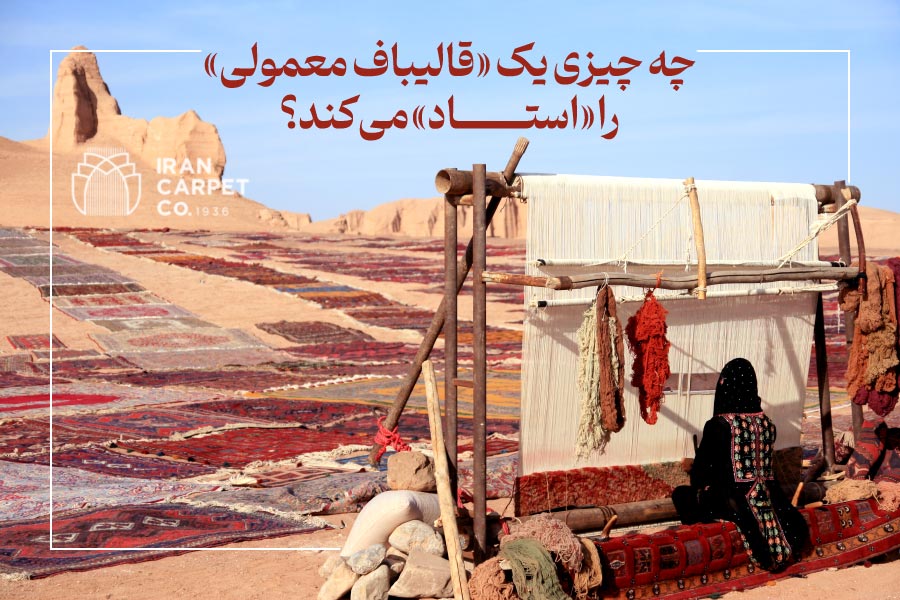
Magnificent Persian carpets, with their captivating creativity, have the power to transform an interior into something almost magical. Yet few names of master weavers whose work surpasses the ordinary have endured. What makes a carpet weaver a true master?
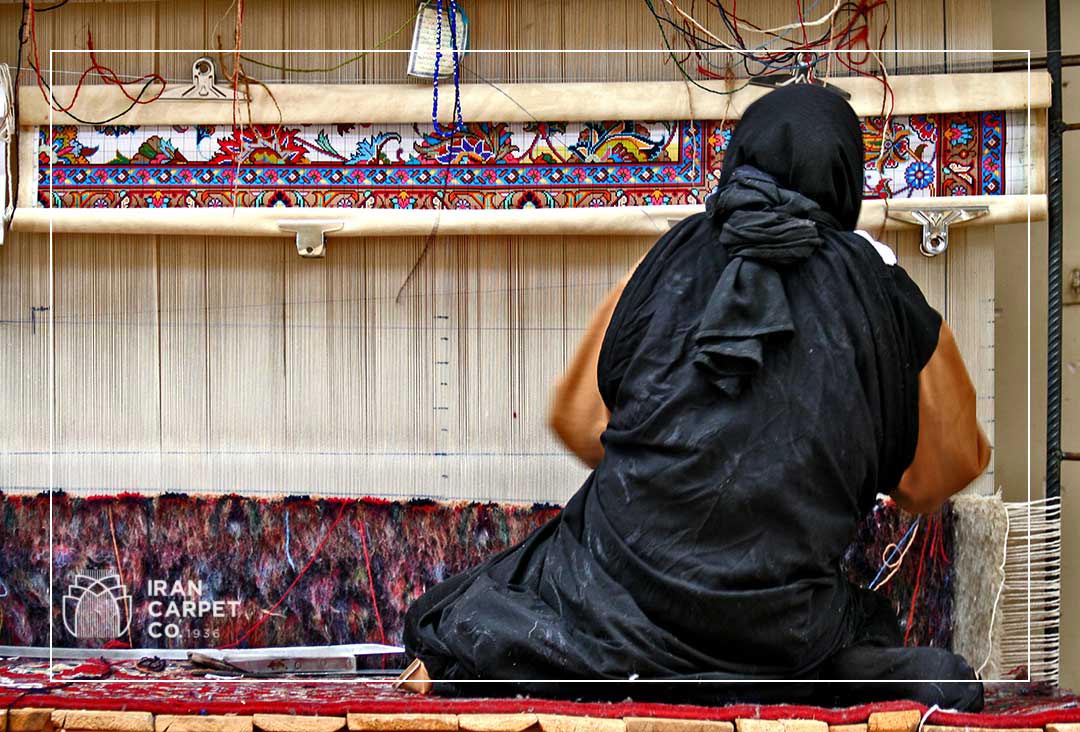
Weavers of village and tribal carpets learned their craft through the oral transmission of traditions from one generation to the next. Many of these weavers could neither read nor write. Even so, their work is admired for its folk-art sensibility, the simplicity of its patterns, and its inherent artistic appeal. By contrast, carpets made in cities were more likely to be woven by people who were literate. These weavers may have attended a formal school to learn and refine their carpet-weaving skills.
Among carpets woven in production centers such as Tabriz, Isfahan, and Kerman, one occasionally finds signed pieces. They bear the weaver’s name, or sometimes the name of the weaver’s family. In many cases, their designs reflect a particular school of artistic thought, and, for the most part, their varied designs still adhere to a set of standards.
Carpets woven in both rural and urban settings have qualities that give them a distinctive character. At times, however, we encounter a carpet that stands apart as a singular example: its colors and design come together in a captivating way, and its quality is nearly flawless. These are the works of master weavers, true artists of their craft. Master carpet weavers can readily be compared to the great painters of the Italian Renaissance, such as Leonardo da Vinci, Michelangelo, and Sandro Botticelli.
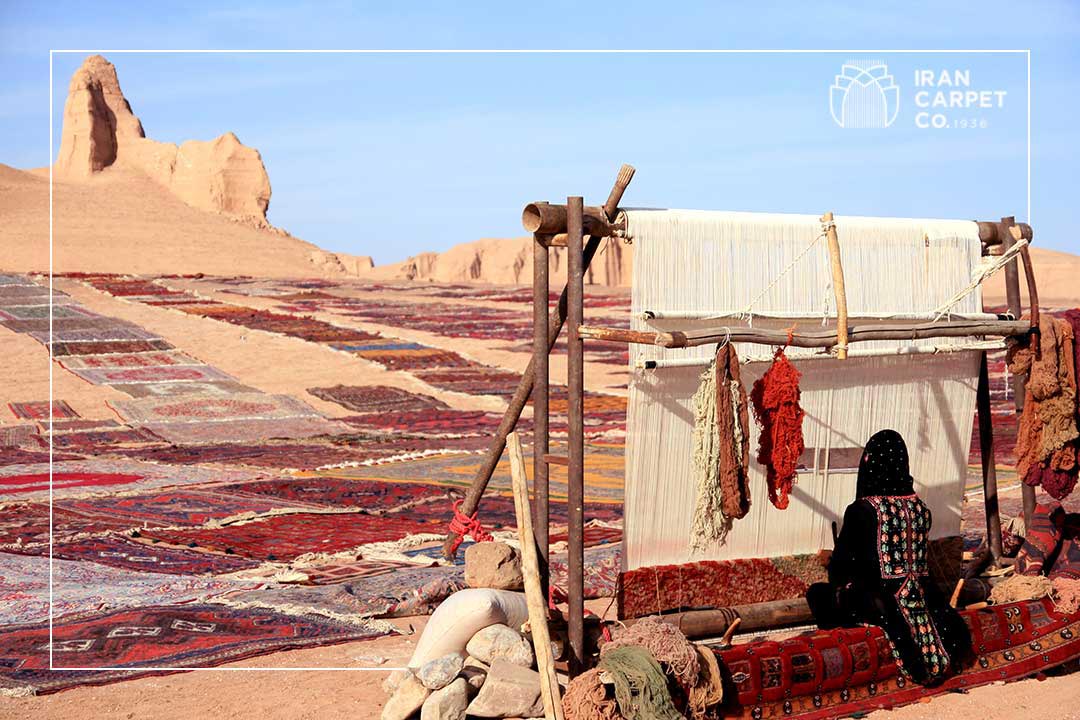
What makes an “ordinary carpet weaver” a “master”?
To answer this question, it is important to consider two essential questions:
- First, what makes a carpet good or high-quality?
- Second, what constitutes an original work of art?
The first important consideration is execution.
• A master weaver’s work is flawless.
• Their work brings together high-quality materials, carpet-dyeing techniques, artful design, and exceptional color combinations.
• Although this is not always the case, one hallmark of carpets woven by master weavers is a high level of detail within the motifs. This is achieved by weaving carpets with a high knot count. In other words, these carpets have a greater knot density and a higher knot count per raj. In addition, the warp and weft used in such finely woven carpets must be sufficiently fine to accommodate the details of the design. This, too, demands highly skilled weavers.
It is also important to understand that a master weaver does not carry out the entire process alone. They are often the designer of the pattern, the selector of colors, the supervisor, and the quality controller. They must then bring together a team of skilled spinners, dyers, carpet weavers, and others to execute the design. Often, these carpets are commissioned by wealthier clients or, at times, public institutions.
The works of master weavers are often, though not always, woven on a large scale. They are not usually intended for an ordinary home, but rather for display in a public building, palace, religious site, or distinguished estate.
Because of their high knot counts, masterfully woven carpets often take years to complete. These masterpieces are works of dedication—truly passionate works of art. When the weaving is finished, their weavers sign them with pride. This is not always the case, but if you happen to find a signed carpet, it may point to a remarkable work.
Master weavers were rarely the artisans whose hands physically created the pieces. Rather, drawing on their knowledge and skill, they closely supervised the artisans throughout the process to achieve an exquisite result. Some of these carpets are very large, and would take one person an extraordinary amount of time to weave. Such carpets were made by teams of weavers who worked at their craft all day—sometimes around the clock in multiple shifts. Master weavers selected their teams carefully and closely monitored their work throughout the process.
The ability to create masterpieces did not arise by chance; these weavers had to undergo years of rigorous training. One form of training was formal instruction under parents, acquaintances, and relatives recognized in the profession. Another was study at an institution under masters of the field. These included the “School of Fine Arts” and “Sanaaye Mostazrafeh” in Tehran, the Ark School in Tabriz, and the “School of Fine Arts” in Isfahan. Years of study and training in a formal setting are what distinguish masters from artisans. Carpet weaving is a field in which designers and artisans come together to create a work that stands out as fine art and offers a remarkable example of the state of the art at the time of its creation.
No two are alike, just as there are no two Mona Lisas or Sistine Chapels. Someone may produce a similar work, but there is only one original. The same can be said of the works of master weavers.
Renowned master weavers such as Mohtasham Kashani, Haji Jalili of Tabriz, and Hossein Kermani created some of Iran’s finest known antique carpets. Other carpets are known not for the weaver who made them, but for the company that commissioned them. One example is Ziegler & Co., which commissioned high-quality carpets from Iran’s Arak region for Western tastes. These prized pieces stand out for their weave quality, decorative designs, and colors, which depart from traditional Persian compositions.
Faezeh Ghaderi Senior Handwoven Carpet Specialist
Photo Album (6)
Related Reading
All Journal & Blog Research Articles
Symbolism of the Neyriz Tree Carpet
Among researchers, Neyriz tree carpets are known as “three-trunk” carpets, since the tree’s trunk is formed from three sections, sometimes aligned uniformly and sometimes arranged unevenly. Read more about this carpet in this article.