
Research Articles
Why Did Eastern Carpets Fall Out of Favor with Europeans?
Apr 11, 20226 min readIran Carpet Company
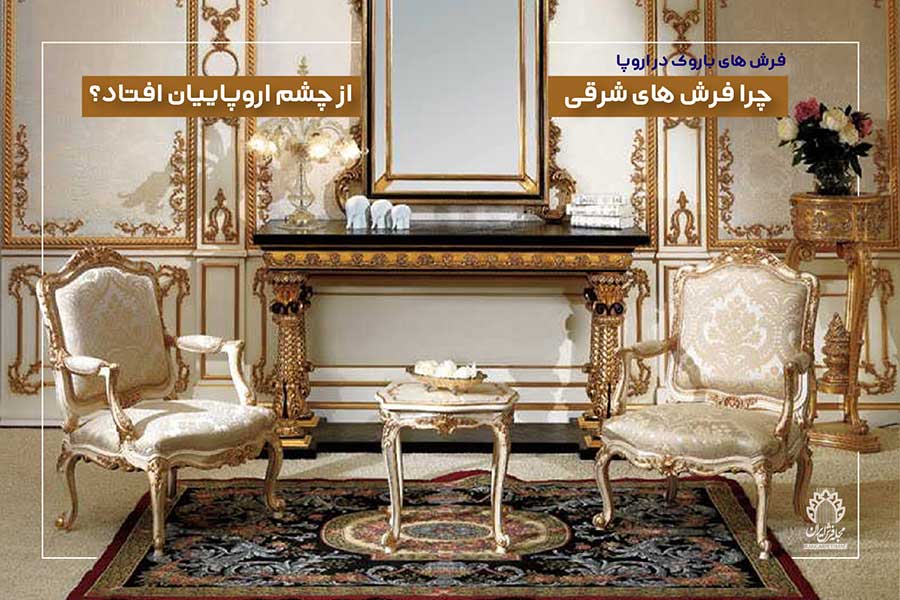
At least from the fourteenth century onward—and even earlier—Europeans, especially the aristocracy, had long cherished Eastern carpets, which were among the most important goods imported into Europe. Yet over a period of roughly a century, this bond and affection began to wane, and Eastern carpets fell out of favor with Europeans; carpet imports to Europe also declined during this period. This era roughly coincided with the beginning of the Baroque period, when European aristocrats preferred to buy carpets woven in Europe rather than Eastern ones.
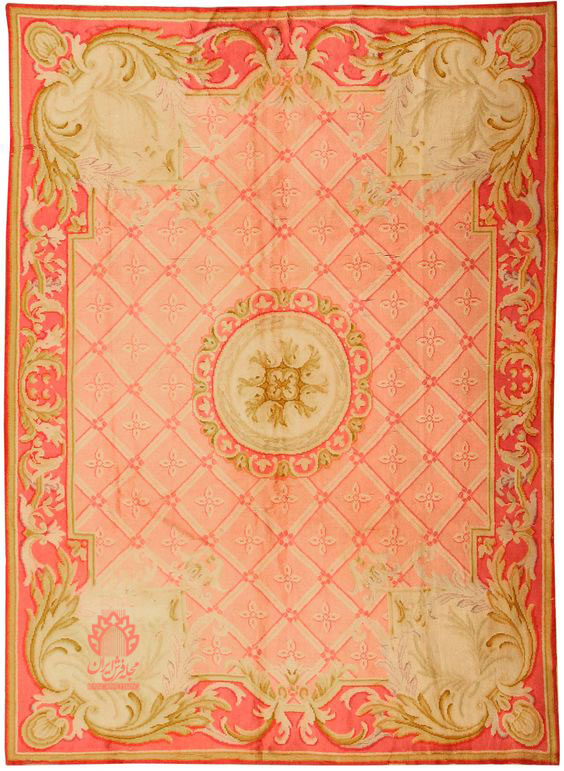
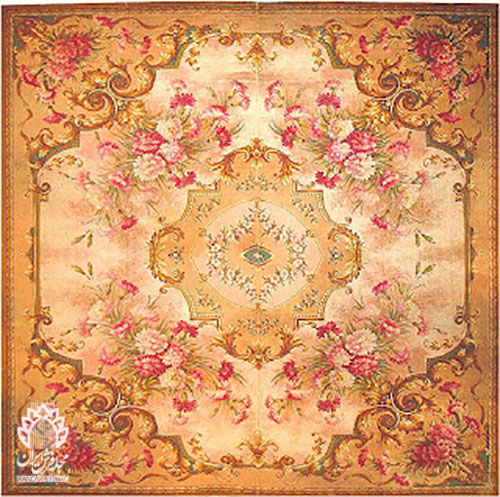
European carpets, whose production began around 1644, bore no resemblance to Persian and Turkish carpets—the kinds we see in Renaissance paintings. Their designs, motifs, and colors instead drew inspiration from Baroque architecture, and European designers sought to create carpets suited to the décor of Baroque palaces. One of the pioneers of this movement was the Savonnerie carpet manufactory in France.
These new European carpets were not simply imitations of, or loosely inspired by, the motifs used in Baroque architecture. Interior designers went a step further, reproducing and weaving the wall and ceiling ornamentation directly onto carpets—a formidable task for Europeans with little experience or tradition in carpet weaving, despite their considerable skill in painting and architectural decoration. They had also learned from Eastern traditions that carpets woven for the floors of mosques or palaces might echo the designs and motifs beneath the dome or ceiling above. In any case, the Baroque style, which spread throughout Europe, and the Rococo style that followed it, embodied the power and magnificence with which Europe wished to be identified. They also reflected the military advances and rapid economic growth of Europe during that period.
In France, the Savonnerie and Aubusson manufactories flourished; in England, so did Axminster and Wilton. Their carpets came to dominate European markets. But it would be wrong to assume that Europeans had entirely lost interest in Eastern culture and its expressions. During the Baroque period, as enthusiasm for Eastern carpets ebbed, a movement in European popular and artistic taste was taking shape—one we now call Turquerie. Trade and cultural exchange with the Ottomans had introduced Europeans to Eastern ways of life and aesthetic tastes, particularly those of Anatolia, and captivated them. Turquerie was a fashion and style based on the imitation of Turkish-Ottoman art and culture that took hold in Western Europe from the sixteenth through the eighteenth centuries, especially in France. It had a profound influence on Western décor, painting, and music. In eighteenth-century Europe, for example, Turkish dress and smoking Turkish tobacco from a Turkish pipe became fashionable, while carrying a Turkish-style ornamental watch signaled high social standing.
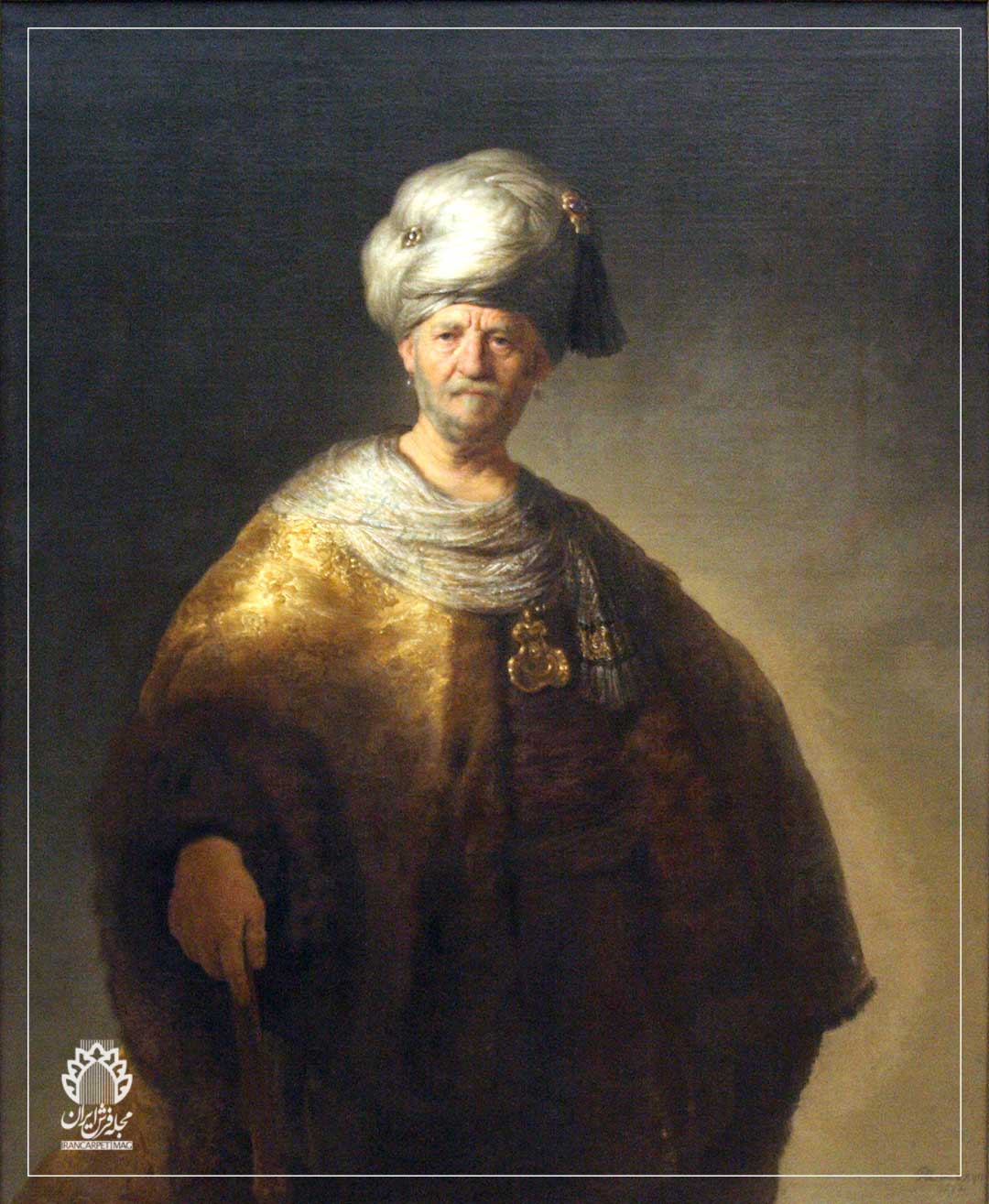
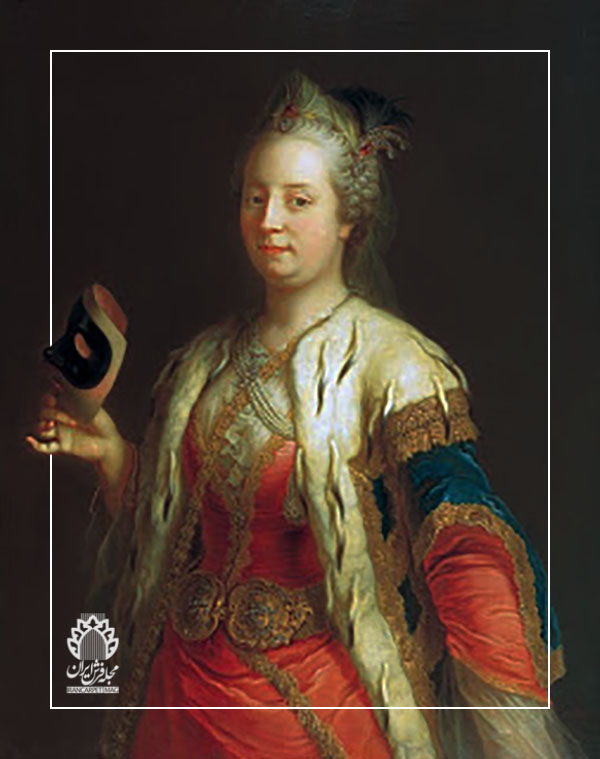
The emergence of an Eastern style and fashion in Europe is remarkable. More remarkable still is the fact that carpets were not part of it. This may be one of the most puzzling questions in the history of carpets, and a difficult one to answer. Nevertheless, Turquerie encompassed décor, clothing, textiles, and the design and ornamentation of porcelain wares; in today’s terms, it was a mark of “chic.” But how did Europe become enamored with Ottoman culture?
Until around 1650, the Ottoman Empire was Europe’s most formidable neighbor. In a remarkable period of expansion, it had annexed a large part of Eastern Europe, including Greece, as well as extensive territories in North Africa. Gradually, however—and particularly after the Battle of Vienna, which had grave consequences for the Ottomans—they abandoned further expansion into Europe. Although parts of Eastern Europe remained under Ottoman rule for another two centuries, fear of the Ottomans receded, and Eastern culture, with all its mysteries, slowly found its way into Western Europe. Europeans were now encountering an enemy they no longer feared, and so they grew interested in Ottoman culture and art. Even the custom of drinking coffee, which had traveled from Istanbul to Venice, spread throughout Europe.
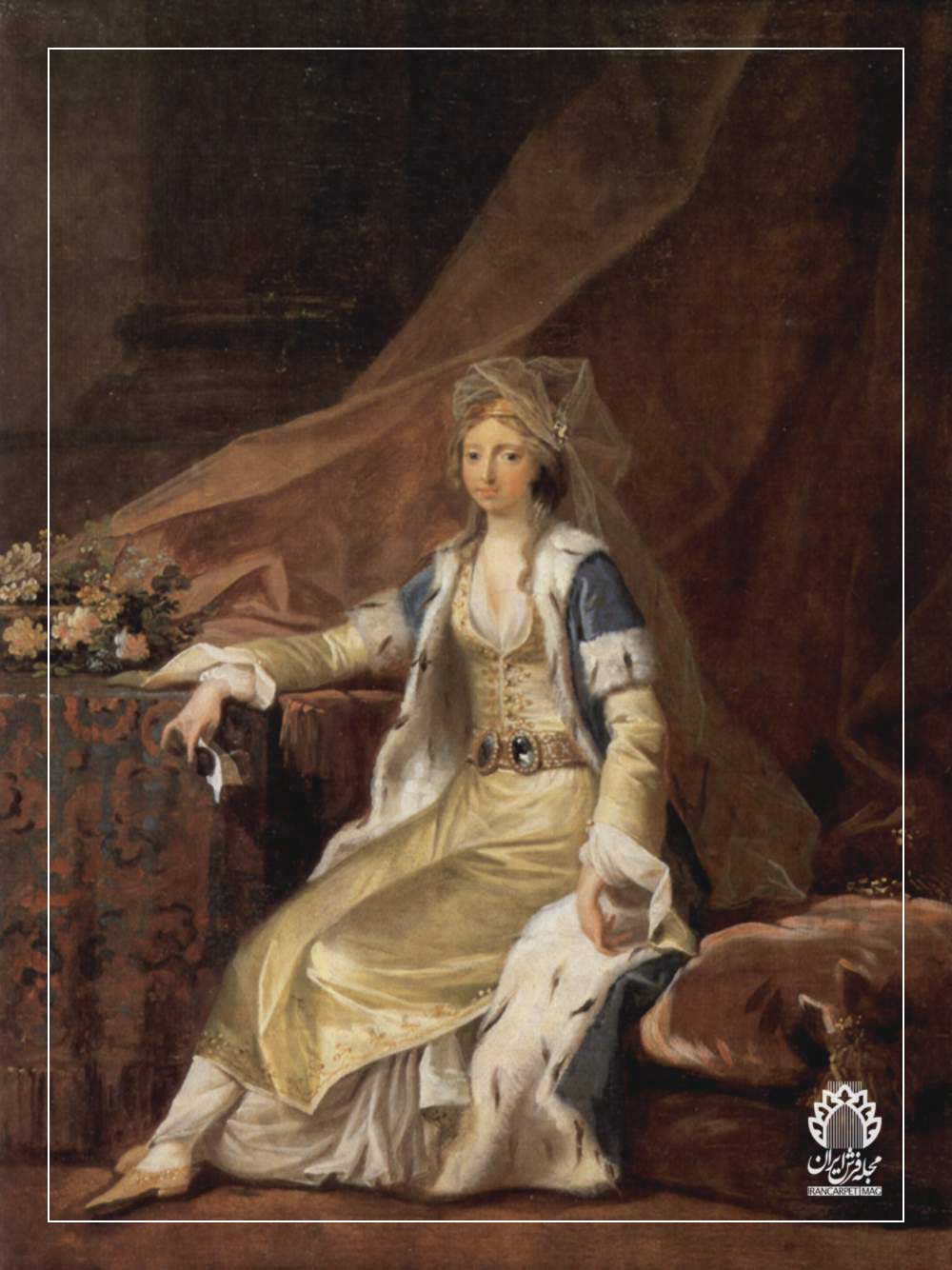
Like any fashion, Turquerie blended reality and fantasy. In particular, ordinary Europeans had not yet traveled to the East, and their ideas of it were largely fanciful and unrealistic. Although the use of Eastern carpets declined during this period, European painters depicted nobles and aristocrats in Turkish dress, seated on Eastern carpets, to evoke a stronger sense of the Orient. The image opposite, for example, is a portrait by Jens Juel of Louise Augusta of Denmark and Norway, with a Safavid (Polonaise) carpet spread across a table beside her.
All these examples show that Europeans of the period ought to have valued the carpet—the foremost symbol of the East—even more. Yet, in this particular regard, European taste took a different path. While aristocrats displayed their Eastern carpets during the Renaissance, in the Baroque period French and English carpets became symbols of wealth.In reality, Turquerie was an exciting but fleeting fashion that did not encompass every aspect of European taste and aesthetic sensibility. Some traces of it can still be found in European culture today.
From 1750 onward, Europeans once again welcomed Eastern carpets. One reason was the high cost of producing carpets in France and England, which made them expensive; consequently, imports of Eastern carpets to Europe rose significantly. Napoleon’s campaign in Egypt in 1798 was another factor, bringing ordinary Europeans into closer contact with the East. The era of imagining the East had now come to an end, and a new period in European art began—one that brought Westerners face to face with the reality of the East: the era of Orientalism.
Compiled by: Dr. Davoud Shadlou Faculty member, Department of Carpet, Shiraz University of Art
 Research Articles
Among researchers, Neyriz tree carpets are known as “three-trunk” carpets, since the tree’s trunk is formed from three sections, sometimes aligned uniformly and sometimes arranged unevenly. Read more about this carpet in this article.
 Research Articles6
Magnificent Persian carpets, with their captivating creativity, have the power to transform an interior into something almost magical. Yet few names of master weavers whose work is of exceptional quality have endured. What makes a carpet weaver a true master?
 Research Articles23
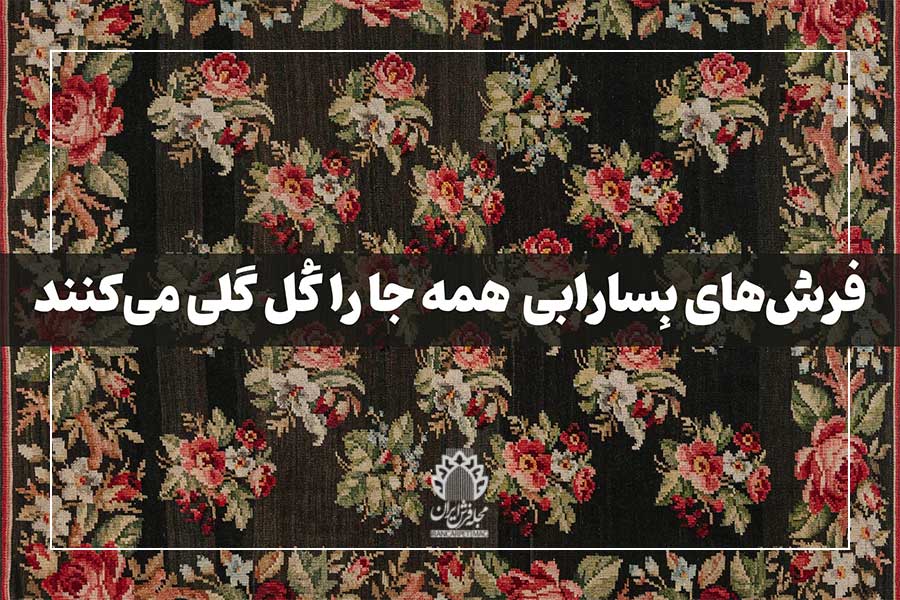
Bessarabia is a region in southeastern Europe, north of the Caucasus Mountains in southwestern Russia. It borders Romania to the south and the Black Sea to the east, and lies between the Prut and Dniester rivers.