Which Carpets Are Worth Restoring?
One of the most common, seemingly simple questions we ask about antique carpets is whether they are worth restoring. Often, the question centers on the carpet’s value rather than its aesthetic qualities. Read on to find out more.
How can you tell whether your carpet is worth the cost of restoration?
The answer depends on several factors. The main point, however, is this: restoring your carpet affects its value. In some cases, restoration increases its value; in others, it may diminish it—especially if the work is poorly done. Authentic carpets—whether inherited heirlooms, valuable antique knotted carpets, or the work of a gifted artisan—are investments. Time and creativity have gone into making them, and they deserve proper care and attention from their owners to preserve them for decades to come. But is every carpet worth the expense? We know that while some carpets hold sentimental or emotional value for us (something that cannot be measured in money!), for others, the cost of restoration may not be justified. In that case, it may be better to forgo repair and restoration—unless you still wish to have the work done.
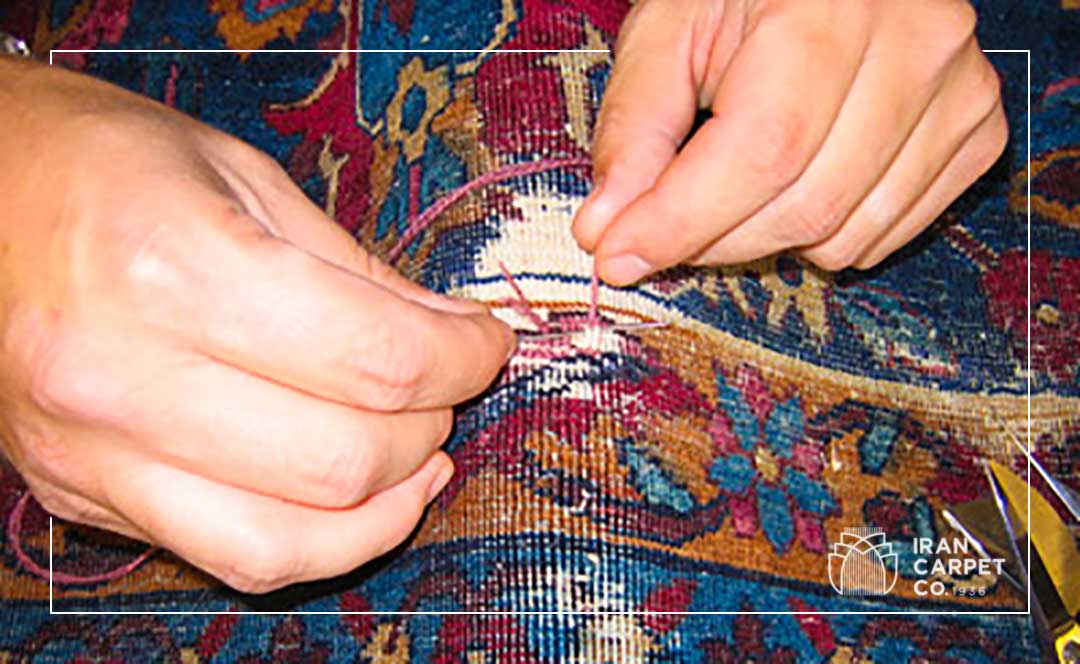
When a carpet is damaged, the first question should be whether it is worth investing in its restoration.
The answer depends on whether restoring the carpet will increase its value or make little difference. This is a broad question, and there are exceptions to almost every rule. In most cases, modern carpets do not have enough intrinsic value to warrant restoration. However, if you love a carpet and feel emotionally attached to it, repairing it may be worthwhile. When it comes to antique carpets, a range of factors—including color, design, technique, materials, age, and place of origin—help determine whether restoration is worthwhile.
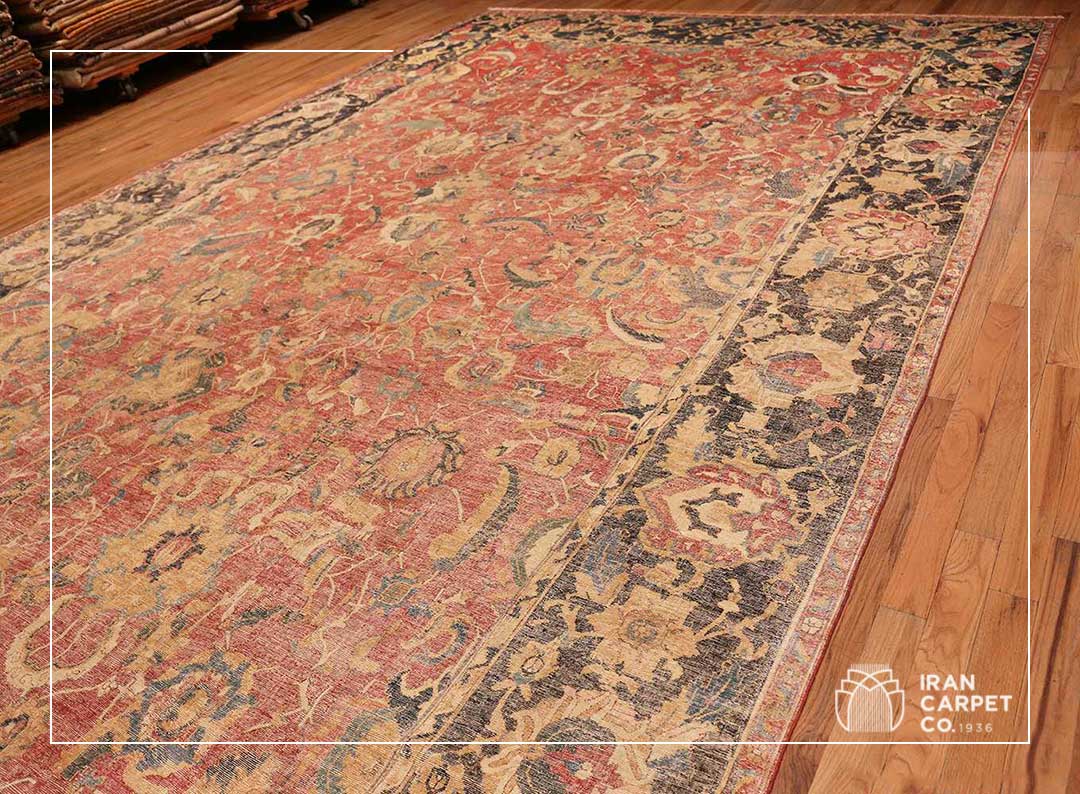
The following points may help you decide whether to restore a carpet.
Carpets that may be worth investing in restoring:
• Carpets that represent a particular historical period, such as Safavid carpets, tend to attract greater interest over time because of their historical significance and rarity.
• Carpets with distinctive designs also tend to attract greater interest over time, such as carpets associated with notable figures, vase carpets, or Tree of Life designs.
• Fine carpets woven by master weavers or reputable manufacturers—such as Haji Jalili, Ostad Mohtasham, Abdolhossein Kermani, and Iran Carpet Company—will always command a high price when they are in good condition.
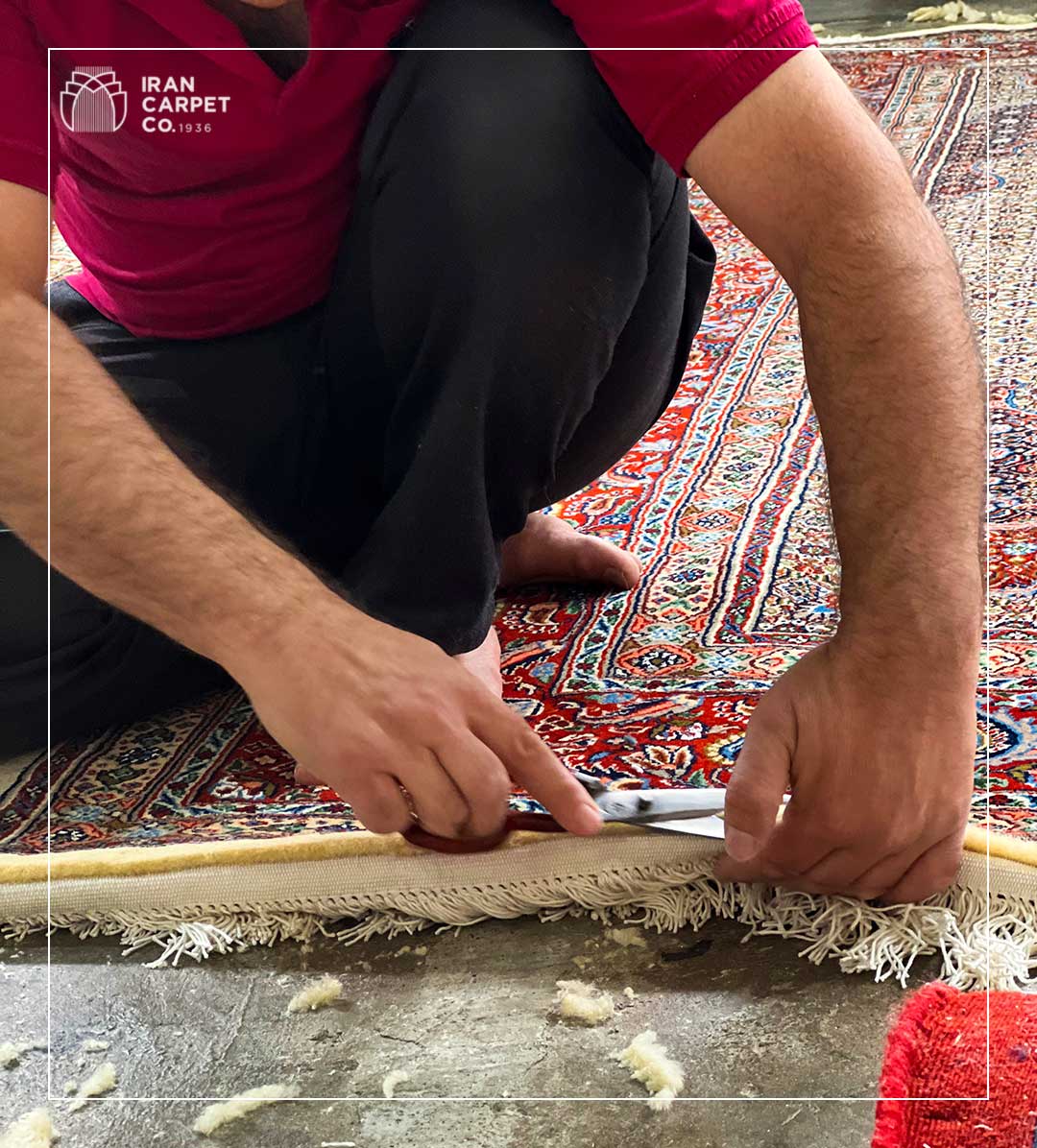
• Fine examples of carpets from specific places, such as Tabriz, Bijar, Kashan, and Heris, are also more valuable.
• Tribal and village carpets are popular and retain their value. However, since not all of them are expensive, the cost of restoration should be weighed against the carpet’s actual value.
Keep in mind that the points above are general observations and do not assess the value of any particular carpet. In general, the more likely a carpet is to retain or increase its value over time, the more it merits investment in care and, when necessary, restoration to keep it sound and in good condition. Entrust the restoration of your investment only to a professional who specializes in old, high-quality carpets.
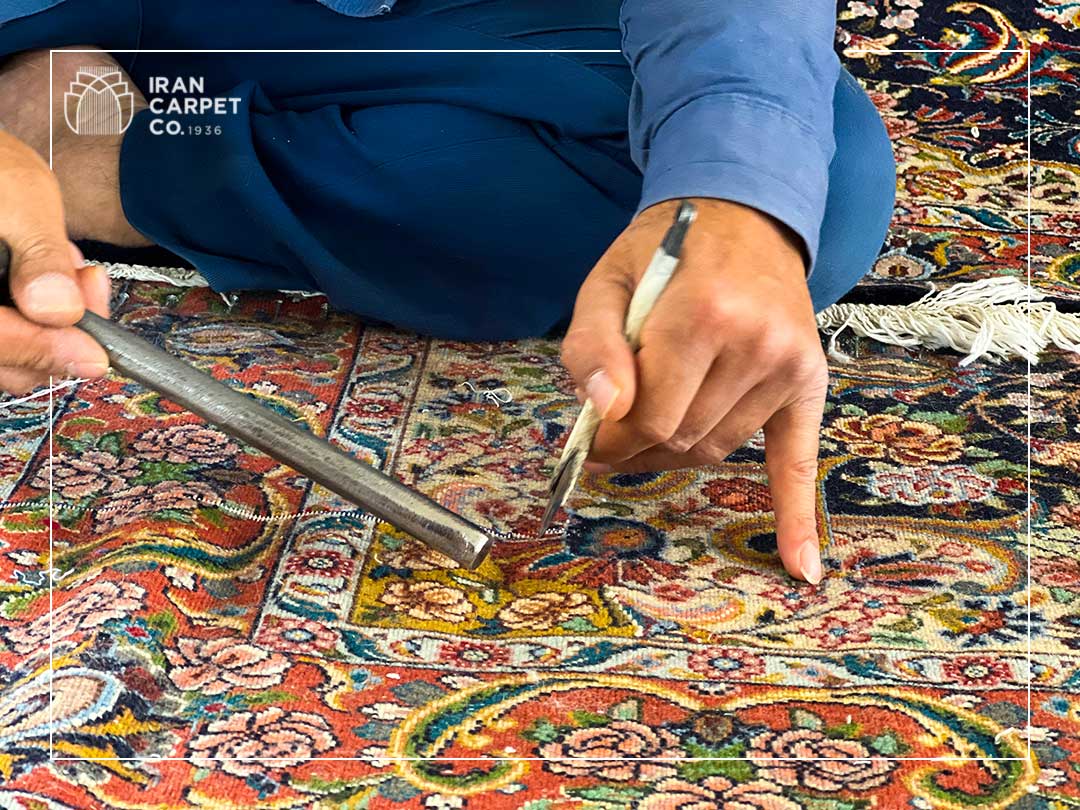
Not all carpet repairs are the same
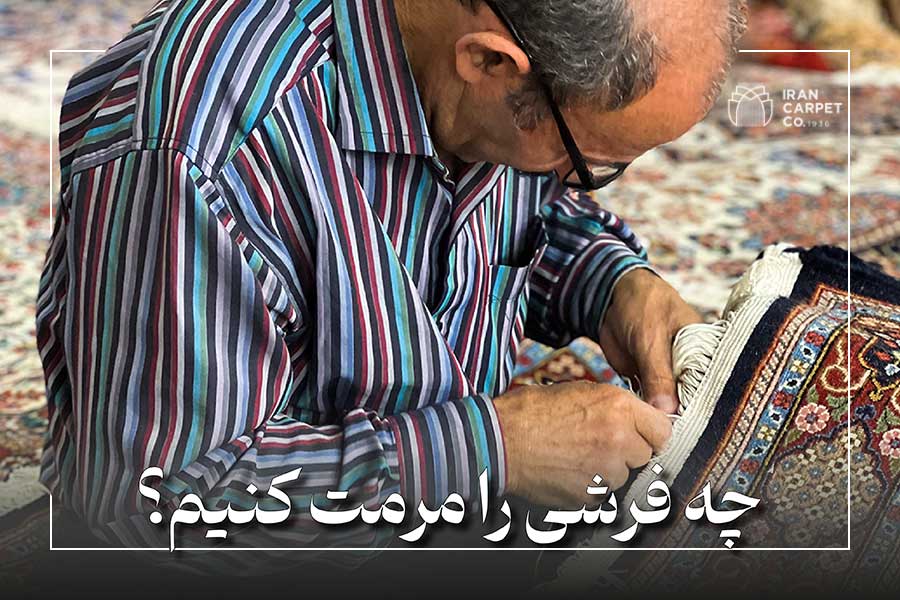
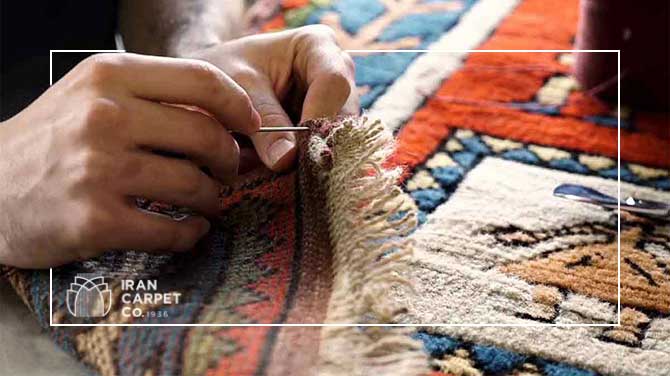
If you wish to restore a carpet that is a valuable investment, or one that holds sentimental value for you, make your decision carefully. Carpet restoration services are not all alike. Restoring an antique carpet often means reweaving and re-knotting it using the precise techniques employed to create the original. Only a highly skilled carpet-restoration specialist can reproduce these techniques so accurately that the restored area is difficult to distinguish. Poor restoration, by contrast, will be conspicuous, spoil the carpet’s appearance, and negatively affect its value. Carpet restoration involves far more than sewing it together. Sewing is not an appropriate method for an antique carpet.
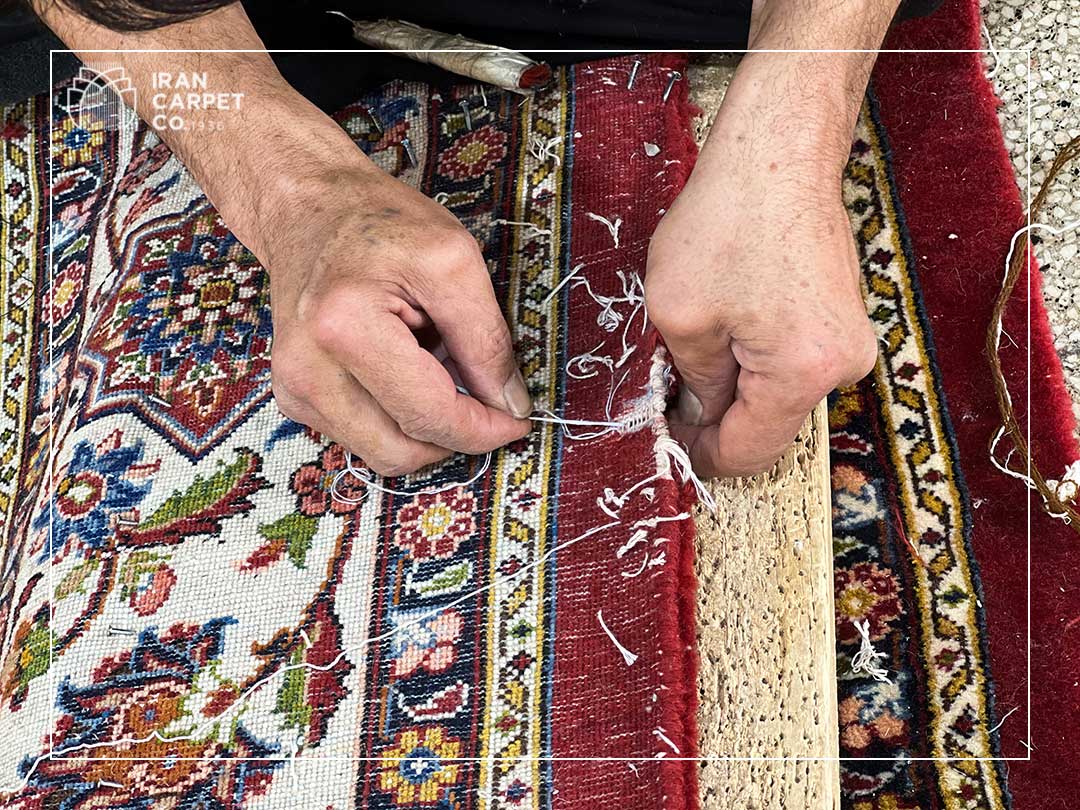
It is also difficult to match the original colors precisely. Many variables affect the colors in a carpet, including the types of dyes used and whether they have faded or changed over time. New colors placed beside the original ones will always be noticeable, but a good restorer can achieve an almost perfect match. Reaching this level takes skill and practice.
Sometimes the answer is not to restore the carpet. There are cases where investing in restoration is the wrong choice—for example, if a carpet has little resale value, or if it is an exceptionally rare, museum-quality collector’s piece. Restoration can reduce the value of a highly collectible, museum-quality carpet. The only exception is when repair is essential to preserve the carpet’s structural integrity and stabilize it against further deterioration. If your carpet falls into either category, consult a specialist before deciding whether to restore it.
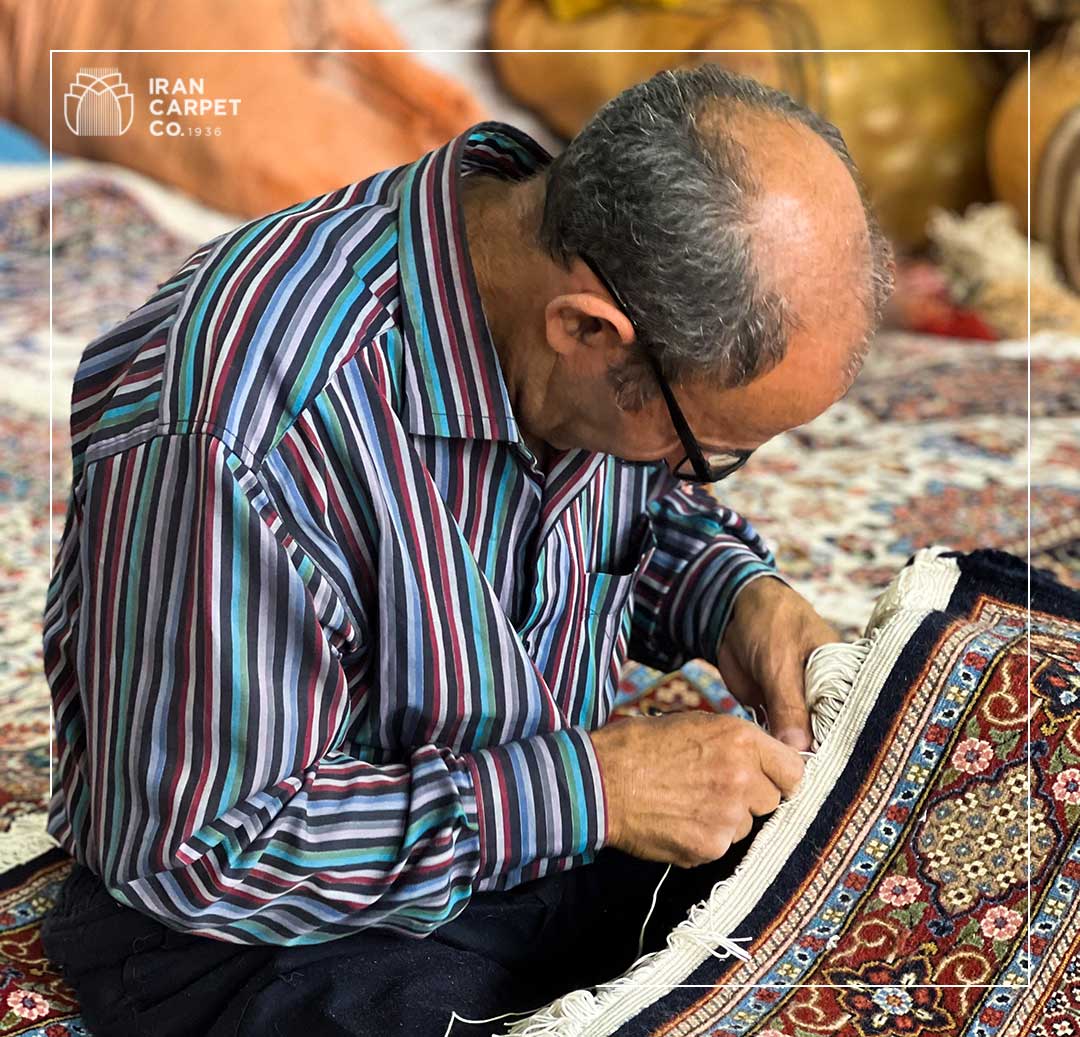
There is currently a design and finishing trend that gives new carpets an aged appearance. But why settle for an imitation when you can own an authentic carpet? A carpet that shows its age can suit many different décor styles and effectively soften the starkness of a modern interior. These carpets can bring new life to your spaces.
Deciding whether to restore your antique carpets:
As you can see, the decision to restore a carpet depends on a range of factors. It is always best to discuss your particular circumstances with an experienced specialist. If you decide to restore your carpet, be sure to ask about the different methods available. It is also a good idea to see examples of the quality of the work; ask the company or individual you are considering to provide them. Antique carpet restoration is not a simple process, and it is a significant investment in its own right. It is therefore important to choose someone experienced and trustworthy who can do the work properly. This is a decision you will have to live with, so make sure you choose a qualified specialist.
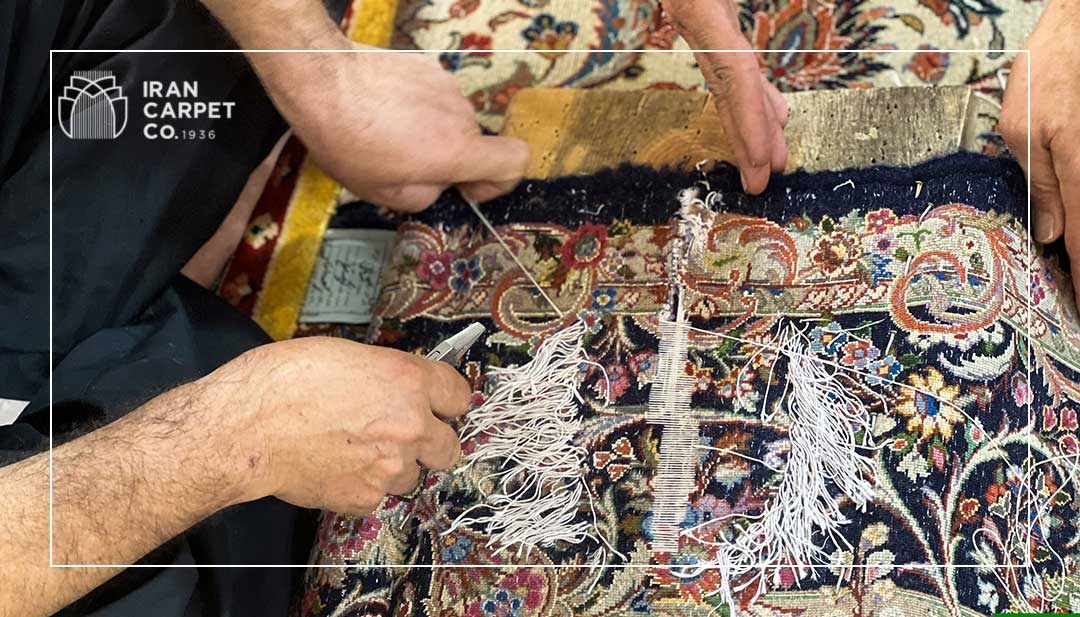
Antique carpet restoration: The aim of restoring a rare, antique, or valuable carpet is to recover its original beauty and physical integrity, which may have suffered through use and the passage of time. The time and cost involved depend not only on the carpet’s condition, but also on its value in relation to the cost of repair. Restoration can make a damaged piece usable and commercially viable again. Ultimately, however, the greatest reward of cleaning and restoring antique Oriental carpets is knowing that a rare and beautiful work of art will be preserved for future generations.
Reversing wear and other damage caused by years of use, rebuilding sections of a carpet, and restoring it all require precise matching of the yarn, color, and shade. This process calls for expertise, training, and a keen eye to identify and recover subtle variations in the carpet’s texture and color.
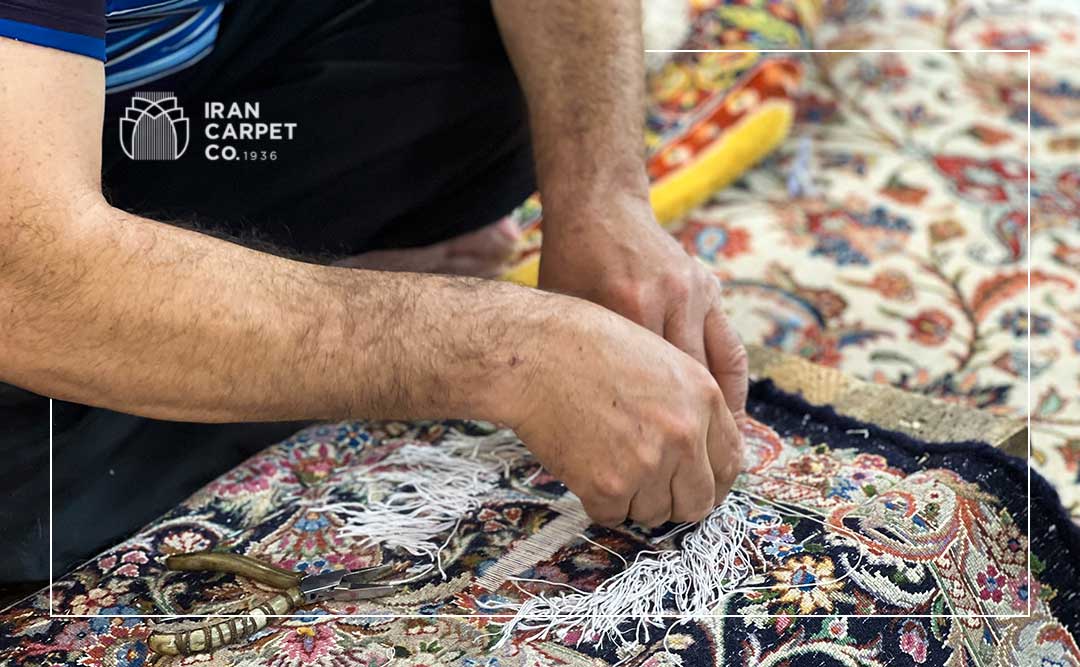
A summary of key points on carpet restoration and repair
• Almost any carpet can be repaired or returned to its original condition.
• Do not throw away used or old carpets that appear damaged! A professional restoration specialist may be able to help.
• To help determine whether the cost is justified by the value of the investment, ask the company or individual to whom you plan to entrust your carpet for an estimate of the restoration and repair costs.
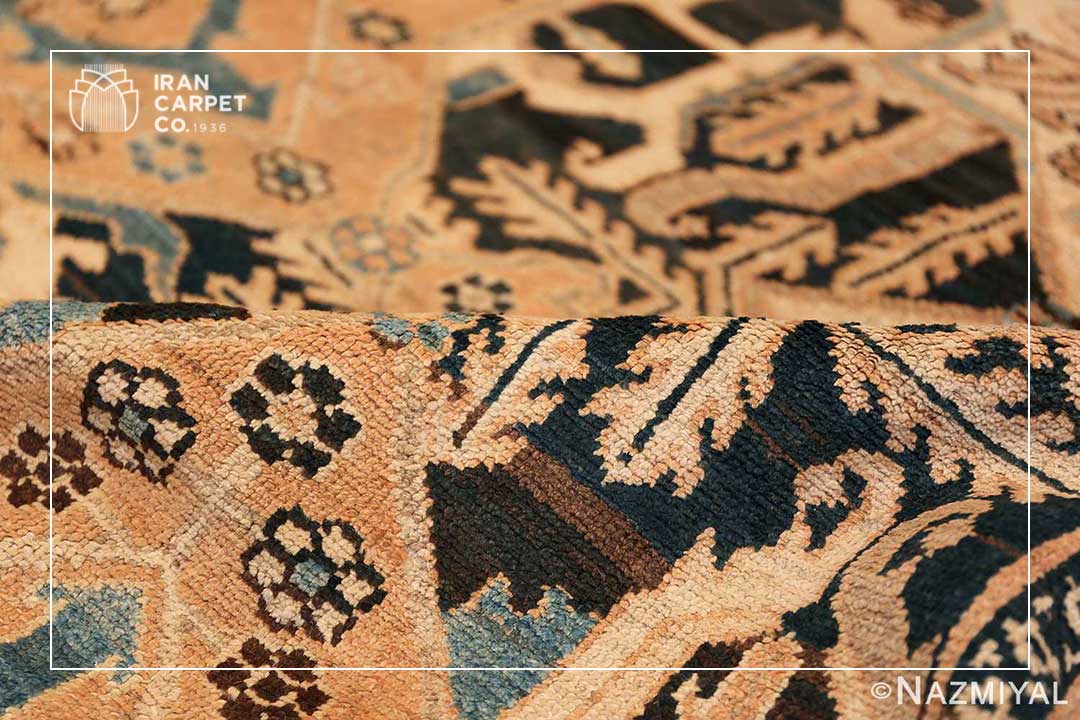
• Remember that regular, consistent care and cleaning by a specialist can prevent costly repairs and preserve the feel and appearance of carpets of every size and style.
• If your carpet needs attention, arrange for repairs promptly to prevent further, more costly damage.
• Minor repairs, such as overcasting the sides, rebuilding the fringe, and straightening the edges, may be done at home if you have the skill, experience, and patience. However, reweaving and correcting carpet distortion require a level of workmanship that only specialist restorers can provide. Trust your carpet restoration only to skilled professionals.
Faezeh Ghaderi Master’s-level specialist in handwoven carpets