Ukrainian Carpets
What written sources tell us about Ukrainian handwoven textiles is as follows:
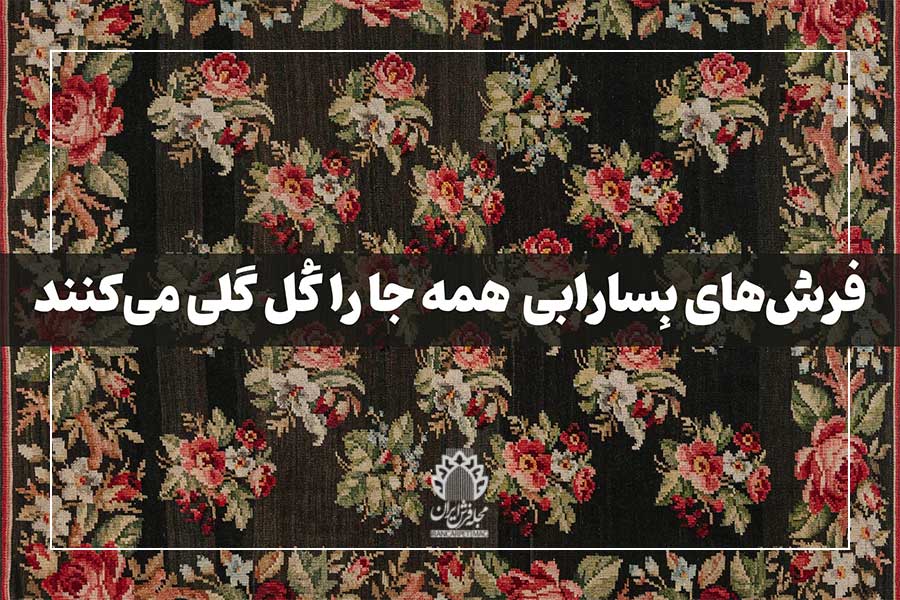
Ukrainian handwoven textiles reveal the influence of French carpets and the Bessarabia region. Fine flatweaves made with supplementary eccentric wefts, traditionally known as “Bessarabian,” were produced mainly in Ukraine. Ukraine is a country in Eastern Europe, sharing borders with Belarus to the north; Poland, Slovakia, and Hungary to the west; and Romania and Moldova to the south. It also has coastlines on the Sea of Azov and the Black Sea. Ukraine is Europe’s second-largest country after Russia, which borders it to the east and northeast. Kyiv is the country’s capital and largest city. Ukrainian is the official* and national language, and most people are also proficient in Russian. For several centuries, Ukrainian territory was occupied by various foreign armies, including the Tatars, the Kingdom of Poland, Lithuania, Sweden, Tsarist Russia, and the Austro-Hungarian Empire. Ukraine gained independence from the Soviet Union in 1991, after the Cold War. Since independence, it has been governed as a unitary republic under a semi-presidential* system.
Pile carpets were woven in Ukrainian manor houses and workshops from the 17th century onward. Their floral designs drew on European styles, particularly carpets from the French reign of Louis-Philippe, which were inspired by Savonnerie models. After the Russian Revolution, pile carpets were woven in workshops, or artels. Tapestry-woven flatweaves with geometric and floral designs were also produced, some bearing Cyrillic inscriptions.
Many of the designs and colors found in Ukrainian weavings resemble those of neighboring Bessarabia, another weaving region. Ukrainian and Bessarabian workshops are believed to have been connected through art and trade. Both regions produced English needlepoint, paisley shawls, and regular lattice patterns. The field, as well as the borders and medallions, is predominantly black or charcoal gray. Pomegranate red (from cochineal) and ivory, combined with other colors against black, create an appealing effect. Various shades of green, gold, gray, brown, beige, and cinnamon are used in the motifs and outlines. For decades, the Ukrainian palette has been admired by interior designers around the world.
Ukrainian handwoven textiles reveal the influence of French carpets and the Bessarabia region. Fine flatweaves made with supplementary eccentric wefts, traditionally known as “Bessarabian,” were produced mainly in Ukraine, not in Bessarabia (the modern-day republic neighboring Moldova). The finest examples come from the Poltava region in eastern Ukraine. Kosiv, in the Carpathians of western Ukraine, was one of the country’s most important carpet-weaving centers. The carpets of this region have intricate designs, often featuring intertwined trees filled with foliage and flowers, resembling the textiles and murals found in churches and palaces.
Ukrainian carpets often have cotton warps and wool pile, a symmetrical Turkish (Ghiordes) knot, and a low knot count (coarse weave). They were woven in various sizes, from small rugs (3’ × 5’ / 5’ × 8’) (240 × 150 or 150 × 90 centimeters) to dining-room sizes (9’ × 12’ / 8’ × 10’) (300 × 250 or 365 × 275 centimeters). Carpets were produced on a limited scale in workshops, and production ceased after Ukraine’s incorporation into the Soviet Union in the 1920s. Today, antique Ukrainian weavings appeal to consumers and designers and command high prices on the market.
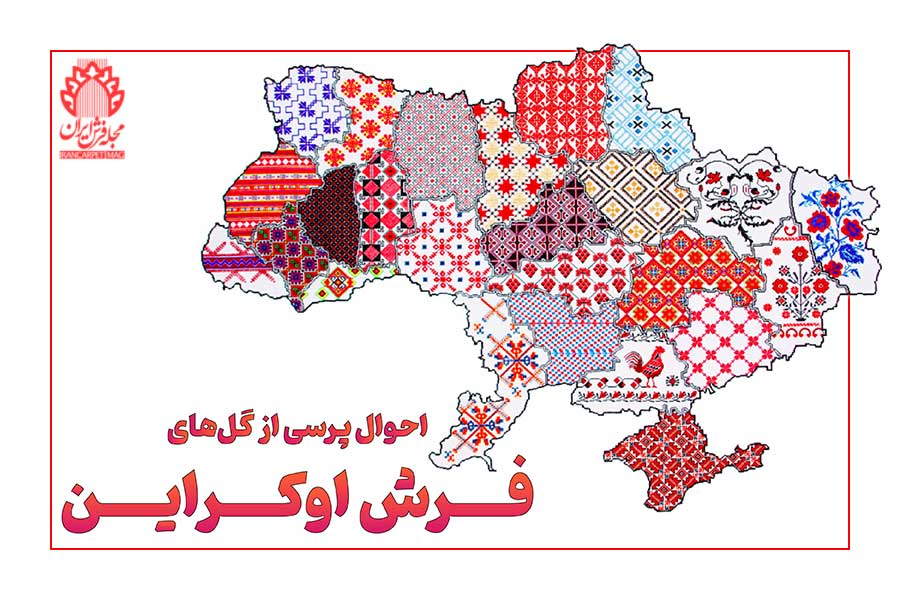
Ukraine is especially renowned for its skillful embroidery. As a popular art, embroidery is widely used on clothing, bedding, curtains, and furniture upholstery. Much of this embroidery comes from the regions of Poltava and Kyiv.
Compiled by: Shahin Nemati Dehkordi Master’s degree in handwoven carpets
*Ukrainian belongs to the East Slavic language group and is closely related to Russian. Many words used in Ukrainian derive from Polish, while its grammar is similar to Russian. The Ukrainian alphabet, like the Russian alphabet, is Cyrillic, and there are few differences between the two.
*A semi-presidential system of government combines features of presidential and parliamentary systems.