Ukraine Must Pull Its Kilim Out of the Fire
Kilim weaving (килимарство, kylymarstvo) and the term “kilim” (in Ukrainian: килим, kylym) have Turkish roots and refer to decorative woven textiles used as floor coverings or for wall decoration.
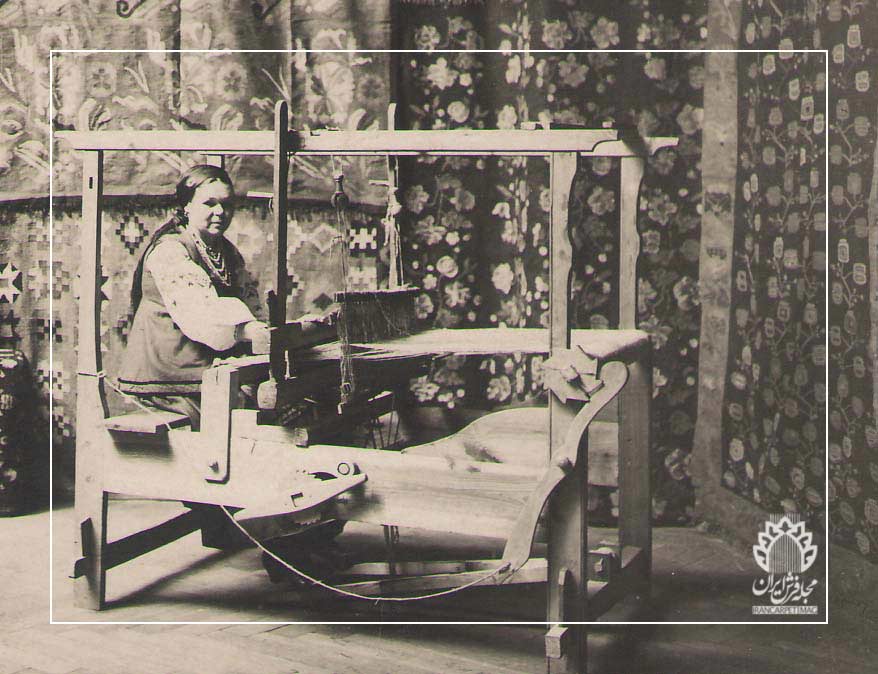 The earliest sources mentioning kilims date back to the time of Kyivan Rus*, when they were used in funerary ceremonies. Kilims were also used as coverings for princes’ chairs. In addition, references to kilims can be found in byliny* (Bylina/Bylyna) and old songs. Kilims are depicted in the murals of St. Cyril’s Church in Kyiv and in portraits from the late 17th and early 18th centuries. It is therefore impossible to say anything definitive about kilim weaving in Ukraine before the 16th century; earlier kilims belonging to the ruling class were most likely imported.
The first references to kilim imports from Eastern countries appear in 15th-century sources. Kilim production in Volhynia is well documented in the 16th century. For example, a 1578 document listing Maria Holszańska’s dowry names two serf weavers, Yurko and Fedir.
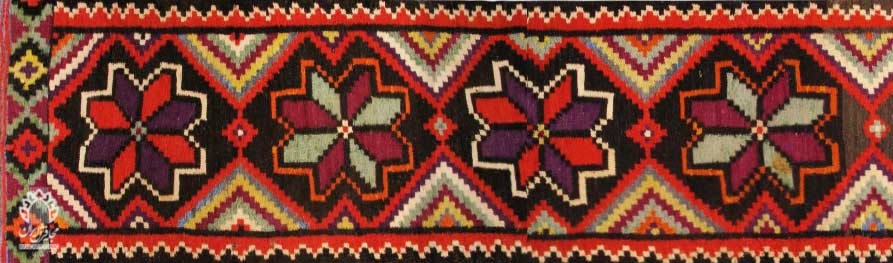
Numerous 17th-century sources refer to both locally made and imported kilims. Kilim weaving expanded in the 18th century: on Ukraine’s Right Bank (the western bank, or right-hand side of the Dnieper River), workshops owned by the Czartoryski and Potocki families were well known; on the Left Bank, so was the workshop of Colonel Pavlo Polubotok.
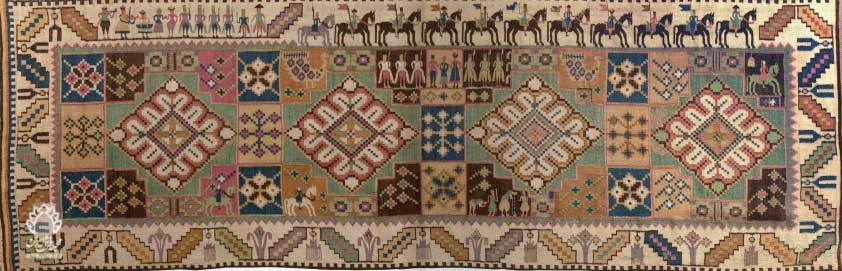
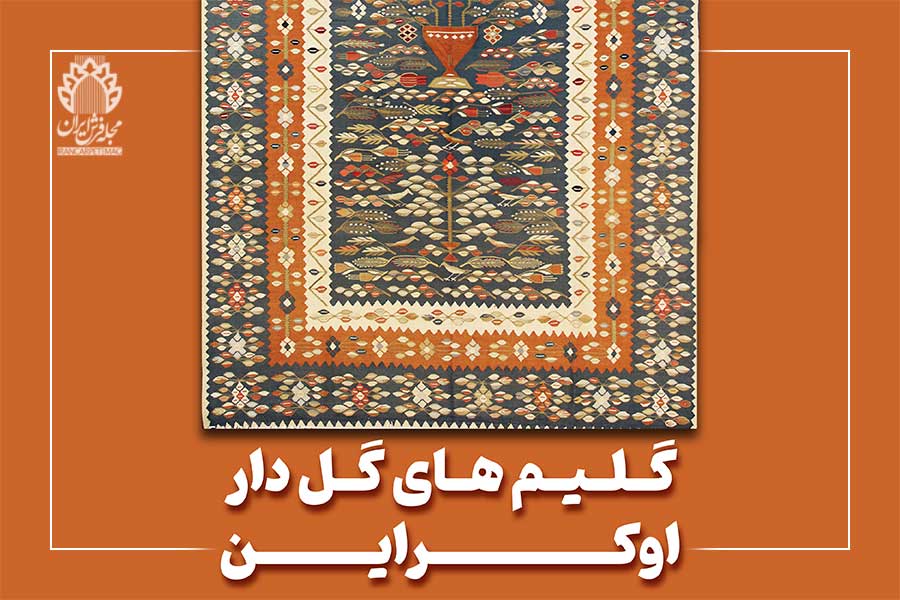
Kilim designs feature floral motifs, flowering shrubs with birds, and sometimes human figures and the tree of life; their patterns had moved away from fully curvilinear forms. Although villagers may have taken up kilim weaving much earlier, it became widespread among them in the 18th century. Monks and urban artists also engaged in weaving. The craft grew rapidly in the late 18th and first half of the 19th centuries. Landowners opened new workshops on their estates, particularly on Ukraine’s Left Bank, as well as in towns. By the mid-19th century, Kharkiv’s annual production of kilims and woollen caparisons (decorative coverings for a horse’s back and head, worn over the saddle and harness) had reached 25,000 pieces.
In the second half of the 19th century, Ukraine’s kilim industry suffered a sudden decline. Kharkiv’s annual output fell to 4,000 kilims. Individual producers and zemstvos (elected councils established in Tsarist Russia to administer local affairs after the abolition of serfdom) took measures to counter this trend.
The Poltava zemstvo opened a kilim-weaving school, promoted kilim sales, and established a collection of traditional kilims.
In 1905, Varvara and Bohdan Khanenko established a home-weaving enterprise in the village of Oleniivka, Vasylkiv, Kyiv Governorate. Apprentices trained for two years. In the late 1880s, Volodyslav Fedorovych established a kilim-weaving school and workshop in the village of Vikno, in the Ternopil region. At the beginning of the 20th century, the main kilim-weaving areas on Ukraine’s Left Bank were the districts of Myrhorod, Romny, Poltava, Pryluky and Zinkiv in Poltava Governorate.
Thanks to the efforts of the artist Yevheniia Prybylska, a home-weaving enterprise was established in 1913 in the village of Skoptsi, Kyiv Governorate. Kilim weaving also flourished in the Katerynoslav region, Podillia and Ternopil (Zbarazh, Zalozhtsi, Tovste and Vikno).
In the late 19th and early 20th centuries, new kilim-weaving centres emerged in Galicia, influenced by the developing kilim craft in western Podillia. A weaving association established in 1886 began producing kilims in 1890. In 1894, the association opened a weaving school, which became a kilim workshop in the 1920s.
A number of temporary kilim workshops were established near Kosiv, Ternopil, Chortkiv, Zbarazh, Zhydachiv and Lviv. The kilim craft existed in Transcarpathia in the 19th century, although little is known about it. In 1905, a cooperative kilim workshop was established in the village of Hanychi, in Tyachiv district. Another workshop was set up in the village of Ardaniove, in Irshava district. The Bukovinian kilim craft was well developed in the 19th century. In the 1920s, a kilim-weaving school opened in Ataki, Bessarabia.
At the beginning of the Soviet period, the kilim craft in Ukraine faced serious difficulties: equipment and raw materials were scarce, and private workshops had closed. The new authorities made considerable efforts to revive kilim weaving in its traditional centres. Art workshops and schools were established in the Poltava, Chernihiv and Kyiv regions, and in eastern Podillia, to train skilled workers in the craft.
The craft was organized in handicraft artels (in pre-revolutionary Russia, cooperative associations of artisans who lived and worked together), and kilim production for export was encouraged. Between 1928 and 1930, its value rose from 40,000 to 100,000 rubles. In the 1930s, the artels became large state enterprises and were placed under the Ukrainian Handicrafts Association (1936). Their production was governed by a five-year plan. Today, the most important kilim workshops are located in Reshetylivka, Dihtiari, Hlyniany, Kolomyia, Khotyn and Kosiv. Since the Second World War, production in these centres has grown steadily, with geometric designs becoming more common than floral ones.
Hlyniany’s production rose from 15,000 square metres in 1945 to 49,000 square metres in 1960 and 82,000 square metres in 1970. Kosiv’s production increased from 95,000 square metres in 1955 to 120,000 square metres in 1965. Khotyn’s output rose from 10,600 square metres in 1950 to 17,000 square metres in 1960 and 46,000 square metres in 1970.
Kilim weaving is a complex and labour-intensive process involving spinning, dyeing and weaving. Traditionally, the necessary skills are passed down from one generation to the next. Sheep’s wool was generally used as the raw material; later, cotton and linen yarns were also introduced, and more recently, synthetic fibres resistant to rot, mould and moths have been used. Until 1880, natural dyes—chiefly those derived from local plants—were used.
Yellow was obtained from oak wood and bark, dyer’s rocket, young birch leaves and buds, or wild apple bark; pale yellow came from the outer layers of onions, while buckthorn* berries produced a bright, clear colour. Dark yellow was obtained from buckwheat husks* or buckthorn berries. Green came from onion skins, blue-black blackthorn berries and indigo. Reds came from the small Mediterranean scale insect Coccus ilicis* and sometimes from the roots of madder (Rubia tinctorum)*. Oak bark produced black and grey, young alder bark produced brown, and indigo shrubs yielded blue. These natural dyes produce pleasing, soft shades that are also remarkably vivid. The discovery of aniline dyes in 1856 brought a major change to the dyeing process, with harmful effects on Ukrainian dyed wool. Nevertheless, workshops in Ukraine still pay close attention to the colourfastness of their materials, and aniline dyes are rarely, if ever, used.
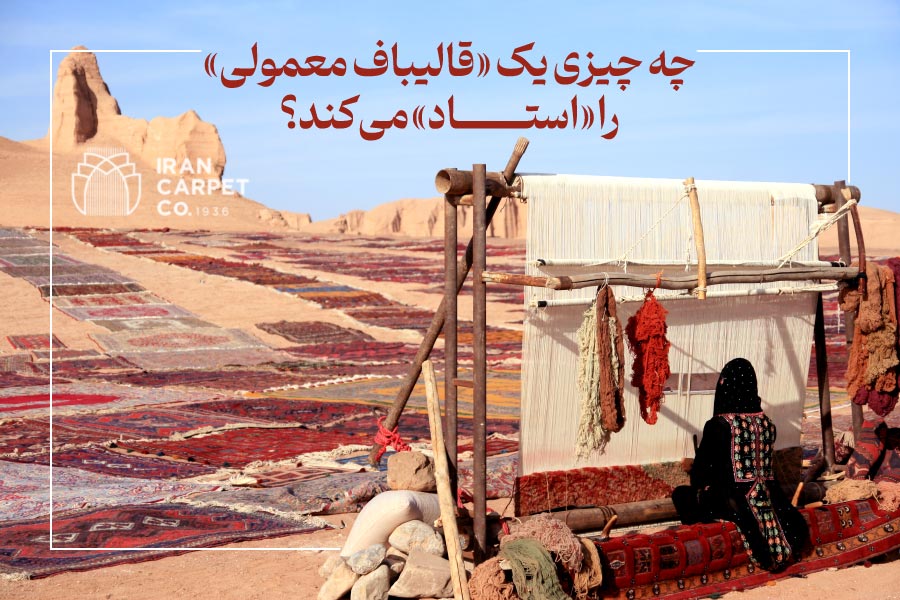
Two types of loom are used in kilim weaving: vertical and horizontal. Flat-woven and knotted kilims are woven on vertical looms. Designs are created using tapestry weaving: the wefts are passed by hand back and forth through the warps to define the desired areas of colour. The ground is then woven mechanically. Horizontal looms, used mainly for the geometric motifs that later became popular, are still used today; kilims are produced using traditional methods as well as somewhat more modern Axminster and Jacquard looms.
The earliest record of ornament on Ukrainian kilims dates to the 16th century. It describes kilims with “various flowers”: two with a light-blue ground, two with a white ground, one with a yellow ground and five with a black ground. Three kilims from the 17th century have survived. One of them, a kilim lavishly adorned with floral ornament, was made in 1698 at the workshop of Stanisław Koniecpolski, established in Brody in the mid-17th century.
The ornamentation of 18th-century kilims consists mainly of plant designs, displaying a strong sense of local character and variety. Plants depicted on kilims from Ukraine’s Right Bank are more delicate and lighter in style than those on Left Bank kilims. Geometric motifs were more common than floral ones.
Kilim designs feature floral motifs, flowering shrubs with birds, and sometimes human figures and the tree of life; their patterns had moved away from fully curvilinear forms.
Other plant motifs include eight-petalled flowers, lotuses, palm trees, branches with leaves and flowers, and vases of flowers. Repeated across the field, these motifs form the kilims’ pattern repeats. The borders are clearly set apart from the field by dividing lines.
As the market for kilims with geometric motifs grew, floral motifs and ornament evolved into lighter, more geometric designs. Geometric kilims have been and remain the principal type produced in Galicia, Bukovina, Polissia, Podillia and the Hutsul region of the Carpathian Mountains. Many of the motifs on these kilims symbolize natural phenomena as imagined by early peoples.
For centuries, magical symbols revered by ordinary people were depicted in folk art. Over time, they lost their original meanings and became purely decorative elements. In addition to geometric and floral designs, Ukrainian kilims once depicted coats of arms and emblems, scenes from the lives of the nobility, and religious imagery. During the Soviet period, such subjects were often replaced by portraits of Soviet leaders and scenes of Soviet life.
FLOWERS AND BIRDS IN UKRAINIAN KILIM DESIGN by Stefan Taranushenko, on Ukrainian kilim designs, and PODILLIA KILIMS* by Volodymyr Tytarenko, which presents examples from Podillia museum collections, are valuable sources.
Shaheen Nemati Dehkordi Carpet specialist
*Kyivan Rus was a loose federation in Eastern and Northern Europe from the late 9th century to the mid-13th century. *Byliny are old Russian oral epic poems. Their narratives have a weak basis in historical fact and are largely embellished with fantasy and exaggeration. *Coccus ilicis is a Mediterranean scale insect that lives on oak leaves and produces a red dye. *Rubia tinctorum is a species in the madder family (Rubiaceae). It grows wild in the Mediterranean region, North Africa and parts of Asia. Its earliest origins are in the Near East and the Caucasus. *Buckwheat has a brown colour and an irregular shape. It is cultivated mainly in the Northern Hemisphere, especially in Central and Eastern Europe, Russia, Kazakhstan and China. *Buckthorn is a shrub in the oleaster family with berries in four different colours: red, green, dark yellow and brown. *The illustrations in PODILLIA KILIMS show kilims from private collections and museums, including the National Museum of Ukrainian Folk Decorative Art (Kyiv), the National Museum of the History of Ukraine (Kyiv), the Vinnytsia Regional Museum, the Vinnytsia Museum of Folk Art, the Khmelnytskyi Regional Museum, the Zhytomyr Regional Museum, the Museum of Ethnography and Crafts at the Institute of Ethnology of the National Academy of Sciences (Lviv), the Andrey Sheptytsky National Museum (Lviv) and the Lviv Museum of History.