
Research Articles
The Wasted Years of an Archaeologist
May 16, 20225 min readIran Carpet Company
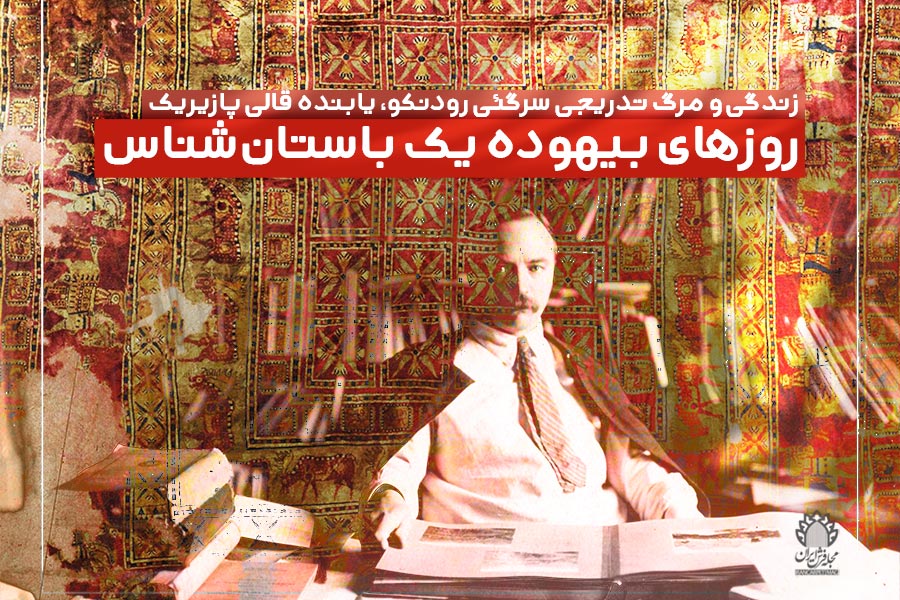
After the Russian Revolution of October 1917, the Communist Party and Soviet authorities sought to define frameworks and objectives for science and art in accordance with the ideals of the revolution. Scientists and artists were expected to deliver “results” in line with principles and directives issued by the state.
The task was easier for artists: one could write a novel like Gorky’s Mother, or, like Isaak Brodsky, reduce art to painting portraits of Lenin and Stalin. For scientists, however, it was not so simple. Reconciling scientific findings and laws with Marxist thought, and grounding them in that ideology, seemed exceedingly difficult. In this climate, the goal was not to advance science. Rather, there were predetermined conclusions, consistent with the thinking of the leader, the Party, and the Marxist worldview, which scientists were expected to prove through false research and quasi-scientific methods. Otherwise, they risked losing support, being ostracized, or ending up in the Gulag. Scientists in every field were required to abide by this new doctrine; consequently, old-school scholars—or, in the language of the Communist purge, “bourgeois specialists without commitment”—were persecuted everywhere. Among them was the archaeologist, ethnographer, and renowned discoverer of the Pazyryk carpet, Dr. Sergei Ivanovich Rudenko.
 Sergei Rudenko
Rudenko was born in 1885 in Kharkiv, in present-day Ukraine. He completed his university studies in mathematics and physics in St Petersburg, then went to Paris to continue his studies in archaeology and anthropology. He advanced rapidly. He was a follower of the school of anthropology established by the French anthropologist Paul Broca. He later returned to Russia and held a number of positions at the Academy of Sciences, the Geographical Society, and the Ethnography Department of the Russian Museum. He also conducted archaeological, anthropological, and ethnographic research across extensive areas of the Volga River basin, Kazakhstan, and northwestern and southern Siberia. Among his notable discoveries during this period were the famous Pazyryk burial mounds in the Altai, whose excavation began in 1929. Yet, just as the history of carpets was on the verge of being transformed, everything took a turn.
Rudenko’s persecution began in these years. In 1928, he came under intense attack from Marxist scholars, some of whom were also jealous of him. He was accused of anti-Communist views and of pursuing expertise without political commitment. He had been branded a symbol of bourgeois science. At universities, museums, and institutions of higher education, opposition to Rudenko’s views on archaeology and ethnography became fully accepted and widespread; the more vigorously one attacked him, the more favor one earned. Then, on August 5, 1930, Dr. Rudenko’s name appeared on the list for the so-called “Historians’ Case,” also known as the “University Case.” He was arrested and purged from the university. He spent 12 years in prison, camps, and barracks along the White Sea–Baltic Canal, as well as in other remote places of exile. These events fundamentally changed the life of this scholar. Since he also held university degrees in mathematics and physics, in addition to archaeology, he was compelled for a time to work at the Soviet Hydrological Institute, although his interests lay elsewhere.
At last, after 12 years of imprisonment, exile, and forced labor, he was released and returned to Leningrad. Yet he was still unable to resume work at a university in archaeology, his chief passion. Once again, he had no choice but to take a position at the State Hydrological Institute. A few months later, in 1942, he was finally able to resume his archaeological research, joining the Institute for the History of Material Culture of the Academy of Sciences of the Soviet Union. What a wasted 12 years for a scholar! Even so, the Soviet Union was then embroiled in the Second World War and had no funds to invest in archaeology. Excavations had come to a halt, and Rudenko still had to wait.
After the Second World War ended, Rudenko was finally able to continue a new phase of his unfinished excavations in Kamchatka and the Altai. These investigations had led to the discovery of the Pazyryk burial mounds in 1929, but had never been completed. One day in 1949, the carpet now famous as the Pazyryk carpet suddenly emerged from beneath ice preserved from ancient times. Discovered by Rudenko in the Pazyryk Valley, in southern central Siberia, 79 kilometres from the Mongolian border, the carpet completely transformed the history of carpets. The Pazyryk carpet could have been found much earlier—in 1928 or 1930, when the mounds were discovered—if politics and war had not squandered a scientist’s life. Even so, the magnificent Pazyryk carpet spent only a little longer beneath the ice. For a 2,000-year-old Achaemenid carpet, the twenty-year delay was brief; but for Rudenko, who died in 1969, it was a lifetime.
Compiled by Dr. Davoud Shadlou Faculty member, Carpet Department, Shiraz University of Art
 Research Articles
Among researchers, Neyriz tree carpets are known as “three-trunk” carpets, since the tree’s trunk is formed from three sections, sometimes aligned uniformly and sometimes arranged unevenly. Read more about this carpet in this article.
 Research Articles6
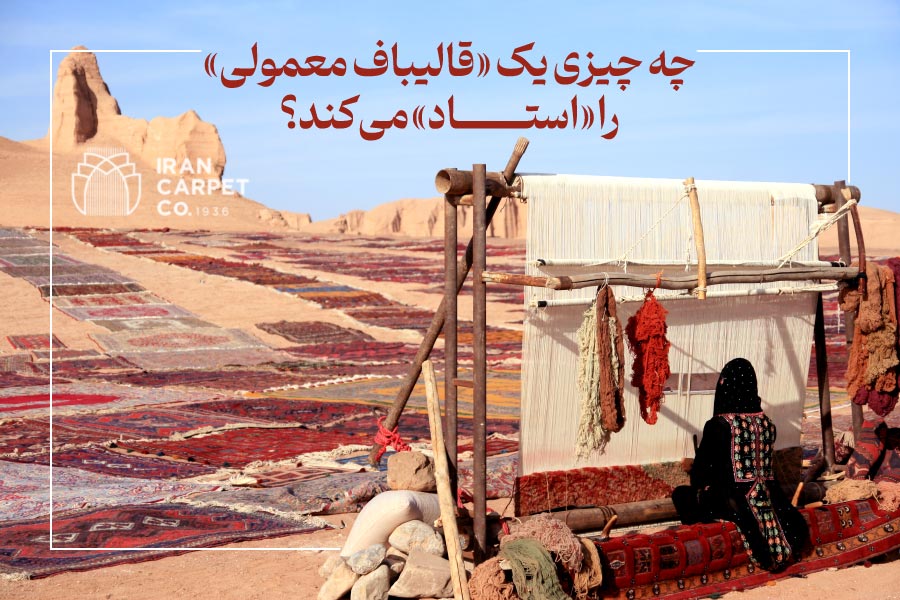
Magnificent Persian carpets, with their captivating creativity, have the power to transform an interior into something almost magical. Yet few names of master weavers whose work is of exceptional quality have endured. What makes a carpet weaver a true master?
 Research Articles23
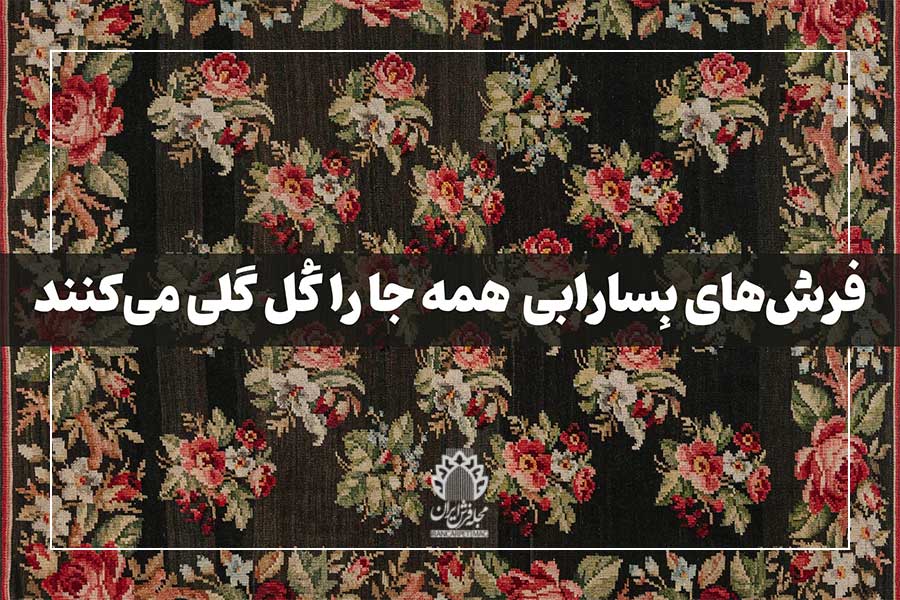
Bessarabia is a region in southeastern Europe, north of the Caucasus Mountains in southwestern Russia. It borders Romania to the south and the Black Sea to the east, and lies between the Prut and Dniester rivers.