Sickle, Hammer, and Carpet Beater
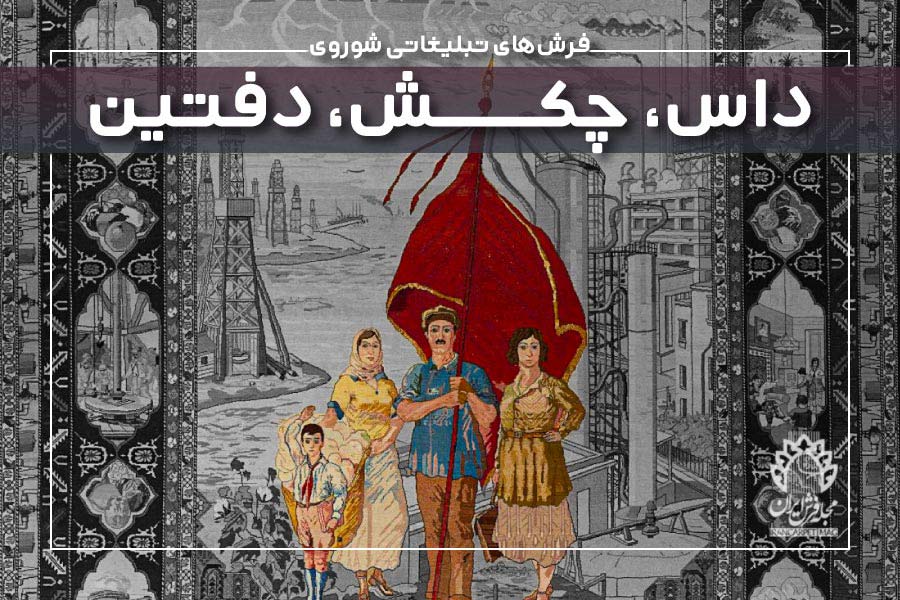
 Image 1: Carpet bearing Stalin’s portrait, Turkmenistan, 1936
Stalin was given the title “Father of the Peoples.” The propagandists of the Stalinist system saw him as a sun illuminating every country in the world.
 Image 2: Caucasian weavers weaving Stalin’s portrait into a carpet, 1932
The Soviet propaganda machine understood the place of carpets in the carpet-rich lands east and west of the Caspian Sea. Carpets woven from Turkmenistan to the Caucasus were among the best-known symbols of life for the peoples of the Soviet Union. Every family dreamed of owning an authentic Oriental carpet. They hung these costly woolen canvases on their walls or spread them across the floor, where they served as decoration and helped warm homes during Siberia’s cold winters. Authoritarian regimes make the most of such circumstances, seeking to impose their ideas on people by every means available. Soviet leaders therefore decided to use the carpet as a medium and instrument of propaganda. They ordered carpets to be woven depicting the Bolshevik Revolution, the Party’s achievements, scenes of Soviet industrial progress, and—above all—the faces of the country’s leaders and prominent figures.
Carpets with revolutionary themes became widespread between 1920 and 1970. They were made almost entirely for domestic use, although some were also exported to other communist countries. While some producers continued to create traditional carpets for domestic and foreign markets, the weaving of carpets with revolutionary themes also flourished between 1920 and 1970. These were made almost entirely for domestic use, although some were exported to other communist countries.
We will examine several examples of these carpets, shown at an exhibition held in 2020.
 Image 3: Lenin and Narimanov, wool carpet, Shusha, 1920
Woven in the Caucasus in 1920, this carpet (Image 3) depicts Lenin alongside Nariman Karbalayi Najafoghlu (Narimanov), a prominent Soviet statesman, writer, and revolutionary. Among the carpet’s flowers, the weaver has placed the sickle-and-hammer emblem at the same level as the two men. The inscription reads: “The revolutionary world is led by Lenin; the East is led by Narimanov.” Narimanov died in 1925 and is buried in Moscow’s Red Square. Trotsky described his death as “the second great loss for the Eastern Bloc, after Lenin’s death.”
 Image 4: Oil Worker, wool carpet, Caucasus, 1969
Authoritarian regimes make the most of such circumstances, seeking to impose their ideas on people by every means available. Soviet leaders therefore decided to use the carpet as a medium and instrument of propaganda. Image 4 shows the celebrated carpet known as “Oil Worker,” woven under the guidance of Latif Karimov, a scholar of Azerbaijani carpets. For the Soviet state, workers were the true heroes and saints. At the center of the composition, we see an exemplary oil-company worker with his family, raising a red flag. His son, a pioneer in learning, carries a book under his arm; his wife is a cotton picker; and his daughter is presumably an engineer, carrying a leather briefcase and appearing as an independent woman. Views of refineries and the oil and gas industries are woven into the background. The large border panels depict scenes from Soviet life, recalling the illustrations in Orthodox Christian books depicting the lives of saints. People pick cotton, fish, play sports, and pursue other activities, leading, in effect, a happy life under the rule of their good communist comrades. The carpet’s composition and details are remarkable. Its narrow border features the Maygan Dostkami motif; more striking still, the other narrow border depicts an oil pipeline and a valve. This carpet opens up a broad picture of existence before us, revealing every imaginable aspect of everyday life in its time. See, for example, Image 5, which shows a panel from the large border of the Oil Worker carpet.
 Image 5: The everyday life of a prosperous family under the communist system. The scene is rendered remarkably well within the limited space of a complete double-niche composition, and the weaving is of a very high quality.
 Image 6: We Are Stakhanovites!, Caucasus, 1937
Image 6 is a carpet inspired by the Stakhanovite movement. In 1928, Stalin launched the First Five-Year Plan to develop the national economy. Its principal aim was rapid expansion. In 1935, a miner named Alexei Stakhanov extracted 102 tonnes of coal in a single shift, despite a quota of 7 tonnes. He devised a particular method of coal extraction, later named Stakhanovism after him, which gave rise to the Stakhanovite movement. By assembling a group of skilled and specialized workers, dividing the work among them effectively, and using ordinary, basic equipment, he was able to extract several times the usual amount of coal. From that point, the Stakhanovite movement spread from the coal industry to other sectors. Workers in different industries far exceeded their quotas, and Stalin awarded them medals. The movement eventually met resistance from both workers and the state: higher productivity led workers to demand higher wages, while the state expected them to maintain high productivity for their previous pay. In his novel Animal Farm, George Orwell modelled the character Boxer on workers in the Stakhanovite movement, giving him the slogan, “I will work harder!”
 Image 7: Laboratory, 1969
The Soviet propaganda machine understood the place of carpets in the carpet-rich lands east and west of the Caspian Sea. Carpets woven from Turkmenistan to the Caucasus were among the best-known symbols of life for the peoples of the Soviet Union. Other carpets promoting literacy and sport were also woven in Turkmenistan and the Caucasus, including Laboratory (Image 7) and Sport (Image 8). They suggest that a Soviet citizen was expected not only to be educated and a good worker, but also to have a healthy body—which, according to Soviet propaganda, was essential to a healthy mind. Promoting sport and physical education was therefore among the communist system’s primary objectives.
 Image 8: Sport, 1969
The carpets woven at the behest of the Soviet propaganda machine included both orderly, urban examples, such as Image 4, and tribal and rural carpets, such as Image 6. The artists’ work was closely supervised, since these pictorial carpets were large and difficult to weave; rendering and weaving faces was technically challenging, and a caricature-like depiction of Lenin or Stalin would not have been approved for release. The regime’s propaganda imagery, intended to galvanize the public politically, was subject to strict censorship. Only professional weavers were recruited for this work, and the state paid the artists half the commission fee—an arrangement that other occupations might not have offered. As a result, many such pictorial carpets were woven in the republics of the Soviet Union, including Turkmenistan, Armenia, Georgia, and Azerbaijan.
Compiled by Dr. Davoud Shadloo Faculty member, Department of Carpet, Shiraz University of Arts
Related Reading
All Journal & Blog Research Articles
Symbolism of the Neyriz Tree Carpet
Among researchers, Neyriz tree carpets are known as “three-trunk” carpets, since the tree’s trunk is formed from three sections, sometimes aligned uniformly and sometimes arranged unevenly. Read more about this carpet in this article.