
Research Articles
Handwoven Carpet Advertising in the Nineteenth Century
Aug 6, 20224 min readIran Carpet Company
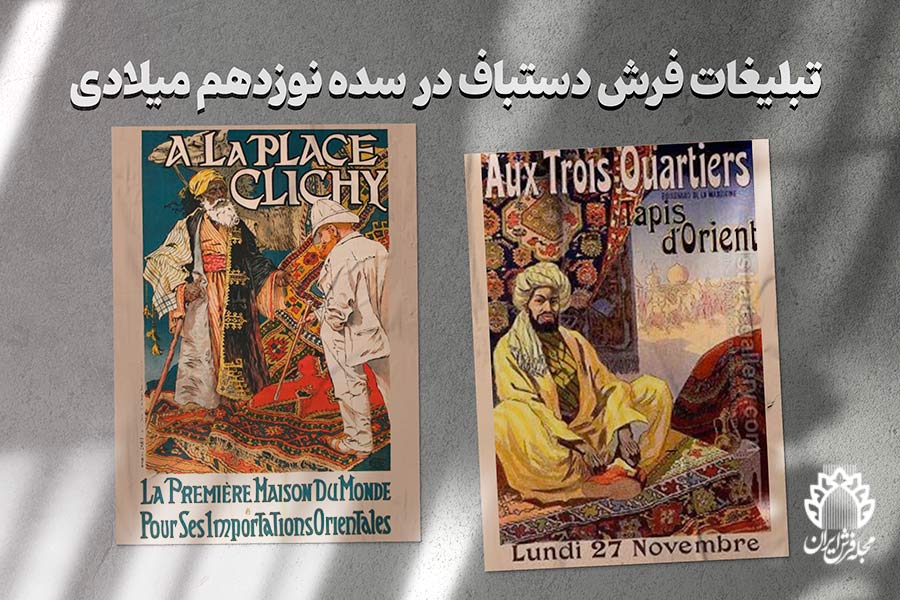
How can the mysteries of handwoven Oriental carpets be summed up in just a few words? This has always been a challenge both for producers and sellers who earn their living from carpets, and for buyers who want to describe the carpet they have purchased to friends and acquaintances. It is therefore fascinating to consider how handwoven carpets were presented and advertised by sellers at a time when the media were far less widespread and marketing methods had not yet acquired the structure and precision they have today.
Posters were the most prominent means of advertising handwoven carpets in the nineteenth century. Some became so popular that they played a major role in the sale of handwoven carpets. Today, too, these posters are highly prized by collectors. For example, an original poster for the A La Place Clichy store now sells for around €5,000.
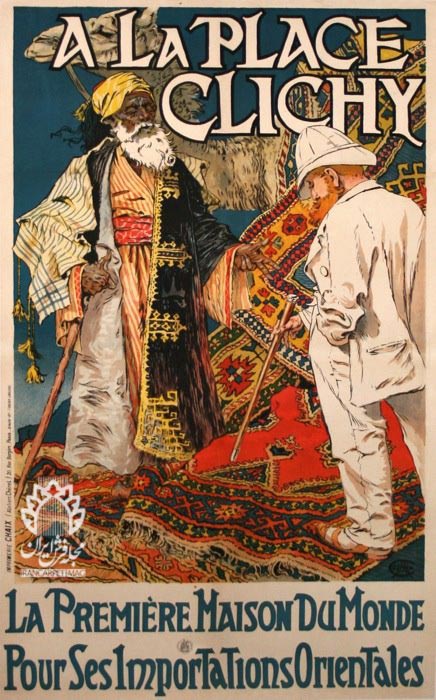 Designed in 1891 for a Paris carpet shop named A La Place Clichy, this poster presents the store as the world’s foremost importer of handwoven Oriental carpets.
What gives this advertisement its appeal? An Arab nomad who has arrived from far away, and a camel laden with handwoven carpets. The poster presents the purchase of a carpet as the beginning of an adventure. Yet, on closer inspection, it becomes clear that the designer probably had little detailed knowledge of Oriental carpets: the carpets depicted in the poster are generally Caucasian in design and have little connection with the camel-riding, desert-dwelling Oriental figure.
The advertisement for A La Place Clichy was created by Swiss painter Eugène Samuel Grasset (1845–1917), a practitioner of Art Nouveau. After studying design and architecture, he travelled to Egypt in 1886 and was influenced by Eastern art and its motifs. He incorporated many Egyptian and Eastern elements and ornaments into his work. His understanding of Western ideas about the East and its peoples gave him a clear sense of how to create images, and which elements to include, to appeal to European audiences. Today, Grasset is best known as a designer of textiles, furniture, tapestries, ceramics, and jewellery.
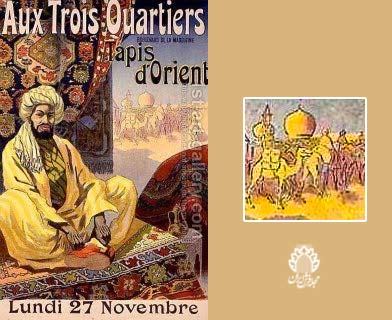 Designed in 1899 by René Péan for Trois Quartiers, a carpet shop in Paris.
Another advertisement, designed in 1899 for a different Paris carpet shop, was the work of French painter and illustrator René Péan (1875–1955). This poster, too, bears similarities to Grasset’s work. Its central figure is an Arab nomad, and once again the image features handwoven Caucasian carpets, which have no geographical connection to Arab countries. In the distance, we also see a camel caravan and a view of a mosque.
Why, then, did European designers depict Caucasian carpets against Arab settings and figures? There are many possible answers, but if we focus specifically on handwoven carpets, one explanation may be that Caucasian carpets were relatively new to the Paris market at the time and therefore needed to be presented through more familiar imagery. Ralph Kaffel, author of Caucasian Prayer Rugs, writes: “Although Caucasian carpets were known in the West in the third quarter of the nineteenth century, they still had the appeal of novelty.” In any case, by the end of the nineteenth century Caucasian carpets had become so widespread in France that their use in interior design and home furnishings had become a new fashion.
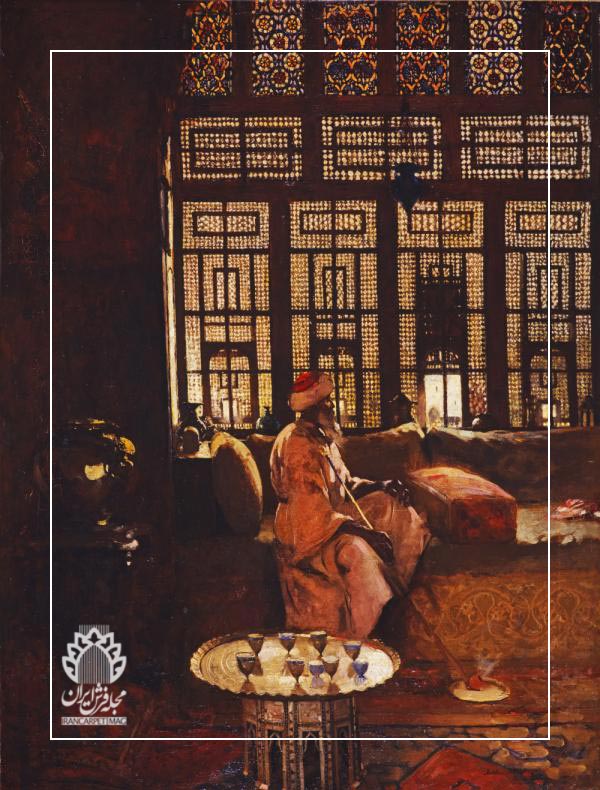 Interior of an Arab House, 1881, Arthur Melville
The advertising posters of carpet shops from the late nineteenth and early twentieth centuries, like Orientalist paintings, belong to a world and a time long past. Yet these works remain among the most successful examples of carpet advertising of all time.
Dr Davood Shadlou Faculty member, Department of Carpet, Shiraz University of Arts
 Research Articles
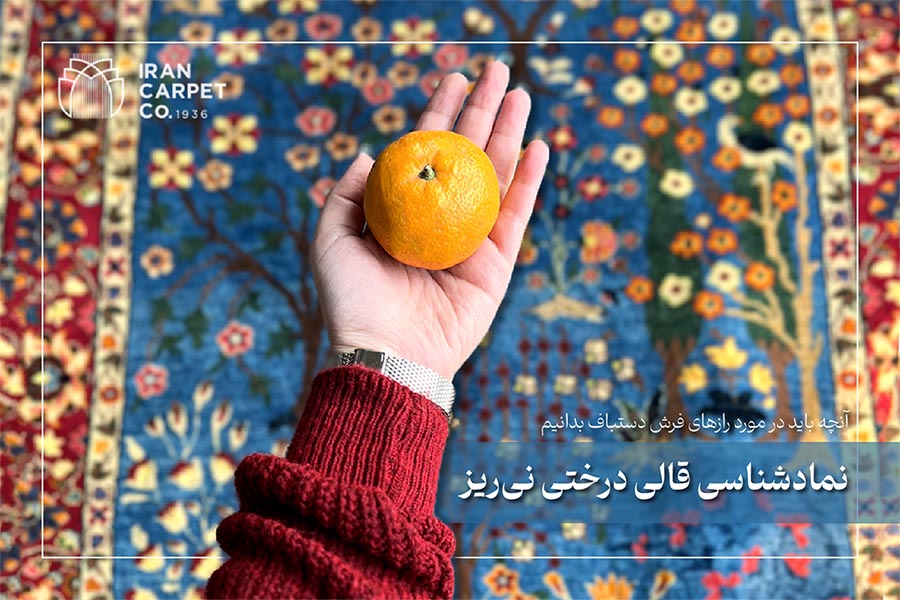
Among researchers, Neyriz tree carpets are known as “three-trunk” carpets, since the tree’s trunk is formed from three sections, sometimes aligned uniformly and sometimes arranged unevenly. Read more about this carpet in this article.
 Research Articles6
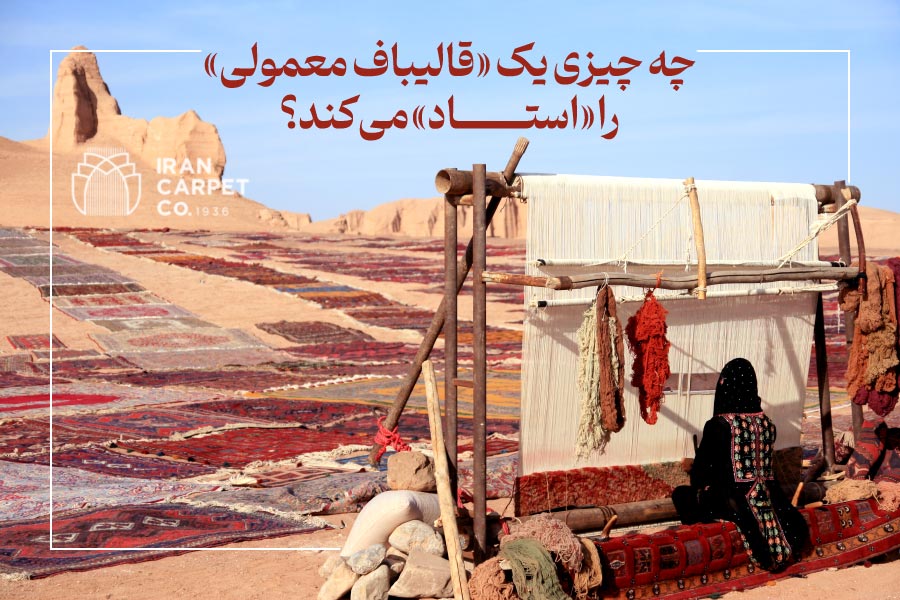
Magnificent Persian carpets, with their captivating creativity, have the power to transform an interior into something almost magical. Yet few names of master weavers whose work is of exceptional quality have endured. What makes a carpet weaver a true master?
 Research Articles23
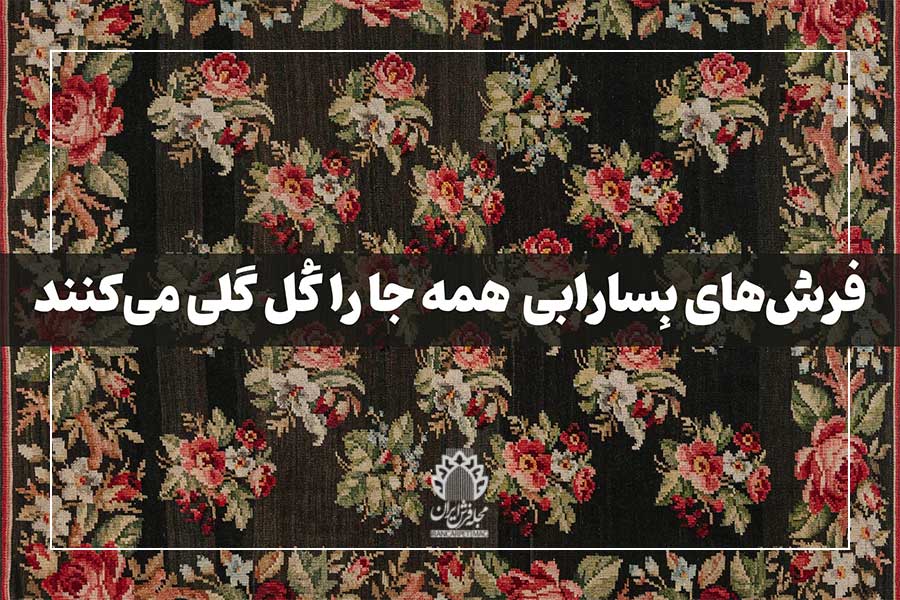
Bessarabia is a region in southeastern Europe, north of the Caucasus Mountains in southwestern Russia. It borders Romania to the south and the Black Sea to the east, and lies between the Prut and Dniester rivers.