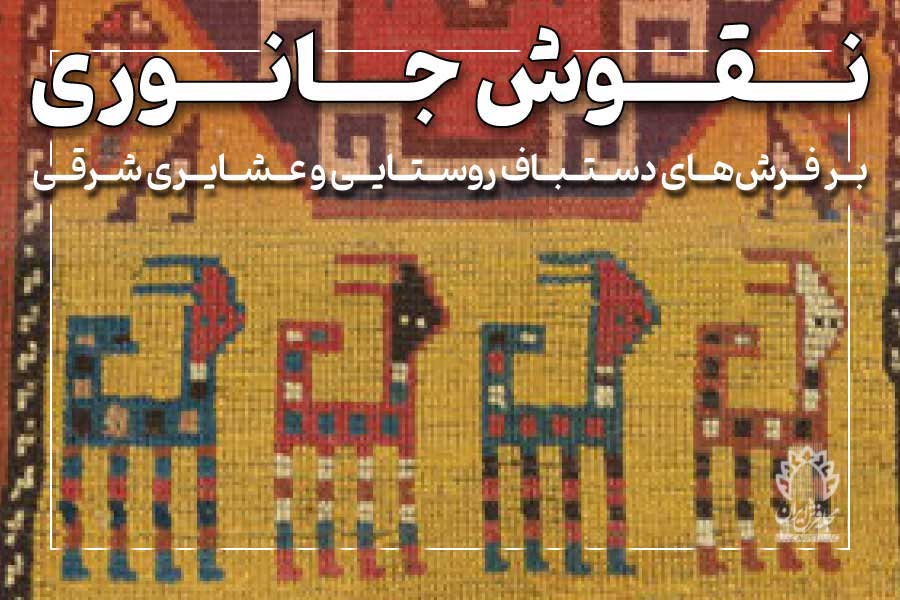
Animal Motifs in Eastern Rural and Nomadic Handwoven Carpets
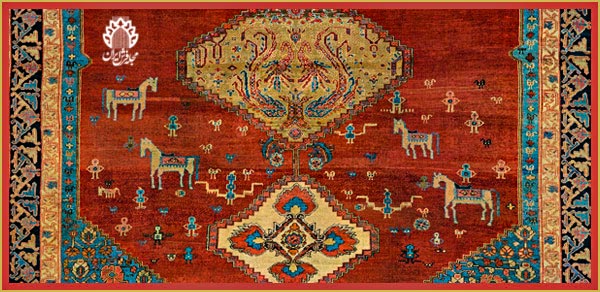 Saddled horses, several human figures, and a bird depicted on a Bakhshayesh handwoven carpet
In today’s hyper-technological age, it is hard to imagine that as recently as 70 years ago, tribes stretching from Mesopotamia to the Central Asian steppes lived with few amenities and without motor vehicles, electricity, or running water (the author does not know whether, even today, running water and electricity are still unavailable in some parts of this region, including its major cities, or available only for a few hours a day). The people of these lands were either shepherds or farmers, and the carpets and rugs woven by their women played an important role in making their homes warm and comfortable. They wove symbolic motifs into these handwoven carpets, motifs learned from their ancestors that connected the present generation to those who came before.
The lives of nomads and villagers have always involved close interaction with nature and with animals, both domestic and wild. They regarded certain animals as totems and embodiments of hidden qualities. Many animals are stronger and faster than humans, or can fly through the sky or swim in the sea; for a nomad living in a tent, all these were little more than dreams. This longing is one of the principal reasons people recorded animal motifs in their artistic and utilitarian works, including carpets.
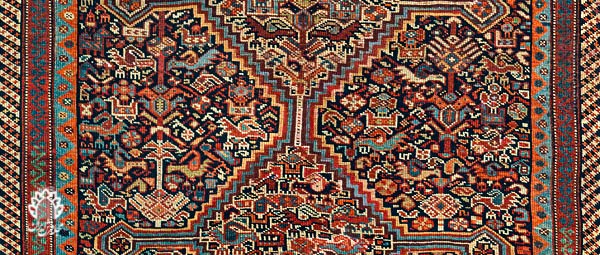 A close look at nomadic handwoven carpets reveals their weavers’ worldview
In the early years of my career, I was fortunate to meet and spend time with a number of nomadic carpet weavers. I say “spend time” because approaching the world of tribal symbols requires great sensitivity; one must respect the nomads’ worldview and what connects them to nature and their ancestors. Unlike urban handwoven carpets, which tend to use more floral and purely decorative motifs, nomadic and rural carpets are rich in animal imagery: eagles, dragons, phoenixes, and more, each with its own meaning.
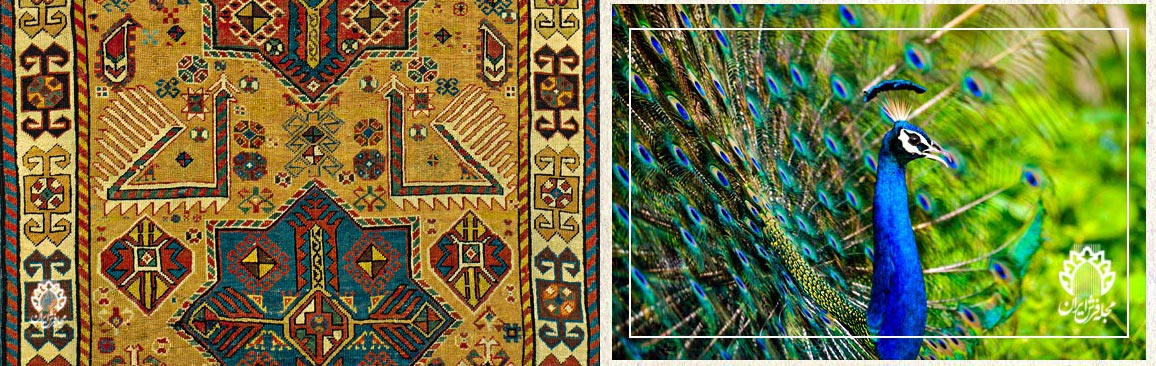 Caucasian handwoven carpet with peacock motif, 1850 CE
With its fan-shaped tail and magnificent feathers, the peacock evokes royal grandeur and has deeply captivated tribal peoples.
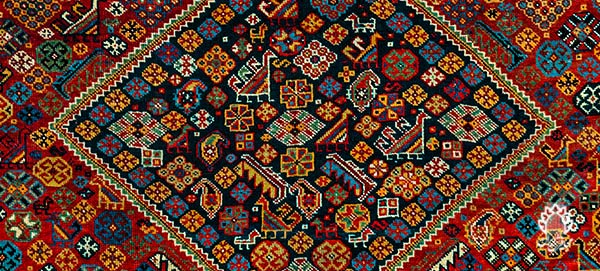 Qashqai handwoven carpet with peacock motif
Peacocks with flame-like tails—best exemplified in Aghstafa (Aghstafa) carpets of the Caucasus and Qashqai carpets of Iran—evoke a mythical creature that walks the earth while its feathers reach toward the sky.
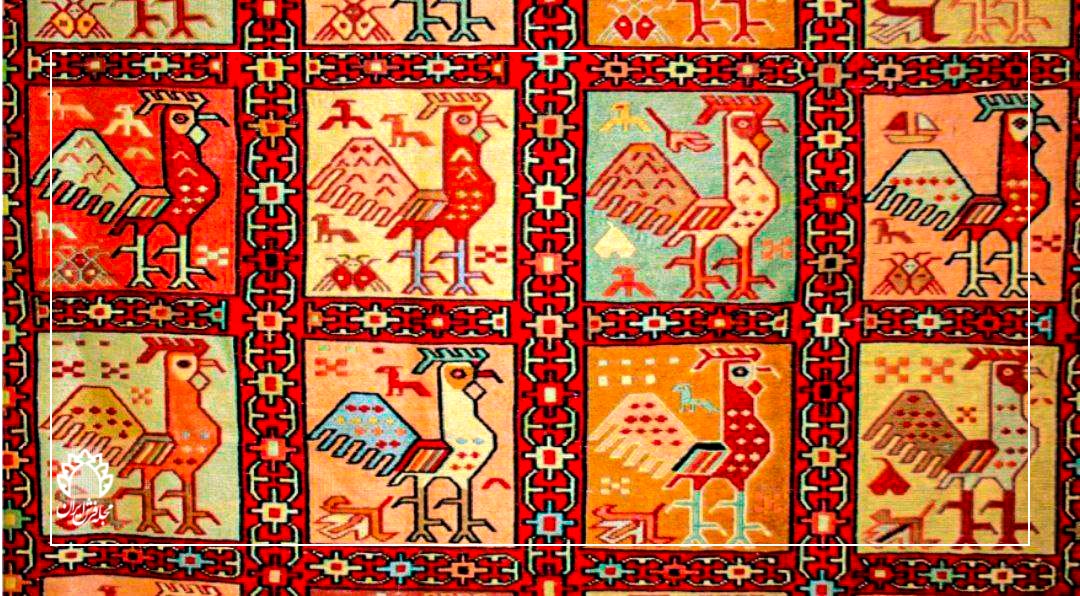
Flocks of hens and roosters also appear in many nomadic handwoven carpets, including those of the Qashqai, the Khamseh tribes of Fars, and the Shahsevan. Hens pecking at the ground for food to bring to their chicks suggest the pursuit of sustenance, a value respected by the peoples of the East. The rooster and its crow before dawn are also like a natural timekeeper: they wake people from sleep and guide them from the darkness of night into the light of day. It is believed that Christ, Muhammad, and Buddha were all born to the crowing of a rooster.
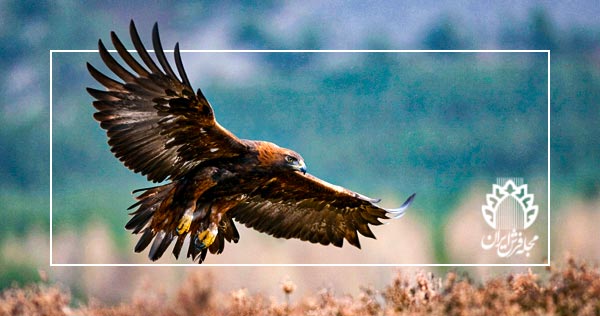
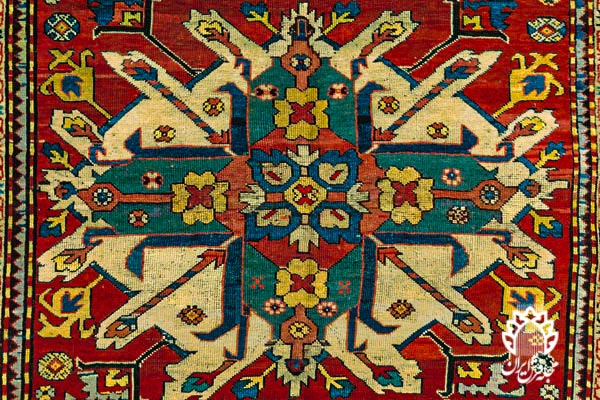 The celebrated weavers of Caucasian Kazak carpets depicted a highly abstract interpretation of this magnificent bird of prey, wings outstretched, as seen on this remarkable handwoven carpet dated 1850.
Anyone who has seen an eagle in flight is struck by its majesty. Dozens of eagle species soar above carpet-weaving regions and nest on the sheer cliffs of the towering Caucasus, Alborz, and Zagros mountains. In Qarabagh carpets, the eagle motif is sometimes likened to the sun; its meaning is to awaken a person’s capacity for far-reaching vision.
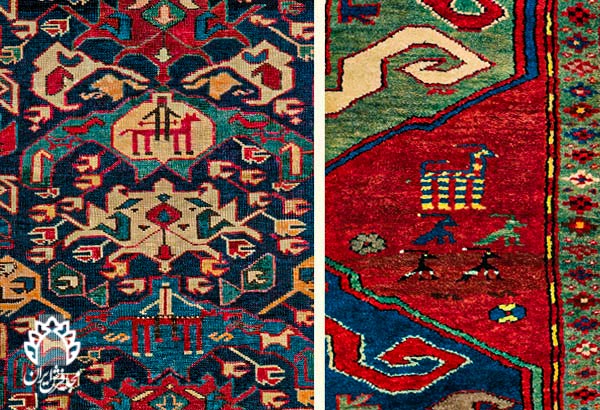
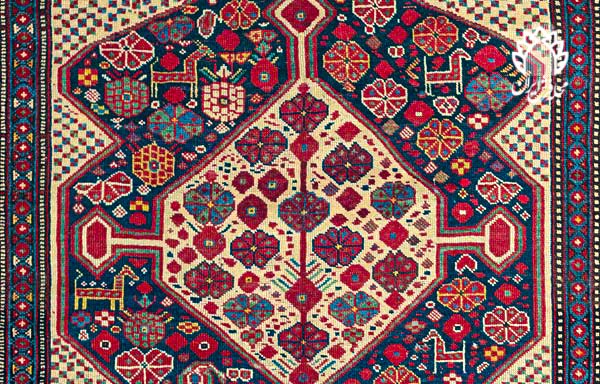
My clients and I are always delighted to see ceremonial saddled horses depicted on Caucasian handwoven carpets. Horses grazing, or carrying a rider, are equally captivating. The grace and endurance of horses have always inspired people, and for nomads who raise horses themselves, these animals hold particular value.
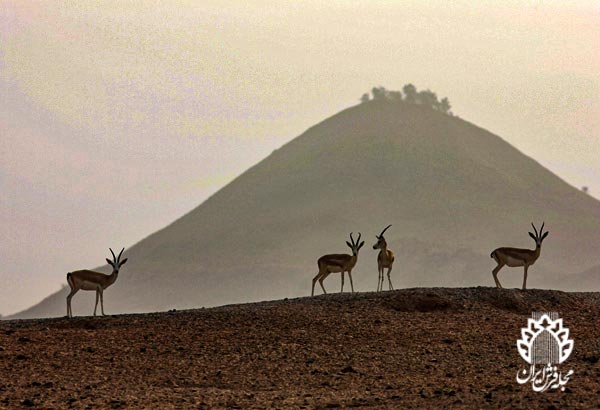
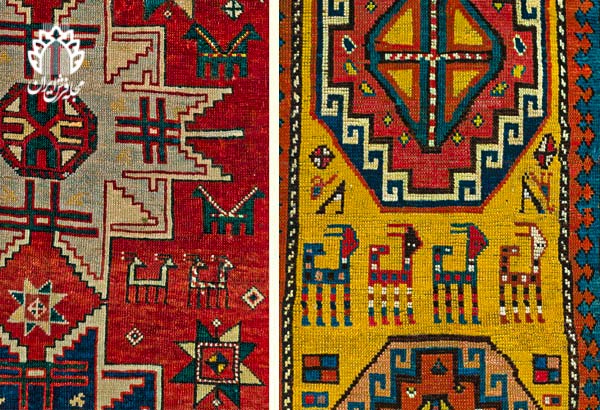 The beautiful Iranian gazelle, a subspecies with a 6,000-year history, woven into Iranian and Caucasian handwoven carpets
Wild animals have long inspired nomads. The swift gazelle, light-footed and free as it runs across forbidden lands and leaps effortlessly over rugged terrain, has profoundly impressed tribal peoples. They see themselves in the gazelle, able to overcome life’s hardships with ease.
In the past, more lions roamed Iran and the Caucasus. A majestic animal, the lion is a symbol of the land of Iran. The lion motif is most often found on Bakhtiari and Qashqai handwoven carpets, where it represents inner strength, balance, courage, and, of course, royal grandeur.
Author: John David Wintz Translation: Davoud Shadlou
Photo Album (2)
Related Reading
All Journal & Blog Patterns & Symbolism
Re-reading an Architectural Narrative in the Warp and Weft of a Carpet
Inspired by the Borujerdi House in Kashan, a distinguished example of Qajar architecture, this carpet shows how concepts such as plan, spatial organization, and architectural ornament can be reimagined through a carpet’s motifs, composition, and palette.