
Patterns & Symbolism
Re-reading an Architectural Narrative in the Warp and Weft of a Carpet
Apr 10, 20253 min readIran Carpet Company

In the heart of Kashan, where earth becomes brick and brick tells the story of a culture, a house stands that is more than a historic building: it is a visual narrative of harmony and balance. The Borujerdi House in Kashan, a masterpiece of Qajar-era architecture, has inspired many Iranian arts with its captivating geometry, poetic refinement, and ingenious structure. But what happens when this inspiration is translated into the language of the carpet?

The plan: more than a drawing In traditional Iranian architecture, a plan is more than lines on paper. It is a blueprint for experiencing space, directing sight, movement, light, and stillness. The design of this carpet draws on the same logic: its balanced central motif, or medallion, guides the viewer’s gaze and creates an inward movement across the carpet, much like the passage from the courtyard to the iwan and reception halls of the Borujerdi House.


The hashti: a point of entry, a moment for reflection In Iranian houses, the hashti is the visitor’s first encounter with the architecture: a transitional space between outside and inside, where one pauses and registers a change of setting. In this carpet, the concept is reimagined as a distinctive medallion at its center. The meeting of color and pattern in this section evokes the feeling of standing at the threshold of another world.
Movement through space, movement through design The paths through the Borujerdi House in Kashan are no accident; every corridor, opening, and skylight has a purpose. Nor does the viewer’s gaze wander aimlessly across the carpet. From center to border, from corner to corner, forms and colors map the eye’s journey.

Windcatchers and visual patterns The tall windcatchers of the Borujerdi House are not merely decorative; they channel fresh air deep into the cellars. The carpet’s repeating patterns and interwoven forms likewise create a sense of flow and movement for the viewer’s eye and mind.
Reinterpreting materials through color The carpet’s palette emerges from the materials of the Borujerdi House in Kashan: earthy reds drawn from traditional brick, soft buff tones from the stucco work, and brilliant lapis blue from the wall and ceiling mosaics. These colors are not arbitrary; they are the language of the building materials, now given meaning in the carpet’s warp and weft.


A piece of architecture in your home This carpet is a woven expression of the thought and worldview of Iran’s traditional architects. It does not copy their motifs, but reimagines the logic of Iranian architecture in an artfully woven form. If you admire the Borujerdi House, experiencing this carpet is a continuation of that encounter: a tangible experience of architecture, narrative, space, and beauty.

Maryam Ghanbari Adyavi M.A. in Handwoven Carpets and M.A. student of Architectural Engineering
 |
 |
| Kashan handwoven carpet, 40 raj, 6-metre size, code: 4-23249 | Kashan handwoven carpet, 40 raj, 6-metre size, code: 4-23783 |
 Patterns & Symbolism2
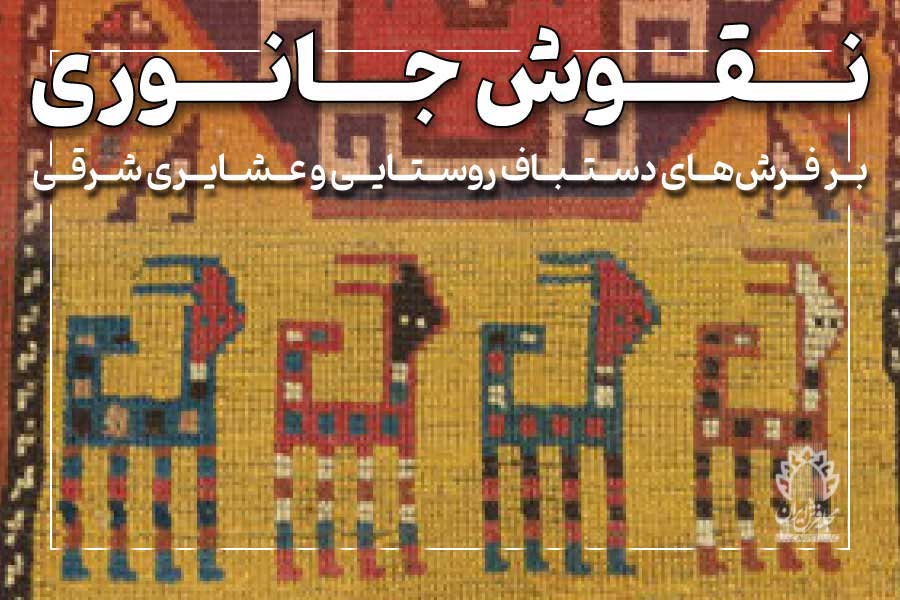
The lives of nomads and villagers have always been closely connected with nature and the animal world. They regarded certain animals as totems and embodiments of hidden qualities, and recorded their images in works of art such as carpets.
 Patterns & Symbolism9
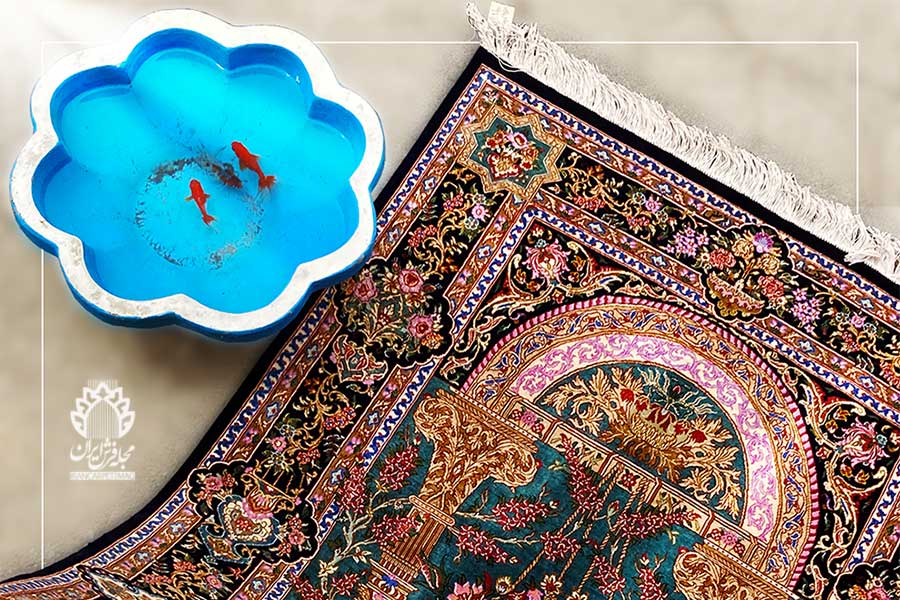
One of the most compelling features of Iranian handwoven carpets is the diversity of their designs and motifs. Beautifully balanced and carefully composed, these designs also carry a range of meanings. The Mehrabi design is one such example, and the subject of this article.
 Patterns & Symbolism22
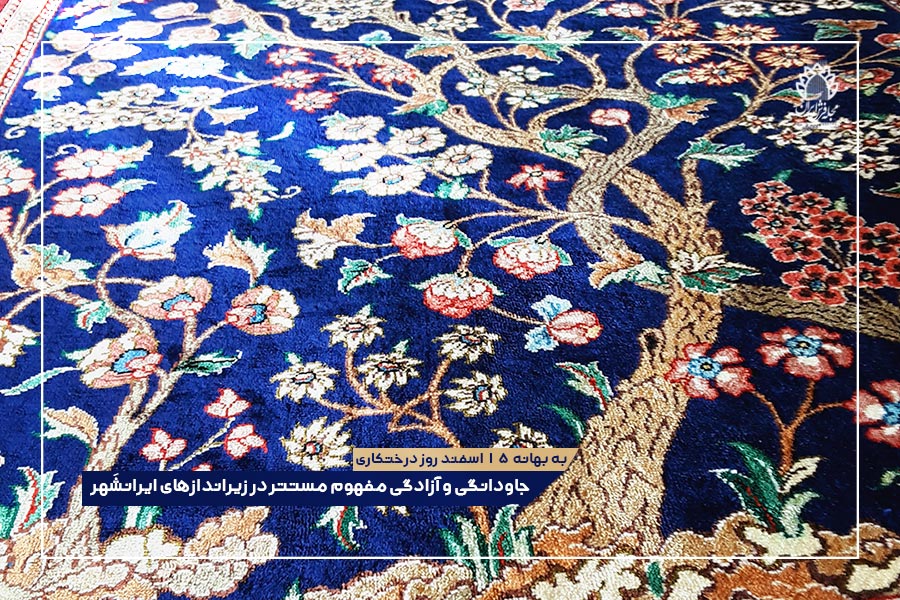
The tree has long held a place of distinction in Iranian culture. Pottery, stone carvings, textiles and, of course, rugs all bear signs of the tree—sometimes symbolic, sometimes mythic.