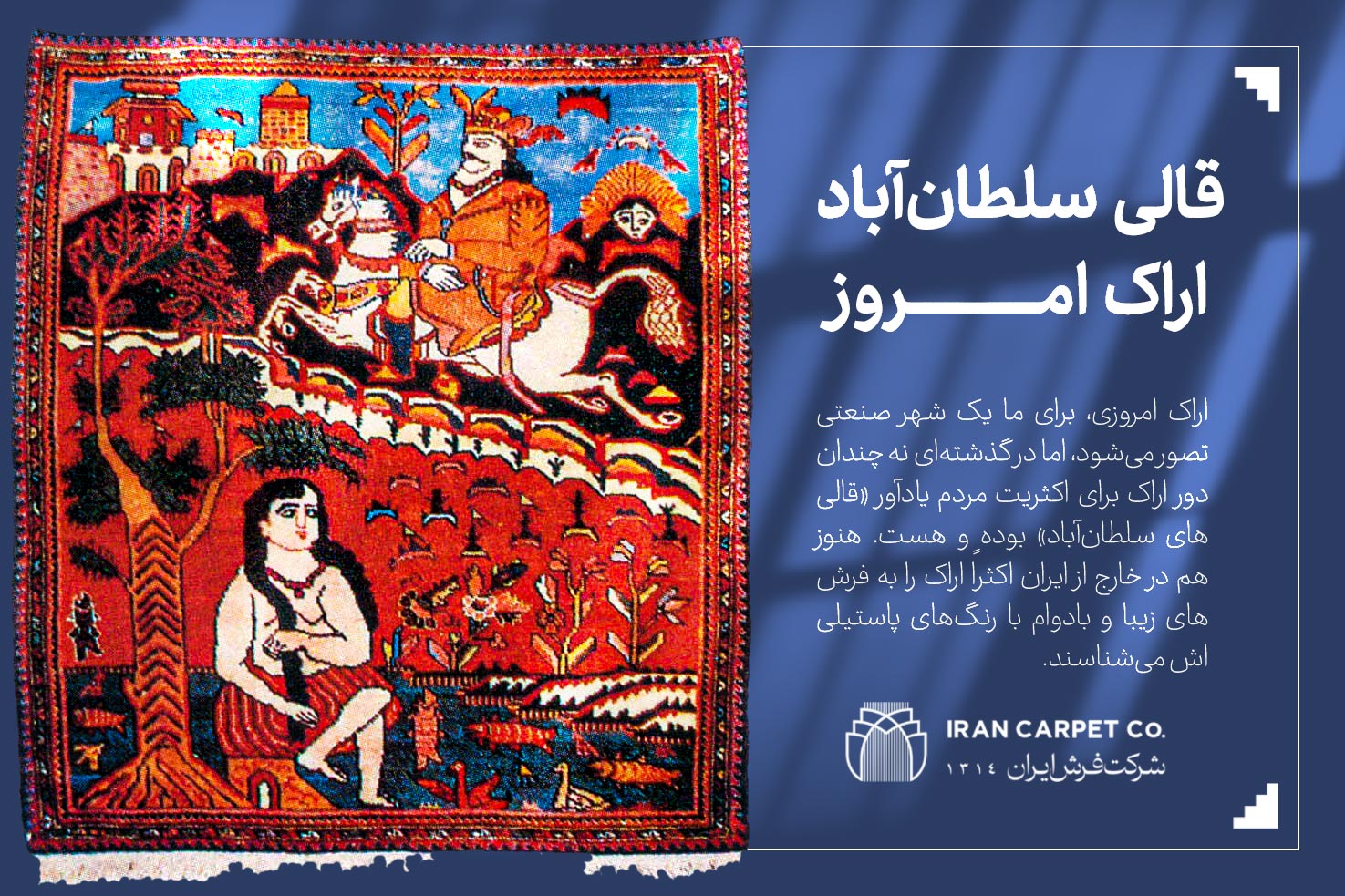
The Women Who Made Chaleshtor Carpets Famous as Bibi-Baft
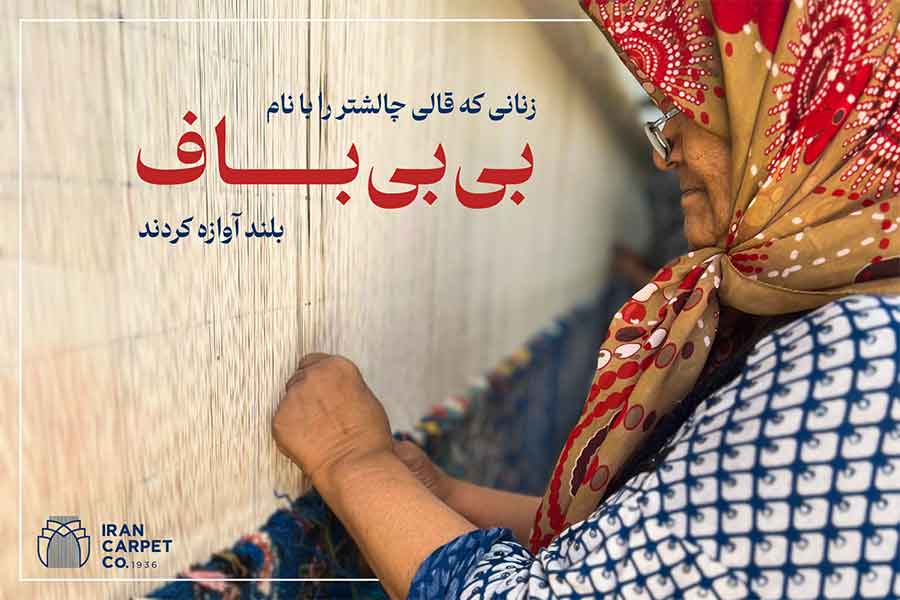
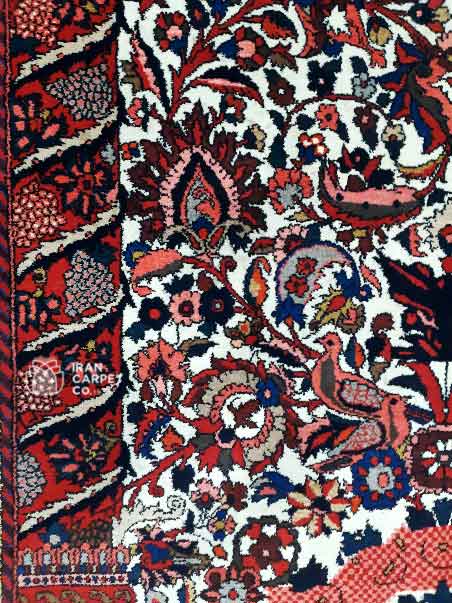
Today, Chaleshtor is considered one of the districts of Shahrekord. It is renowned for its Bibi-baft carpets and handmade locks. The Chaleshtor carpet is distinguished from other carpets by its particular weaving technique, known as tab-ku, which has become a hallmark of the authenticity of Bibi-baft carpets. The principal qualities that brought the carpets of Chaleshtor international fame are: 1) the selection of fine raw materials; 2) precise warping; 3) natural vegetable dyeing and colourfast dyes; 4) the weaving technique; 5) repeated beating with the beater; and 6) the use of traditional designs.
Several explanations have been offered for the name of this region: 1. Chaleshtor is said to combine the words chalash, meaning conflict or battle, and -tor, meaning a field or place; together, the name would mean a battlefield. 2. Another explanation derives the name from chal, a place where camels are kept, and oshtor, meaning camel—making Chaleshtor a place for camels. This derivation seems unlikely.
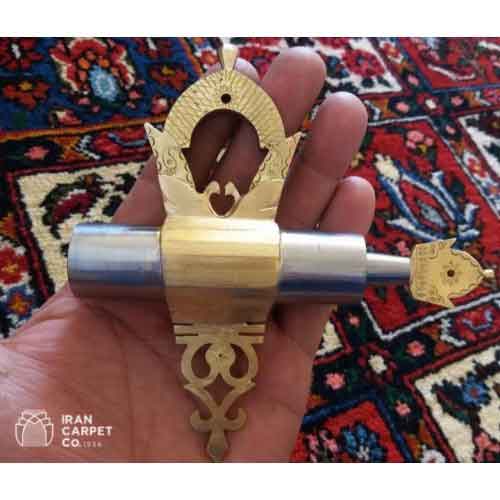
The people of Chaleshtor traditionally earned their living mainly through farming, animal husbandry, and carpet weaving. Lock-making was another source of income. Among the best-known Chaleshtor locks is the Haji Abdullah lock, which has gained international renown. The region’s traditional lock-making dates back to the Safavid period. According to local accounts, a prominent Chaleshtor resident named Khajeh Abdullah Nasr went to Isfahan as a child and learned the craft from Master Mohammad-Ali Talaei, a renowned weapons maker. After returning to Chaleshtor, he devised a lock that became distinctive to the region. In Chaharmahal and Bakhtiari, locks were used mainly for protection, including to secure saddlebags and salt bags. Other locks had significance beyond their practical use and were associated with popular beliefs. People believed that tying a votive offering and seeking the intercession of the Immaculate Ones could help resolve difficulties; sometimes they did so to fulfil a vow.
Some sources report that around 200 years ago, the Bakhtiari khans brought the designs for Chaleshtor carpets to Qahfarrokh (today’s Farrokhshahr), after which this type of carpet weaving spread in Chaleshtor. Carpet weaving has always been—and remains—the principal occupation of the women of the region. Weavers sometimes combine motifs through their own creative ingenuity, creating new designs. Chaleshtor carpets can be divided into two groups: Bibi-baft carpets and carpets woven by weavers using their own funds.
Bibi-baft carpets. Financed by the khans and made under the supervision and direction of the Bibis, these carpets were of exceptional quality: fine designs, excellent hand-spun pile wool, highly colourfast natural vegetable dyes, and the tab-ku weaving technique. They were woven by the finest weavers for personal use, as gifts, and as souvenirs; the weavers’ names were not recorded. The production of Bibi-baft carpets was limited to the period of the khans’ rule, beginning during the reign of Naser al-Din Shah and ending under Reza Shah, when the khans lost their power. During the Qajar era, the Bakhtiari khans maintained relations with Western governments. This encouraged a taste for luxury and aristocratic living among them, and European cultural influences can be seen in Bibi-baft carpets, from their motifs to their colour palettes. The khans of Bakhtiari were deeply interested in art and the decorative arts. Bibi-baft carpets were among the furnishings used to decorate their homes and were reserved for the khans and their close associates. Among the khans and Bibis who took a particular interest in carpets were Yusuf Khan Bakhtiari, known as Amir Mojahed, and Bibi Khadijeh, the wife of Khodarahm Khan.
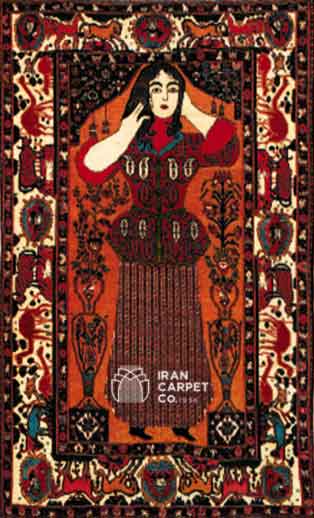
The second group of carpets was broadly comparable to Bibi-baft carpets in weaving technique, materials, and other qualities, but was not designated Bibi-baft. Because of the weavers’ difficult circumstances, the colours they used tended towards darker shades, whereas Bibi-baft carpets were generally brighter, with colours such as light blue, white, cream, and orange.
Characteristics of Chaleshtor carpet weaving
Today, metal vertical looms are used; in the past, horizontal, ground looms were also used. Persian-style warping is carried out using a shed stick. The carpets have a knot count of 35 to 45 knots per raj and combine loul and flat-weave structures using the tab-ku technique. They are woven with the symmetrical Turkish (Ghiordes) knot, without a hook, and have attached selvedges and canvas-like flatweave ends. The warp and weft are cotton, and sometimes wool.
Common sizes are generally one and a half zar, 6, 9, and 12 square metres. Larger sizes are occasionally found. Small sizes also appear from time to time, but are not very common.
The tab-ku (tab-kub) carpet-weaving technique
This technique uses two wefts of different thicknesses—fine and thick—as well as an additional tab-ku weft, made up of approximately four or five plies of warp yarn. The process is as follows: after weaving a row (tab), the weaver inserts the fine weft, then passes the tab-ku weft between the warps and beats it down very firmly with the beater. The tab-ku weft is then lifted upwards (it is not drawn out from between the warps, but moved towards the shed stick), and the next row is woven. To insert the wefts for the following row, the tab-ku weft is first put in and beaten; it is then lifted, and the thick wool weft is inserted. One row is woven with a thick weft, the next with a fine one. The direction of the knots changes with each row, slanting once to the right and once to the left; from the back of the carpet, one knot is visible. This method of inserting the wefts makes the carpets soft and foldable. Because of their softness, they are also known locally as cat-ear carpets.
Dyeing and colour in Chaleshtor carpets
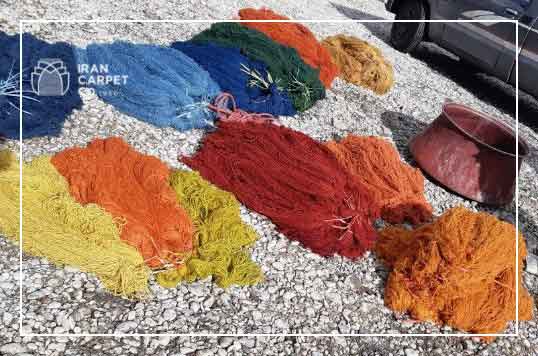
Thanks to its dyeing methods and the use of natural pigments, the Chaleshtor carpet is known for its high-quality vegetable-dyed colours. The dyestuffs used in the region include madder, walnut husks, grape leaves, pomegranate rinds, jashir, gundel, and indigo. Colours used in Chaleshtor carpets include camel (light brown), almond, straw yellow, bright and dark turquoise blue, deep indigo (strong blue), red (lac), deep and medium pink, badan (pale pink), shamshadi (orange), mina green (dark green), light green, qarai, grey, and earthy brown.
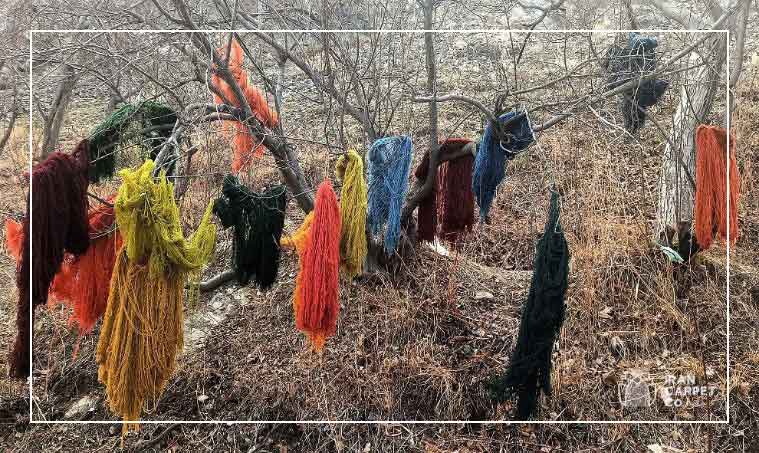
The way madder reds are dyed in this region differs from methods used elsewhere. The pile wool is first boiled with a mordant, then placed with madder in a dye vat for 3 to 10 days in a warm setting, heated by the sun. After this period, it is removed from the vat and, once dry, immersed in running stream water until the desired shade is achieved. To produce a milky pink, the wool is taken out of the vat and placed in buttermilk; after being removed and dried, it is also immersed in water to obtain a beautiful pink. Dyeing the pile wool red and pink was especially important in this region. These two colours seem to have been regarded as sacred in carpet weaving: according to old beliefs, during the dyeing process, people considered impure were not allowed to enter the house or even look in, as they might spoil the colours.
Once dyeing is complete and the pile wool has dried, it is washed and immersed in water. A day considered auspicious is chosen from the calendar, and the wool is put into the water on that day. The water in each region affects the colours differently, depending on its mineral content. From morning until evening, or overnight, madder-dyed red and milky-pink wool is left immersed in the river so that the colours can mature—that is, reach the desired shade and become fixed. Red wool is initially orange, while milky pink is very pale. After remaining in running water until evening, the orange turns a fiery red and the pale pink becomes a floral pink, known as milky pink. Once the wool is taken out of the water, the women beat it with a stick (known as kotak-e choob) to give it lustre and clarity and to clean it. They then wash it very carefully in the river and hang it on a line to dry.

In the past, three streams flowed near Chaleshtor. The first began at a spring in the town of Nafch and carried cold water; it was known as Bīngāh. The second, used specifically for immersing pile wool, originated in Chaleshtor and was known as Āb-e Shati. The third passed by Qaravolkhaneh Mountain, rose in the gardens of Hasanabad, and ran along the beginning of the Saman road. It was known as Damreh-ye Khayriyeh. The khans had sold its water, which flowed towards Shahrekord, to the Shahrekord municipality. Pile wool was immersed in these streams to achieve the desired colour. Sadly, they have now dried up.
Designs and motifs of Chaleshtor carpets
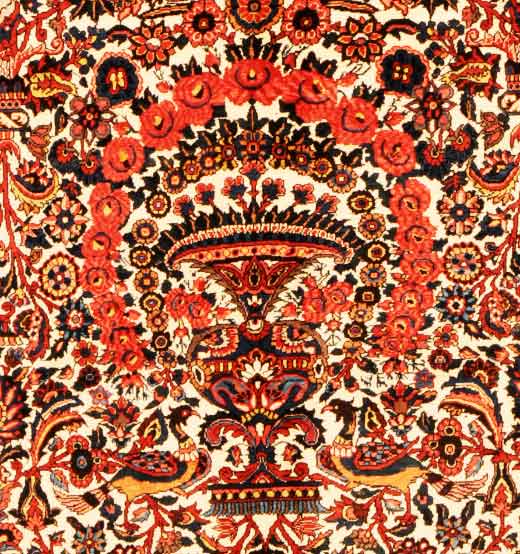
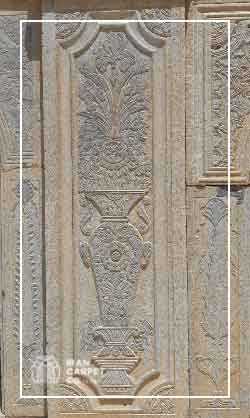
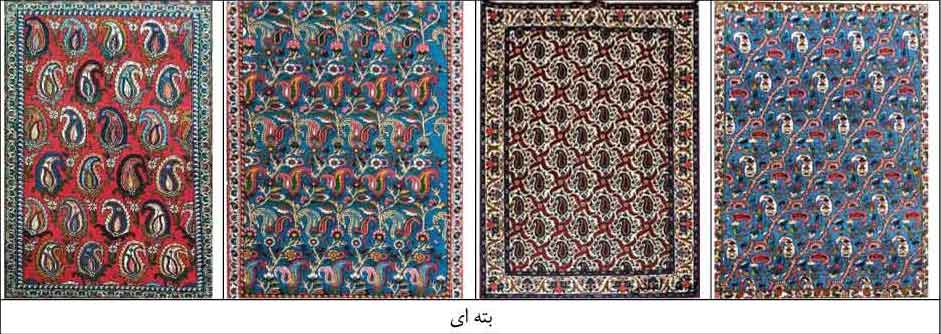
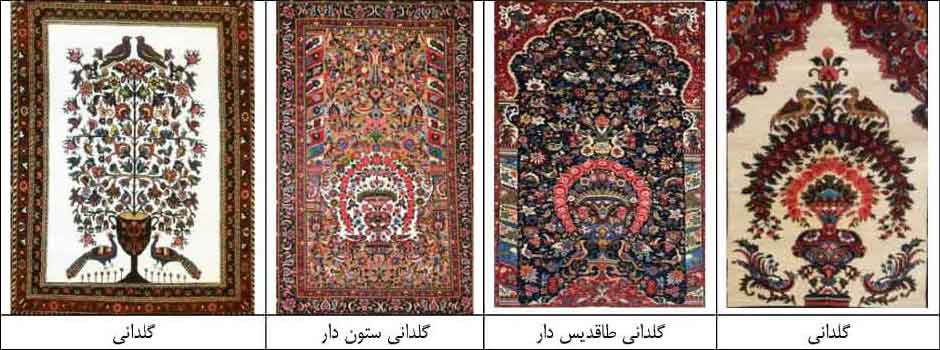
In the past, carpet designs were drawn on uncoloured graph paper, and weavers chose the colours according to their own taste. Many carpet motifs—including the iris, grapevine, cypress, and gol-e farang flowers—can also be seen in the stone carvings of Chaleshtor Castle. To ensure that Bibi-baft carpets were distinct from one another, the design was often destroyed after a carpet had been woven so that it could not be copied. As a result, few Bibi-baft designs and carpets have survived. Those still known include kheshti, cypress and pine, and mina flower designs. Common designs in the region include: 1. medallion and corner (Lachak-Toranj), also known as the mina-flower design; 2. kheshti (panelled); 3. framed; 4. boteh; 5. vase designs, including columned and arched vases; 7. hunting scenes; and 8. repeating floral and bird motifs.
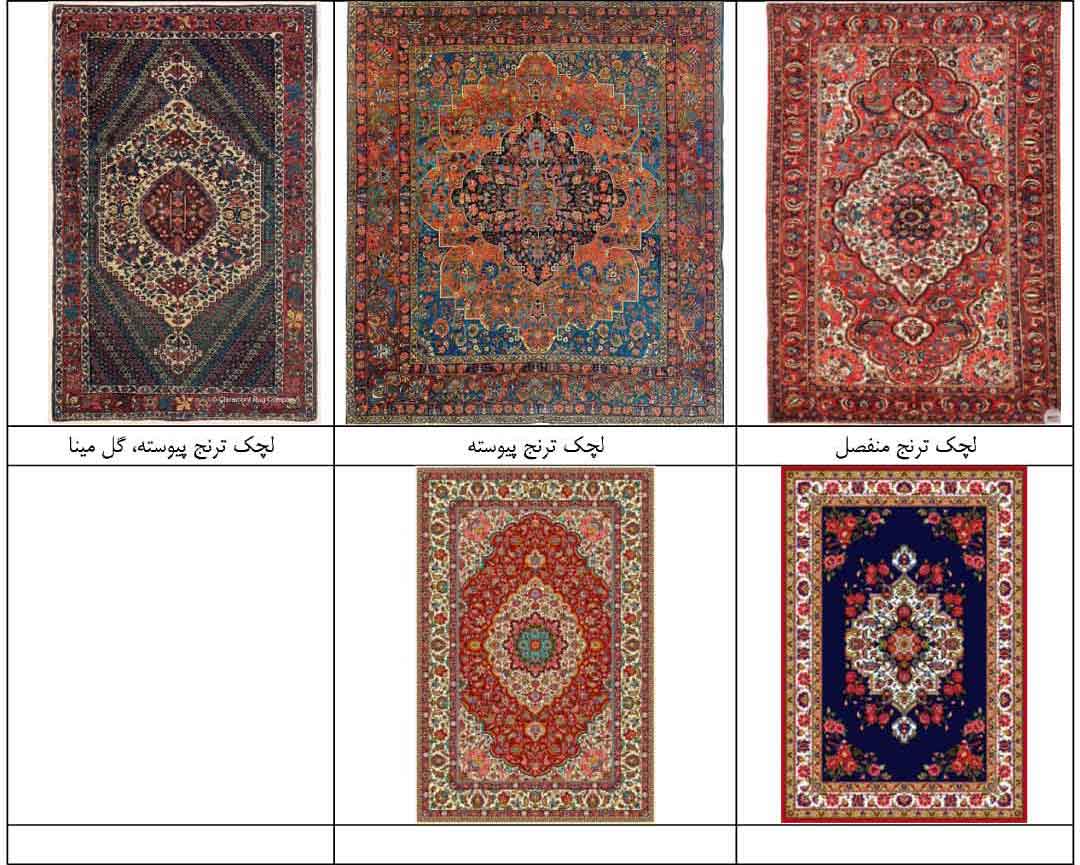
In Chaleshtor, the medallion-and-corner design is known as kelil-toranj. Depending on whether it includes corners, a medallion, or both, its variations include: 1. a plain medallion-and-corner design; 2. a medallion without corners; 3. corners without a medallion; 4. a medallion-and-corner design with a plain field; and 5. a geometric medallion.
The medallions in Chaleshtor carpets have a variety of shapes and local names, including majmaeh, nest, pomegranate, Quranic, sun, dragon’s mouth, arabesque, and three-medallion forms. Kelils (corners) are also divided into three types: continuous (the four corners are joined), semi-continuous (the corners are joined in pairs), and separate (the corners have no shared point of connection).
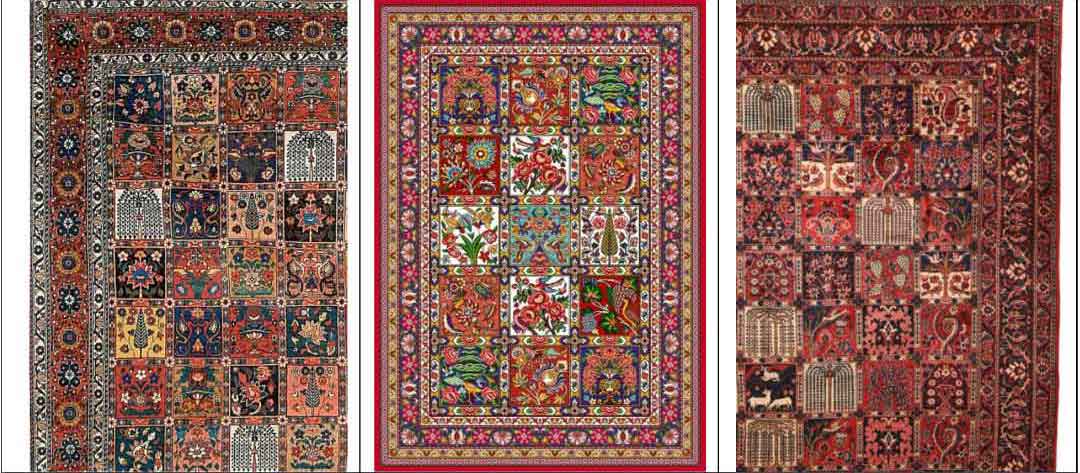
Kheshti. In kheshti carpets, equally sized square panels are arranged side by side. Different motifs are woven inside each square, and each panel has its own distinct field and design. In Chaleshtor, the panels are arranged in grids of ten or eight, and their motifs are drawn from nature or carry symbolic meaning. The motifs that separate the panels are called ghalamdan or band-e khesht.
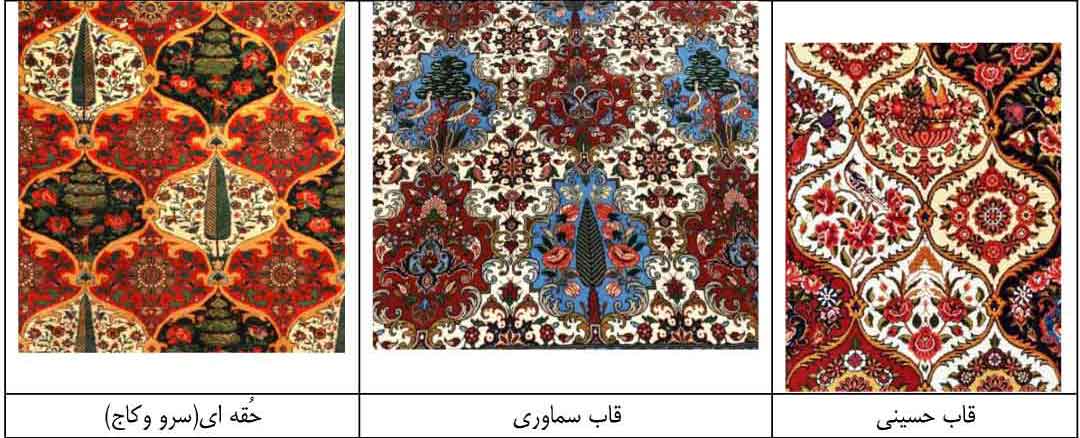
Framed design. The forms in framed designs can take shapes beyond squares and rectangles, including diamonds. Variations include the samovar frame, Hosseini frame, and huqqeh frame (cypress and pine).
Repeating boteh design
Vase design
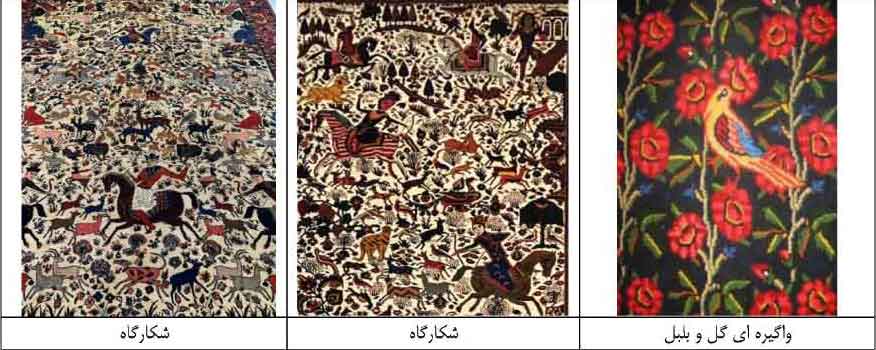
Common motifs found in carpet panels include:
- Natural motifs (animal and plant forms), such as peacocks, animals, snakes, leaf-and-vine flowers, London flowers, cypress, pine, weeping willow, grapevine, and more.
- Symbolic motifs (inspired by the surrounding environment), such as scissors, arched forms, sickles, and dast-e delbar motifs.
Common panel motifs in kheshti carpets include the columned panel; onion-flower (iris); Shah Abbasi flower; fan-shaped flower (grape leaf); cypress (sabal); pine; peacock; one-sided meadow; grapevine; almond tree; weeping willow; animal; animal-bearing; bird-bearing; reconciliation boteh; angel panel; arched form; dragon’s mouth; almond boteh; six-boteh; and crooked-headed boteh, among others. Some panels belong to particular tribes and are used within families. For example, the Shakeri tribe often uses animal motifs in its panels.
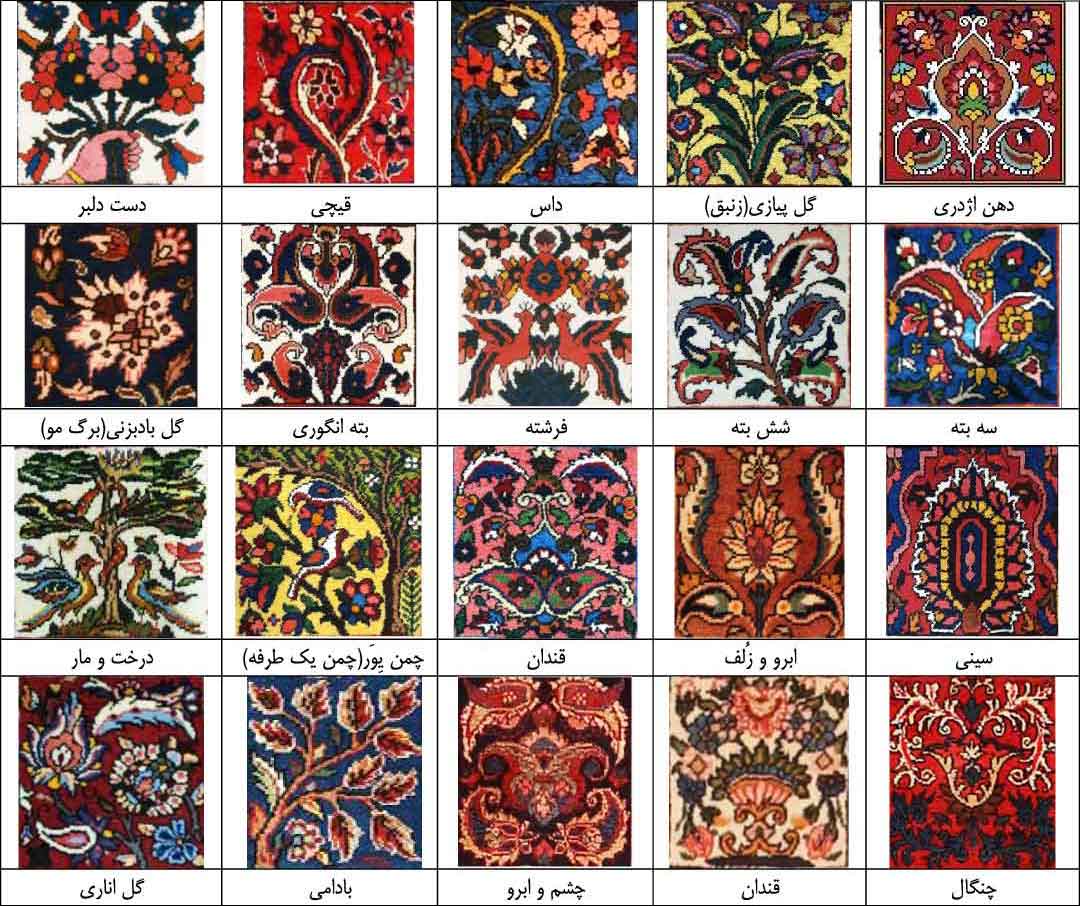
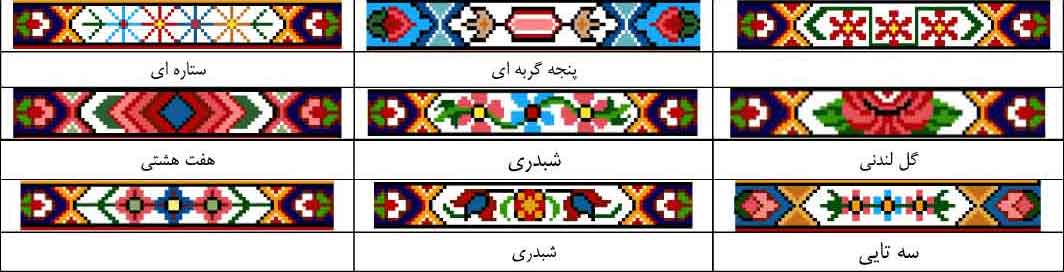
In kheshti carpets, the spaces separating the panels are called band-e khesht or ghalamdan. Each panel is bordered by four ghalamdans. The motifs on the vertical and horizontal axes are often different. Common ghalamdan motifs include cat’s paw, star, clover, cotton flower, three-part, floral, haft-hashti, small flower, and armband.
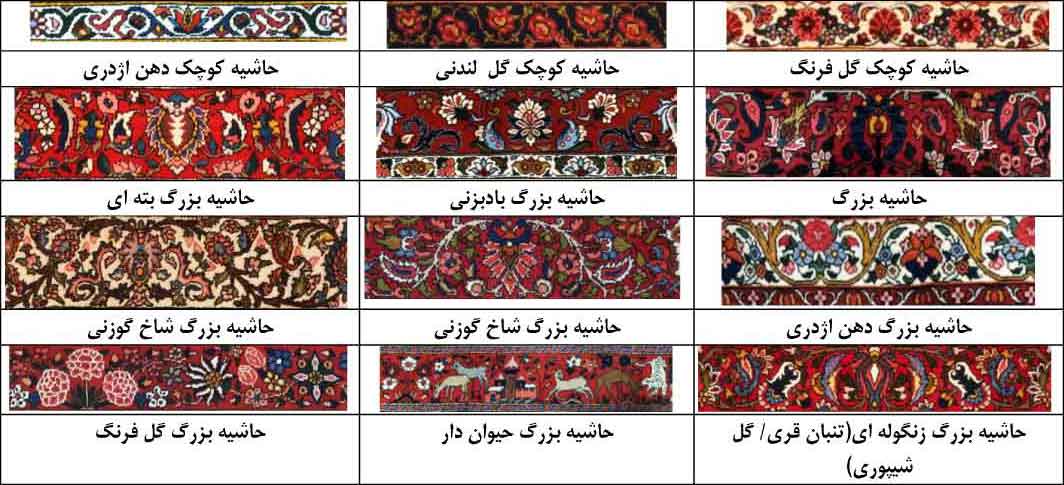
A distinguishing feature of Chaleshtor carpets is that the broad main border often has a red ground. Common borders in the region include gol-e farang (London flower), tanban qari, deer antler, and others.
Designers
The most important and influential designers of traditional Chaleshtor patterns include:
The late Mirza Ahmad Nasr Chaleshtori drew inspiration not only from weavers’ commissions but also from historic buildings, castle motifs, and the tilework of mosques. The late Abolqasem Khan Azadeh did not create new designs, but redrew Mirza Ahmad’s patterns with slight changes. The late Karim Bayat, Abolqasem Khan Azadeh’s son-in-law, modified Mirza Ahmad Nasr’s designs with small changes to their colours. He chiefly restored traditional designs, preventing them from being lost. The late Mohtaram Eshaqian Chaleshtori, too, used her passion and imagination to create and weave new designs in the kheshti style.
Shaheen Nemati Dehkordi Carpet specialist
*Tab: In the local Chaleshtor dialect, a row of knots is called a tab. *Kotak-e choob: A little washing powder is added to the pile wool, which is placed on a flat stone and beaten with a small stick. This action is called kotak-e choob—literally, beating the wool with a stick. *Immersing in water: The pile wool is left floating in running spring or qanat water for as long as needed. Minerals in the water are absorbed and alter its colour; the wool is removed according to the weaver’s needs and the desired shade. *Majmaeh: A large copper tray on which dishes of food are placed and set on a korsi, a low table with a heating source beneath it. *One use of carpets is in mourning ceremonies. A carpet is spread over a grave and flowers, halva, and a framed photograph of the deceased are placed on it; it is gathered up after the ceremony. *Bibi: The mothers and wives of khans, and other women who held the title Bibi. *Ghalamdan: Some believe that carpet ghalamdan motifs were adapted from the designs on calligraphers’ pen cases. Older weavers call these motifs bazubandi, believing them to be inspired by the armbands worn by champions.
For further reading on Chaleshtor carpets, see the following source: Ghani, Afsaneh (2019), Cultural Analysis of the Chaleshtor Carpet, SAMT Publications.
Related Reading
All Journal & Blog Regional Weaves
Tabriz Carpets: A Feast of Khata’i Motifs
Across the centuries, Tabriz has remained a cradle of art and culture. The handwoven carpets of this city seem to embody Iranian taste and creativity, their warp and weft alive with it. Tabriz’s skilled weavers intertwine delicate knots to bring inventive designs to life.