A Glorious Day
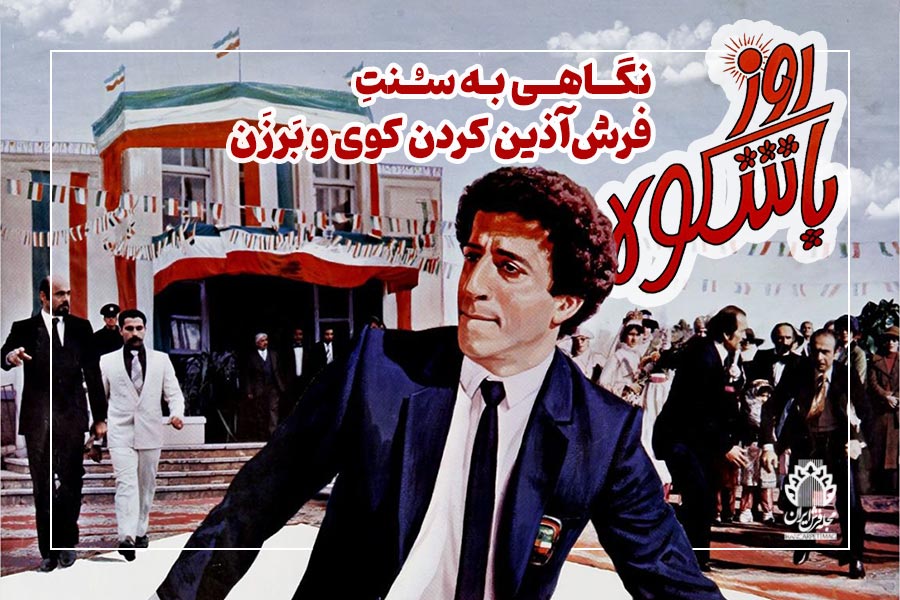
 Poster for the film A Glorious Day
Officials in a small town on the edge of the desert—probably somewhere in Semnan Province—are informed that a high-ranking official from the Pahlavi court will arrive by train to visit their town. The officials set about preparing a reception, doing their best to make use of every available resource. Meanwhile, a young cyclist named Gol-Aqa, a local who has won a gold medal at the Asian Games, returns to his hometown and is greeted with great enthusiasm by its residents. When the officials learn how popular Gol-Aqa is, they decide to use his appeal to draw people to the reception for the court official. The governor and military and security officials also ask Gol-Aqa to use his influence with the townspeople to persuade them to lend their household carpets to the governor’s office, so that the route for the reception can be covered with them. Gol-Aqa refuses to cooperate, and the story continues...
This is the plot of A Glorious Day (1988), a film by Kianoush Ayari. What makes the film a compelling watch for carpet lovers is its depiction of streets carpeted and adorned with rugs. In the film, however, the lanes and streets are never dressed with carpets, because Gol-Aqa and the townspeople refuse to cooperate with the governor’s officials. Yet decorating streets and lanes with carpets was an ancient tradition in Iran. Today, it has disappeared at least from the country’s major cities, where plastic banners and the like have largely taken its place.
Timurid chronicles relate that Shahrukh ordered the gates and walls of Herat to be adorned with carpets for the arrival of envoys from Khotan.
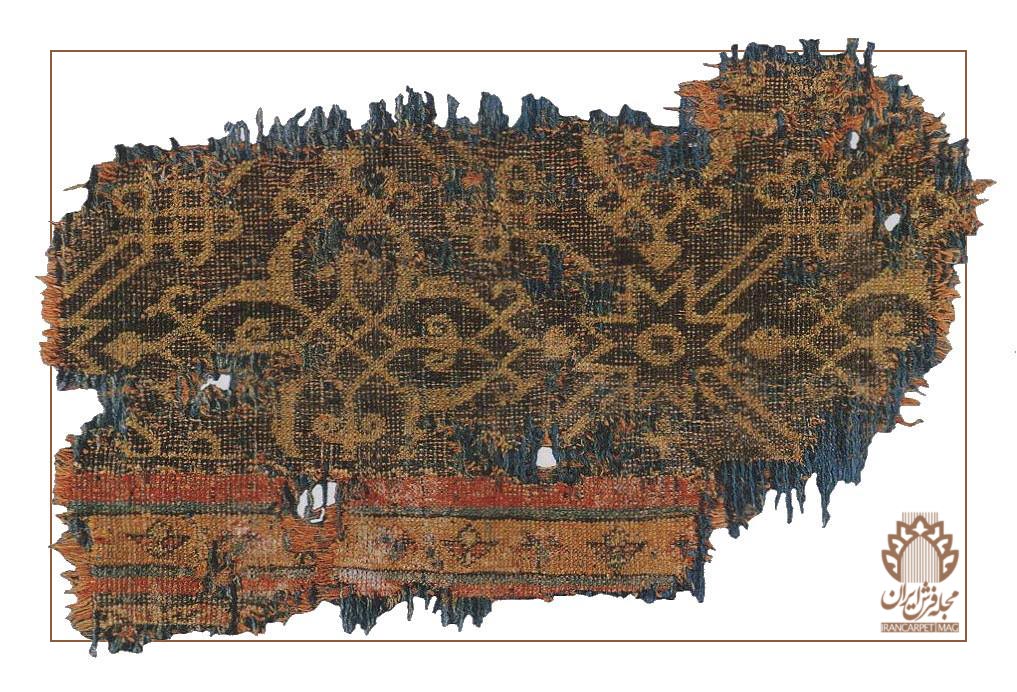 Fragment of a Timurid carpet, Benaki Museum, Athens
Photographs from the Qajar period also show several examples of this tradition, such as these:
Most photographs showing carpets used to adorn lanes and streets, however, date from the Pahlavi period.
Although this custom has now fallen out of use, elderly people in Iran still remember it. They recount that local people were generally asked to help carry it out. Weddings, receptions for notable figures, and even the farewell or funeral processions of certain individuals were marked by carpeting the lanes and streets. Usually, people would lend one or two of their carpets for the occasion, receive a receipt or something similar, and collect their carpets after the event. For Iran and its people, what could make a welcome or farewell more gracious than walking upon carpets, with the eye wandering over their arabesques, khata’i motifs, and colors?
Compiled by Dr. Davoud Shadlou Faculty member, Carpet Department, Shiraz University of Arts