You Won’t Become a Master Dyer Until You’ve Worked at the Dye Vat
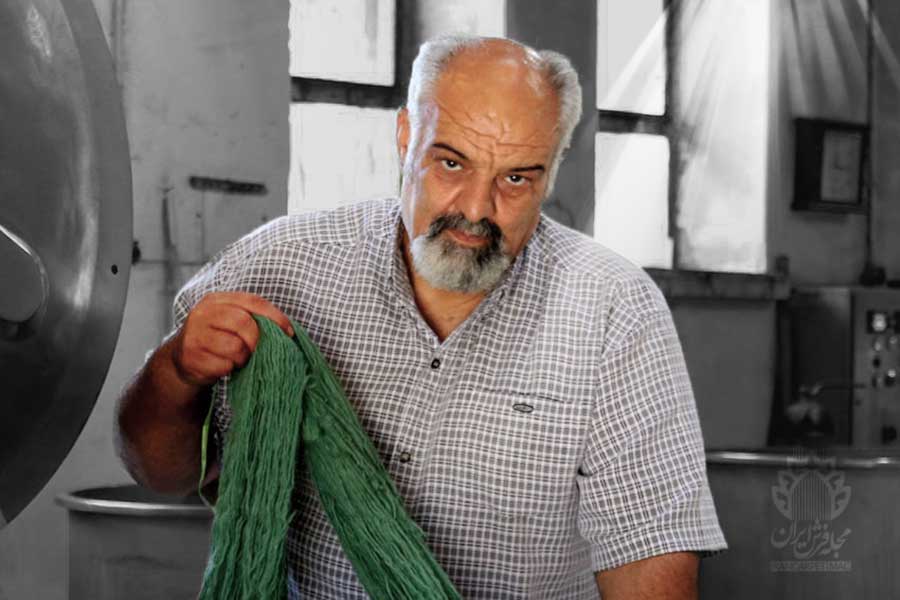
According to the public relations office of Iran Carpet Company, Carpet Plus, an online monthly magazine devoted to handwoven carpets, published an in-depth interview with Majid Jalali, a veteran dyer at Iran Carpet Company, in its 14th issue. The conversation follows. The 14th issue of Carpet Plus was prepared and published in 40 pages in Azar 1399 (November–December 2020), under the editorship of Maryam Taheri Tafreshi.
Could you describe the wool-washing section at the Karaj factories in detail and explain how it works?
When wool arrives at the factory, it goes to the sorting section. Sorting is done by hand, separating the different grades of wool and its various colors. Each color is treated as a separate batch and taken to a separate area. Washing then begins in sequence. For example, the first batch is started on Saturday. First, the white wool is washed. On Sunday and Monday, the cream-colored wool, which has a slight yellow tinge, is washed. The colored wools are washed on Tuesday and Wednesday, and the wool containing dark fibers is washed on Thursday. This method prevents the clean water fed into the machine on the first day of washing from being wasted, while ensuring the wool is washed in sequence.
Wouldn’t it be better to sort the wool where it is first gathered? Here it is piled up, and clean and dirty wool gets mixed together. Doesn’t that make the work more difficult?
It is true that the work becomes more difficult, but we don’t have the facilities to do that in those areas. There, the shearers are the only ones who handle the wool. They collect it all together and send it here. Skilled workers sort it. This section of the factory is now also operated by a contractor.
Could you explain the wool-washing process?
As you can see, there is a tray beneath this large washing machine. When the wool enters the machine, it is immersed in water and washed. Rollers squeeze out the water, which drains into the tray. It is recirculated and returned to the machine, helping to conserve water.
The wool-washing process begins in the opening section, where a machine loosens the wool. This is the opening stage. The wool then enters the first of five tanks. The first tank is for removing the wool grease and sweat. The fibers enter the tank and are treated with warm water. They then pass through the second and third tanks, which contain a soap solution that saturates the fibers. The wool is washed in two stages. The fourth and fifth tanks are for rinsing. By the time the fibers have passed through all five tanks, the smell of wool and the unpleasant smell of ammonia are gone. The wool is thoroughly washed, and all the sweat and grease have been removed.
After these five washing stages, steam is used to generate heat. The washed wool dries on these conveyor rails. It passes through a series of stages until it is completely dry. The drying section has three chambers, each taking about five minutes. The fibers move forward on these trays, and in the next section a fan turns the wool over before sending it on. The same process is repeated in the second and third chambers, until the wool is fully dry. By the final stage, it has no unpleasant odor and no moisture. It is then sent for baling.
Are these the original washing machines?
Yes. These are the original machines that were purchased. They were made by the American company James Adams and were brought here and installed in 1956–57 (1335 SH). They have been operating ever since. Newer, up-to-date machines have since been introduced and are in use abroad; but despite having worked for around 80 years, this machine is one of the best in the region and produces excellent washing results.
How many tonnes can the machine wash in each cycle?
It can wash 8 tonnes in a 12-hour shift.
Where does the wash water go, and is it reused?
Yes. The water goes to the treatment section and is then used for agricultural purposes.
What happens to the wool after it is washed?
After washing, the wool is sent to the baling machine. This machine was also imported, installed, and commissioned at the time by the same American company. It is set about 4 metres into the ground. The washed and dried wool is fed into this chamber. The machine presses it, reducing its volume until it is tightly compressed. It is then lifted by the chains at the sides and covered with burlap. The bale is wrapped and taken out of the machine. The wool is then sent to spinning mills, or, if a merchant has placed an order, delivered to them in bales.
Do you also export washed wool?
Iran Carpet Company does not export wool, but merchants who commission washing and baling may export it themselves.
Which regions does this wool come from, and is wool from each region washed and baled separately?
Yes, it is kept entirely separate. For example, if wool comes from Ilam, Kermanshah, or Sirjan, it is washed and packed separately. After baling, the bale is labeled accordingly—for example, “Ilam white wool, grade 2.”
Were these magnificent buildings originally built for Iran Carpet Company’s factories?
No. In 1948–49 (1327 SH), these were among the first concrete buildings in Karaj. They were built by the Germans as part of an industrial town for an ironworks. The equipment and facilities required for the ironworks were being shipped to Iran when other ships struck the vessels carrying them, and they sank. The project was consequently halted. In 1956–57 (1335 SH), the buildings were allocated to various organizations. This site was assigned to Iran Carpet Company. Another large building went to the Standards Institute, and a further building to the Technical and Vocational Organization. However, for years after the Isfahan steelworks was established, this site continued to serve as a warehouse for the ironworks. Iron was brought here by train from Isfahan and then transported from this area to different parts of the country.
Could you tell us a little about the carpet-washing section?
This section was established around the same time. It has a deep well for washing. Carpets woven in other cities are brought here. After finishing, they come to this section for washing, stretching, and the main finishing operations. The carpets produced here are handed over to the finishing workers, who expertly trim and even them out. They are then washed with water and detergent using a semi-industrial process, and dried. If a carpet needs further work, such as stretching, that is also done here.
Do people also bring carpets here from outside for washing?
Yes. People either bring their carpets in themselves or contact us to arrange collection. The carpets are brought here, all the necessary work is carried out, and they are sent back to the customer.
What work is done in the repair and restoration section at the Karaj factories?
Carpets requiring repair and restoration are brought to this section and worked on by master craftspeople and their colleagues. Leather edging is also sewn onto new carpets. If a carpet has a raised or uneven area, the master craftspeople correct it. In general, all the practical stages of carpet finishing take place here, so the carpets enter the market free of defects. This section of the factory is also operated by a contractor.
Photo Album (15)
Related Reading
All Journal & Blog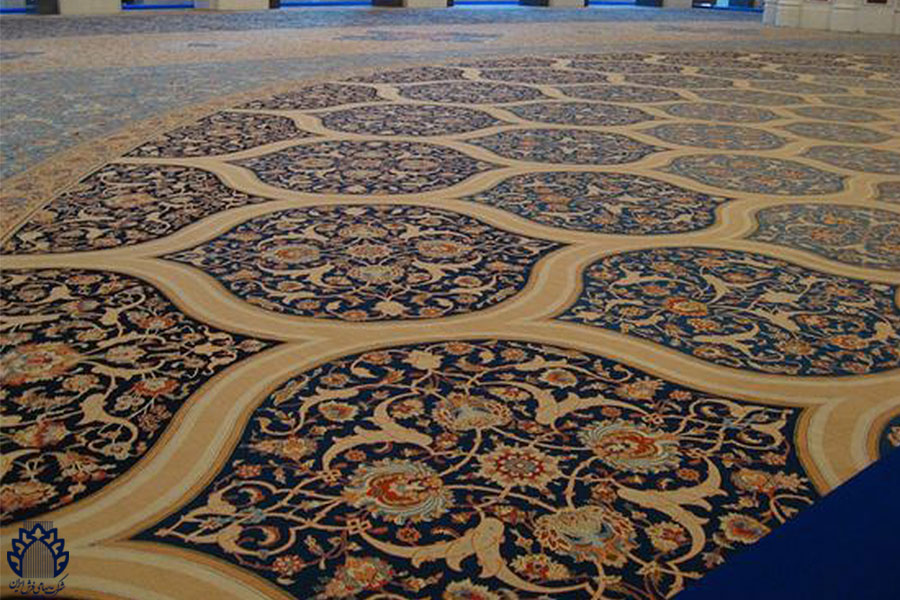 Interviews4
Carpet-Weaving Masterpieces by Iran Carpet Company
The carpet for the Sultan Qaboos Grand Mosque in Muscat is one of the large-format carpets produced by Iran Carpet Company. It was sent to Oman in 2000. On this occasion, we spoke with Reza Allahdad, who was the company’s Deputy for Production at the time.