Warping
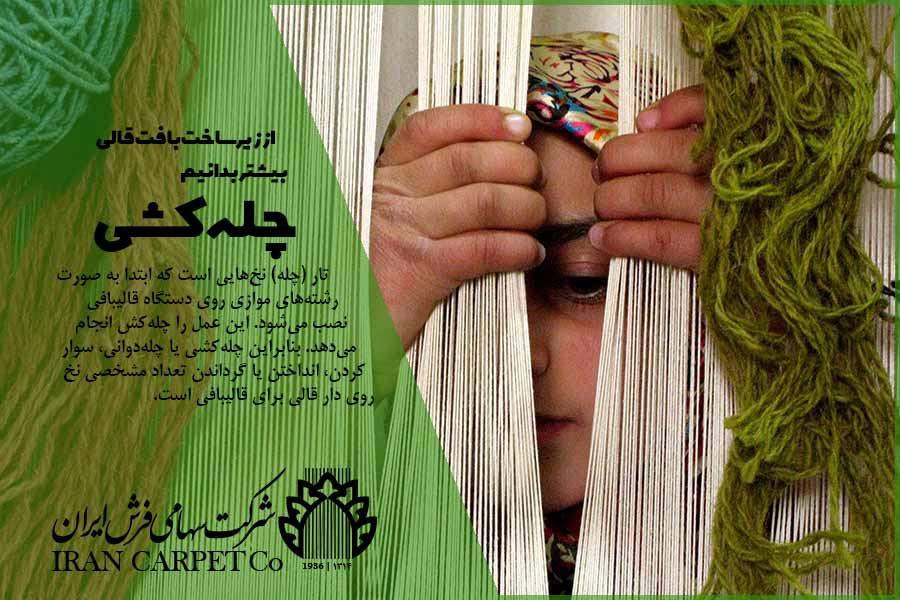
Warping is one of the most important stages in carpet weaving. In a finely executed weave, the skill of an experienced, accomplished warper (taneh-tab) is no less valuable than the patient, meticulous work of the weaver. In addition to the warper’s expertise, the choice of quality materials and a suitable loom are also of great importance. In carpet weaving, the warp and weft form the essential framework. The warp consists of threads first arranged in parallel on the carpet loom. This is done by the warper. During weaving, the weaver passes the weft between the warp threads. Warping, also known as setting or drawing the warp, is the process of mounting, laying, or winding a specified number of threads onto the loom for carpet weaving. These stages are carried out by one or two warpers. The warper winds the threads around the loom’s upper and lower horizontal beams, known respectively as the *sardar* and *zirdar*. A warper must be familiar with different types of carpet designs and be able to read them. Depending on the weaving location and local weaving traditions, warping is carried out in two ways: Persian warping: The warp threads are first wound around two pegs firmly fixed in the ground, then transferred to the loom. Turkish warping: In this method, two workers sit at opposite ends of the loom, one above and the other below. They pass the ball of warp yarn from side to side, winding it regularly around the upper and lower beams. Although this method takes longer, it offers greater precision and regularity, and produces a satisfying result.