Viss Rugs
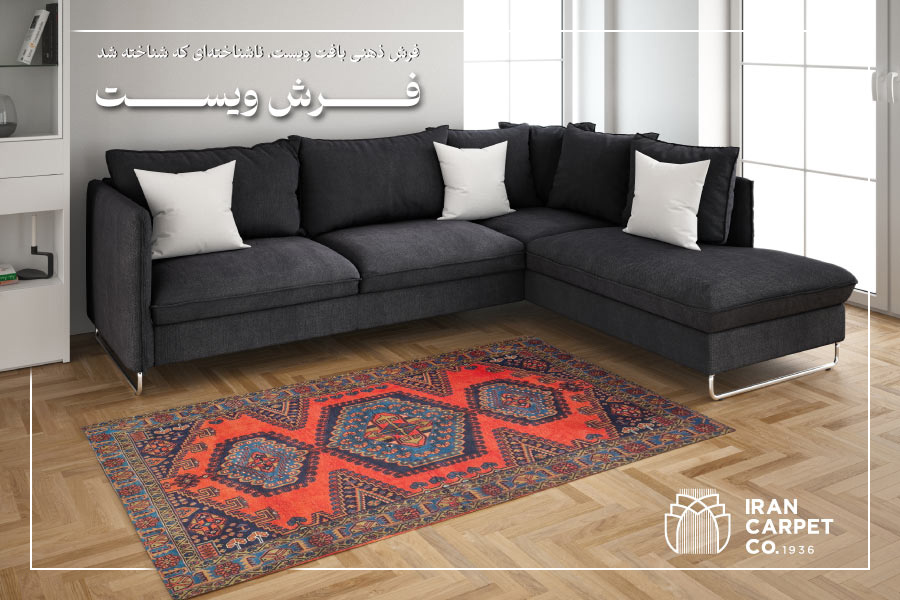
Although Viss rugs were once little known among carpet buyers, growing interest in decorative carpets has recently made them one of Iran’s best-known village rugs—and a serious potential rival to Heriz carpets in international markets.
A Brief History of Viss
The village of Viss lies two kilometres from the town of Khansar, in a verdant, mountainous area among the Zagros foothills. It enjoys a mild climate.
Viss dates back to the Median period. Recent archaeological research on the central mound of Viss indicates that the oldest archaeological remains in the Golpayegan and Khansar region are found here, dating to the Parthian period.
The name Viss is ancient and means “large tribe.” According to Dehkhoda, in the Avestan language, *vis* means a village or settlement—and may also refer to a clan or tribe. The tribes who settled in Viss migrated to the area from Hamadan. Some research traces the migration of peoples living in Hamadan to before 400 BCE and the time of Cyrus the Great, suggesting that groups of Jewish people from Hamadan historically migrated to Khansar and Golpayegan. The people of Viss speak a form of classical Persian. Three small neighbouring villages—Arjang, Kahart and Khosheh Rud (Khoshk Rud)—speak Turkish, while the people of Hajiabad and Hasanabad speak Luri.
Although Viss rugs and those woven in nearby villages share broadly similar designs, subtle differences set them apart. For this reason, rugs woven in the villages around Viss are generally known as Khansar rugs.
Technical Characteristics of Viss Rugs
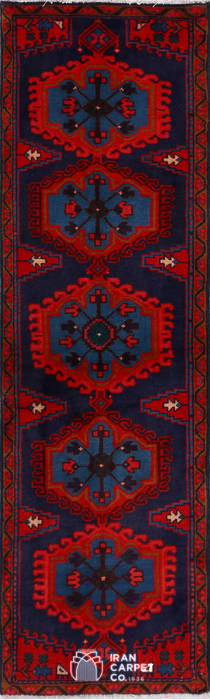
Viss rugs average 20 raj (17–21 knots per 7 centimetres). They are woven with 12-ply cotton warps, double-ply wool pile and seven-ply cotton weft. The symmetrical Turkish (Ghiordes) knot is tied right-handed1, without a hook, in a double-wefted, half-loop2 structure. Rugs are woven on looms using the Turkish circular warping method, with a shed rod in place. The pile is trimmed in the Persian manner at every row during weaving. Sizes range from medium to large; rugs measuring less than 1 square metre or more than 9 square metres are uncommon in Viss.
Overall Structure of Viss Rug Designs and Motifs
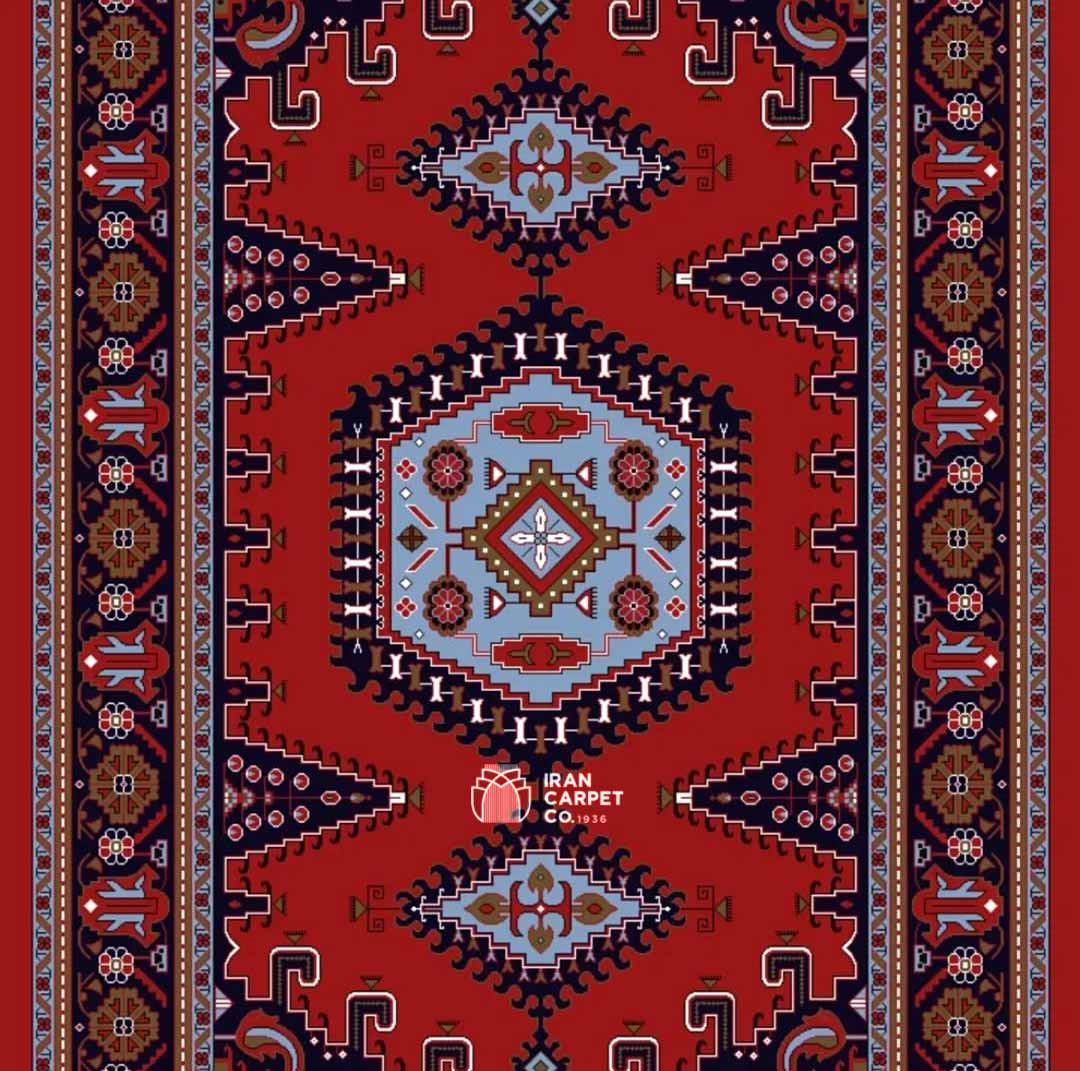
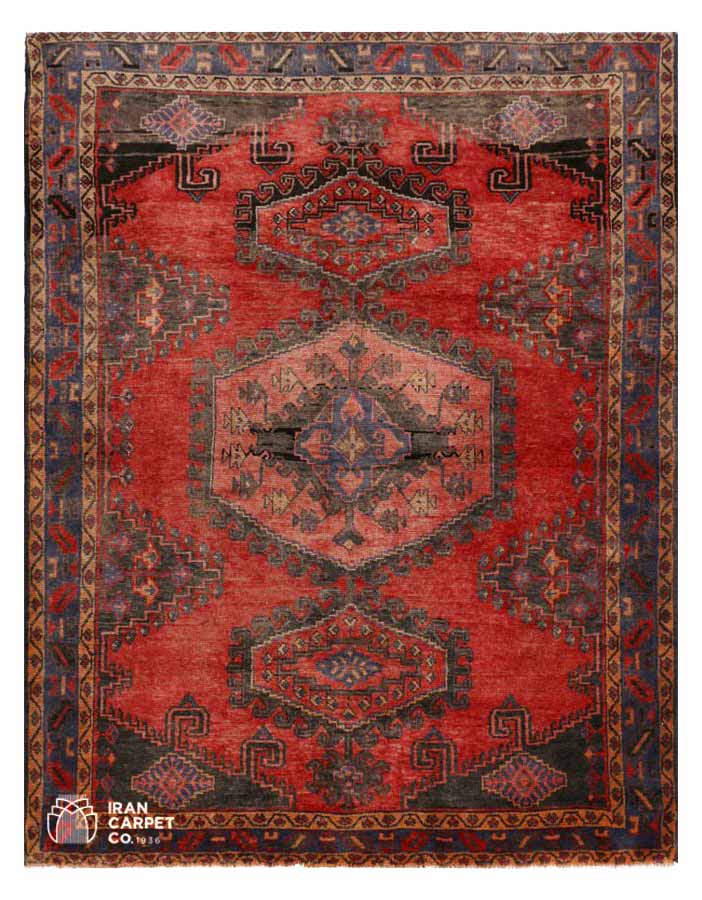
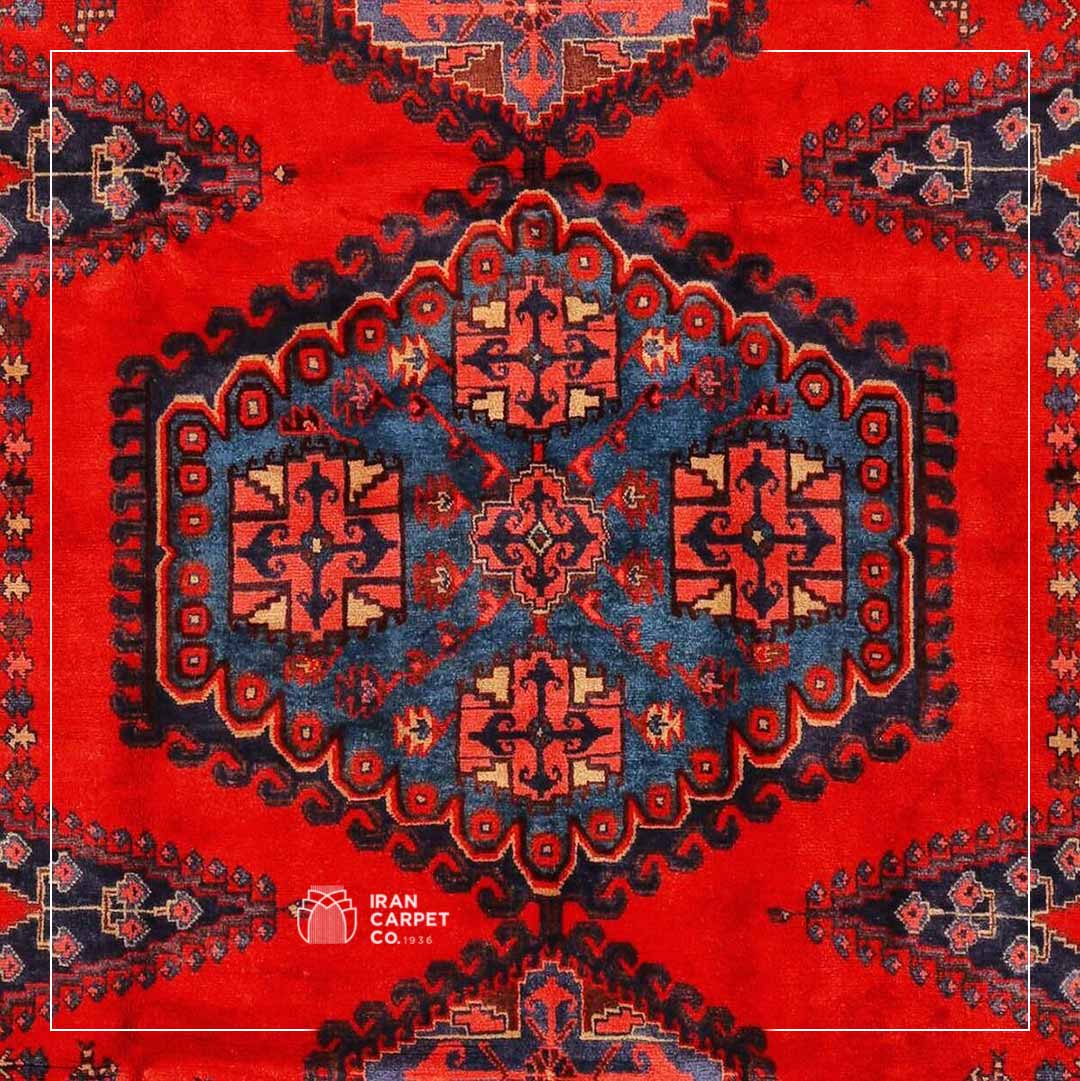
Viss rugs are geometric in design and woven from memory, placing them within the tradition of village weaving. They follow two distinct, consistent design formats, known as the “boteh” and “Vissi” (or “Yavari”) formats. The Vissi format, woven in essentially the same arrangement for many years, is the more common and has distinctive characteristics. It is based on a quarter-map design. Its principal, recurring elements include the pond (central medallion), the rooster’s wing (golden wing), the teki (fragment), the central teki, the sugar bowl, the small lock, the teki hand, the tip, the hand and the paper flower (Image 1). Viss rug motifs can also be classified into three main groups—plants, animals, and non-figurative geometric forms—each with several subdivisions.
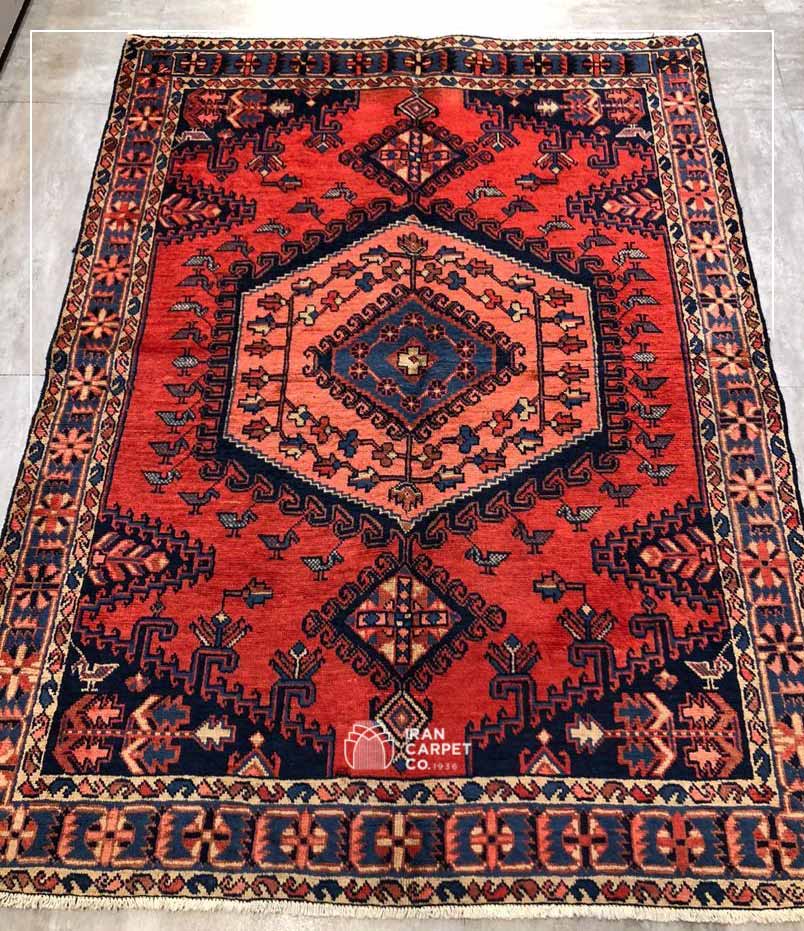
Image 1: Viss design
The boteh motif is not generally considered a recognised or commercially established design in Viss rugs. It is most often woven by young weavers who are just starting out, as an exercise to develop their skills. The design is also not discussed in the various published books on the subject. Some rugs of this type show very simple geometric innovations. In the all-over boteh design, the boteh forms are simple, and their direction alternates from one horizontal row to the next, creating a “quarrel and reconciliation” effect. Boteh-motif rugs are woven in smaller sizes and at a lower knot count, making them thicker.
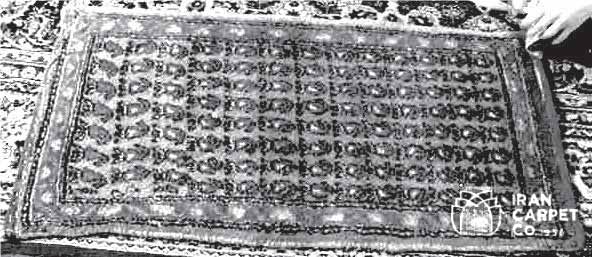
Image 1: All-over boteh design format
Colour Palette of Viss Rugs
The Viss rug palette comprises six principal colours: lac red (locally called “goli”), navy blue (locally “abi”), pink (locally “do’i”), yellow with a green undertone (locally “bokho”), white and brown.
An examination of the rugs studied shows that in more than 80 percent of examples, the colours alternate in sequence from the narrow lac-red (goli) border to the navy-blue (abi) border. The broad border is therefore navy blue, while the field is lac red. Accordingly, blue is the dominant colour in the borders and red in the field.
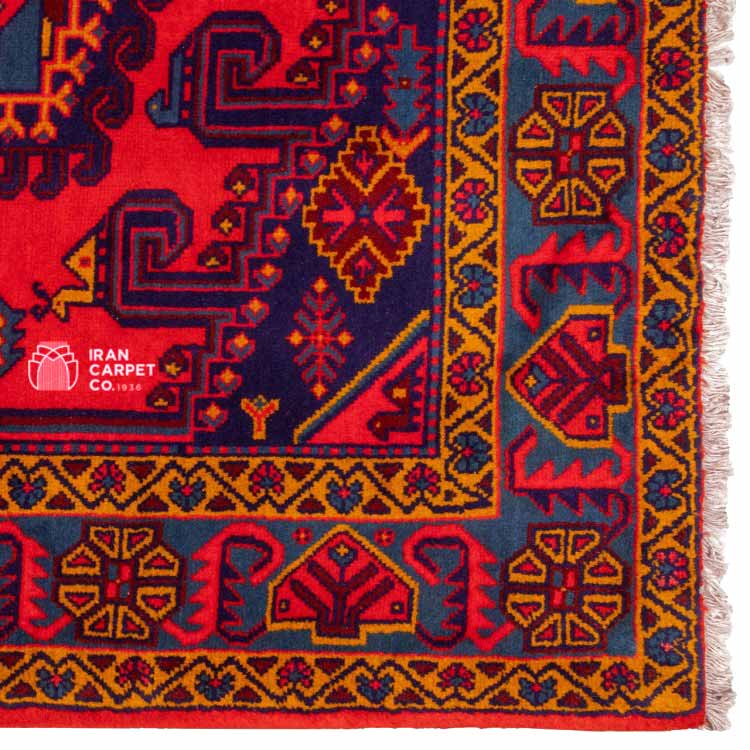
One notable feature of the Viss palette is that bokho—the yellow with a green undertone—is not used as a dominant colour in the field. Brown is used only to embellish the motifs in the field.
The number of colours used in Viss rugs is limited: between four and six in the borders, and five to seven in the field. The colours used in the borders and field are generally the same.
Reyhaneh Kathiri
MA in Handwoven Carpets
For further information on Viss rugs, consult the following sources:
- Maleki, Atiyeh, and Iman Zakariaei Kermani (1395 SH / 2016–17). “A Semiotic Study of the Memory-Woven Motifs of Viss Rugs from Khansar.”
- Mojabi, Seyed Ali, et al. (1392 SH / 2013–14). “An Examination of Numerical Ratios in the Composition of Memory-Woven Viss Rugs.” Goljam.
- Mojabi, Seyed Ali, et al. (1390 SH / 2011–12). “Classification of Designs and Motifs in Memory-Woven Viss Rugs.” Negareh: Scientific-Research Quarterly.
- Zoleh, Touraj (1381 SH / 2002–03). *A Study of Persian Carpets*. Yassavoli Publications, Tehran.
- Nasiri, Mohammad Javad (1374 SH / 1995–96). *A Survey of the Art of Carpet Weaving in Iran*. Author-published, Tehran.