Turkmen Carpets
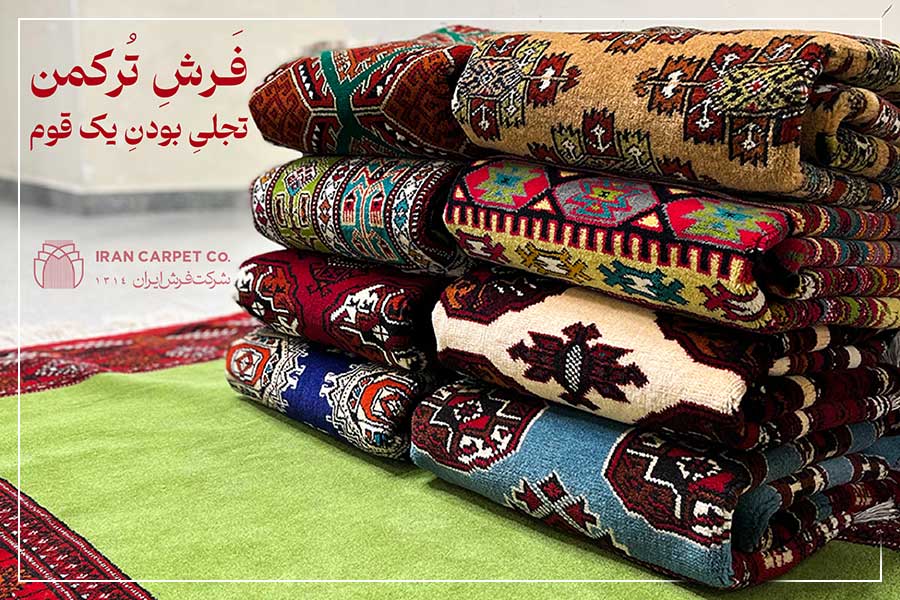
Turkmen Sahra, a land of velvety green plains and a people with deep roots and a rich culture, is the home of the artistry of its women, whose carpet-weaving skill is among their most valuable achievements. The Gelin Barmak¹ motif tells the story of women who immortalize their artistry in every knot of a Turkmen carpet.
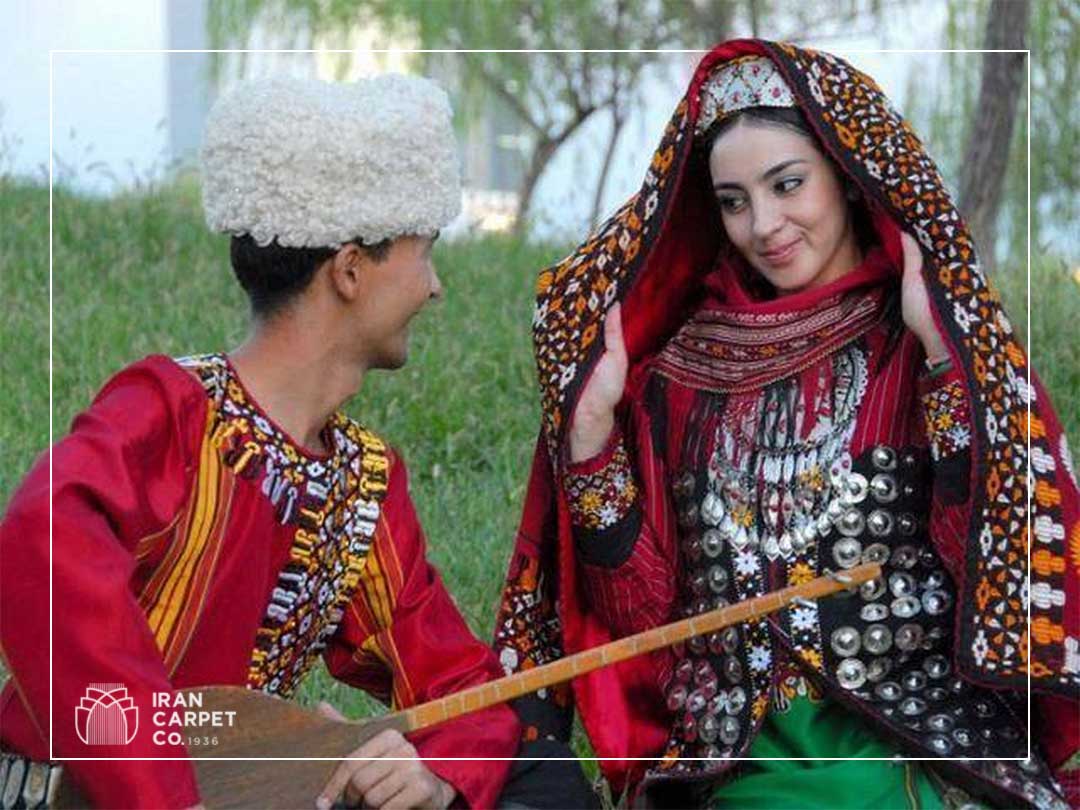
The Historical Background of the Turkmen
The Turkmen are said to have originated among the Mongol Turks and to have lived as nomads for thousands of years east of the Caspian Sea, in Soviet Turkmenistan and northeastern Iran. In his book Genealogy of the Turkmen, Abulghazi Bahadur Khan traces their history back six thousand years. The celebrated Italian traveler Marco Polo, in his account of his legendary journey to East Asia and the legends of the Tatars,¹ refers not only to Turkmen horses and mules but also to the fine and beautiful carpets of this people. As among Iranian nomadic communities generally, carpet weaving is a constant and enduring part of Turkmen life. They weave carpets not for amusement or luxury, but out of necessity. Yet some of these textiles are so finely made and so skillfully taken from the loom that calling them objects of luxury does not seem altogether misplaced.
Turkmen Tribal Structure
The Turkmen are divided into five major tribes: the Salor, Saryk, Ersari, Yomut, and Teke. Most live in Turkmenistan. In Iran, only some Yomut clans—belonging to the Atabay and Jafarbay tribes—and some clans of the Teke tribe are found.
The finest Turkmen weavings are made by the Teke. Teke carpet weavers are more skilled than those of the other two tribes, and their work is better known. After the Teke, the Atabay weavers are considered the finest in the region, and their output is greater. Jafarbay rugs are generally of lower quality and produced in smaller numbers than those of the Atabay. The wool comes from their own sheep, and the spinning and dyeing are also done by the weavers themselves.
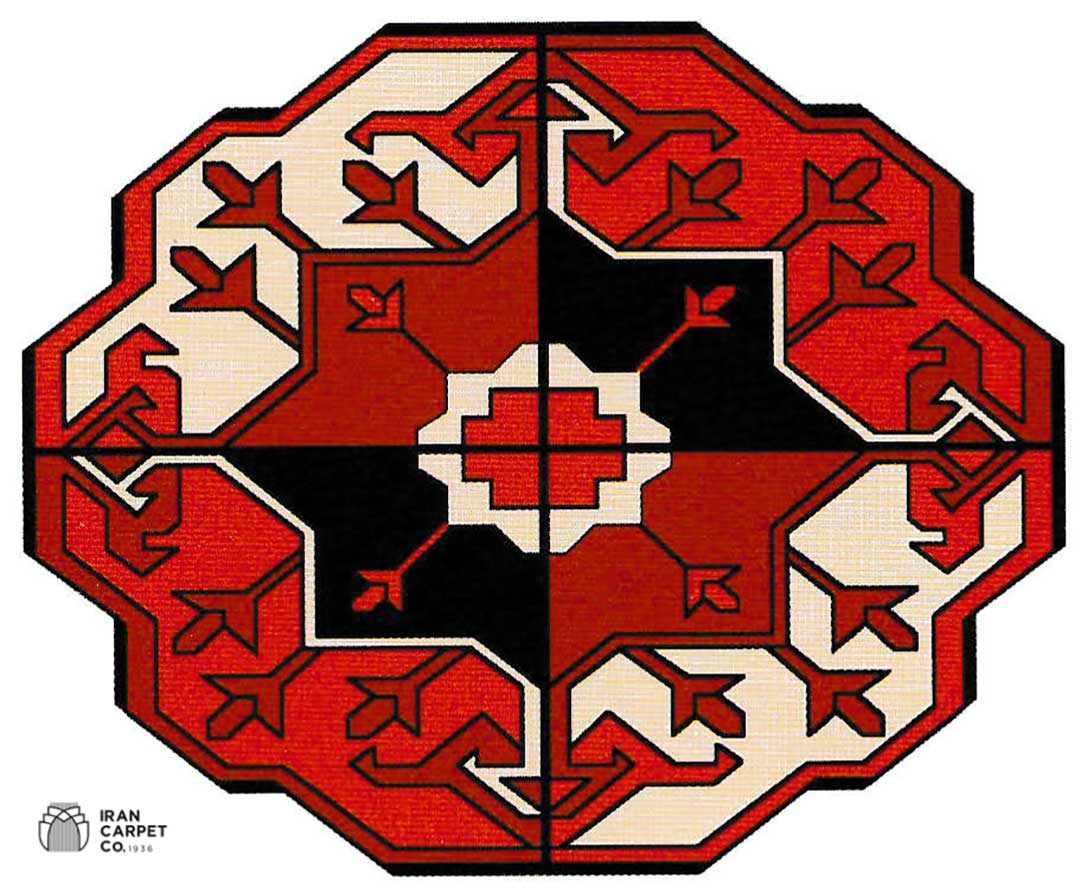 Figure 1: Mari Gol motif
Design and Motifs in Turkmen Carpets
As expressions of a people’s culture, Turkmen carpets feature symbolic motifs that reflect the ritual, ideological, religious, and mythological beliefs of their weavers. According to legend, the ancestor of the Turkmen encoded instructions in carpet motifs for his sons, and to this day no one has been able to unravel their meaning.
The motifs of authentic Turkmen carpets are drawn from the weavers’ imagination. Most Turkmen carpet weavers are women. Girls learn to weave from childhood at their mothers’ sides, and weaving one or more carpets for their own trousseaus is considered essential.
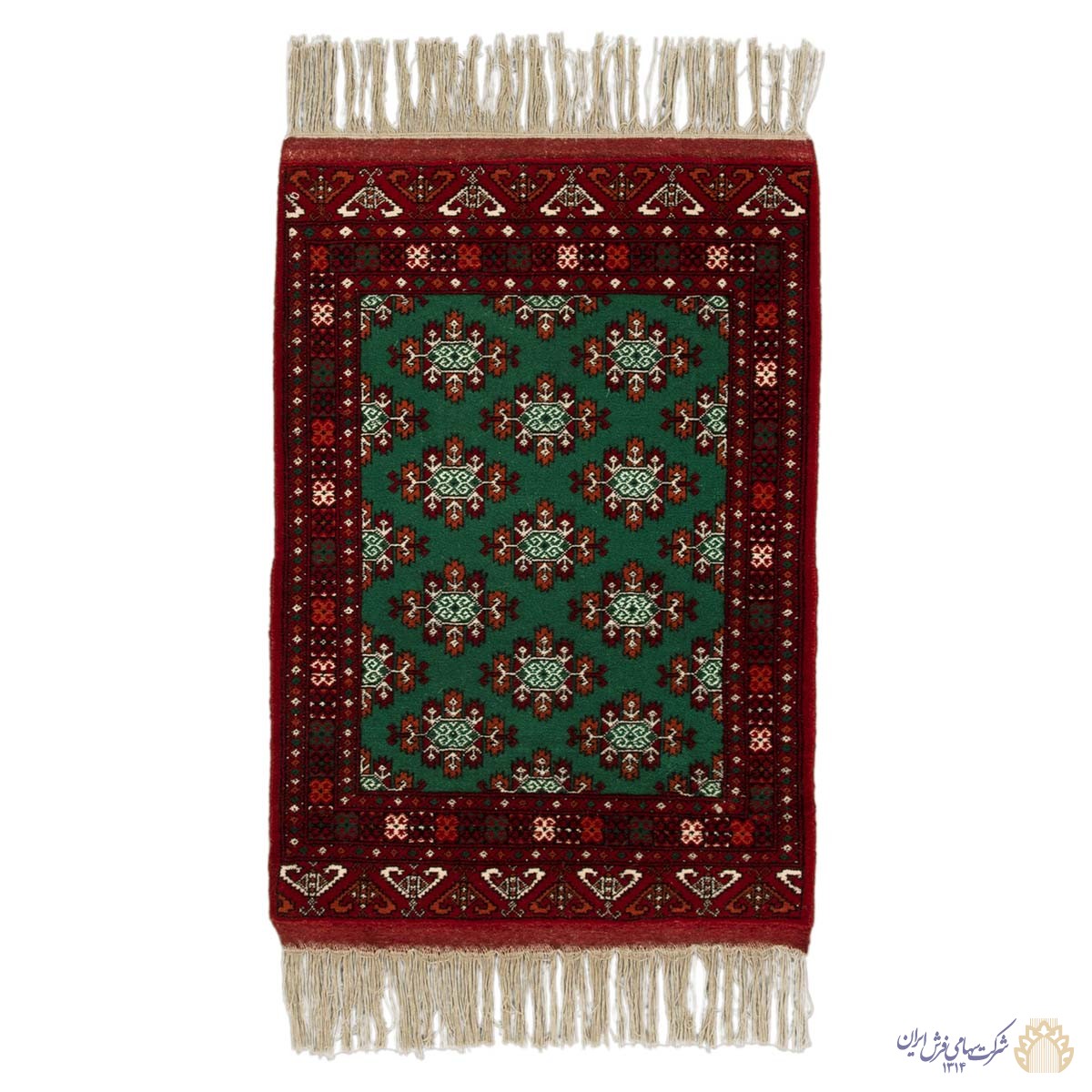
Turkmen carpet designs are composed of frequently repeated motifs, which vary according to the tribe of the weaver and draw on the creative imagination and distinctive artistry of the Turkmen people. Among the well-known designs of these tribes is the Turkmen Qashoqi, whose field contains forms resembling the carved handles of the spoons used by nomads for drinking yogurt. Other examples include the Turkmen Akhal³ (Bukhara) design, the Turkmen Cheshm-e Ghazal (Gazelle Eye), which resembles a gazelle’s eye, and the Four Seasons design, specific to Teke weavers. A characteristic feature of the latter is a small cross at the center of the field, dividing it into four sections.
The ground colors of these carpets include dark tones, red, green, and a shade of brown. Turkmen weavers favor lacquer red, navy blue, deep green, and beige.
Classifying Turkmen Carpet Motifs
Turkmen carpets are commonly identified not by their designs but by their motifs. These are often geometric, octagonal forms that offer a simple interpretation of nature through stylized shapes of animals and trees.
One motif found in Turkmen carpets, with more than twenty variations, is known among Turkic-speaking peoples as the “gol,” while Persian-speaking nomads and villagers call it a “howz” (pool). The Turkmen gol is the equivalent of the Iranian medallion and recurs in Turkmen carpet patterns in many different forms. “Mari Gol,” one of the best-known Turkmen motifs, is modeled on a camel’s footprint and points to the important place of camels in Turkmen life.
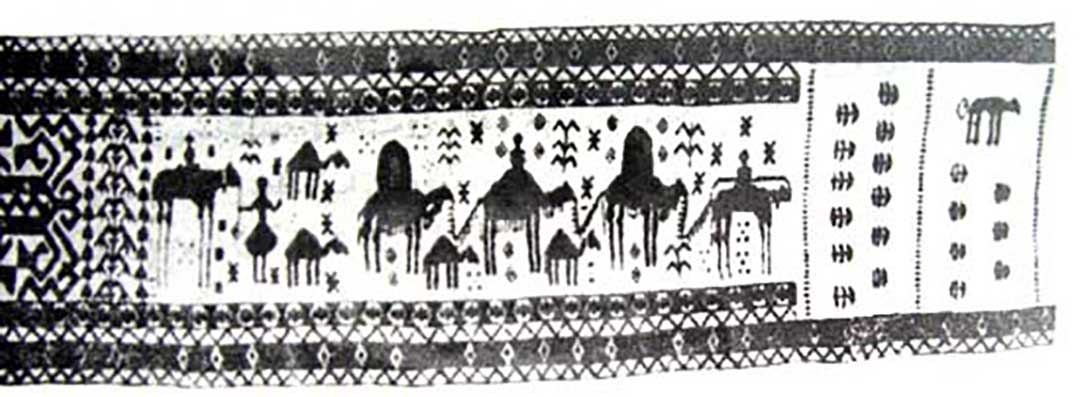 Figure 2: Gelin Barmak motif
Another beautiful Turkmen motif is called “Gelin Barmak.” It is most often woven into the borders of carpets made by young brides. Depicting a camel caravan, it shows the bridal trousseau being carried along the path of married life. Some believe Gelin Barmak represents a bride’s fingers, wounded while she wove the carpet and leaving behind drops of blood. Other floral motifs include Qabseh Gol, Toghor Gol, Dernaq Gol, Ayeneh Gol, and Gol-Aydi (Itliq), among others.
Other Turkmen motifs include Chakhmaq, Khomtaz, and Talisman. Each of these names and symbols derives from objects in the Turkmen world, which weavers adapted as designs for their carpets and kilims.
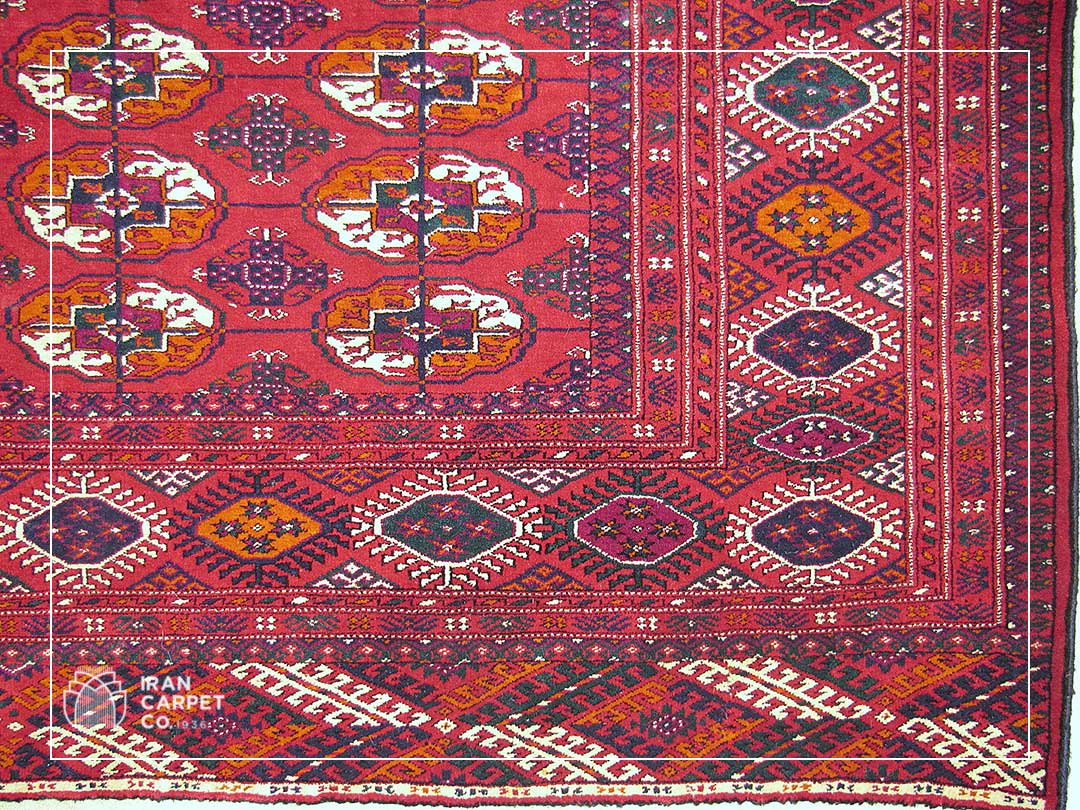 Figure 3: The comb motif, woven at the top and bottom of the carpet.
Technical Characteristics of Turkmen Carpets
Turkmen carpet looms are horizontal and set close to the ground, and the carpets are woven by women. The rugs have a single weft, and both warp and weft are wool. Local dye materials include madder and a red insect dye similar to cochineal. Both are found in the eastern Caspian region.
Knotting techniques vary from tribe to tribe. The Teke use the symmetrical Turkish (Ghiordes) knot, while the Yomut use the asymmetrical Persian (Senneh) knot. Turkmen selvage weaving and kilim weaving follow the Persian style. One notable feature of Turkmen carpets is the extra few centimeters of kilim-woven end, worked in distinctive patterns known as “shane” (combs). This practice is uncommon in other Iranian carpet-weaving centers (Figure 3). The kilim-woven end of a Turkmen carpet is also called the “alam.” Turkmen carpets range in size from one to twelve meters.
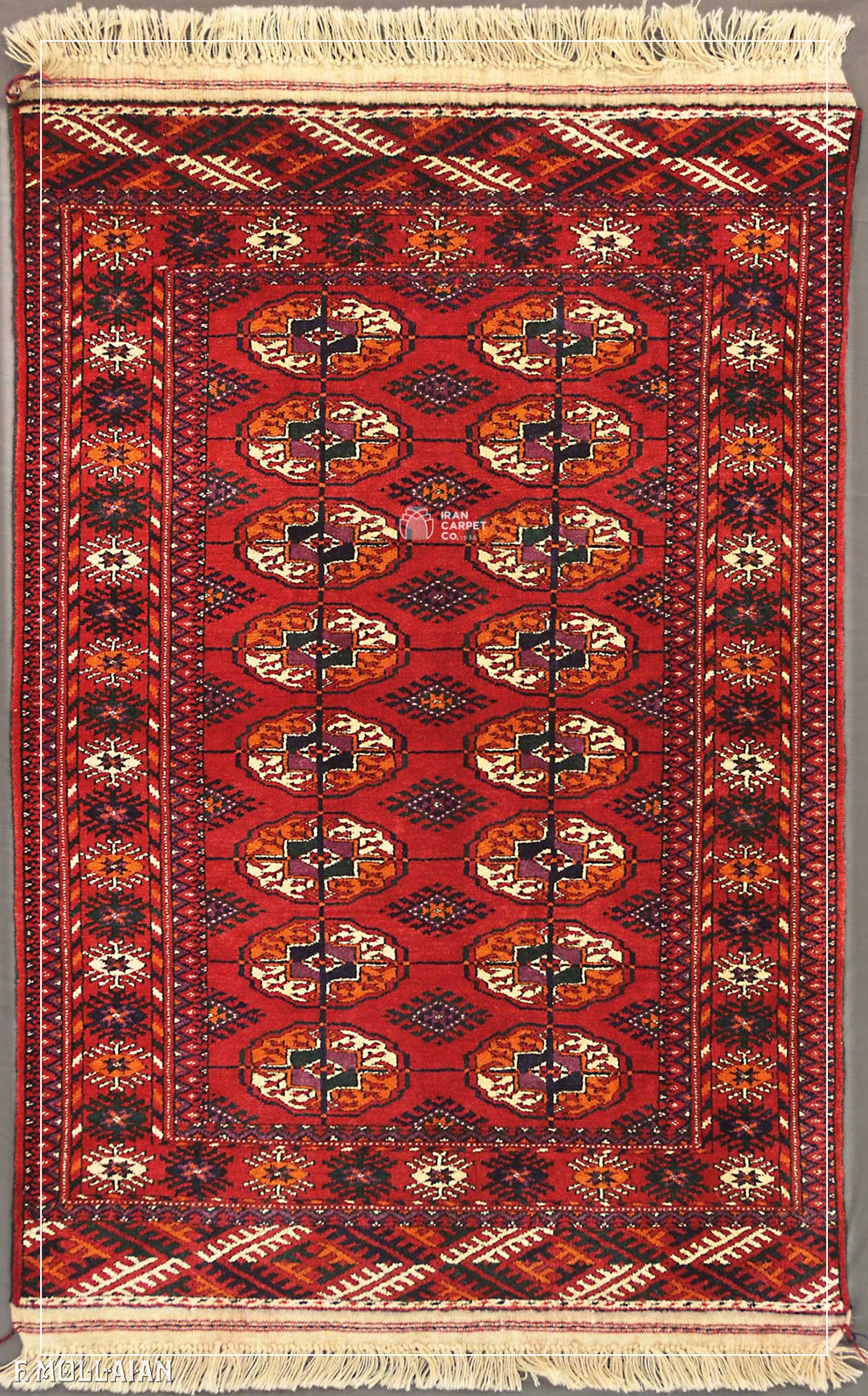 Turkmen carpet: an expression of a people’s being
Reyhaneh Kathiri Carpet specialist
Notes
1. The motif is considered a symbol of a young bride’s fingers, wounded while weaving a carpet.
2. The talisman is one of the motifs found in Turkmen carpets. Talismans comprise prayers and symbols intended to ward off the evil eye. Earrings, the yellow scorpion, and Khizabi (the chained dog) are among the best-known talismans.
3. Akhal is one of the provinces of Turkmenistan.
For further information about Turkmen carpets, consult the following sources:
- Tzareva, Elena. Turkmen Carpets. Translated by Hossein Kamandlou, Semnan University Press, 1396 SH (2017–18).
- Hasouri, Ali. Turkmen Carpet Motifs and Those of Neighboring Peoples. Farhangān Publications, 1371 SH (1992–93).
- Bogolyubov, Sergei. Turkmen Carpets. Translated by Nazdiba Khazineh-Elm, Iran Carpet Museum, Tehran, 1356 SH (1977–78).
- Nasiri, Mohammad-Javad. Persian Carpets. Por Rang Publications, Tehran, 1385 SH (2006–07).
- Yaghoubzadeh, Azadeh. “Protective Talisman Motifs on Turkmen Carpets,” Book of the Month: Art, no. 184, 1392 SH (2013–14).