The Carpet Loom
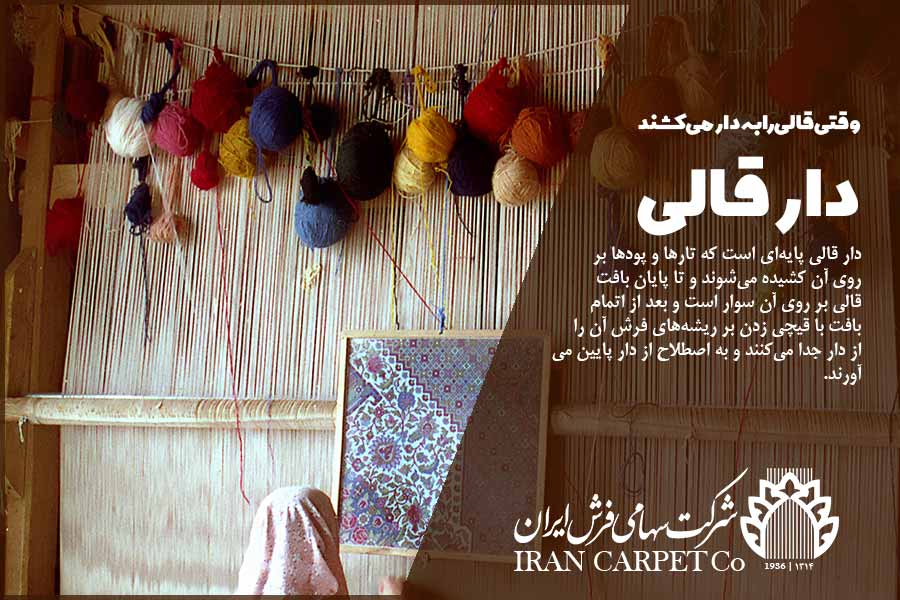
Before weaving a carpet can begin, once the design and pattern are ready, the most important task is to prepare the loom and set up its warp. A carpet loom is the frame over which the warp and weft are stretched, and on which the carpet remains mounted throughout weaving. Once weaving is complete, the carpet is cut free from the loom by trimming the warp ends, or ‘fringes,’ and is said to be taken off the loom. The Carpet Loom Carpet looms are divided into two groups: horizontal (ground) and vertical (upright). The horizontal loom is characteristic of rural and nomadic regions and comes in three forms: wooden, metal, and nomadic. Upright, or vertical, looms are known as Persian, Turkish, or Kermani looms. Carpet looms can be broadly classified into three types: 1. Persian looms, used in Persian-weaving regions; 2. Turkish looms, used in Turkic-speaking regions and Azerbaijan; and 3. Kermani looms, used in the Kerman region. Horizontal and upright looms are also classified as either stationary or movable. Looms that can be moved from one place to another are considered movable, while those that cannot be moved, and whose legs are sunk into the ground and fixed in place, are considered stationary. When a carpet loom is warped using the Turkish method, the warps can be rotated on the loom, so the loom is considered movable. By contrast, looms warped using the Persian method, on which the warps cannot be rotated, are considered stationary.
Some of the loom’s components include: Upper beam, lower beam, side posts, fandak, kooji rod, haf rod, and wedges.
Related Reading
All Journal & Blog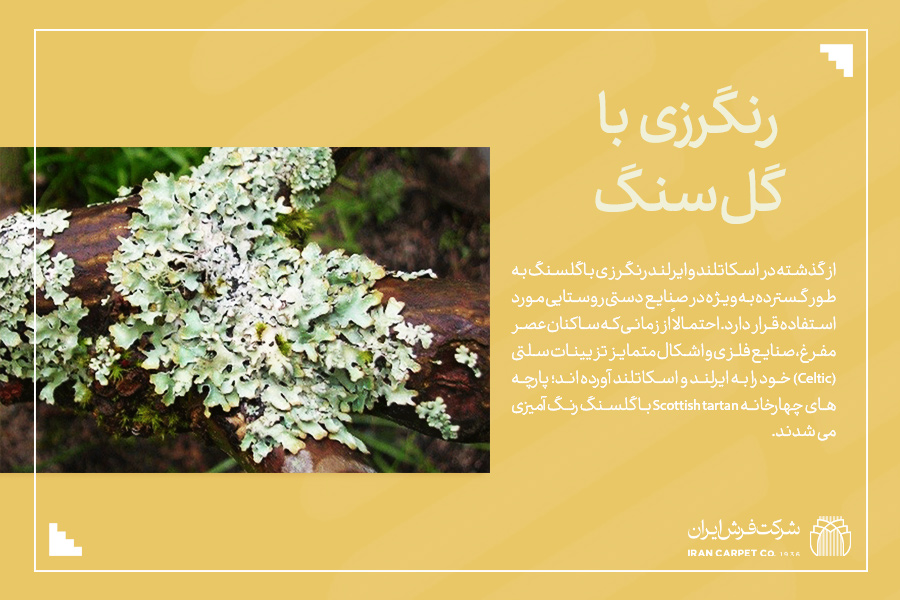 Weaving & Dyeing
Dyeing with Lichens
A lichen is a living partnership between two organisms—an alga and a fungus—sharing a single body. Lichens usually grow on rocks, walls, and tree trunks, forming patches of yellow, whitish gray, or greenish gray.