Silk
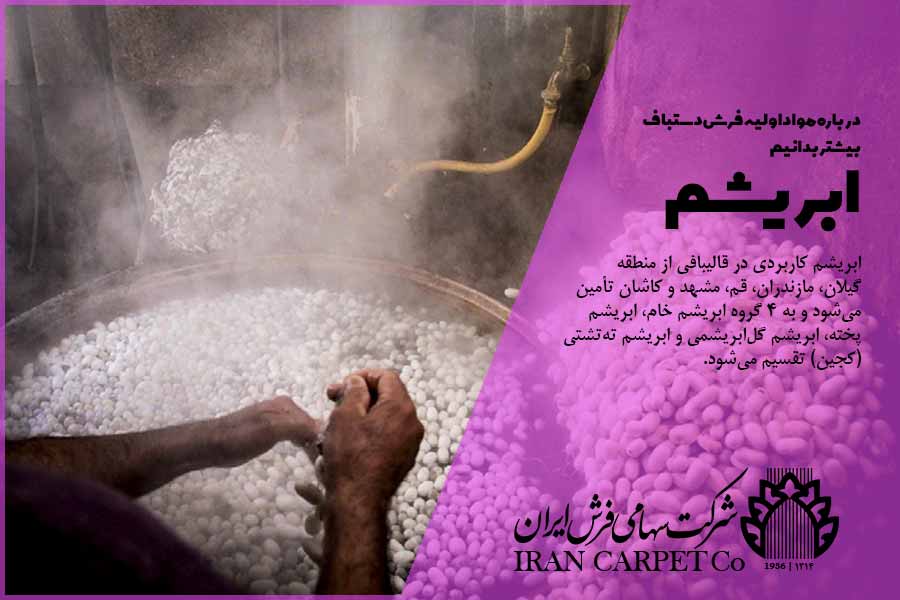
Silk fibers are obtained from the cocoon of the silkworm. Silk is used in both the warp and the pile of carpets. With a history of more than 2,600 years, silk production—and its use in a variety of Iranian textiles and carpets—has earned worldwide renown. Many historians and travelers, including Herodotus, Ibn Hawqal, Thomas Herbert, and Chardin, have described Iranian silk in their writings as particularly famous and valuable. At equal weight, silk fibers are considerably stronger than wool fibers. Silk used in carpet weaving is sourced from Gilan, Mazandaran, Qom, Mashhad, and Kashan. It is classified into four groups: raw silk, boiled silk, flowered silk, and ta-tashti (kajin) silk. Silk is sometimes used to add sheen and lustre, or to make a design stand out in relief, as in silk-accented carpets from Nain, Kashan, Tabriz, and Birjand. It may also be used for the warp and weft, as in small Isfahani rugs with silk warps. Today, Qom’s production is renowned worldwide for its all-silk carpets. The following are two methods for identifying and testing real silk as opposed to synthetic silk in a carpet: Burn test: Cut off a small piece of silk and burn it. Observe the ash and the smell of the smoke. If the silk is natural, it should form an almost black bead in the flame and smell like burning hair, since both hair and silk are protein fibers. If, however, the ash is soft and chalky in color and the smoke smells like burning paper, synthetic silk has been used. Physical test: Stroke the carpet with the palm of your hand. If your palm feels warm, the silk is natural; otherwise, it is synthetic. Sometimes you may be unsure of what you feel. In that case, compare the carpet in question with a silk carpet whose authenticity you can verify.