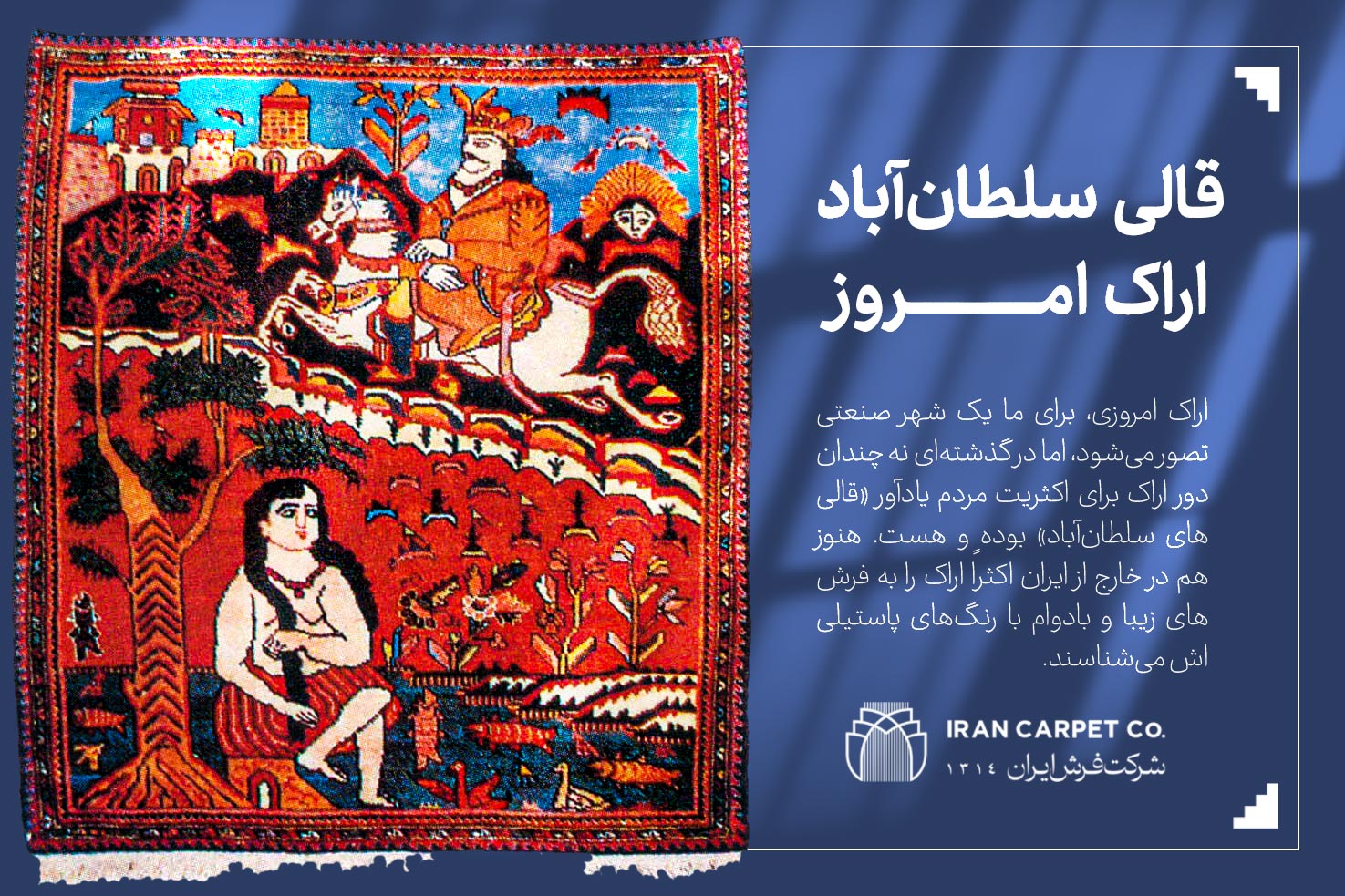
Nain Carpet: A Paradise as Vast as the Desert
The History of Nain Carpets
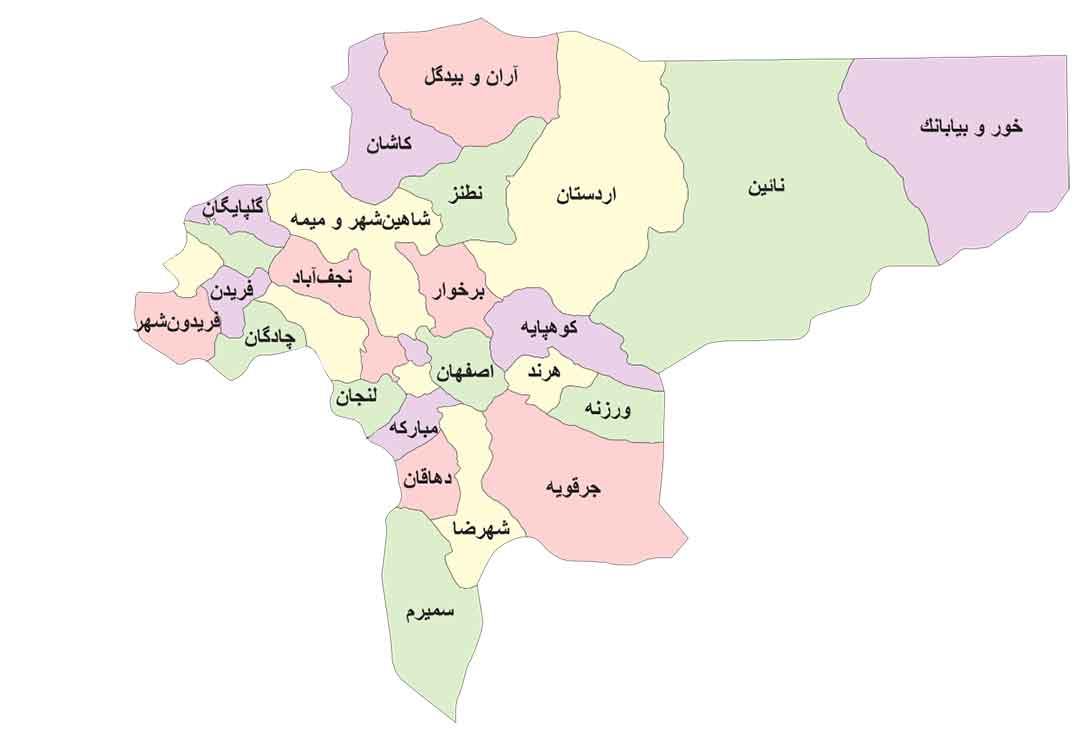
Near the western edge of the Dasht-e Kavir, 200 kilometres east of Isfahan, lies the beautiful city of Nain. Its adobe buildings are the first feature to catch the eye.
As the textile industry advanced in Europe, Nain’s long-established aba-weaving industry lost its prosperity. Like weavers in other textile centres, including Kerman and Kashan, Nain’s aba weavers turned to carpet weaving; carpet-making became widespread from 1320 SH (1941–42). Given the fine nature of aba weaving, Nain carpets are woven at a high knot count, sometimes reaching 90 knots per 6.5 centimetres.
Accustomed to spinning fine yarn for thin, coarse fabrics, Nain’s weavers set the rug warps to achieve 22 × 22 knots per inch. The resulting carpets were finer than any woven in Iran up to that time. They were taken to Tehran, where they came to be regarded as the finest-woven and among the finest carpets in Iran.
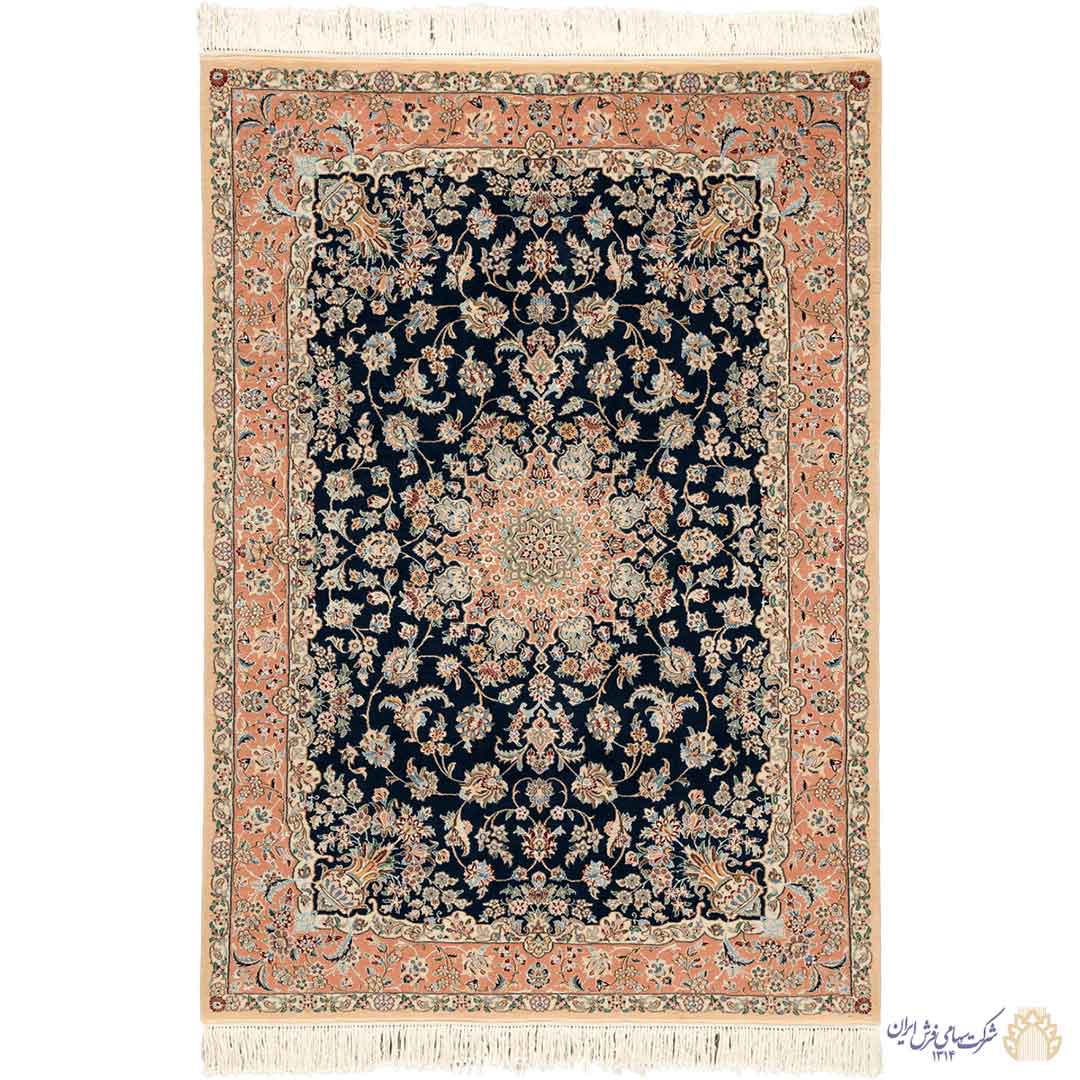
At first, Nain carpets were woven from designs associated with Bakhtiari, Yazd, Arak and, above all, Isfahan. After the Second World War, however, Nain developed a distinctive design and weaving tradition, and its patterns secured a place of their own among Iranian carpet designs. Yet even as its artistic identity took shape, Nain’s ties to its parent city, Isfahan, endured. The enduring influence of Isfahan’s designs on Nain weaving remains unmistakable.
Design and Colour in Nain Carpets
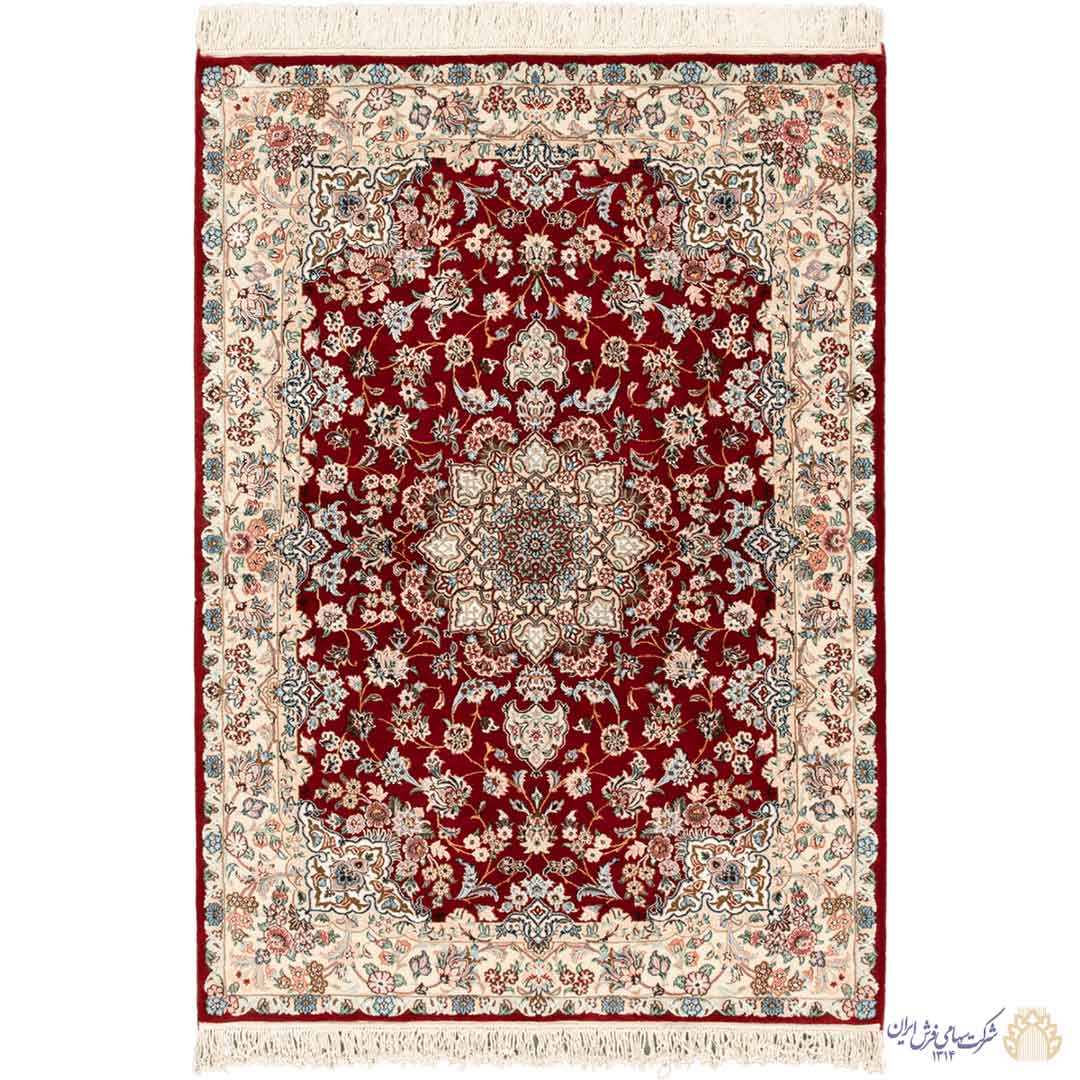
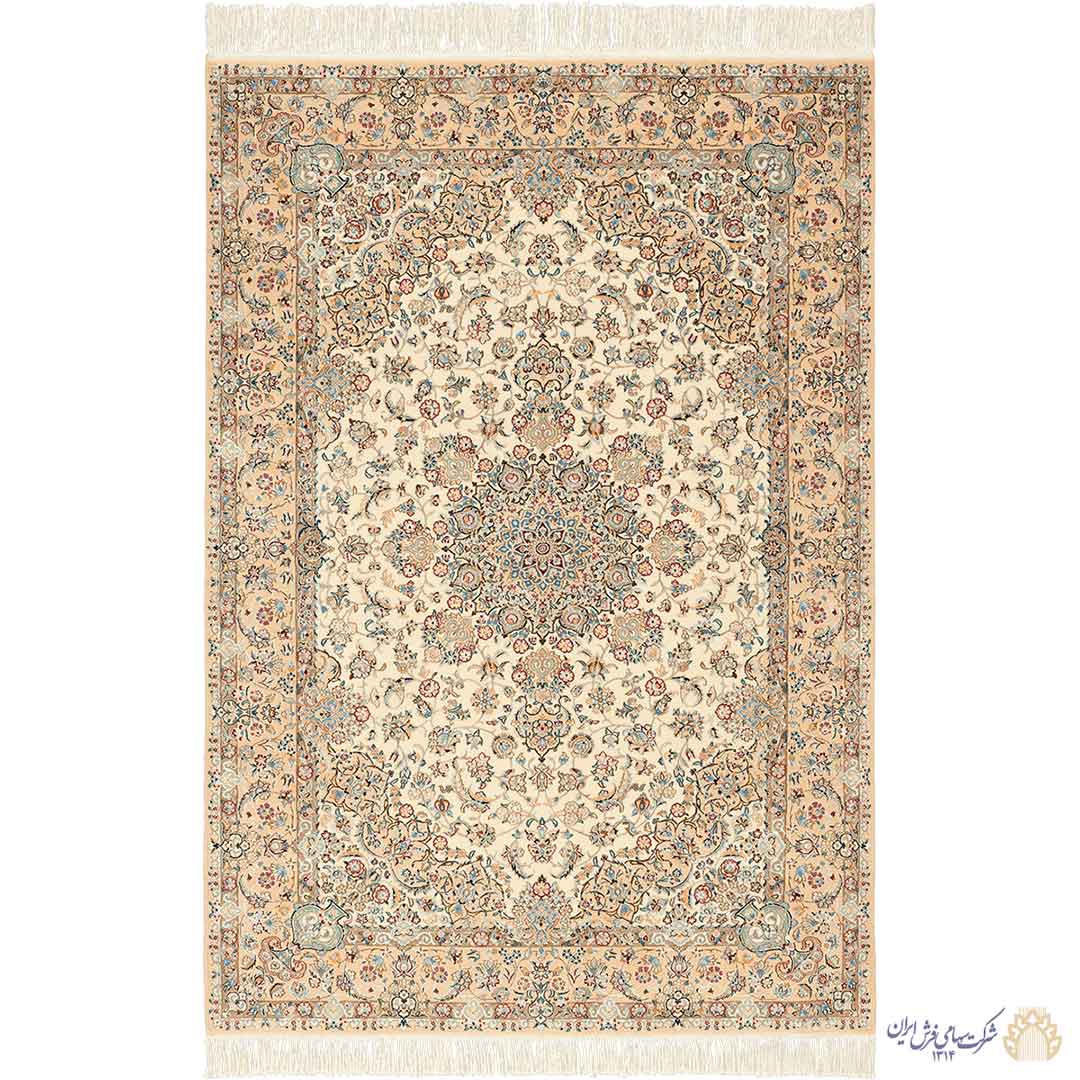
Among the principal designs used in Nain carpets are well-known patterns such as Shah Abbasi, medallion and corner (Lachak-Toranj), the animal-bearing deer-antler band, Shah Abbasi Afshan, and Bazubandi. The thoughtful use of traditional designs, together with the distinctive colouring of Nain carpets, has given them a singular identity and international renown.
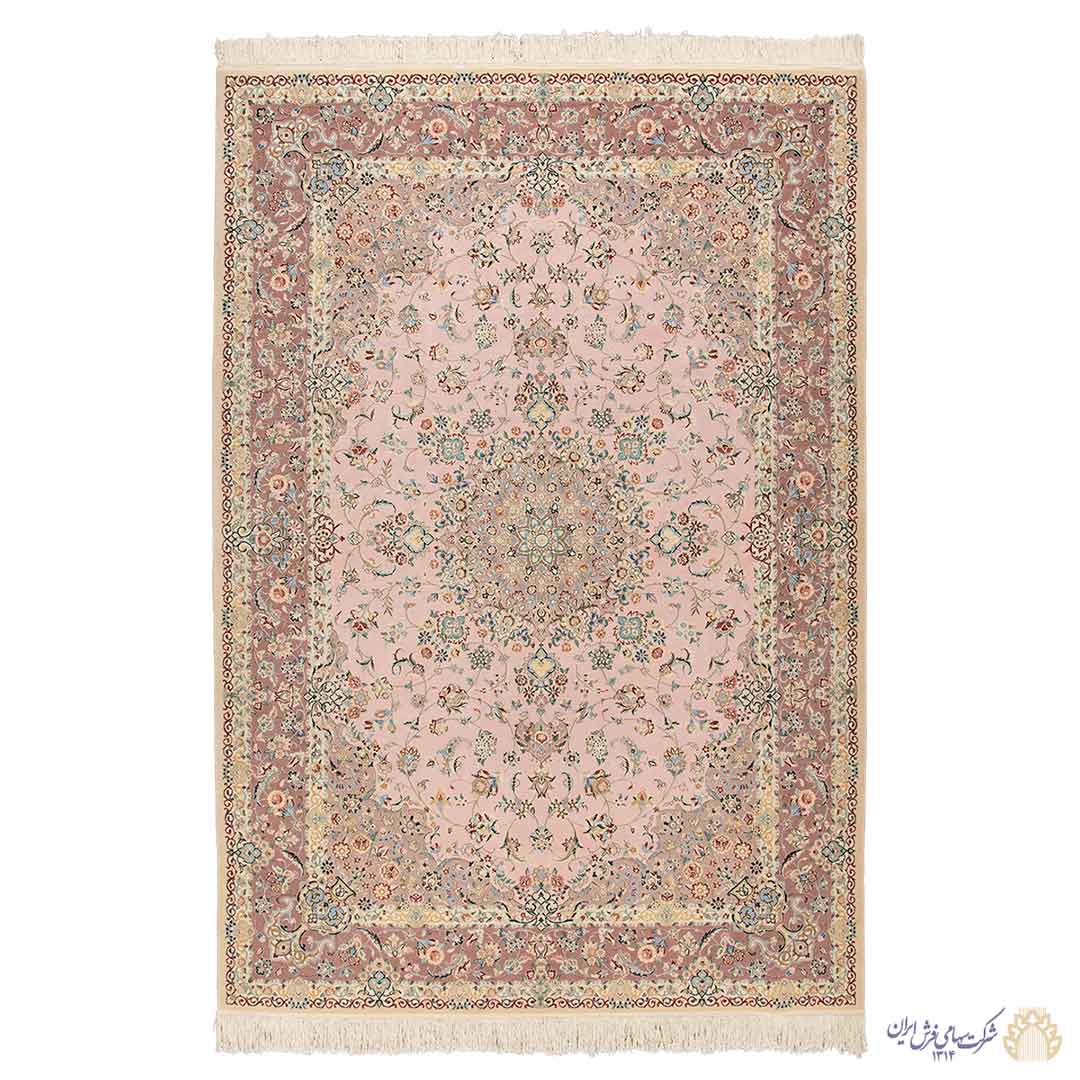
Other traditional motifs have also been used to artistic effect in Nain carpets. These include hunting scenes, vase designs, flowers and birds, tree or woodland motifs, domes, ceiling patterns, Haji Khanumi, framed panels, prayer-niche designs, striped patterns, all-over Afshan motifs, medallion and corner designs, and inscriptional and historical motifs. Several of these patterns bear unmistakable similarities to those found in Isfahan carpets. The influence of Isfahan designs on Nain carpets is clearly apparent, alongside Nain’s independent approach to colour. One of the most distinctive features of Nain carpets—and one that makes them readily recognisable—is the dyers’ preference for cool colour families. Their favoured hues appear most often against an ivory-white ground: turquoise, sky blue, navy blue, pistachio green and beige, with red used only rarely. Another characteristic is the contrast between the gentle colours of the border and the darker tones of the field. In general, flawless weaving, precise symmetry, a light and gentle palette, and the absence of shading in the colouring are hallmarks of Nain carpets.
Among the past and present designers of Nain carpets are Sheikh Hassan Motavalli, the Mofidi brothers, Jahan Mofidi and Reza Yousefpour. Prominent contemporary producers include Master Fathollah Habibian Naeini, the Mofidi brothers, Haj Reza Ghanbari and Jalal Bandeh Ali.
Characteristics of Nain Carpets:
Nain carpets are woven with the asymmetrical Persian (Senneh) knot, with knot counts ranging from 300,000 to one million knots per square metre. The jufti knot is also used. The usual knot count for Nain carpets is between 50 and 70 knots per 6.5 centimetres. Carpet experts use a terminology specific to the weavings of this city to describe their fineness (knot count): Nain four-la, six-la and nine-la. The number of plies in the warp yarn is generally used to determine the value and commercial grading of Nain carpets.
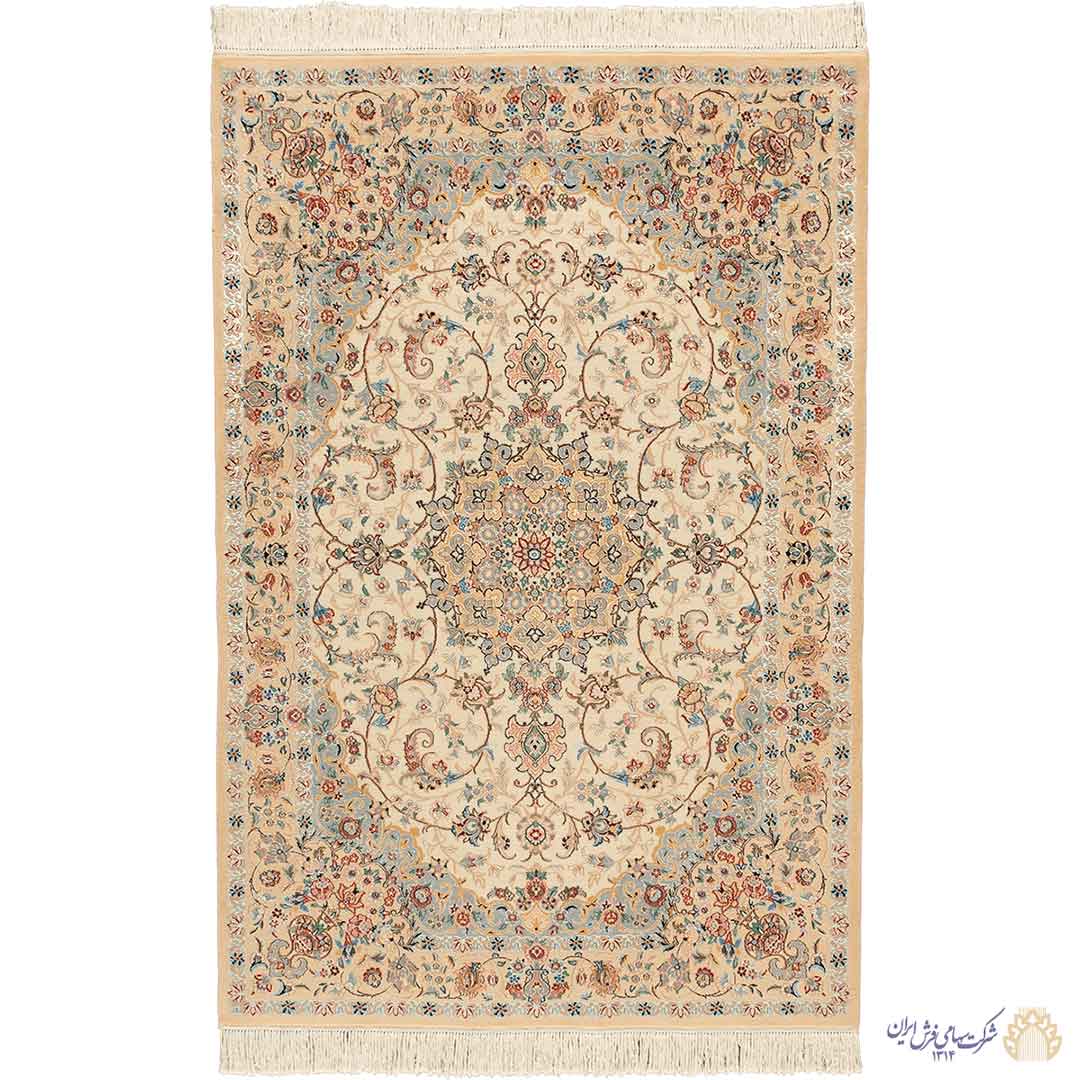
The number refers to the strands twisted together to make the carpet’s warp. In other words, the warp of a six-la Nain carpet is made by twisting six strands of yarn together. For this reason, the four-la type is finer and of higher quality. Four-la carpets are rare, and their warp and weft are so fine that weaving them requires nimble fingertips, while reading the design calls for keen eyesight.
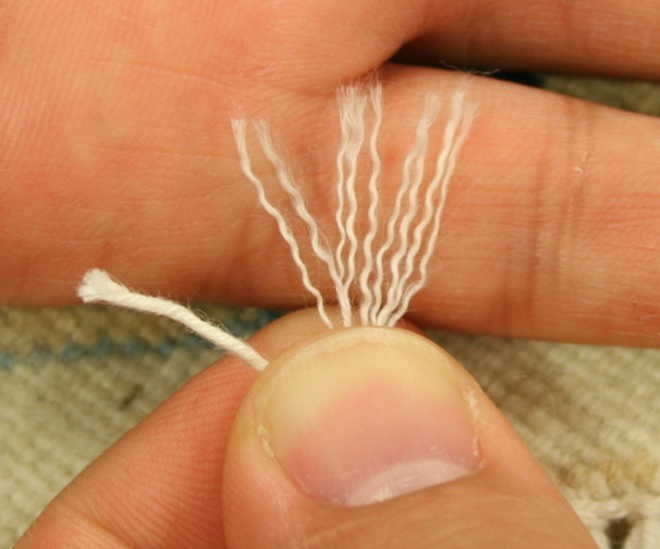
Image 1: Nine-ply yarn
Nain carpets are generally made of wool, with silk used to outline flowers and leaves—a technique known as gol-abresham, or “silk flowers.” The warps are set in the Persian manner, and the carpet is sheared and its selvedges woven during the weaving process. Rather than coarse wool, Nain carpets use kork, a fine undercoat wool.
Nain carpets range in size from small cushions to large and even exceptionally large carpets, the latter made only to order. The 6- and 9-square-metre sizes are the most common.
Reyhaneh Kowsari Master’s Degree in Handwoven Carpets
For further reading on Nain carpets, consult the following sources:
- Edwards, Cecil (1988–89 [1367 SH]). The Persian Carpet, translated by Mahin Dokht Saba. Association of Book Lovers.
- Juleh, Toraj (2002–03 [1381 SH]). A Study of the Persian Carpet. Yasavoli Publications, Tehran.
- Nasiri, Mohammad Javad (1995–96 [1374 SH]). A Survey of the Art of Carpet Weaving in Iran. Author-published, Tehran.
- Babajamali, Farhad (2020–21 [1399 SH]). “A Comparative Study of the Technical and Visual Characteristics of Nain Carpets and Nain Carpets Woven Elsewhere.” Iranian Journal of Handicrafts.
Related Reading
All Journal & Blog Regional Weaves
Tabriz Carpets: A Feast of Khata’i Motifs
Across the centuries, Tabriz has remained a cradle of art and culture. The handwoven carpets of this city seem to embody Iranian taste and creativity, their warp and weft alive with it. Tabriz’s skilled weavers intertwine delicate knots to bring inventive designs to life.