Khuzestan Carpets
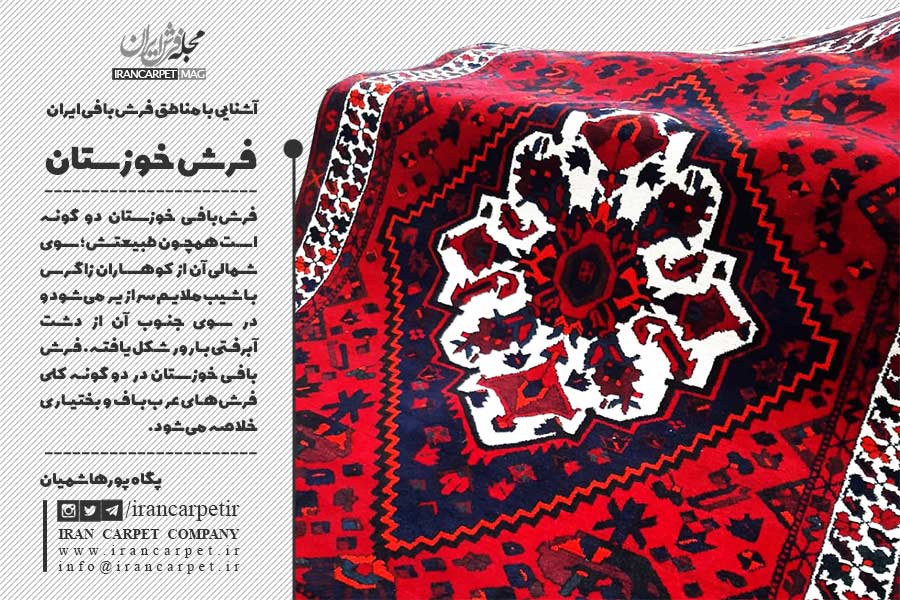
According to a report from the Public Relations Office of Iran Carpet Company, citing Pegah Pourhashemian, a contributing correspondent to Iran Carpet magazine, the weaving of floor coverings has long been practiced in northern and northeastern Khuzestan, including Shush, Shushtar, Dezful, and Andimeshk, as well as parts of Ilam. In the weaving tradition of these areas, rugs were commonly made narrow and long. In the culture of Khuzestan’s Arab communities, people sit together in a mudhif—the traditional guesthouse—and turning one’s back on another is considered discourteous. Arab rugs from Khuzestan were therefore often woven lengthwise, allowing people to sit in two facing rows.
The best-known weaving areas in Khuzestan have been Surkheh and Chenaneh, villages in Shush. In local usage, they are known as “al-Sarkhieh” and “al-Chenaneh.”
Although these textiles vary in design, size, color, and style, they share a connection to the weavers’ stories, way of life, and surroundings. Among the woven products are bariyeh, prayer rugs, kilims, felt, izar, and zolieh.
The Bakhtiari-populated towns and districts of Khuzestan Province include Masjed Soleyman, Andika, Lali, and Izeh, as well as villages in Shushtar County. Livestock raising is widespread among Andika’s residents, and carpet and kilim weaving are particularly prevalent there. The women of Andika spin, dye, and weave carpets and kilims themselves. Their designs are composed from memory, and their motifs reveal the culture and way of life of nomadic communities.
Andika’s woven works are simple yet exceptionally beautiful. Bakhtiari women make them for their own use and as gifts for their daughters and sons. On many of these carpets, they weave the names of their children and the year the carpet was made.