Regional Weaves
Kashmar Carpets
Jun 26, 20236 min readIran Carpet Company
Every Iranian knows the story of the cypress tree that Zoroaster brought from paradise and planted in Kashmar. Formerly known as Torshiz, the city of Kashmar is now an important carpet-weaving centre in Khorasan and has earned a distinguished place in Iran’s domestic carpet market.
 A History of Kashmar Carpets
Kashmar (Torshiz) is a county in Razavi Khorasan Province with an active carpet-weaving tradition, located 230 kilometres from Mashhad. After Mashhad, Birjand and Darakhsh, Kashmar ranks fourth among Khorasan’s carpet-weaving centres. The beginning of a new era of weaving in Kashmar can be traced to the years between 1260 and 1280 in the Solar Hijri calendar. Mohammad Kermani was the first master carpet weaver in the Kashmar area. His name suggests that he may have come from Kerman and migrated to Kashmar.
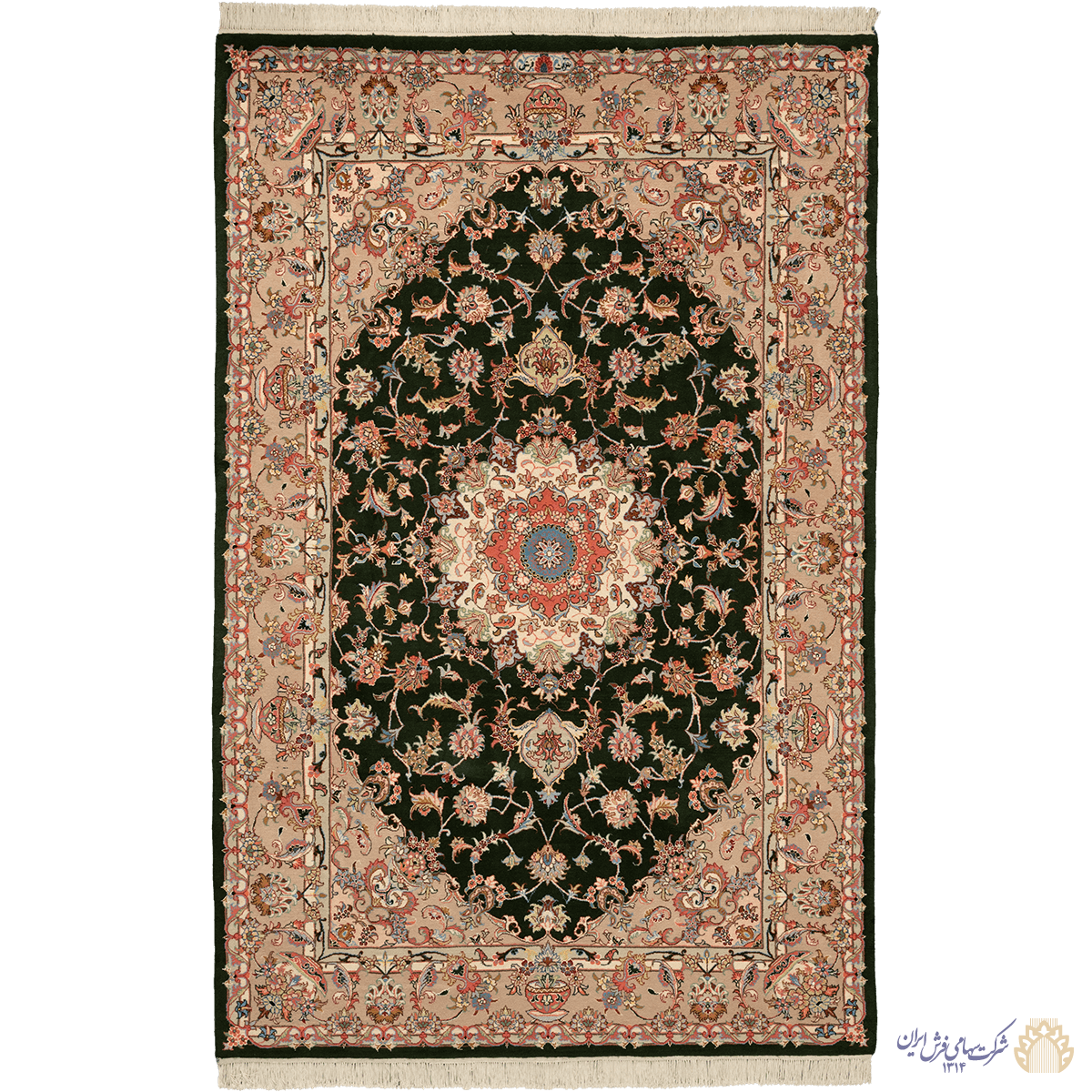 The year 1340 SH may be regarded as a year of change, renewal and innovation for Kashmar carpets. The arrival of Master Alipour that year brought about a major transformation in carpet weaving in Khorasan, particularly in Kashmar. Notable features of this period included new designs and an increase in knot counts to 35 and 40 knots per raj. The introduction of the “subterranean” design—known in Khorasan, especially Kashmar, as the “bowls and pitchers” design—was an innovation that revitalised carpet weaving in Kashmar. It incorporated motifs and flowers commonly found in Tabriz designs. Alongside pitchers, vases and bowls, the design features images and even landscapes across the entire field, and was generally produced on crimson and navy grounds. Another innovation Master Alipour brought from Tabriz was the practice of leaving designs uncoloured and marking each part of the design with a number.
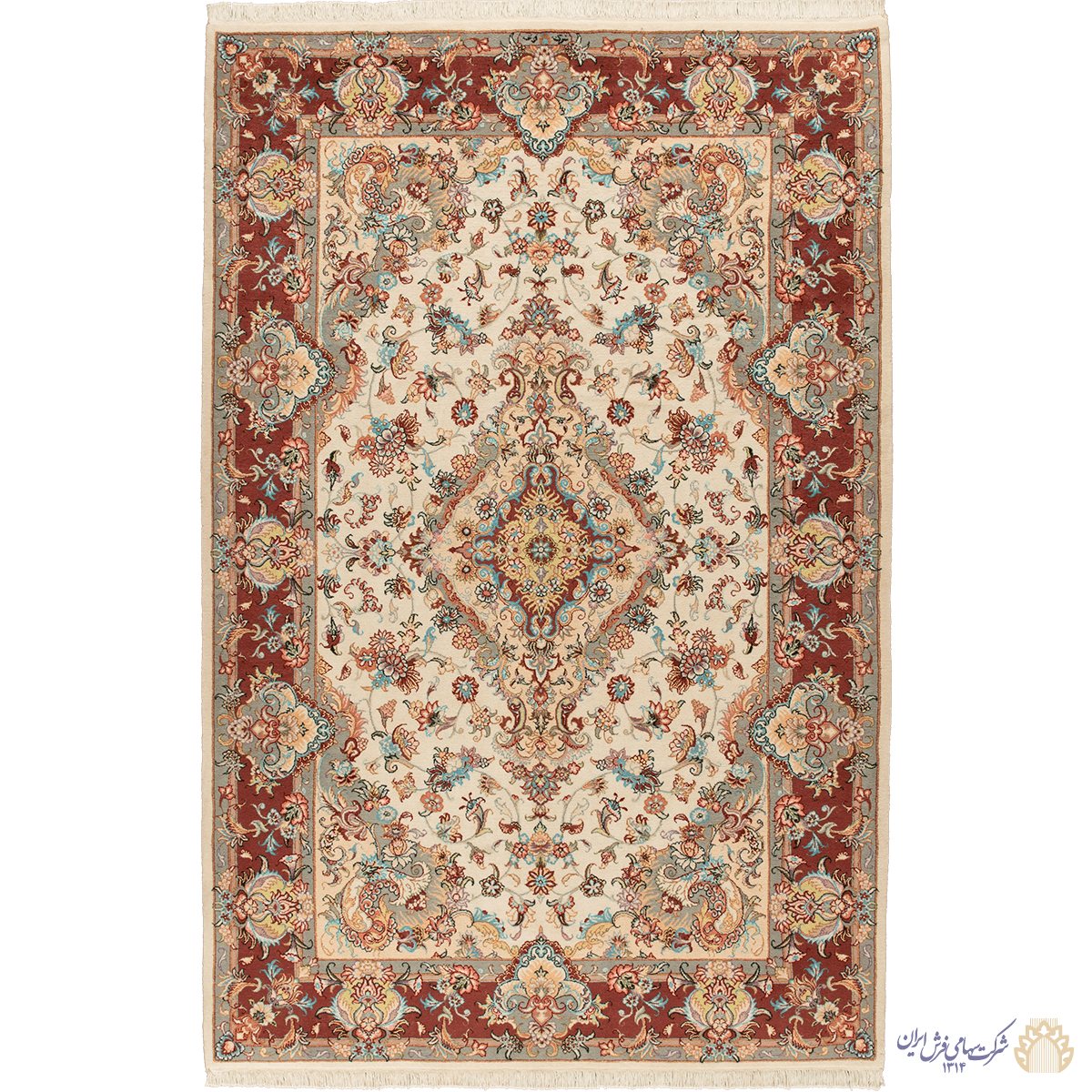 From 1350 SH, a new period in Kashmar carpet weaving began, influenced by the popularity of Kashan carpets with their distinctive designs. However, Kashmar carpets were of comparatively lower quality than their Kashan counterparts, and their sale and distribution met with limited success. In 1360 SH, a new era began with a renewed interest in traditional Khorasan designs—particularly all-over Afshan motifs and Shah Abbasi medallion-and-corner (Lachak-Toranj) designs with the large flowers characteristic of Mashhad carpets—and a return to the region’s traditional carpets, including the “subterranean” design. Kashmar carpets in the Kashan style continued to be produced and marketed sporadically during this period. From 1366 SH, the exceptional domestic and international demand for Nain carpets—which had spread into Khorasan more rapidly than into other provinces—led many Kashmar weavers to produce carpets in this style. Based on their designs and motifs, Kashmar carpets can be classified into four groups:
1—Nain designs 2—Kashan designs 3—pictorial designs 4—new European-floral designs.
 Characteristics of Kashmar Carpets
The asymmetrical Persian (Senneh) knot is the predominant knot used in Kashmar carpets and those of the surrounding villages. The symmetrical Turkish (Ghiordes) knot is also used, though only occasionally and in limited numbers.
The selvedges of all Kashmar carpets are finished after weaving is complete. The pile is also trimmed after weaving, usually in finishing workshops with electric shears.
The warps of Kashmar carpets are set in the Turkish manner on the loom. Wool is the principal material used in Kashmar carpets, with silk used in limited amounts in Nain-style carpets. Kashmar carpets generally have knot counts of 35 or 40 knots per raj. They are woven in the lool-baft construction, and weavers in Kashmar most commonly produce carpets in sizes of 2 × 3, 2.5 × 3.5 and 3 × 4 metres, showing less interest in weaving rugs. Synthetic dyes are widely used by Kashmar dyers because they are easy to work with and inexpensive.
 Design and Colour in Kashmar Carpets
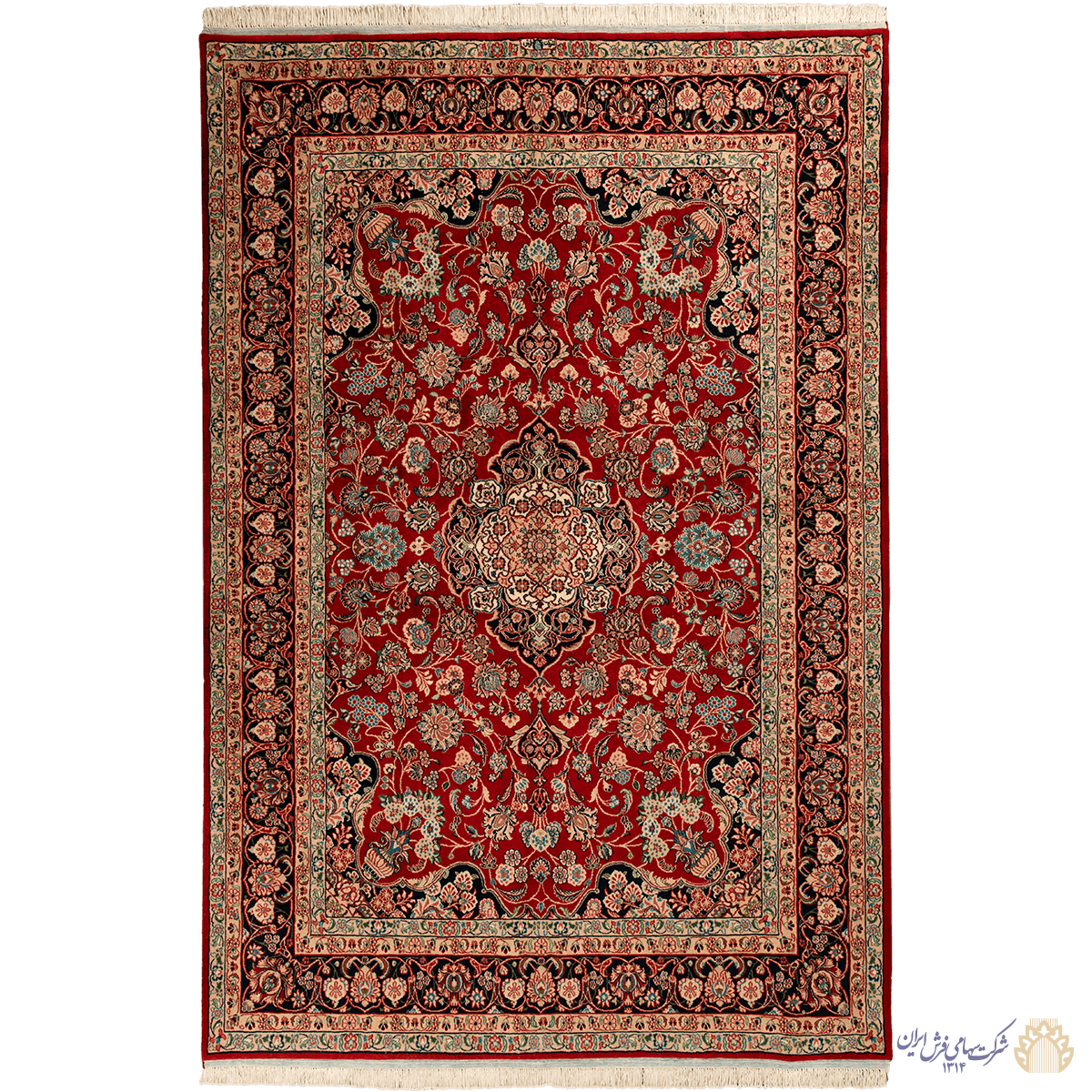
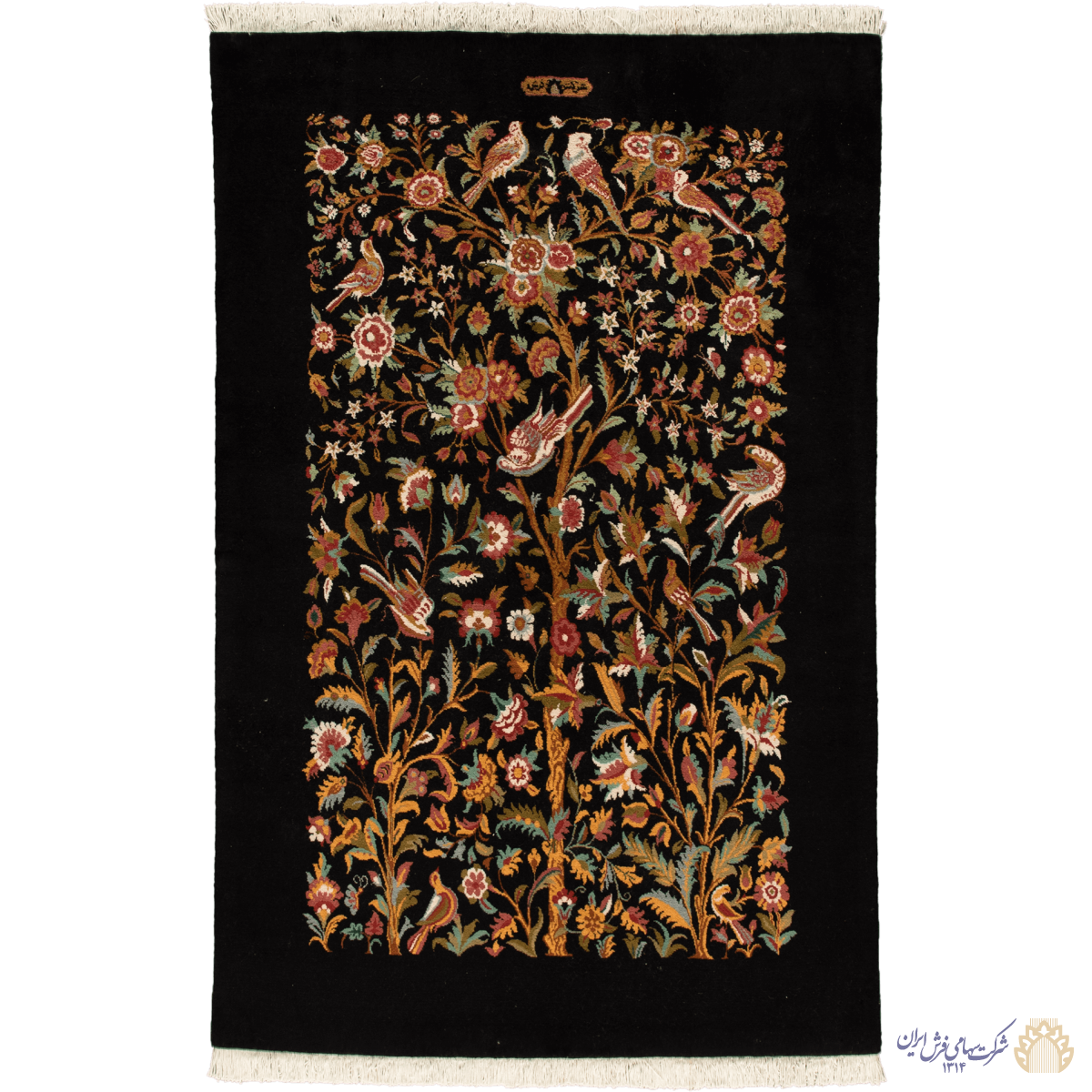
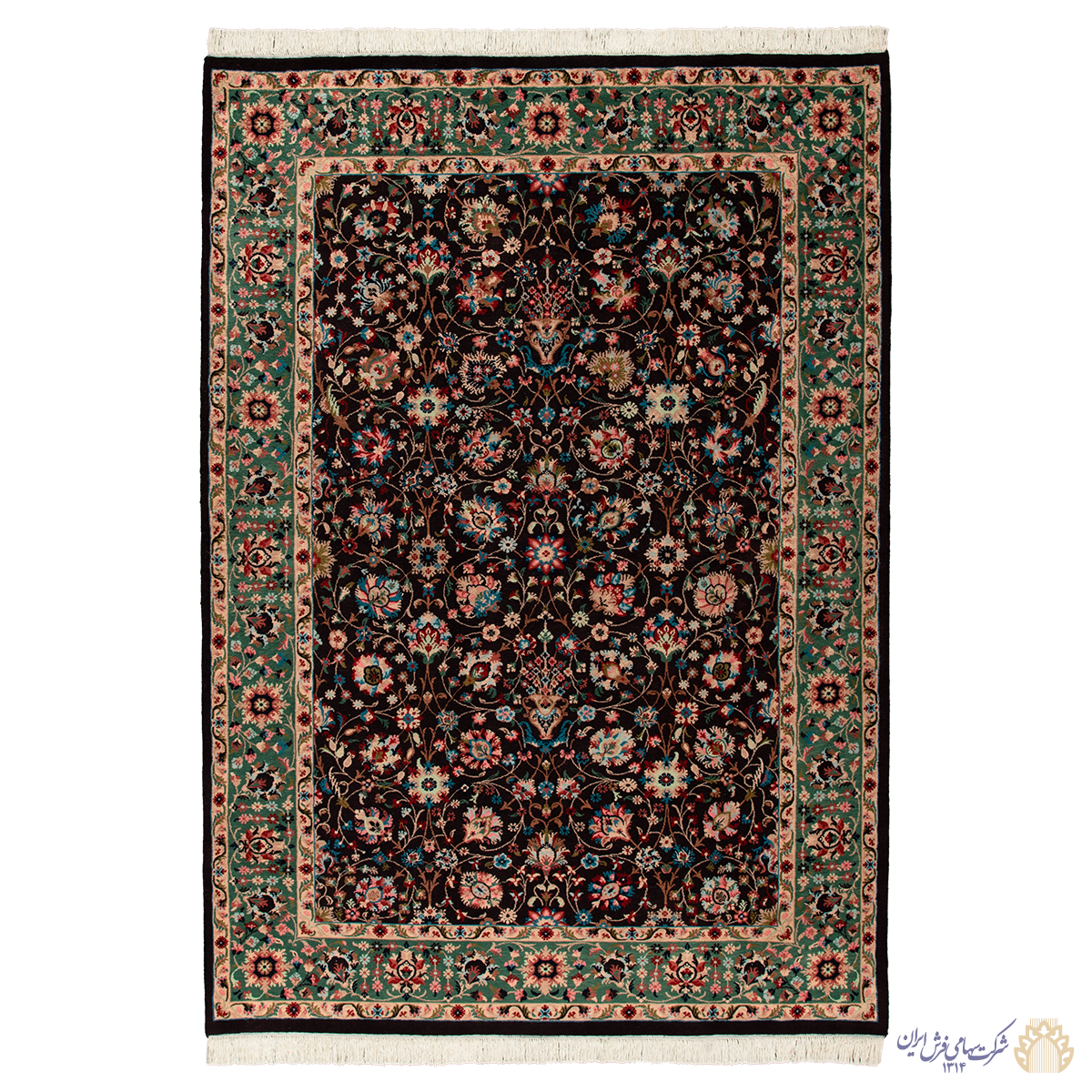
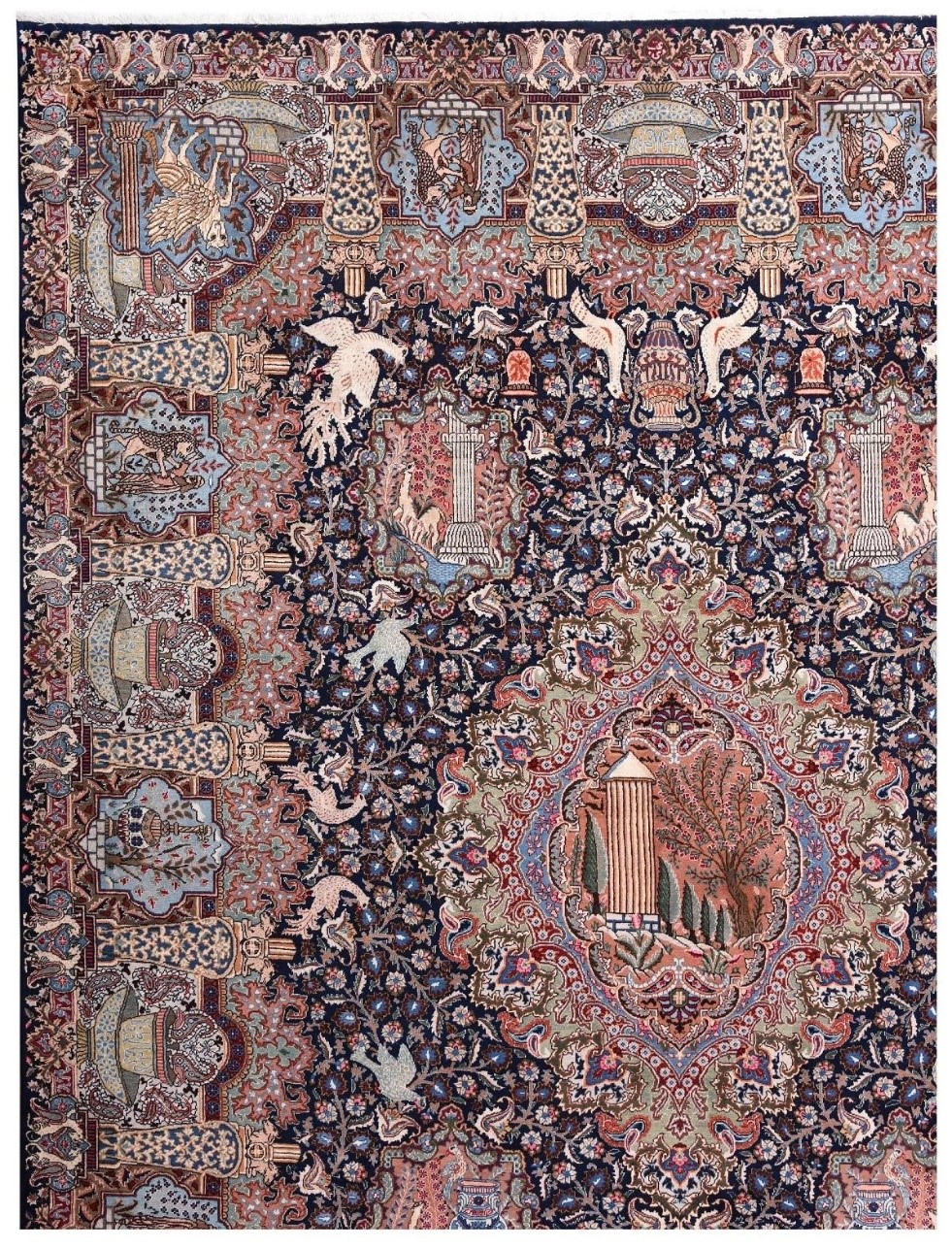
Kashmar carpet designs draw chiefly on patterns from Tabriz, Mashhad, Nain and Kashan. One example is Tabriz’s “subterranean” design, which sometimes has no border; the entire field is covered with motifs inspired by the capitals of historic buildings, vases and antique vessels. Among the botanical motifs in Kashmar carpets, the cypress is especially significant and occupies a substantial part of the field. Its importance becomes clear in light of the historical accounts of Zoroaster’s cypress. Among the animal motifs, the Simurgh is one of the most distinctive designs in Kashmar carpets. It is found in virtually no other regional carpet design and may be considered a defining feature of Kashmar carpets (Image 1). Also
among the characteristic Kashmar designs are all-over Afshan and medallion-and-corner (Lachak-Toranj) patterns.
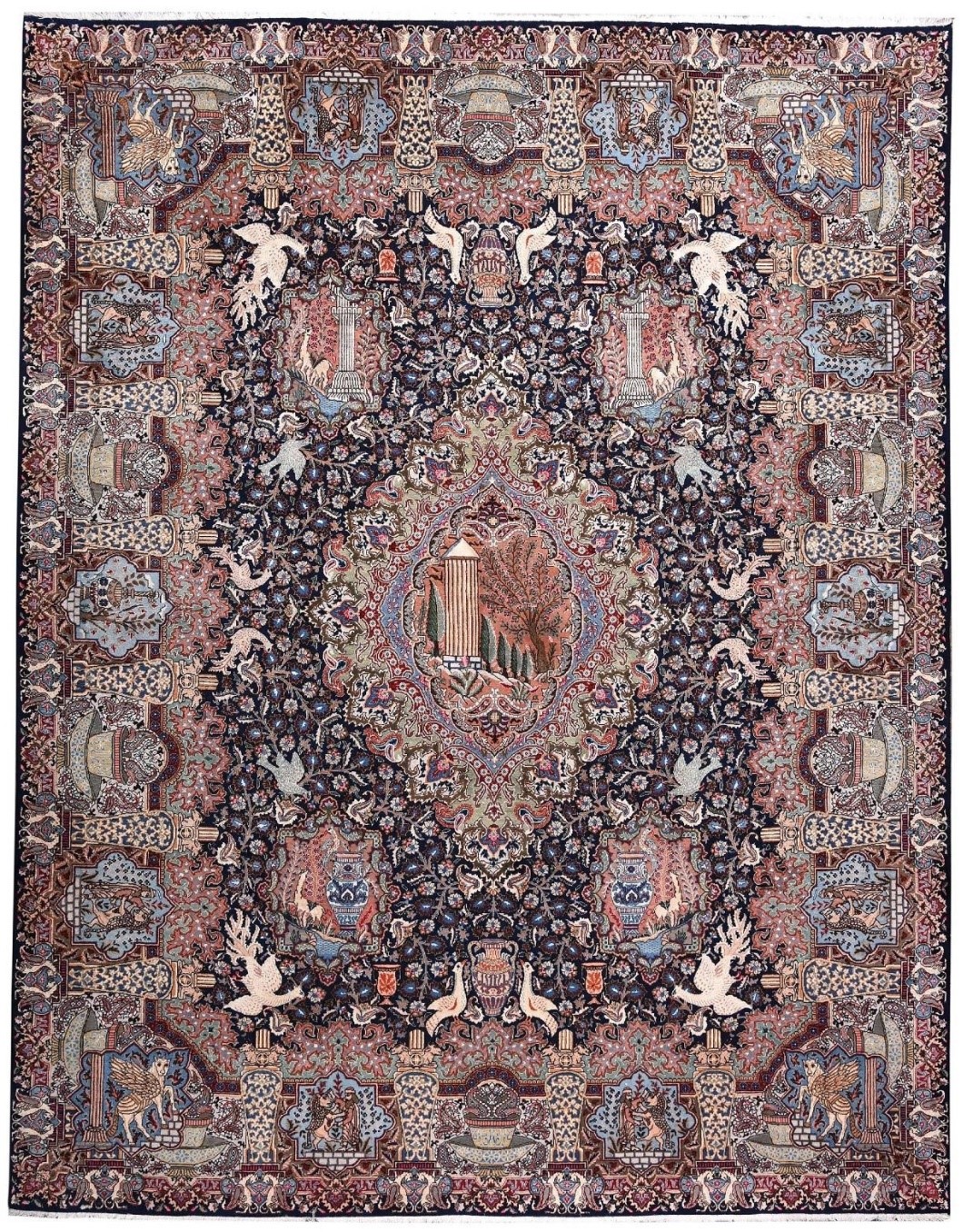 Image 1: The Simurgh motif in a Kashmar carpet
Two well-known designs from before 1340 SH are Hasan Qazi and Zarrin-Kolok. Over many years, Kashmar weavers used both designs intermittently.
The particular shade of crimson used in Kashmar carpets can be considered one of the distinguishing—and perhaps identifying—features of the area’s woven carpets. Known elsewhere as “gol-e khari” crimson, this colour has been widely used in Kashmar carpets for many years.
 Notable Kashmar Carpet Producers and Designers
Azizollah Khani and Ahmad Tork were among the first Kashmar carpet producers, beginning their weaving work before 1300 SH. Other early Kashmar carpet producers included Haj Abbas Golestani, Mohammad-Hossein Vazan, Gholamreza Abedini, Akbar Abedini and Ali Ebrahimi. In recent years, producers including Moshtaqi, Ali-Asghar Mosafer, Akbar Jafari and Ahmad Shojaei, along with others, have renewed efforts to revive Kashmar carpets by bringing relatively fine and beautiful carpets to market. Among the master designers, in addition to Master Alipour, whose work brought many changes, were Master Gholam-Hossein Eskandari Taraqbani, Ali-Akbar Jafari and Javad Javadi.
Iran Carpet Company, with more than half a century of continuous activity in Kashmar, is another longstanding presence in the city. Today, it operates approximately 300 looms, works with 500 weavers and produces 2,000 square metres of carpet annually.
For further information about Kashmar carpets, consult the following sources: -Joleh, Touraj (1996). A Page from the Carpets of Khorasan. Publisher: Iran Carpet Company. -Edwards, Cecil (1988). The Persian Carpet, translated by Mahin Dokht Saba, Book Lovers’ Association. -Joleh, Touraj (2002). A Study of Iranian Carpets. Yasavoli Publications, Tehran. -Nasiri, Mohammad-Javad (1995). A Survey of the Art of Carpet Weaving in Iran. Author-published, Tehran. -Ghasemzadeh, Zohreh, and Atfeh Zendehdel. “A Study of the Designs and Motifs of Kashmar Carpets.” National Conference on Sustainable Development.
A History of Kashmar Carpets
Kashmar (Torshiz) is a county in Razavi Khorasan Province with an active carpet-weaving tradition, located 230 kilometres from Mashhad. After Mashhad, Birjand and Darakhsh, Kashmar ranks fourth among Khorasan’s carpet-weaving centres. The beginning of a new era of weaving in Kashmar can be traced to the years between 1260 and 1280 in the Solar Hijri calendar. Mohammad Kermani was the first master carpet weaver in the Kashmar area. His name suggests that he may have come from Kerman and migrated to Kashmar.
The year 1340 SH may be regarded as a year of change, renewal and innovation for Kashmar carpets. The arrival of Master Alipour that year brought about a major transformation in carpet weaving in Khorasan, particularly in Kashmar. Notable features of this period included new designs and an increase in knot counts to 35 and 40 knots per raj. The introduction of the “subterranean” design—known in Khorasan, especially Kashmar, as the “bowls and pitchers” design—was an innovation that revitalised carpet weaving in Kashmar. It incorporated motifs and flowers commonly found in Tabriz designs. Alongside pitchers, vases and bowls, the design features images and even landscapes across the entire field, and was generally produced on crimson and navy grounds. Another innovation Master Alipour brought from Tabriz was the practice of leaving designs uncoloured and marking each part of the design with a number.
From 1350 SH, a new period in Kashmar carpet weaving began, influenced by the popularity of Kashan carpets with their distinctive designs. However, Kashmar carpets were of comparatively lower quality than their Kashan counterparts, and their sale and distribution met with limited success. In 1360 SH, a new era began with a renewed interest in traditional Khorasan designs—particularly all-over Afshan motifs and Shah Abbasi medallion-and-corner (Lachak-Toranj) designs with the large flowers characteristic of Mashhad carpets—and a return to the region’s traditional carpets, including the “subterranean” design. Kashmar carpets in the Kashan style continued to be produced and marketed sporadically during this period. From 1366 SH, the exceptional domestic and international demand for Nain carpets—which had spread into Khorasan more rapidly than into other provinces—led many Kashmar weavers to produce carpets in this style. Based on their designs and motifs, Kashmar carpets can be classified into four groups:
1—Nain designs 2—Kashan designs 3—pictorial designs 4—new European-floral designs.
Characteristics of Kashmar Carpets
The asymmetrical Persian (Senneh) knot is the predominant knot used in Kashmar carpets and those of the surrounding villages. The symmetrical Turkish (Ghiordes) knot is also used, though only occasionally and in limited numbers.
The selvedges of all Kashmar carpets are finished after weaving is complete. The pile is also trimmed after weaving, usually in finishing workshops with electric shears.
The warps of Kashmar carpets are set in the Turkish manner on the loom. Wool is the principal material used in Kashmar carpets, with silk used in limited amounts in Nain-style carpets. Kashmar carpets generally have knot counts of 35 or 40 knots per raj. They are woven in the lool-baft construction, and weavers in Kashmar most commonly produce carpets in sizes of 2 × 3, 2.5 × 3.5 and 3 × 4 metres, showing less interest in weaving rugs. Synthetic dyes are widely used by Kashmar dyers because they are easy to work with and inexpensive.
Design and Colour in Kashmar Carpets
Kashmar carpet designs draw chiefly on patterns from Tabriz, Mashhad, Nain and Kashan. One example is Tabriz’s “subterranean” design, which sometimes has no border; the entire field is covered with motifs inspired by the capitals of historic buildings, vases and antique vessels. Among the botanical motifs in Kashmar carpets, the cypress is especially significant and occupies a substantial part of the field. Its importance becomes clear in light of the historical accounts of Zoroaster’s cypress. Among the animal motifs, the Simurgh is one of the most distinctive designs in Kashmar carpets. It is found in virtually no other regional carpet design and may be considered a defining feature of Kashmar carpets (Image 1). Also
among the characteristic Kashmar designs are all-over Afshan and medallion-and-corner (Lachak-Toranj) patterns.
Image 1: The Simurgh motif in a Kashmar carpet
Two well-known designs from before 1340 SH are Hasan Qazi and Zarrin-Kolok. Over many years, Kashmar weavers used both designs intermittently.
The particular shade of crimson used in Kashmar carpets can be considered one of the distinguishing—and perhaps identifying—features of the area’s woven carpets. Known elsewhere as “gol-e khari” crimson, this colour has been widely used in Kashmar carpets for many years.
Notable Kashmar Carpet Producers and Designers
Azizollah Khani and Ahmad Tork were among the first Kashmar carpet producers, beginning their weaving work before 1300 SH. Other early Kashmar carpet producers included Haj Abbas Golestani, Mohammad-Hossein Vazan, Gholamreza Abedini, Akbar Abedini and Ali Ebrahimi. In recent years, producers including Moshtaqi, Ali-Asghar Mosafer, Akbar Jafari and Ahmad Shojaei, along with others, have renewed efforts to revive Kashmar carpets by bringing relatively fine and beautiful carpets to market. Among the master designers, in addition to Master Alipour, whose work brought many changes, were Master Gholam-Hossein Eskandari Taraqbani, Ali-Akbar Jafari and Javad Javadi.
Iran Carpet Company, with more than half a century of continuous activity in Kashmar, is another longstanding presence in the city. Today, it operates approximately 300 looms, works with 500 weavers and produces 2,000 square metres of carpet annually.
Reyhaneh Kathiri MA in Handwoven Carpets
For further information about Kashmar carpets, consult the following sources: -Joleh, Touraj (1996). A Page from the Carpets of Khorasan. Publisher: Iran Carpet Company. -Edwards, Cecil (1988). The Persian Carpet, translated by Mahin Dokht Saba, Book Lovers’ Association. -Joleh, Touraj (2002). A Study of Iranian Carpets. Yasavoli Publications, Tehran. -Nasiri, Mohammad-Javad (1995). A Survey of the Art of Carpet Weaving in Iran. Author-published, Tehran. -Ghasemzadeh, Zohreh, and Atfeh Zendehdel. “A Study of the Designs and Motifs of Kashmar Carpets.” National Conference on Sustainable Development.