Kashan Carpets
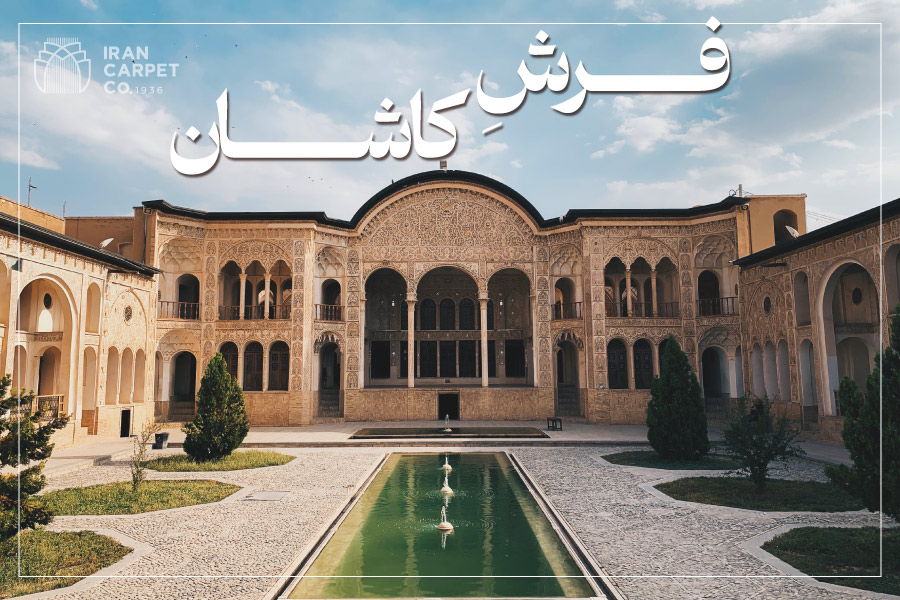
May prosperity bless the noble land of Kashan, ever
A cradle of intellect, craft, and insight;
Its beautiful carpets are now renowned throughout the world,
As are its gold brocades and velvets, admired everywhere.
— Malek al-Sho'arā-ye Bahār
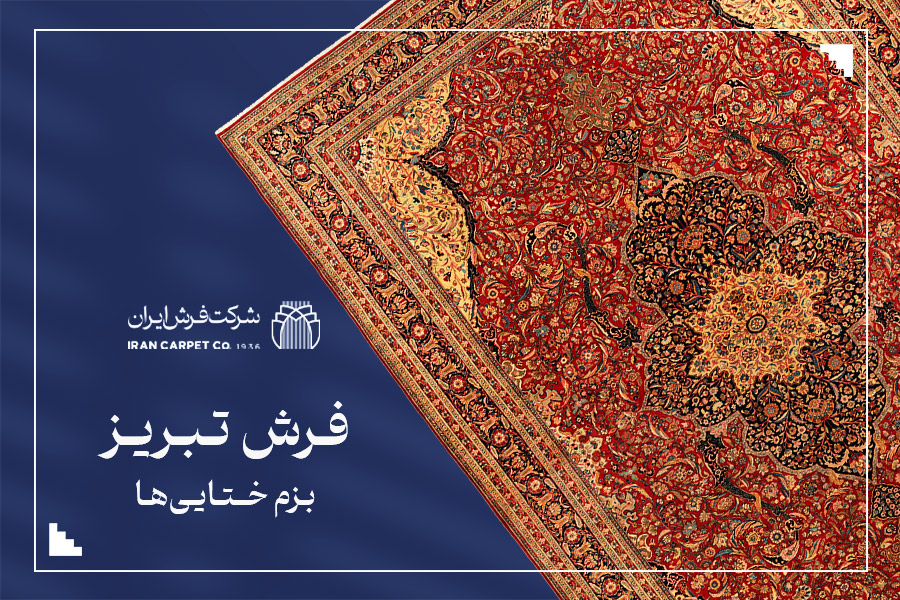
Kashan carpets have long adorned the great museums and art centers of the world. The lives of Kashan’s people have been intertwined with carpets since ancient times, and the city continues to thrive through this craft. At various points in the history of carpet weaving, Kashan has produced some of the finest, most beautiful, most lustrous, and most valuable carpets in the world.
A History of Kashan Carpets
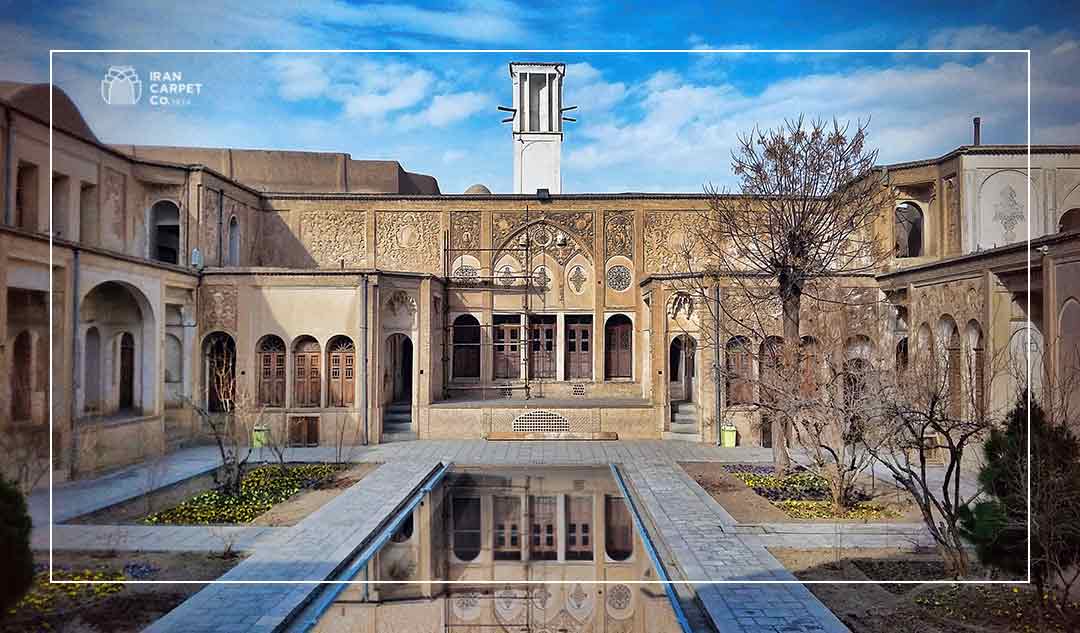
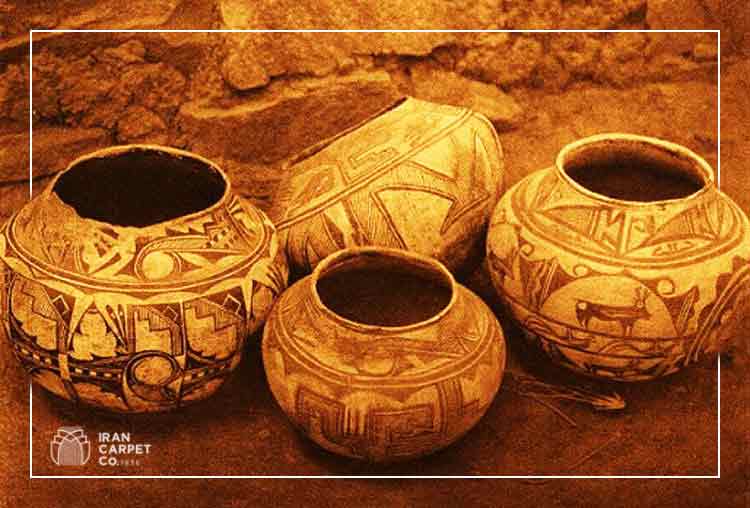
Historically, Kashan lies near one of the world’s earliest centers of civilization: Tepe Sialk, with a history spanning 7,000 years. Sialk is renowned for its pottery, whose motifs, ornament, fine details, and patterns share affinities with Kashan’s ceramic vessels and tilework.
The historical practice of making and weaving carpets from wool and animal hair began in rural and tribal communities and gradually developed in the cities.
Even in the Safavid era, Kashan was a center for weaving a wide range of artistic carpets, and Shah Abbas fostered carpet weaving in the region. Its carpets are associated with gold and velvet, as well as some of the finest Persian rugs—mistakenly known as Polonaise (Polish) carpets. These silk rugs woven with gold thread acquired this name because they were made in Kashan on the Polish court’s commission during the Safavid period. Their fine, velvety-looking weave and distinctive delicacy also set Kashan carpets apart from other rugs woven with the asymmetrical Persian (Senneh) knot.
Some researchers consider Kashan to be the place of origin of the celebrated Sheikh Safi al-Din Ardabili carpet. Although other scholars attribute its weaving to northwestern Iran, what is certain is that the renowned master weaver of the Sheikh Safi carpet was Maqsud Kashani, a celebrated weaver of this region.
Carpets known as Mohtasham Kashani are also counted among the finest Kashan carpets. Mohtasham was a celebrated master of Kashan, active from 1830 to 1880. Although a group of finely woven carpets sold in American and European markets became known as Mohtasham, this was in fact a trade name; in practice, only one carpet was actually woven with the name Mohtasham. Other skilled master weavers also worked in Kashan.
Design and Motifs of Kashan Carpets
In terms of design and pattern, Shah Abbasi medallion-and-corner compositions (Lachak-Toranj), with beautiful flowers and foliage against a red field, were for a long time the traditional design of Kashan carpets. Today, Kashan carpets largely combine traditional Iranian motifs—arabesques and khata’i floral designs—with predominantly cream and earthy tones. Design variety is relatively limited, and production continues to draw on the city’s longstanding reputation and heritage.
Common Kashan carpet designs are generally divided into several groups:
- Medallion and corner designs with small and large floral motifs;
- All-over Afshan designs, Shah Abbasi, Sheikh Safi, prayer-niche, Gol-e Farang, and pictorial designs;
- Panel designs featuring varied motifs in their frames and cartouches;
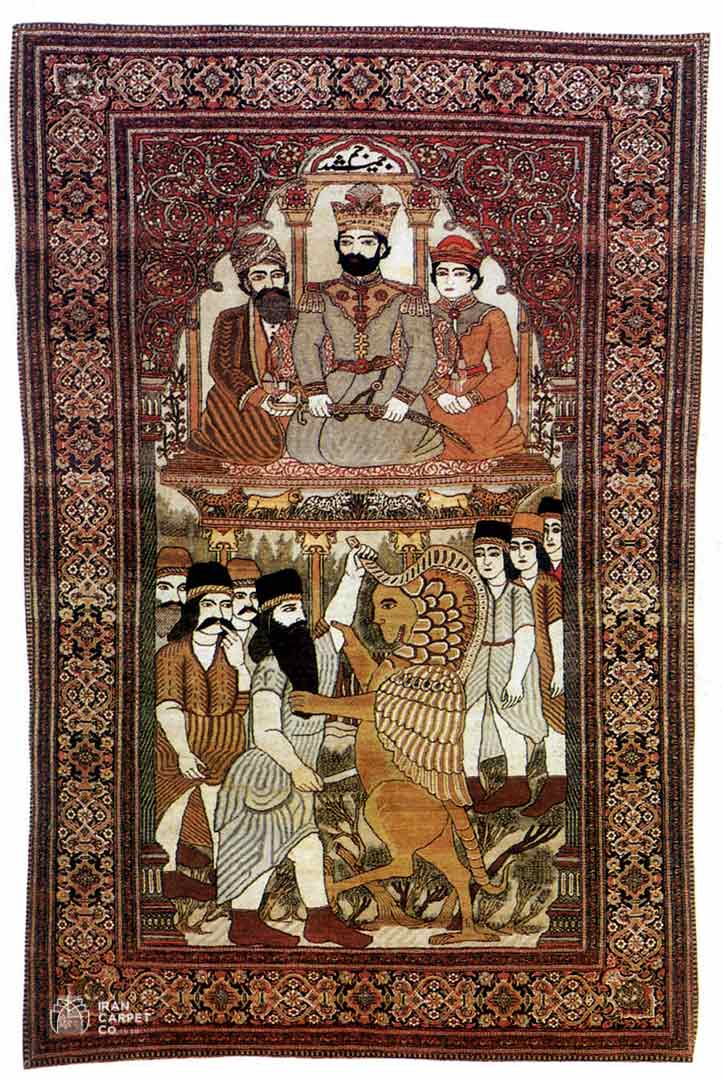 Image 1: Pictorial design, woven in Kashan
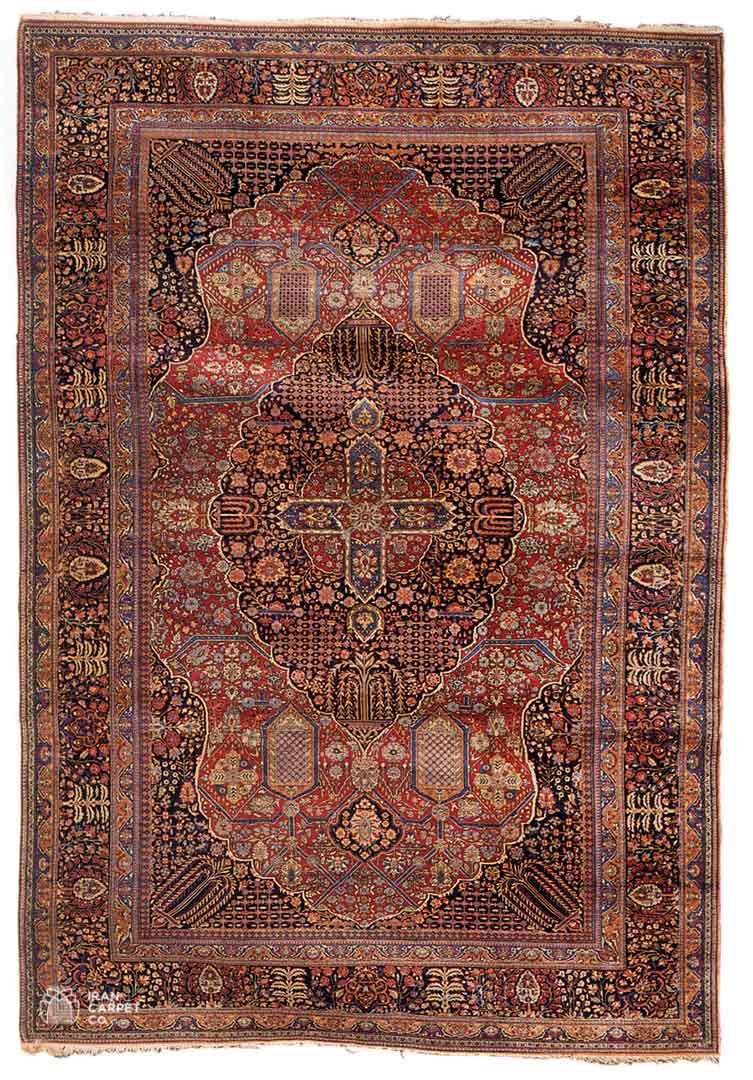 Image 2: Mohtasham medallion-and-corner design, 1289 SH (1910–11)
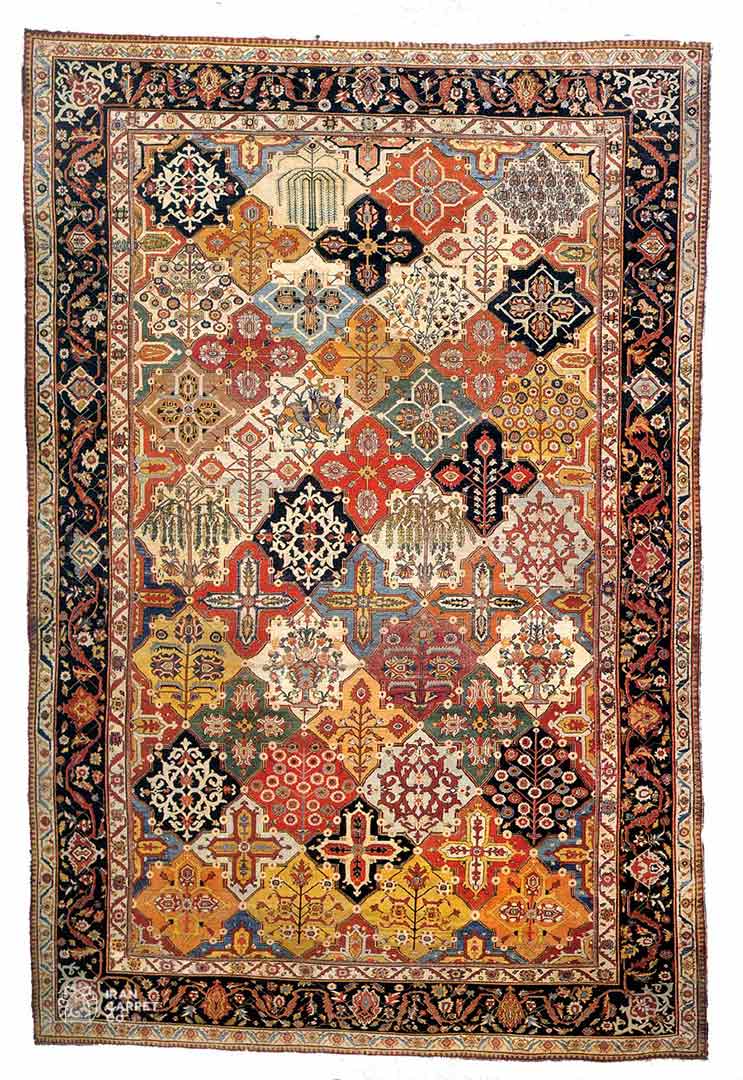 Image 3: Panel design
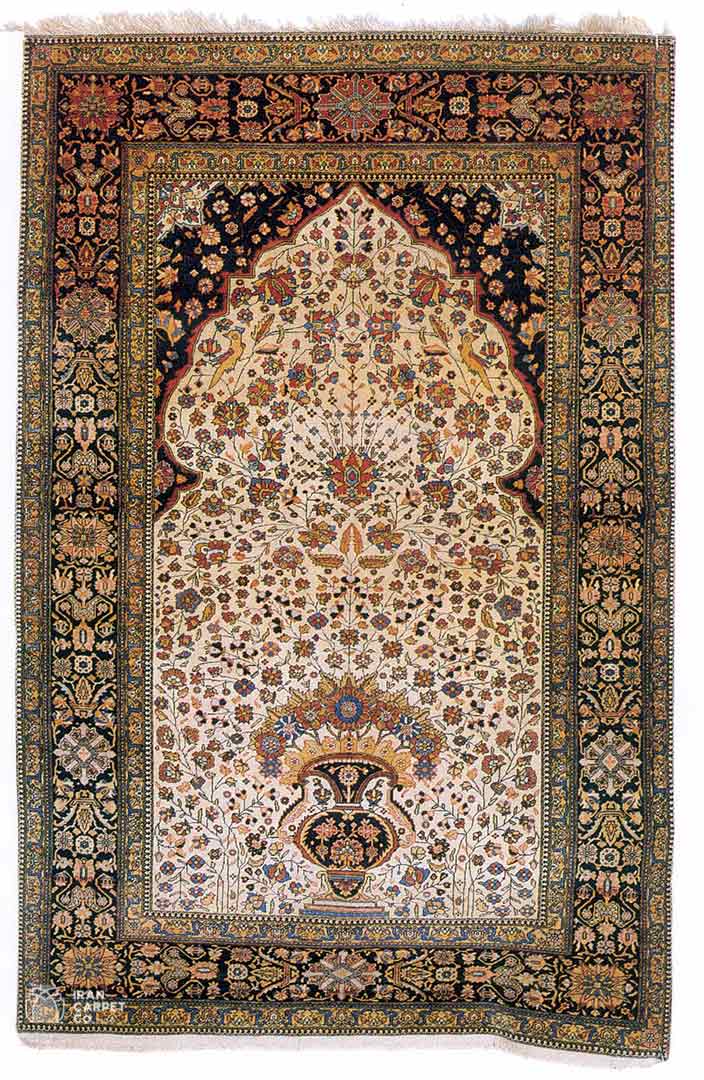 Image 4: Vase design, Kashan, 1279 SH (1900–01). Kashan has the greatest variety of vase-design carpets, a pattern much favored by its designers and weavers.
The medallions in Kashan carpet designs are usually curved and lozenge-shaped. With two projecting ends, they appear more elongated and create a more elegant composition. Twisting leaves are typically arranged around the medallion and corner pieces (Image 5).
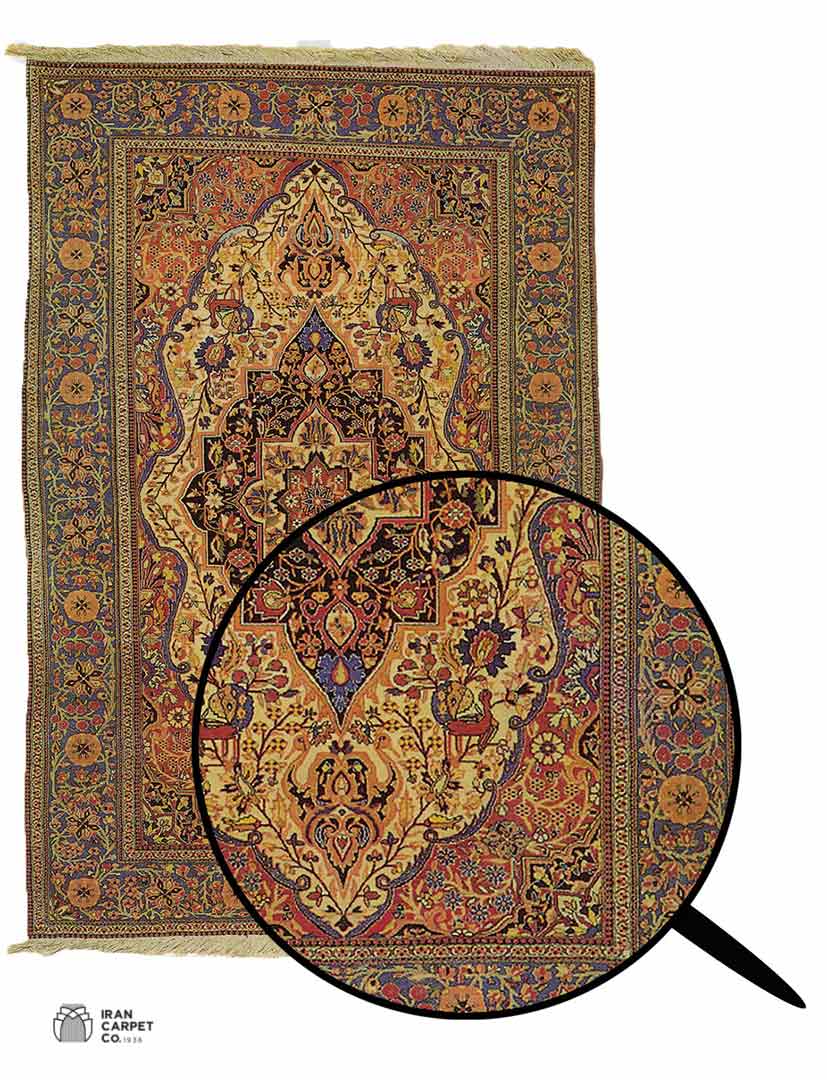 Image 5: Medallion and corner design with small and large floral motifs, early 20th century
Professor Pope also identified other characteristics of Kashan carpet designs, including “scalloped medallions, delicate leaves, and serrated branches and leaves...”
One notable feature that distinguishes Isfahan carpet designs from those of Kashan is the use of khata’i flowers combined with an elongated arabesque branch in the field of Isfahan carpets. In Kashan carpets, the field is decorated chiefly with khata’i flowers, with elaborate arabesques used less often. Perhaps for this reason, the medallion-and-corner design is also called Shah Abbasi in Kashan. As for the borders, Kashan carpets traditionally had seven borders, though over time this number decreased to three or five. The main border usually features two large Shah Abbasi flowers and two scalloped leaves, or an arabesque. A type of border seen on some of the earliest carpets from the region is known as the Mostofi of Kashan.
Color and Dyeing in Kashan Carpets
The history of dyeing in Kashan reaches back more than 7,000 years, to the fifth millennium BCE. Kashan may indeed be considered the cradle of dyeing in Iran: the art was practiced in the Sialk region before it became widespread in many other human civilizations. Following his research, the French archaeologist Professor Ghirshman wrote that the dead were buried in a complex manner beneath the floors of rooms: “The corpse was painted red, a practice not observed elsewhere. The red pigment used to paint the walls of the rooms served as a form of interior decoration. It was a mixture of iron oxide and fruit extract, widely used on the Iranian Plateau. This is an excellent example of the human inclination to experiment in diverse ways and of the capacity for invention.”
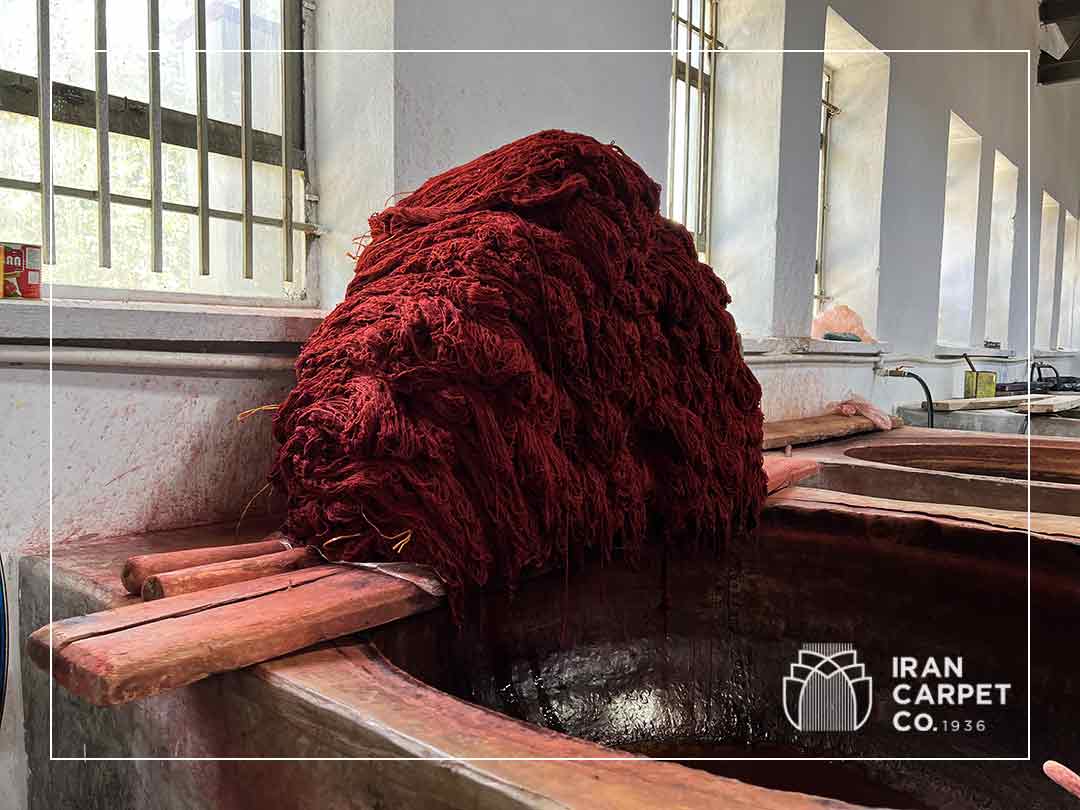
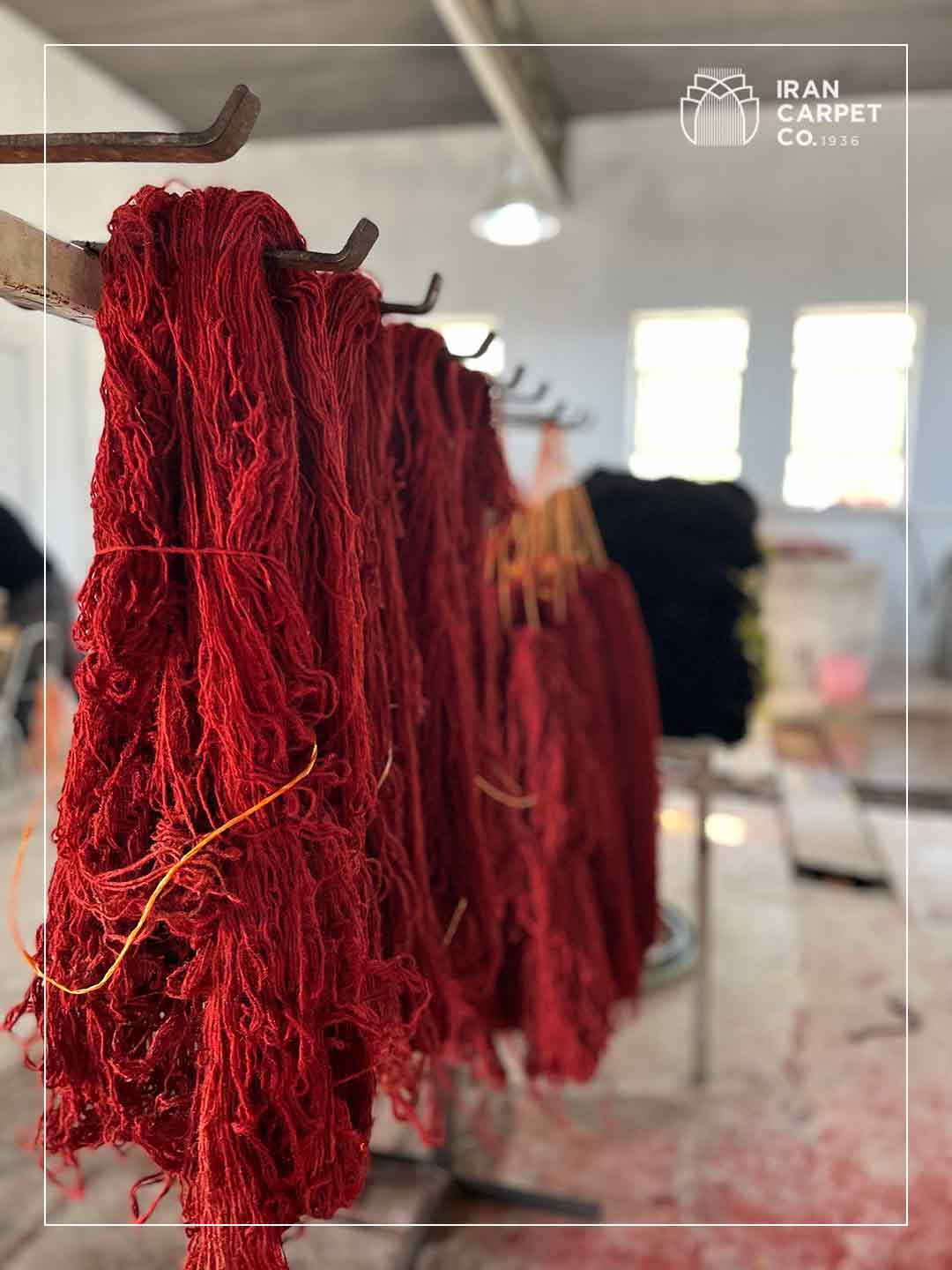
The field colors of Kashan carpets are predominantly red (golī), cream, or navy. Other colors sometimes used include cashew, earthy brown, onion-skin, milky white, almond, and copper. In carpets with a red field, the broad border is often navy, a color also used in the medallion. In the past, Kashan dyers used purple murex shell as well as madder to dye fibers red, imparting a distinctive lustre. Today, dyers there use a range of stable synthetic dyes for most colors. These include red, blue, magenta, turquoise, pale beige, sugar white, elephant gray, brown, and pistachio green. Deep and light reds, blue, green, yellow, black, cream, beige, pink, indigo, navy, and other shades are among the principal colors used in Kashan carpets. Cream and red—especially cream fields—predominate in many contemporary Kashan carpets.
Characteristics of Kashan Carpets
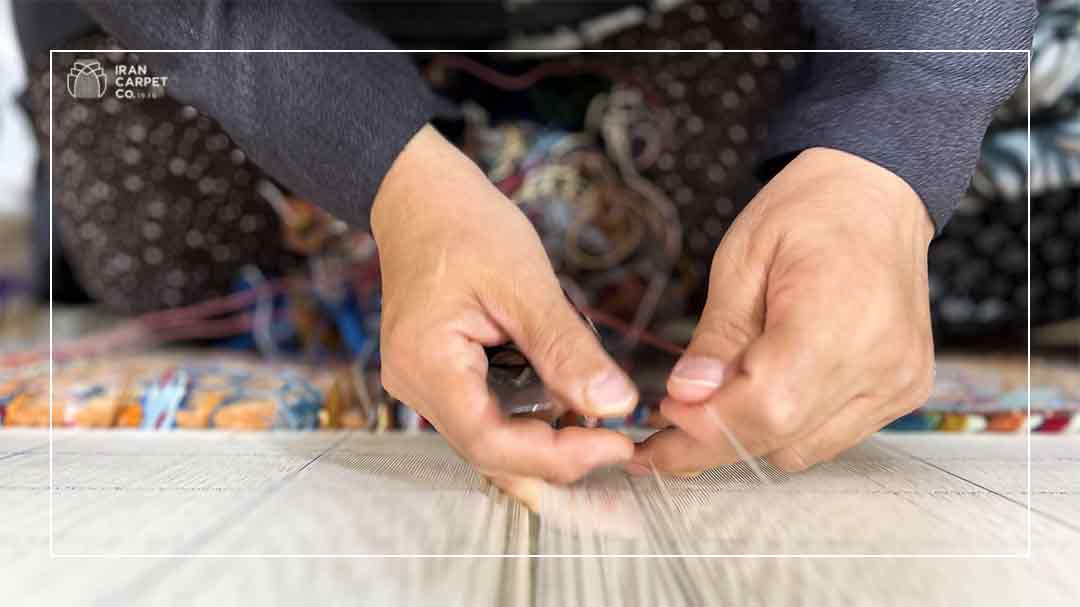
The knot used in Kashan and its surrounding areas is the asymmetrical Persian (Senneh) knot. The warping and loom are also in the Persian tradition; carpets are densely woven, and the looms are vertical and usually wooden. The knot count (raj)—the number of knots in 6.5 centimeters—ranges from 35 to 50. Finishing, or shearing, is carried out during weaving. Pile is made of wool and silk, and the warp is cotton. Kashan carpets were once renowned and readily identifiable for their fine, soft wool and superior weave, owing chiefly to the use of imported merino wool. Because of the Persian weaving technique, the ends of the carpet’s lower fringe are joined, while the warp threads at the top remain loose. Carpet sizes range from 1.5 to 6 meters, with 2-meter carpets also common and 15-meter carpets rare.
Distinctive Traditions of Kashan Carpet Weaving
In Kashan, weavers sing melodies and poetry while weaving. These poems draw on shared cultural life and reflect the weavers’ sorrows, hopes, and interests.
At times, the verses are prayers asking an Imam for help and blessings—for progress in the work, health and well-being, and peace under the protection of the Imams. Some are sung as the carpet is being taken off the loom.
Examples of verses traditionally sung at the beginning and end of weaving include:
O beloved of my soul, in God’s name; O pride of earth and heaven, in God’s name.
Sit and gaze into her eyes; then sit and give your life for her.
First, blessings upon God, the Living Judge; then upon the Messenger, crowned with honor.
Third, blessings upon Ali and his eleven descendants, the Master of all creation.
Reyhaneh Kathiri
Carpet specialist
For further information about Kashan carpets, consult the following sources:
- Bassam, Seyyed Jalal al-Din, et al. (1383 SH). Dream of Paradise (The Art of Persian Carpet Weaving). Tehran: Etka.
- Chitsazian, Amirhossein (1391 SH). “Color and Dyeing in Kashan Carpets.” Kashan Studies, vol. 5, autumn and winter, no. 2 (serial no. 9), pp. 116–135.
- Zholé, Touraj (1392 SH). Understanding Carpets: Some Theoretical Foundations and Intellectual Underpinnings. Yasavoli Publications, Tehran.
- Qomi Oeyli, Somayeh, and Majid Nikouei (1395 SH). “A Study of Changes in the Design and Color Palette of Kashan Carpets over the Past Century.” University of Art, Tehran, Faculty of Applied Arts, master’s thesis.
- Sur-Esrafil, Shirin. The Greatest Carpet Designers of Iran. Tehran: Peykan.