Regional Weaves
Heris Carpets
Jun 17, 20236 min readIran Carpet Company
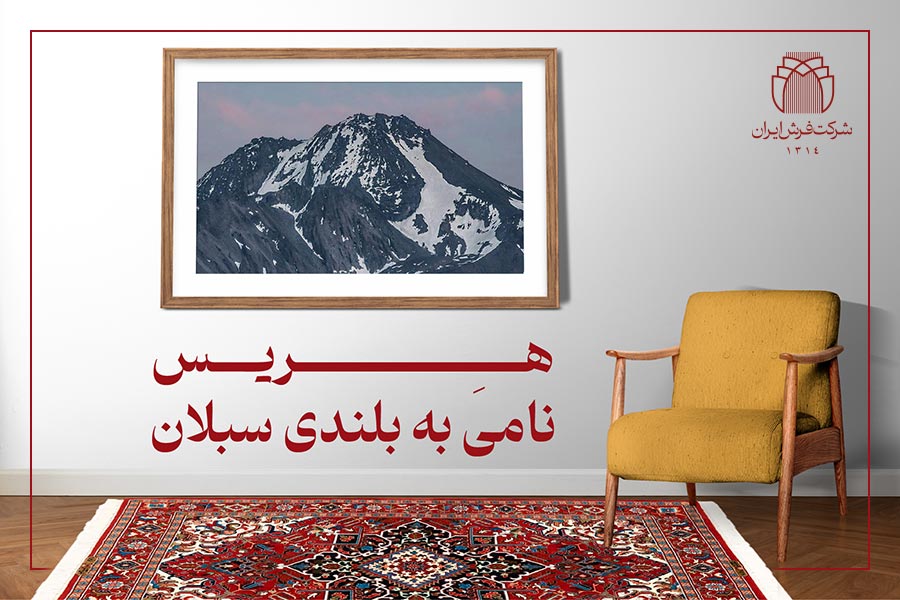
Heris weavers imagine the urban medallion-and-corner design and recreate it on the loom. This imaginative approach has greatly enhanced the beauty of Heris carpets. Their captivating beauty has earned them a place among the world’s most celebrated village-woven carpets.
 History of Heris Carpets
One of Iran’s major and renowned carpet-weaving centers is Heris, in East Azerbaijan Province. Heris carpets are often woven by local weavers from memory. Such carpets reflect the taste, preferences, and aesthetic sensibilities of the weavers’ community. Many factors shape these designs, including the weaver’s age and gender, the geographical setting and social conditions, customs and traditions, and important religious and cultural beliefs.
Heris carpets are considered the finest carpets of the Azerbaijan region. The area is known for its weighty, durable, famous, hard-wearing carpets, which possess distinctive qualities and are nevertheless affordable.
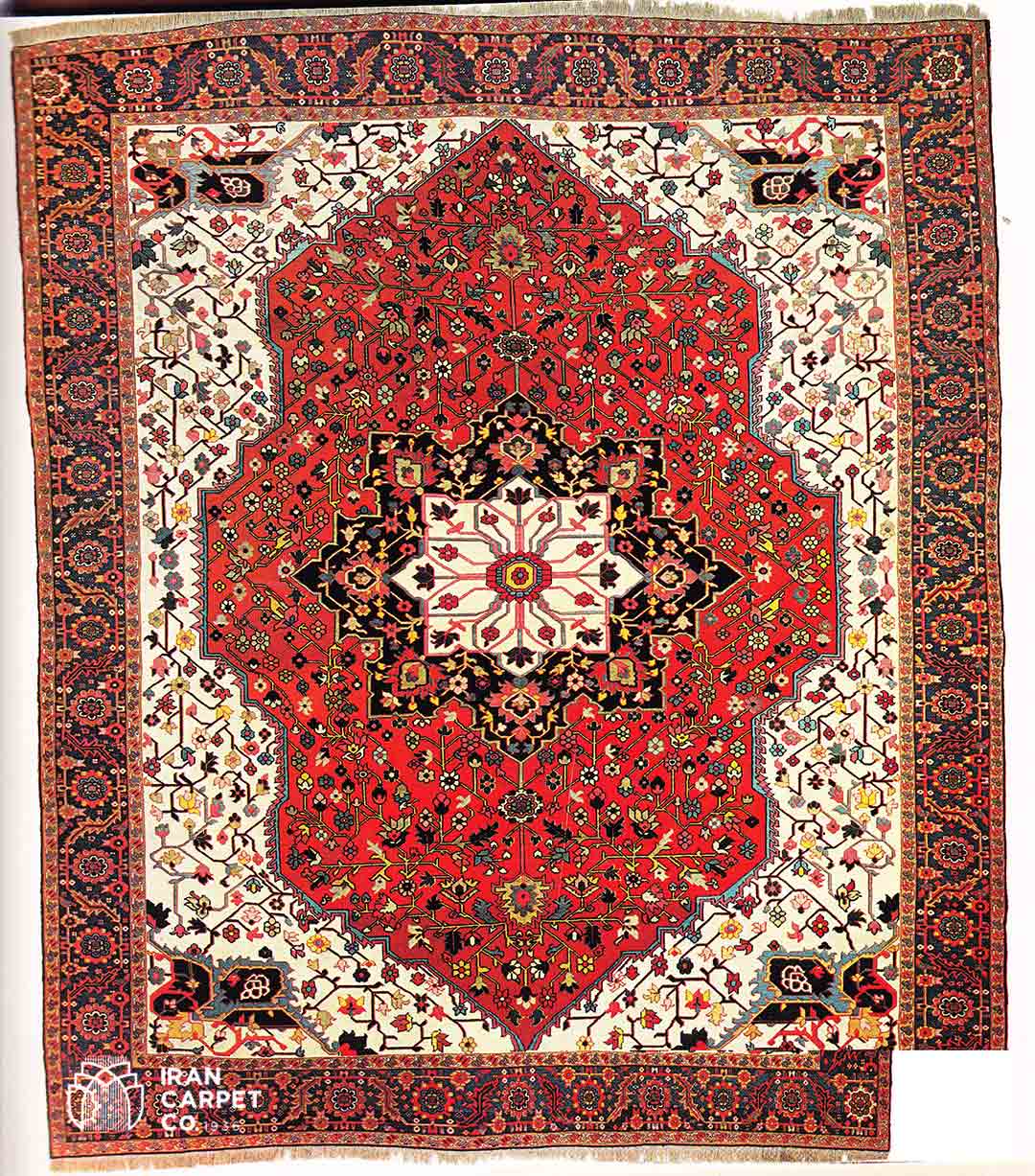 There is little doubt that carpet weaving was established in this region by the beginning of the 19th century, if not earlier. Cecil Edwards writes: “I think we can recount with reasonable confidence the events that took place in this connection. Tabrizi merchants knew that Western countries wanted carpets woven with a medallion design, rather than the narrow, elongated runners with repetitive patterns that had until then been made in villages. It therefore seemed necessary for one of the merchants to send a design from among the familiar curvilinear patterns—that is, a medallion-and-corner design—to Garavan, Bakhshayesh, or Heris, and see how the village carpet weavers would use it. As might be expected, this is what happened.”
In the past, Heris weavers also produced very fine silk carpets. Their skilful, flawless weaving and fascinating designs were such that they were sometimes mistaken for carpets woven in Tabriz.
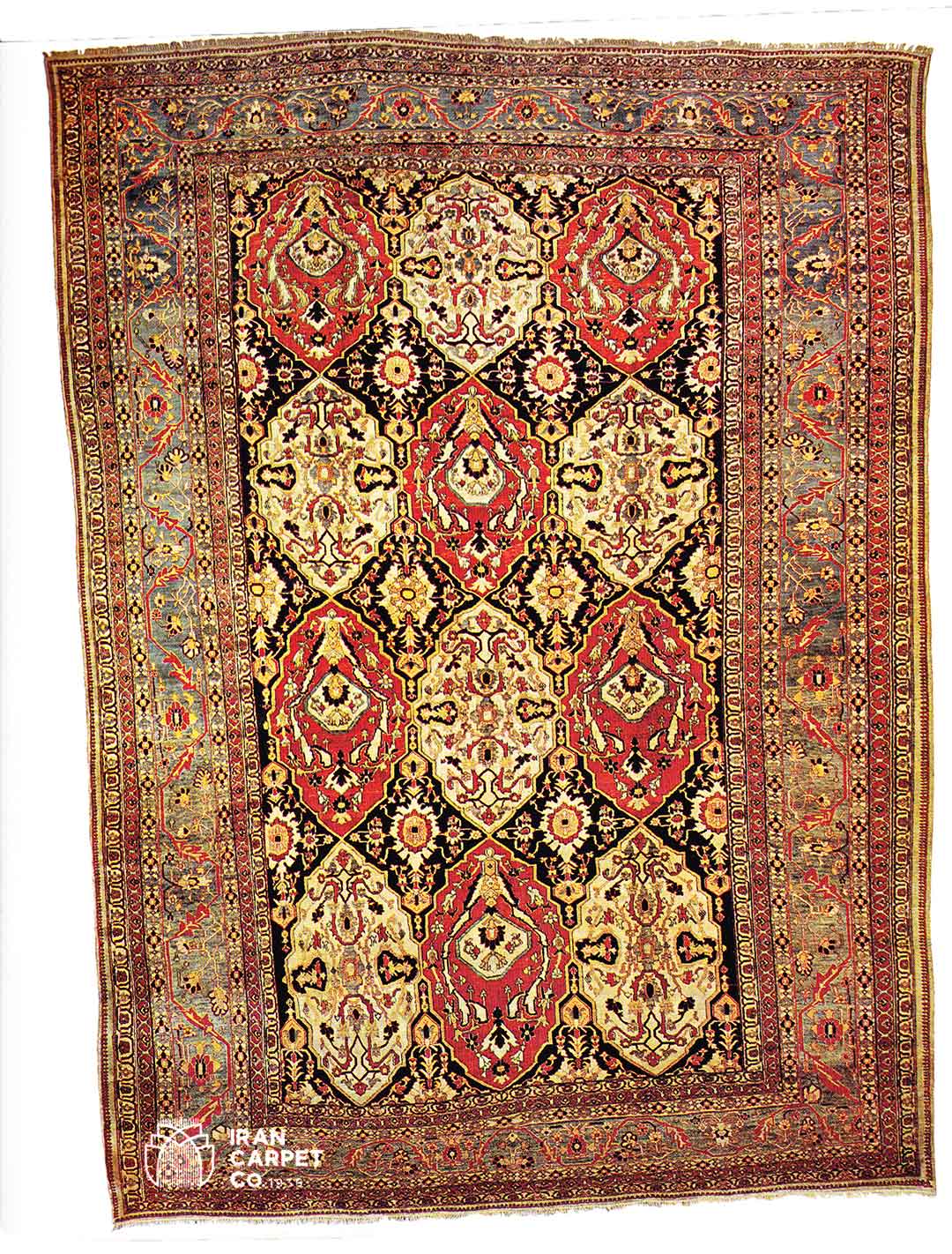 Heris Pattern Cloths, or Small Textile Patterns
Heris weavers use three methods as guides for weaving carpets: naqsheh, ornak, and cheshni. A naqsheh is a design used on graph paper. An ornak is a small woven sample displaying various designs and motifs; it is mounted beside the loom for the weaver to consult and draw upon while weaving. More important, however, are the pattern cloths, known locally as cheshni, which were widely used by Heris carpet weavers. Cheshni were textile weaving patterns measuring less than 30 by 30 centimetres. They consisted of a piece of plain white calico on which the desired design was drawn with ink and a brush. Notably, the lines in these pattern cloths are always curved; once woven into a carpet, however, they appear in a form that is both partly geometric and partly curvilinear.
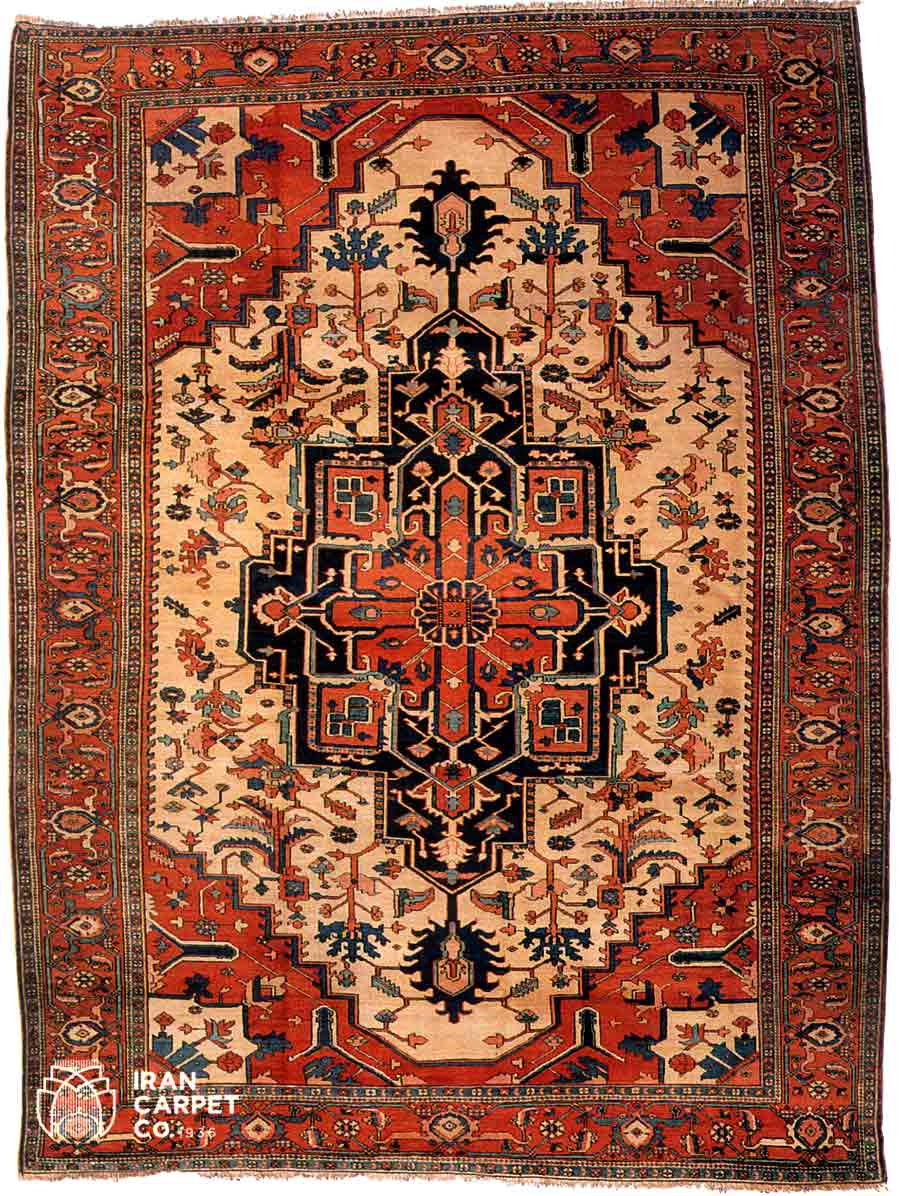 Figure 1: The Tajeri design. The medallion is square and comprises three fields; the corner pieces are square, and the border features a samovari design.
Characteristics of Heris Carpets
These carpets are generally woven with two wefts, a long pile, and a coarse structure, with knot counts of 20 or 30 raj. Silk carpets with counts of 50 or 60 raj are also made. Heris carpets use the symmetrical Turkish (Ghiordes) knot. Contemporary Heris carpets are generally made in sizes of 2 × 3 metres and 2.5 × 3.5 metres. Although Heris carpets are woven in a shared style, few are alike. They are also typically woven in a broken-branch style.
The characteristic design of Heris carpets is the medallion-and-corner composition with a samovari border; the designs are given various names according to the shape of the medallion.
The region’s long tradition of carpet weaving, combined with the integration of broken, memory-woven designs and imported curvilinear patterns, gave rise to new designs. The common carpet designs of the region can be classified into three groups: 1) broken and geometric designs woven from memory (wool, 20 raj); 2) medallion-and-corner Afshan designs with broken branches1 (wool, 20 or 30 raj); and 3) urban curvilinear designs (silk, 50 or 60 raj).
Centers whose carpet styles follow that of Heris include Mehraban, Sherebian, and the villages of Garavan, Bakhshayesh, and Qarajeh.
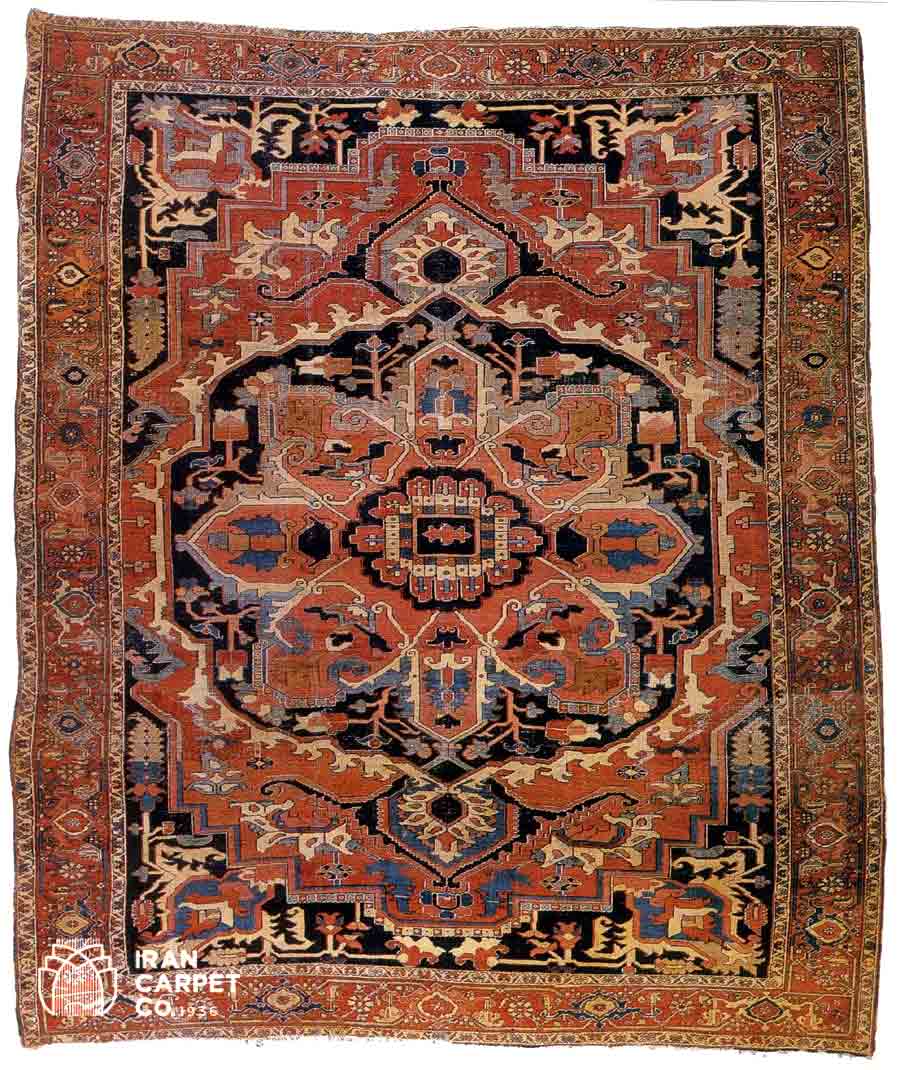 Figure 2: The Samad Khani design. The medallion consists of two sections, with a large arabesque frame forming its head. The corner piece has no corner motif; instead, it features an inverted arabesque frame and a samovari border.
Design and Colour in Heris Carpets
The region’s best-known design is the broken medallion-and-corner pattern, locally known as Gosheh-Gobak. The medallions are usually woven on a large scale, sometimes extending almost to the borders. The central medallion dominates the field, covering a substantial portion of the carpet. The corner pieces often closely resemble the medallion. Heris carpet designs are known by names such as Qach Khatun or Dash Khatun (a medallion on a plain field), Haji Azimi (a lozenge-shaped medallion), Yeddi Gol (seven pools), Sabouri, Esmail Beg, Basha Bash (all-over), Tajeri (stepped corner pieces; Figure 1), and Samad Khani (round medallion; Figure 2).
Oak leaves and Shah Abbasi flowers are used to decorate the borders of Heris carpets. Two well-known borders, “Samovari” or “Tortoise” and “Balugh Shamama”2, appear on many of these carpets. “Balugh Shamama”: balugh means “fish leaf,” and shamama means “large round flower” (Figure 3).
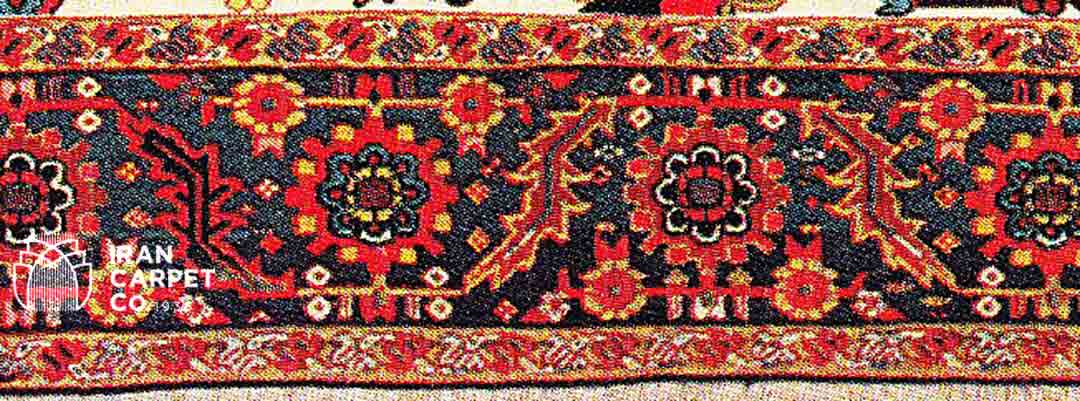 Figure 3: Balugh Shamama border
Heris is renowned worldwide for its designs, colours, and natural vegetable dyeing. Heris weavers choose colours from shades of reddish brown, light and deep pink, light and dark blue, and ivory. The dominant colour in the field of carpets from this region is madder red, often paired with a navy border. Common colours include chestnut red, bright red, navy, madder red, blue, black, yellow, and green.
History of Heris Carpets
One of Iran’s major and renowned carpet-weaving centers is Heris, in East Azerbaijan Province. Heris carpets are often woven by local weavers from memory. Such carpets reflect the taste, preferences, and aesthetic sensibilities of the weavers’ community. Many factors shape these designs, including the weaver’s age and gender, the geographical setting and social conditions, customs and traditions, and important religious and cultural beliefs.
Heris carpets are considered the finest carpets of the Azerbaijan region. The area is known for its weighty, durable, famous, hard-wearing carpets, which possess distinctive qualities and are nevertheless affordable.
There is little doubt that carpet weaving was established in this region by the beginning of the 19th century, if not earlier. Cecil Edwards writes: “I think we can recount with reasonable confidence the events that took place in this connection. Tabrizi merchants knew that Western countries wanted carpets woven with a medallion design, rather than the narrow, elongated runners with repetitive patterns that had until then been made in villages. It therefore seemed necessary for one of the merchants to send a design from among the familiar curvilinear patterns—that is, a medallion-and-corner design—to Garavan, Bakhshayesh, or Heris, and see how the village carpet weavers would use it. As might be expected, this is what happened.”
In the past, Heris weavers also produced very fine silk carpets. Their skilful, flawless weaving and fascinating designs were such that they were sometimes mistaken for carpets woven in Tabriz.
Heris Pattern Cloths, or Small Textile Patterns
Heris weavers use three methods as guides for weaving carpets: naqsheh, ornak, and cheshni. A naqsheh is a design used on graph paper. An ornak is a small woven sample displaying various designs and motifs; it is mounted beside the loom for the weaver to consult and draw upon while weaving. More important, however, are the pattern cloths, known locally as cheshni, which were widely used by Heris carpet weavers. Cheshni were textile weaving patterns measuring less than 30 by 30 centimetres. They consisted of a piece of plain white calico on which the desired design was drawn with ink and a brush. Notably, the lines in these pattern cloths are always curved; once woven into a carpet, however, they appear in a form that is both partly geometric and partly curvilinear.
Figure 1: The Tajeri design. The medallion is square and comprises three fields; the corner pieces are square, and the border features a samovari design.
Characteristics of Heris Carpets
These carpets are generally woven with two wefts, a long pile, and a coarse structure, with knot counts of 20 or 30 raj. Silk carpets with counts of 50 or 60 raj are also made. Heris carpets use the symmetrical Turkish (Ghiordes) knot. Contemporary Heris carpets are generally made in sizes of 2 × 3 metres and 2.5 × 3.5 metres. Although Heris carpets are woven in a shared style, few are alike. They are also typically woven in a broken-branch style.
The characteristic design of Heris carpets is the medallion-and-corner composition with a samovari border; the designs are given various names according to the shape of the medallion.
The region’s long tradition of carpet weaving, combined with the integration of broken, memory-woven designs and imported curvilinear patterns, gave rise to new designs. The common carpet designs of the region can be classified into three groups: 1) broken and geometric designs woven from memory (wool, 20 raj); 2) medallion-and-corner Afshan designs with broken branches1 (wool, 20 or 30 raj); and 3) urban curvilinear designs (silk, 50 or 60 raj).
Centers whose carpet styles follow that of Heris include Mehraban, Sherebian, and the villages of Garavan, Bakhshayesh, and Qarajeh.
Figure 2: The Samad Khani design. The medallion consists of two sections, with a large arabesque frame forming its head. The corner piece has no corner motif; instead, it features an inverted arabesque frame and a samovari border.
Design and Colour in Heris Carpets
The region’s best-known design is the broken medallion-and-corner pattern, locally known as Gosheh-Gobak. The medallions are usually woven on a large scale, sometimes extending almost to the borders. The central medallion dominates the field, covering a substantial portion of the carpet. The corner pieces often closely resemble the medallion. Heris carpet designs are known by names such as Qach Khatun or Dash Khatun (a medallion on a plain field), Haji Azimi (a lozenge-shaped medallion), Yeddi Gol (seven pools), Sabouri, Esmail Beg, Basha Bash (all-over), Tajeri (stepped corner pieces; Figure 1), and Samad Khani (round medallion; Figure 2).
Oak leaves and Shah Abbasi flowers are used to decorate the borders of Heris carpets. Two well-known borders, “Samovari” or “Tortoise” and “Balugh Shamama”2, appear on many of these carpets. “Balugh Shamama”: balugh means “fish leaf,” and shamama means “large round flower” (Figure 3).
Figure 3: Balugh Shamama border
Heris is renowned worldwide for its designs, colours, and natural vegetable dyeing. Heris weavers choose colours from shades of reddish brown, light and deep pink, light and dark blue, and ivory. The dominant colour in the field of carpets from this region is madder red, often paired with a navy border. Common colours include chestnut red, bright red, navy, madder red, blue, black, yellow, and green.
For more information about Heris carpets, consult the following sources: -Mohammadi, Shabnam, and Ali Vandeshaari (1393 SH). “A Structural Analysis of Design in Contemporary Heris Carpets,” Goljam: Research Journal. -Edwards, Cecil (1367 SH). The Persian Carpet, translated by Mahin Dokht Saba, Association of Book Lovers. -Bassam, Seyyed Jalal al-Din, et al. (1383 SH). Dream of Paradise: The Art of Iranian Carpet Weaving. Tehran: Etka. -Nasiri, Mohammad Javad (1374 SH). A Survey of the Art of Carpet Weaving in Iran. Tehran: self-published. -Azizi, Hasan, and Mahnaz Navaei (1387 SH). “A Study of Abstract Motifs in Heris Carpets,” Goljam: Research Journal.Reyhaneh Kathiri Master’s graduate in handwoven carpets