Finishing Operations
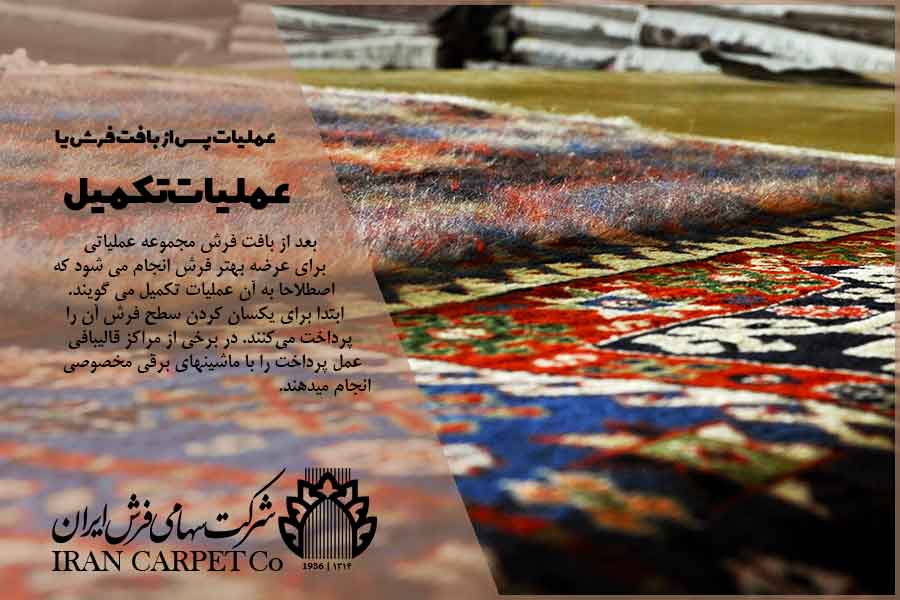
After weaving, the pile is first sheared to even out the carpet’s surface. In some carpet-weaving centers, this is done with special electric machines; in the traditional method, special scissors or blades are used. If too much of the pile is removed after weaving, the result is technically known as «thin pile» or «short pile». Shearing is one of the most delicate stages of carpet making. Stone polishing is another operation sometimes carried out during finishing. It smooths the scales of the wool fibers and removes excess color from the fibers, giving the carpet a velvety, silk-like appearance. Pile height, like other characteristics—including knot type, number of wefts, fringe length, and so on—is one of the criteria used to identify where a carpet was woven; its measurements vary according to local customs and traditions. One type of shearing is relief shearing, done with special scissors (pile-carving scissors). This creates raised areas on the carpet’s surface and is usually used for pictorial carpets, adding a distinctive sense of depth to their design. Selvage wrapping (shirāzeh): This is used to cover the ends of the wefts along the carpet’s sides, neaten the edges, and secure the side warps. The types of selvage wrapping include: Integrated selvage wrapping: Several strands of pile yarn matching the plain-weave color and the main field are twisted together and formed into a small ball. After each passage of weft—thick and thin—the bundle is passed around the selvage warps, wrapped together with the weft ends in a tubular or basket-like manner, and pulled tight. This is repeated at every row. Types of integrated selvage wrapping include:
- Basket-weave selvage (multiple rows): a narrow band along the sides of the carpet, as seen on tribal carpets
- Parallel selvage
- Opposing selvage
- Contrasting selvage
- Crossed selvage
Separate selvage wrapping: In this method, the selvage is woven separately after the carpet is completed. It should be noted that, in practice, integrated selvage wrapping is stronger and of better quality than the separate type. Some Iranian carpets, including those from Fars and Yalmeh in Chaharmahal and Bakhtiari, have colored selvages.
If the carpet’s flatwoven foundation has become loose for any reason, or is judged insufficiently strong to protect the carpet, knots are usually tied at the ends of its fringes. This is particularly important for old carpets that are likely to be washed. The most important and common knots are: Double knot, chickpea knot, window knot