Birjand Carpets
The first and largest carpet company in Iran was the Shargh Birjand Company. One of the oldest private Iranian enterprises devoted to the production of handwoven carpets, it was established in 1308 SH (1929–30). All the carpets produced by the company bore a trademark, with its name set within an image of the sun. (Figures 1 and 2)
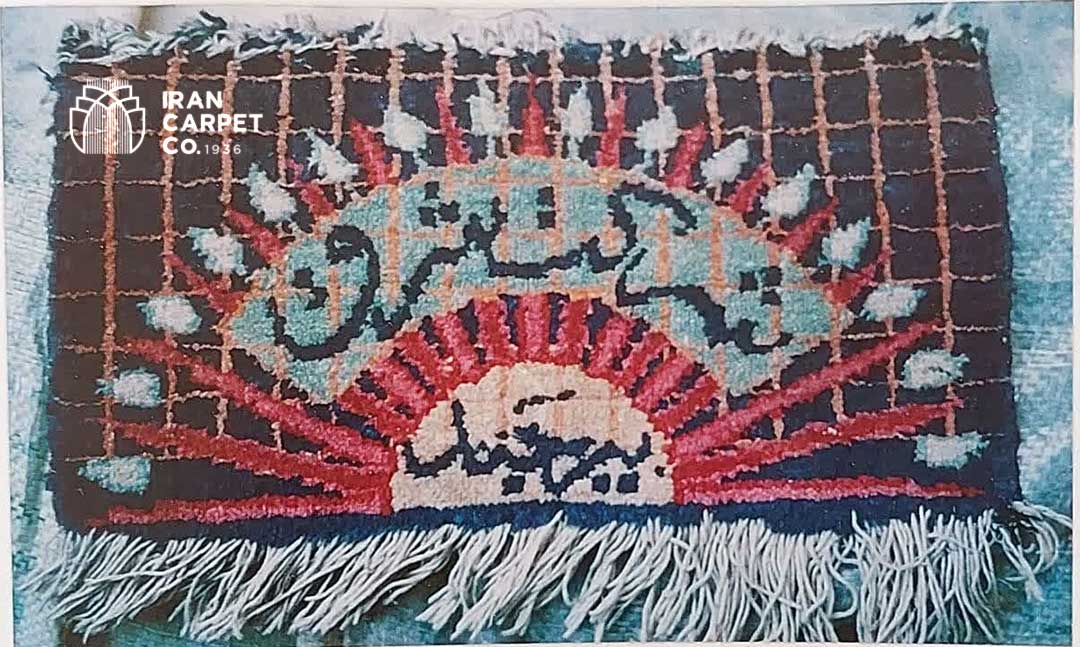
Figure 1: A piece bearing the Shargh Birjand Company emblem, sent to its representative offices in various cities.
A History of Birjand Carpets
Birjand County, home to the capital of South Khorasan Province, lies in eastern Iran. The city has long been known by two names: Quhestan and Birjand. Carpet weaving in the Birjand region dates back many years; according to compiled research, Birjand carpets have a history of approximately two centuries. The weaving areas of Birjand include the central district and the counties of Darmian, Sarbisheh, Nehbandan, Khusf, and Qaen. Some local residents and former industry practitioners consider carpet weaving in the villages around Birjand to be considerably older than in the city itself. The villages of Dorkhesh and Mud are the oldest and best-known carpet-weaving centers in the Birjand area, and among the oldest in eastern Iran and southern Khorasan. Dorkhesh, in particular, is a familiar name to carpet enthusiasts. By the late Qajar period, Birjand carpets had gradually come to play an important role in the regional economy. With the outbreak of war and the collapse of European markets, exports of Birjand carpets declined. Conditions changed from 1330 SH (1951–52), when figures such as Hajj Hossein Amini—a long-established Birjand merchant and producer—devoted themselves to building the carpets’ international reputation.
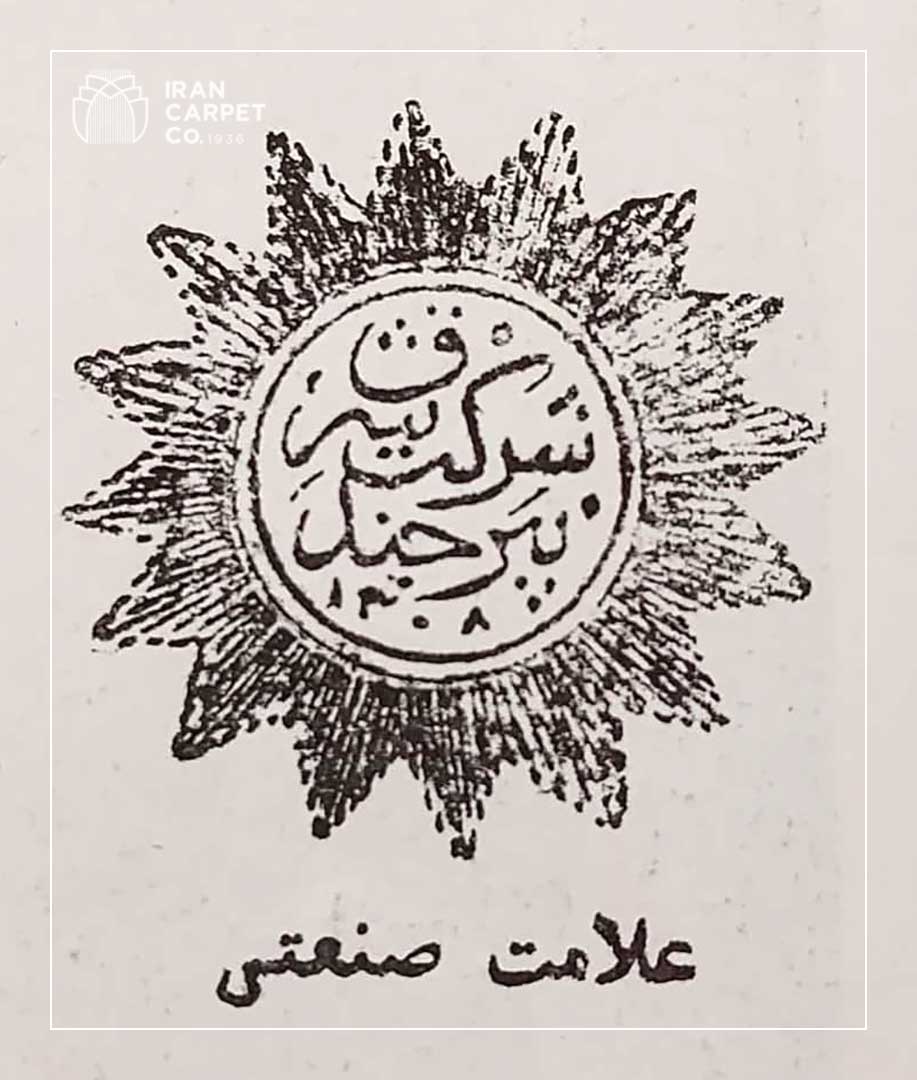
Figure 2: The distinctive emblem of the Shargh Birjand Company
Design and Colour in Birjand Carpets
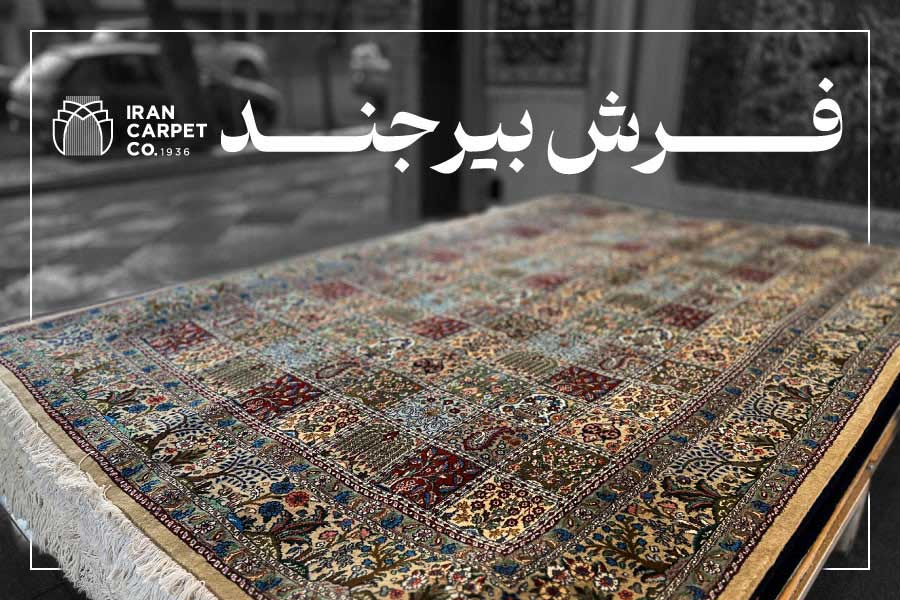
The most characteristic design of the Birjand region is the circular medallion, also known as the sun medallion. Many refer to it as the “Saadi quarter” design. In its traditional form, it features a circular medallion at the center of the carpet, set against a red field adorned with Shah Abbasi flowers. The medallions are woven in three versions: with 16 or 32 heads, or with 64 heads; some also call these the 32-head or 32-flower quarter designs. The design gained its greatest renown when its central medallion, admired for its beauty, was incorporated into carpets with the Mahi-ye Darham (all-over fish) pattern. Some believe that Saadi, a celebrated Birjand designer active in the early years of the 14th century SH, was the first to transfer this medallion to carpets bearing the fish design. By reviving the pattern, he brought Birjand carpets worldwide renown (Figure 3). The Saadi quarter medallion is commonly found in carpets from Mashhad, Birjand, Mud, and Dorkhesh.
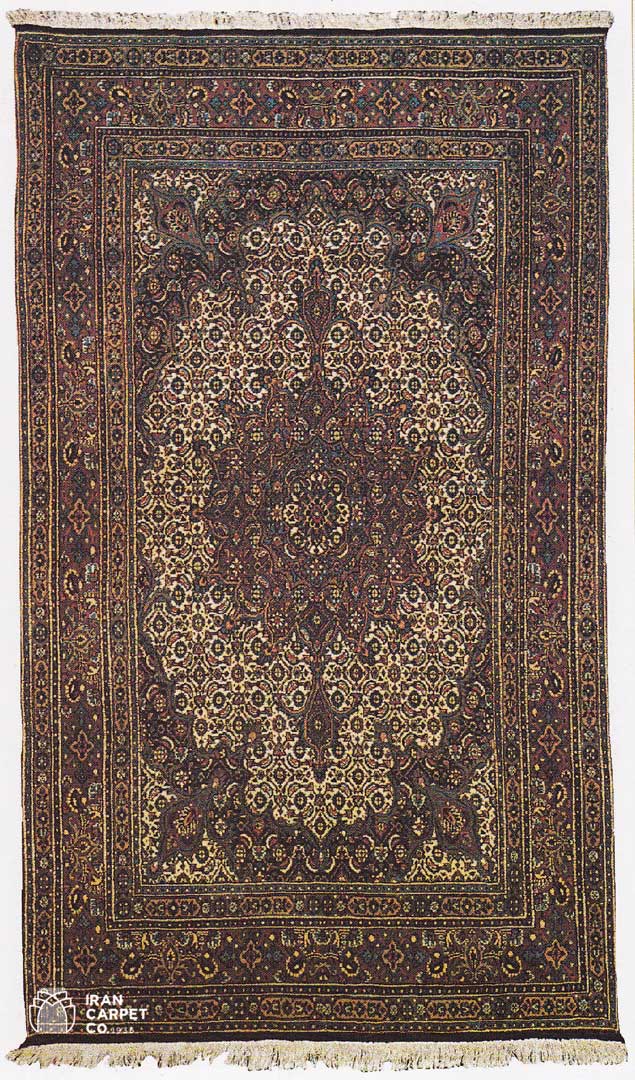
Figure 3: A silk-flower rug, measuring 20 × 126, with a Lachak-Toranj design and trailing arabesques, also known as khordeh mahi (small fish).
The designs used in Birjand carpets fall into two groups: motifs distinctive to the region, including the Saadi and Rizeh Mahi (small-fish) designs; and designs adapted from other regions, such as Sheikh Safi, Shah Abbasi Lachak-Toranj, Kheshti (tile), Moharramat (banded), several varieties of boteh-jegheh, tree and forest motifs, mihrab and prayer-rug designs, Kaleh Aspi (horse-head), and numerous repeating patterns. Of these, Rizeh Mahi carpets account for approximately 50–60 percent of regional production, followed by Kheshti designs at around 30–35 percent.
Besides carpets, the principal product of Birjand is barberry, which is used in place of citric acid when dyeing with cochineal. Dyers in the region favor ivory white, deep red, light blue, navy, mustard, and brown. Birjand carpets typically use between 12 and 15 colours.
Master Producers and Designers of Birjand Carpets
The history of carpet weaving in Birjand includes a distinguished group of major producers from southern Khorasan. Mirza Ali Derakhshi, Marghoubi, Abdolali Ahmadi, Abdolmajid Jamshidi, Hajj Qasem Khamenei, Gholam-Hossein Kamyabi, Asadi, Abolqasem Malek, and, most renowned of all, Hajj Gholam-Reza Bazargan and Farsad Hossein Amini are among the best-known masters and producers of Birjand carpets, past and present. Among the region’s early carpet designers, Hossein Saadi, Master Aziz Mohammad Zohraei, and Jamshid Mud also enjoy considerable renown and esteem. Mohammad Karim Kermani and Mohammad Mohsen Lotfi were other early Birjand designers. Today, Mohammad Ali Samimi is the most active designer in Birjand.
Reyhaneh Kathiri Carpet specialist
For further information on Birjand carpets, consult the following sources:
- Jouleh, Touraj (1375 SH / 1996–97). A Leaf from the Book of Khorasan Carpets. Publisher: Iran Carpet Company.
- Safaran, Elias, et al. (1393 SH / 2014–15). “A Study of Changes in Rizeh Mahi Carpets in Birjand County in Recent Decades.” Goljam Journal.
- Edwards, Cecil (1367 SH / 1988–89). The Persian Carpet, translated by Mahin Dokht Saba. Book Lovers’ Association.
- Nasiri, Mohammad Javad (1374 SH / 1995–96). “A Journey through the Art of Iranian Carpet Weaving.” Self-published, Tehran.