Bijar Carpets
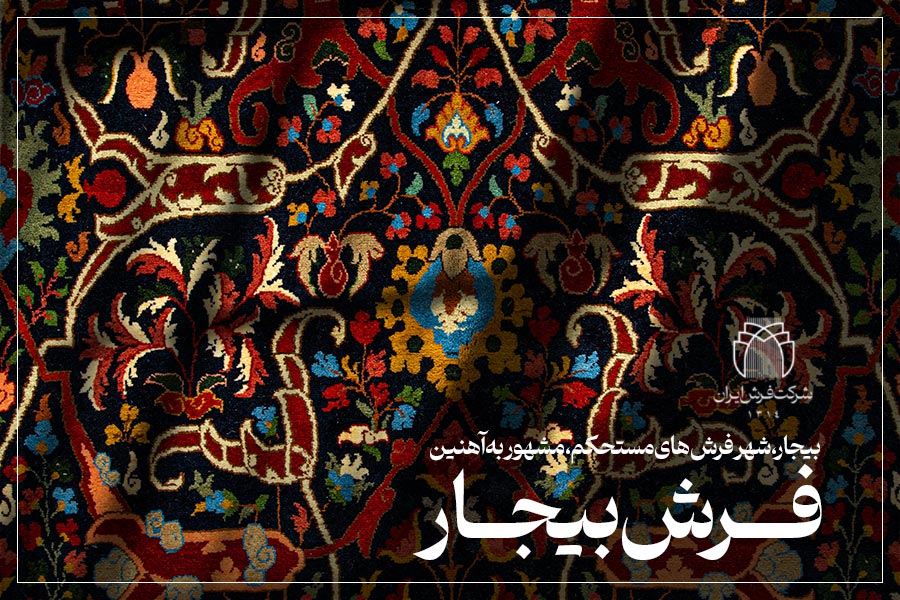
A History of Bijar Carpets
Bijar is a city in Kurdistan Province, in a region formerly known as Grous, apparently named after a tribe of the same name. Even today, old carpet dealers still refer to antique Bijar carpets as Grous carpets. The Bijar carpet-weaving district comprises the city of Bijar and 40 surrounding villages.
Few carpets were woven in this region between the two World Wars, but the industry was revived in the early twentieth century. In 1938, around 1,000 looms were operating in the area. During the Second World War, demand for carpets increased in the provincial capital, Sanandaj. Bijar carpets fell out of favor because buyers there did not care for their thickness and weight.
Small rugs are generally woven in Kurdistan, whereas larger carpets were made in Bijar and its surrounding villages. The reason, according to the account given here, is that the people of Bijar were not Kurdish but Turkic; like many Turkic tribes, they wove their carpets with two wefts. Among these tribes were those of Heris and Tabriz, the Qashqai of Fars, and some Afshar groups in Kerman. These Turkic khans of eastern Kurdistan needed strong, large carpets for their palaces, and commissioned them in the same tribal style, using the Turkish knot and two wool wefts. This was the same technique used to weave Ushak carpets, as it is to this day. In fact, the Bijar carpet may be a distant relative of the Ushak carpet of Turkey.
This Crookedness Comes from Our Straightness2
The density and slight crookedness of Bijar carpets are attributable to the wool weft traditionally used in them. Unlike cotton, wool is resilient; to make a dense carpet, the wool wefts must be beaten down forcefully, producing a coarse, tightly packed weave. The Bijar weavers were exceptionally skilled at this demanding work, beating the wool wefts until they settled firmly into place. In addition to the heavy beater made of iron and wood, they therefore devised a special tool for the purpose, resembling an iron claw and measuring 31 centimetres in length.
Design and Colour in Bijar Carpets
One of the defining characteristics of Bijar carpets is their colour palette. The bold contrasts between colours heighten their beauty. Grous carpets often feature vivid, saturated hues, including red and related shades—especially chehreh, a local term for deep pink, as well as pink and onion-skin pink—along with black, white, henna, and various greens, set against navy, white, or red grounds. This boldness is also evident in the use of a particular shade of yellow characteristic of Bijar, which was used even in carpets with plain, open fields.
The range of dominant designs woven in Bijar has generally been limited, with curvilinear patterns commonly used. Among the best-known and oldest Bijar designs are Saman Barkhanum, the beautiful dragon-mouth arabesque, and the Sardari design. Figure 1 shows an authentic Bijar carpet in the Sardari design. This all-silk carpet, known as the Sardari design, features a composition of interlacing arabesques and varied branches and leaves covering the entire navy field. It measures 200 × 313 and has a knot count of 70 raj. It was woven in 1285 SH (1906–07).
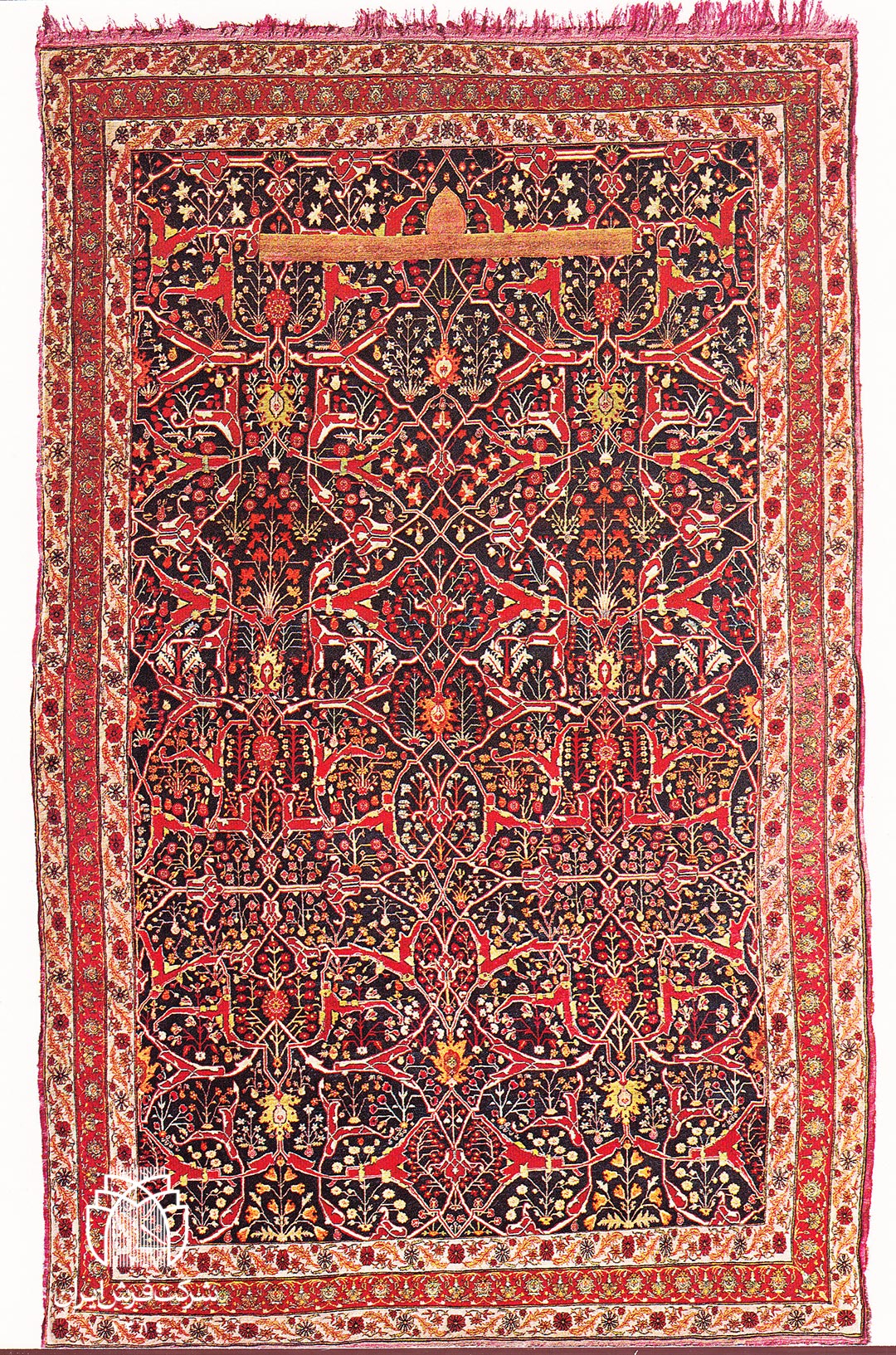 Figure 1: An authentic Bijar carpet in the Sardari design, known as the broken-branch arabesque (Grous design)
Collection: Iran Carpet Museum
Geometric medallion-and-corner (Lachak-Toranj) designs are also found in antique Bijar carpets. Other designs used in Bijar include Gol-Farang, Mostofi, Gol-o-Bolbol (flower and nightingale), and Gol-Vakili. The standard Bijar design is the well-known Herati pattern with a central medallion, but one of the most striking is the Bar-e Aam, or Triclinium, design. In his book The Persian Carpet, Cecil Edwards describes it as follows: “Some local khans wished to have four types of carpet customary in Iran—a sarandaz, a mian-farsh, and two kenarehs—woven together as a single carpet. The carpet was made and proved successful, and the design was repeated; thereafter, carpets in this style were produced” (Figure 2).
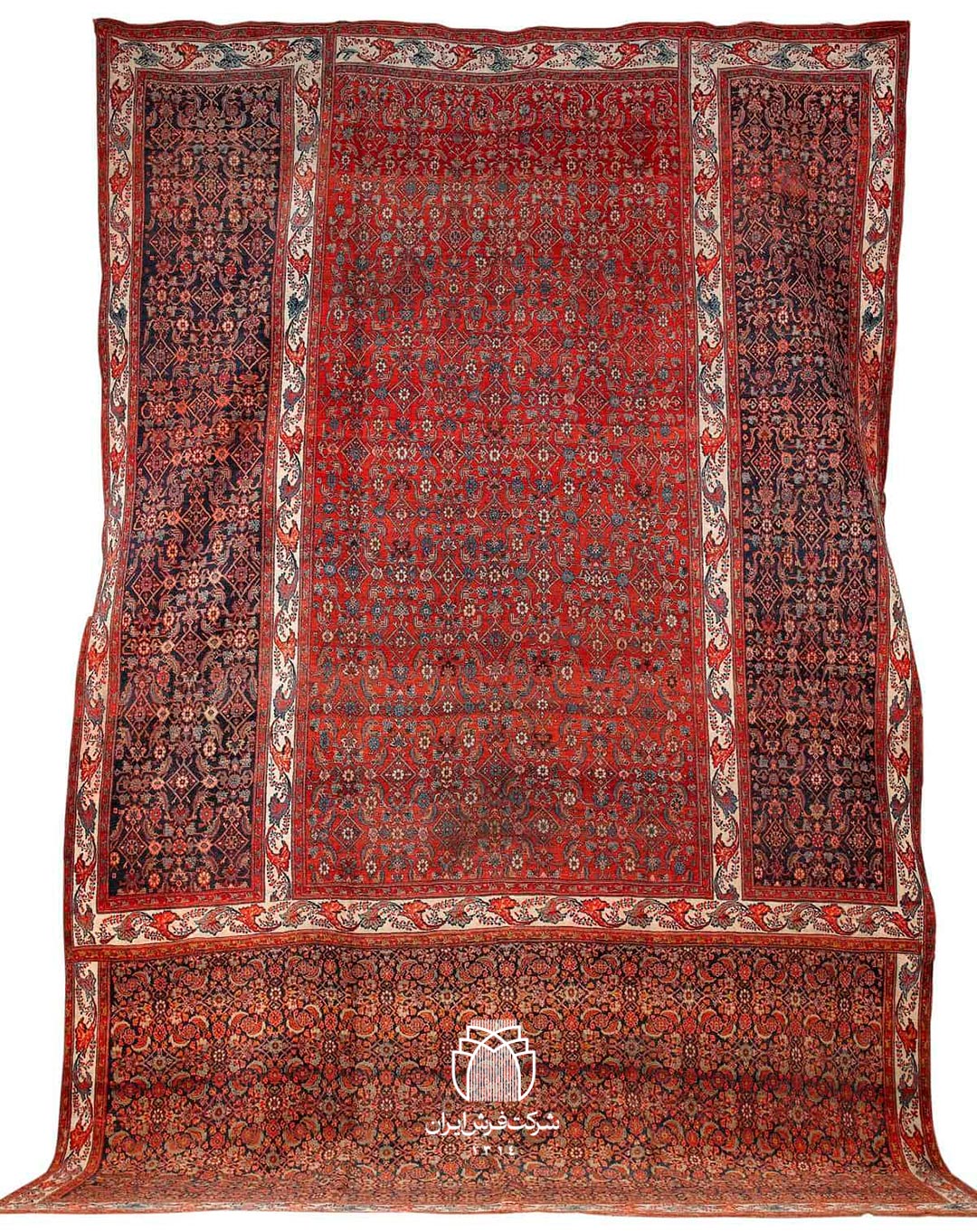 Figure 2: Bijar Triclinium carpet (638 × 402)
“In this design, a sarandaz, a mian-farsh, and two kenarehs are woven together as one.”
In Bijar, new designs were traditionally introduced to villagers by first weaving them into a small rug known as a vaghireh or ornak4 (Figure 3). Today, designs are more commonly presented on graph paper.
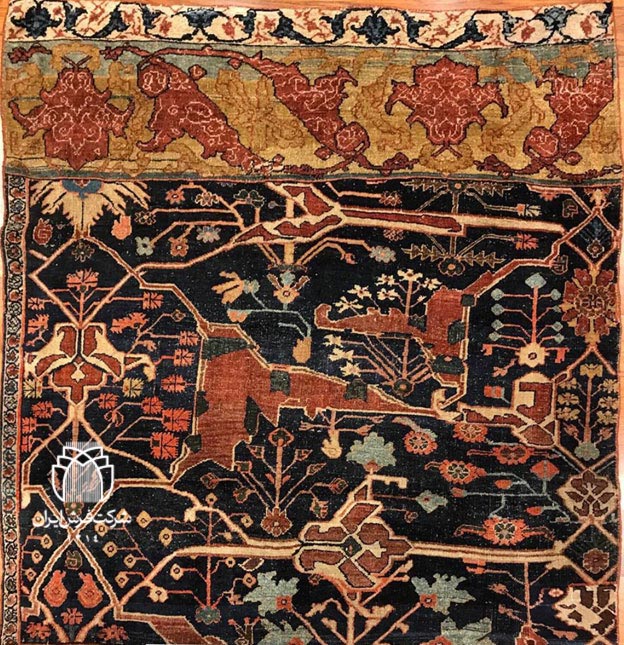 Figure 3: Ornak (a small woven sample showing the field and border designs)
Characteristics of Bijar Carpets
Bijar carpets woven today are all two-weft carpets and belong to the loole-baft5 group. Until about three decades ago, three-weft Bijar carpets were also made. The customary knot in this region is symmetrical. The selvedges are continuous, and the pile is clipped during weaving. The flatwoven ends are made in the Persian style, and the looms used for Bijar carpets are upright and stationary, with Turkish warping. Carpet knot counts range from 30 to a maximum of 35 raj.
The finest carpets in this region are woven by the Amir Afshari branch of the Shahsevan tribe, who live north of Bijar and around Takab. The designs of this area are floral and feature broken branches. At times, their carpets resemble those woven by the Afshar tribe around Kerman.
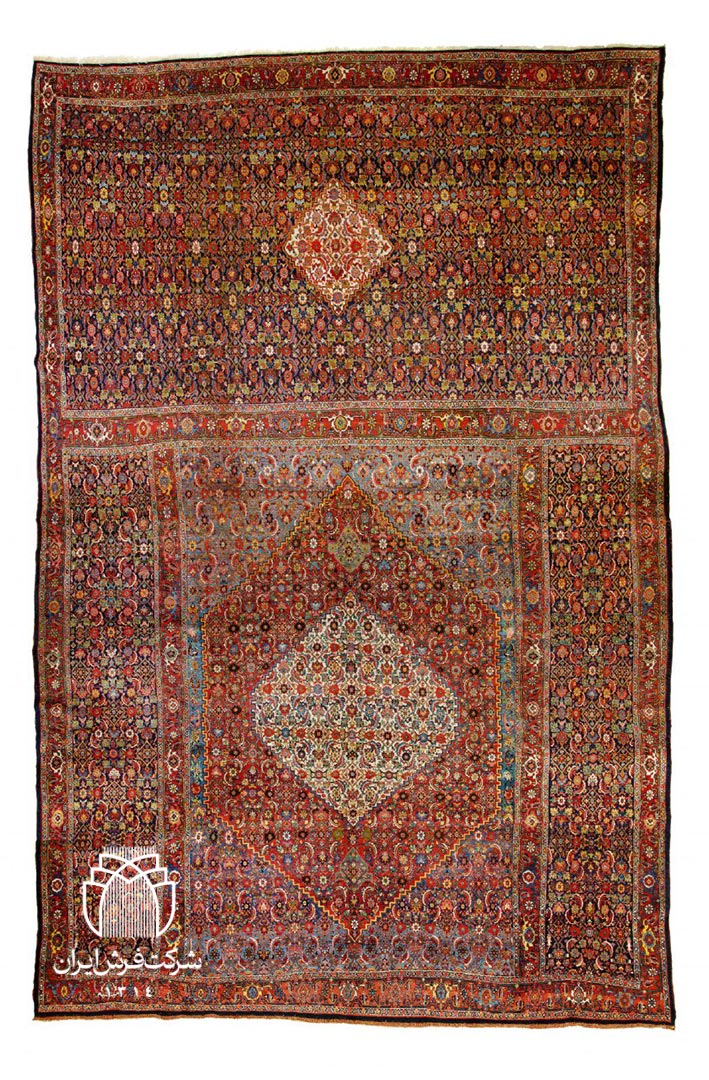 Bijar Triclinium carpet
Notes
1. The name of a province in Turkey.
2. An allusion to a tale about Anushirvan the Just: “Why is this crooked? This crookedness comes from our straightness.”
3. A Greco-Roman term. Cecil Edwards considers the name meaningless, though it is generally understood to evoke a prince or ruler seated on a throne or platform at the upper end of the carpet, while his attendants stand in two rows along its sides, with their backs to the walls.
4. An ornak is a small carpet woven with examples of different designs and motifs. The weaver consults it while making a carpet, drawing from it the patterns and motifs they wish to use. In this way, the ornak served as a model—or an archive of designs—from which weavers could select patterns for a new carpet.
5. Loole-baft: A carpet-weaving technique in which the warp threads on the loom are positioned so that they lie closely together at the points where the knots are tied. With the help of a shed stick (in Turkic-speaking regions), or a shed stick and heddle rod (in Persian-weaving regions), the warps are arranged over and under one another. The angle between the warp threads in this technique varies from 80 to 120 degrees. Each curve on the back of the carpet indicates a knot, and the rows of knots are raised and clearly defined.
For further reading on Bijar carpets, consult the following sources:
- Edwards, Cecil (1988 SH). The Persian Carpet, translated by Mahin Dokht Saba, Book Lovers Association.
- Bassam, Seyyed Jalal al-Din, et al. (2004 SH). Dream of Paradise: The Art of Persian Carpet Weaving. Tehran: Etka.
- Zholeh, Touraj (2002 SH). A Study of Persian Carpets. Tehran: Yassavoli Publications.
- Nasiri, Mohammad Javad (1995 SH). A Survey of the Art of Persian Carpet Weaving. Tehran: Author.
- Ebrahimnejad, Mohammad Ebrahim (1997 SH). An Overview of Grous Carpet Weaving. Zanjan: Salaleh.
-https://www.jozan.net/rug-lexicon/triclinium-carpets
Reyhaneh Kathiri Master’s degree in handwoven carpets