
Care & Maintenance
Best Practices for Washing a Handwoven Carpet at Home
Feb 26, 20206 min readIran Carpet Company

Dirt and stains on a carpet at home are unavoidable, especially if you have children. Dirt diminishes a carpet’s appearance and beauty, so washing and cleaning it are essential. Carpet care has its own principles and rules—particularly when your carpet is handwoven.
Washing and cleaning a handwoven carpet require special care. Following the right practices helps preserve the carpet’s original quality after washing and, as far as possible, maintain its appearance and structure.
If the carpet is not washed properly, however, it can lose its original appearance and its structure may be damaged. In this section of our carpet guide, we explain how to wash a handwoven carpet correctly.
Before washing, the carpet must first be cleared of dust. This can be done in two ways:
Manual dust removal:
In this method, the carpet is shaken or beaten from the back with a stick to dislodge the dust. Do not strike it so hard that the carpet’s weave is damaged. If your carpet is somewhat worn or old, or has been repaired, any forceful blows may cause irreparable damage.
Then sweep the carpet with a wooden broom, taking care not to loosen its warp and weft or damage its weave. When removing dust, do not beat the carpet against the ground. Today, vacuum cleaners are commonly used to clean homes, so carpets are unlikely to retain enough dust to require extensive dust removal.
Mechanical dust removal:
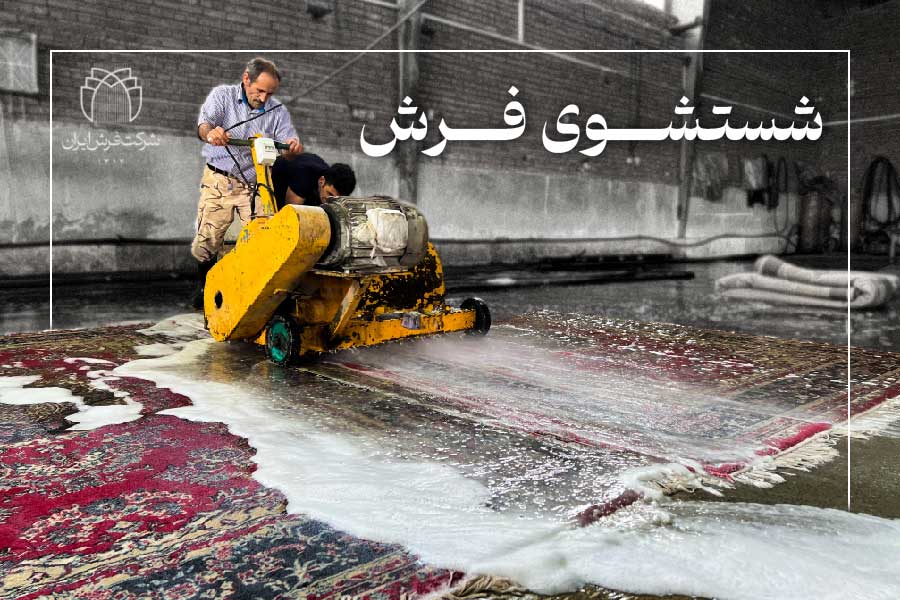
This cannot be done at home; it is carried out at specialized facilities, according to the carpet’s quality. Remove dust from dusty carpets before washing, because the dust turns to mud during washing and settles deep within the carpet. Over time, this can cause the carpet to rot.
Before washing, make sure the carpet’s colors will not bleed, as color bleeding can seriously damage a handwoven carpet. Handwoven carpets vary in quality, and some may bleed—dark colors in particular, such as crimson, dark green, navy, black, and blue.
To check whether a carpet will bleed, dampen a white cloth with lukewarm water and rub it over several areas of the pile. If the cloth picks up color, the carpet is likely to bleed, so you will need to take precautions when washing it.
Do not pre-soak a handwoven carpet that is prone to bleeding, as the colors may spread to its lighter areas.
Follow these tips when washing a carpet at home:
Wash your carpet with cold water
After removing the dust, lay your carpet on a hard surface, such as concrete or tile, or on a sloping surface, and begin washing. Use a shower-like stream of water at room temperature. As noted in our carpet guide, never wash a handwoven or machine-made carpet with hot water.
If a handwoven carpet is prone to bleeding, washing it with hot water causes the transferred dye to set in the lighter areas, making color removal difficult and costly. Carpets with wool or silk warps, or silk knots, may lose quality after washing.
Use a suitable detergent
Use neutral detergents to wash the carpet, such as hand-washing powder dissolved in water or carpet shampoo. To remove grease, it is best to use dishwashing liquid or dissolved soap powder. Never use alkaline products to wash a carpet.
How to remove water and dry a handwoven carpet at home
After washing, do not roll up a handwoven carpet that is prone to bleeding. First, use a squeegee to remove the water, then blot the pile with a cotton cloth or towel. Leave the carpet on the ground in this position for an hour so the water can drain and any bleeding colors do not spread to other areas. This allows the carpet to lose excess moisture and be ready for drying.
Never pour water into a carpet after rolling it up, and do not pour water over its fringes when laying it out again, as the fringes will certainly turn yellow. Lay the carpet out while still slightly damp, pile-side down, in indirect sunlight and in a well-ventilated place.
Restore the pile direction
To make sure the carpet’s design lies neatly in place once it has dried, and to leave it looking more attractive and clean, sweep or brush the pile in its natural direction with a wooden broom or carpet brush. Do not use a vacuum cleaner, as its back-and-forth motion disrupts the pile direction and detracts from the carpet’s beauty.
First, vacuum the carpet. In other words, clean its surface before applying carpet shampoo.
How to prepare carpet shampoo
Pour 2 cups of carpet shampoo and 1 to 2 liters of water into a container. Stir well until it becomes foamy.
How to apply carpet shampoo
Using a piece of netting or a sponge, gently work the carpet-shampoo foam into the carpet. Wait 30 minutes, and do not walk on the carpet.
Restore the pile direction
After 30 minutes, run a rough cloth or curtain net over the carpet to restore the pile direction, then sweep it with a wooden broom in the direction of the pile. Comb the carpet with an old brush to put the fibers back in place and leave it looking soft and beautiful.
Important tips for using carpet shampoo
Never use the diluted shampoo solution; clean your carpet by applying only the foam. Using the liquid can make the carpet limp and sticky and slow its drying. Moisture reaching the carpet’s fringes can also cause them to rot over time.
Carpet-shampoo foam dissolves the dirt on the carpet and disappears within half an hour when exposed to oxygen in the air. Do not walk on the carpet during this time.
When applying carpet shampoo, start at the far end of the carpet so you will not need to walk over areas where you have already spread the foam.
 Care & Maintenance
During emergencies, handwoven carpets—among a family’s most important assets—require special care. This step-by-step guide explains how to store them properly, helping prevent damage and preserve their cultural and financial value through difficult times.
 Care & Maintenance
Carpets—especially antique and handwoven Persian carpets—require attentive care. They are treasured possessions and investments for their owners. Here, we look at how to care for Persian handwoven carpets and preserve them for years to come.
 Care & Maintenance
After a carpet has been in use for several years, it is recommended that it be washed, preferably by a professional. If you plan to wash your carpet at home, this guide offers important cautions and useful advice.