Finishing a Handwoven Carpet
After weaving, the carpet is first sheared to level its surface. Carpet finishing is one of the most delicate stages of carpet making. This part of the finishing process for a handwoven carpet generally involves two stages. The first, known as nazoki, reduces the thickness of the carpet pile. In the second stage, known as mo-giri, the surface of the carpet is made completely even. Mo-giri is generally carried out after the carpet has been washed.
At some weaving centers, finishing is done with specialized electric machines; in the traditional method, special scissors or blades are used. If too much pile is removed from a carpet after weaving, the resulting condition is technically known as a “low pile” or “short pile.”
Stone-finishing is another operation sometimes performed on a carpet during finishing. This smooths the scales on the wool fibers, removes excess color from the fibers, and gives the carpet a velvety, silk-like appearance. The pile height, like other distinguishing features such as knot type, number of wefts, fringe length, and so on, is one of the criteria used to identify where a carpet was woven. It varies according to local custom, tradition, and place of weaving.
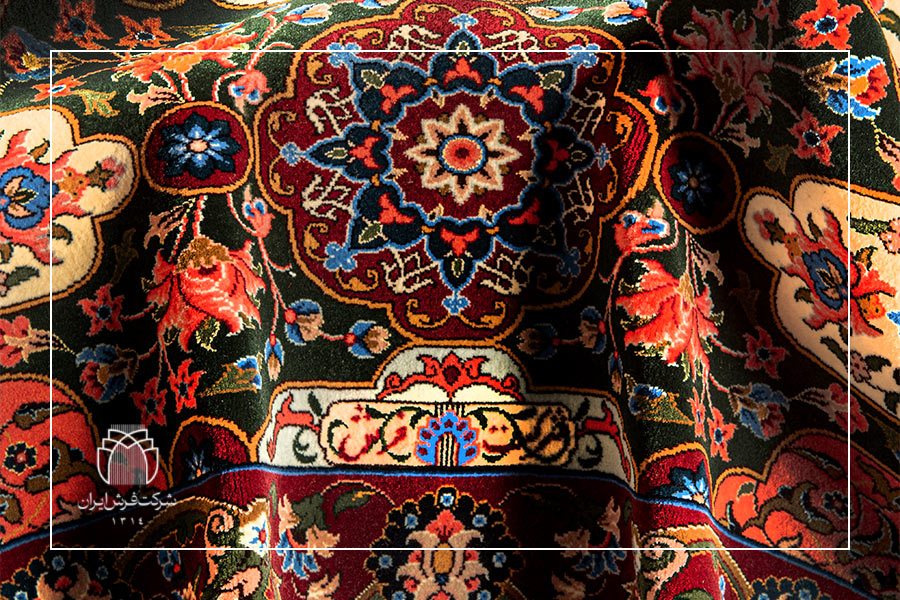
One type of pile finishing for handwoven carpets is relief shearing, carried out with special scissors (known as pile-end scissors). This creates raised areas on the carpet’s surface and is usually used for pictorial carpets, adding a distinctive sense of depth and definition to their design.