
Carpet Industry News
North Khorasan Carpet Museum to Open in Shirvan
Dec 17, 20193 min readIran Carpet Company
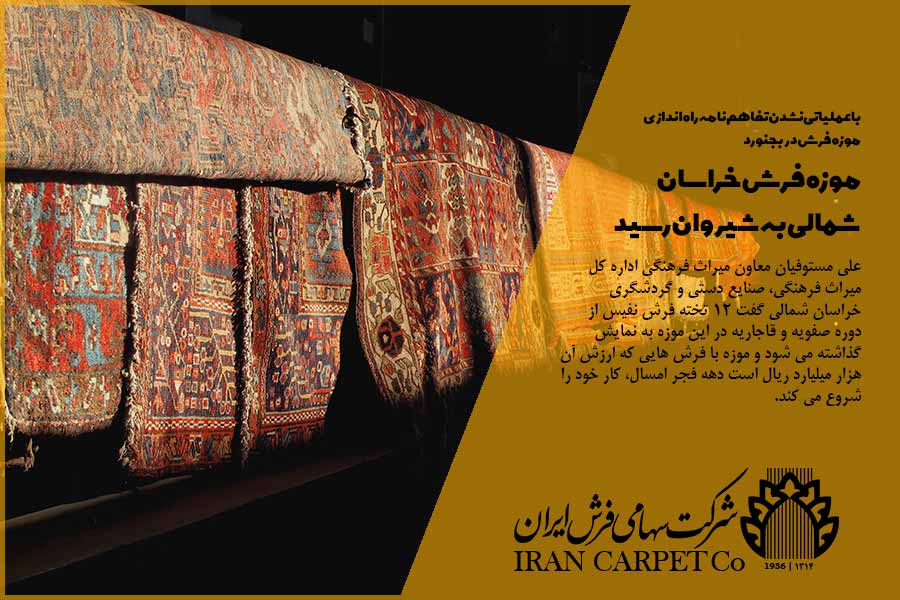
According to the public relations office of Iran Carpet Company, as reported by IRNA, the deputy for cultural heritage at the North Khorasan Department of Cultural Heritage, Handicrafts and Tourism announced that the provincial Carpet Museum in Shirvan will open its doors to the public during the Fajr Ten-Day celebrations, and that claims its operational work has stalled or been suspended are incorrect.
Ali Mostofian said that the North Khorasan Carpet Museum is nearing completion and that even its display cases have been installed. He added that 12 exceptional carpets from the Safavid and Qajar periods will be displayed at the museum, which will begin operations during the Fajr Ten-Day celebrations in 1398 SH (2019–20), with carpets valued at one trillion rials. He continued that, if the museum attracts visitors and suitable conditions are created for the care of additional carpets, the number of exceptional carpets may increase.
Speaking about the process of establishing the museum, Mostofian said: “In 1390 SH (2011–12), 20 exceptional carpets were transferred from the Iran Carpet Museum to North Khorasan for the purpose of establishing a carpet museum. However, the lack of a suitable venue and the failure of officials to cooperate in providing a space meant that the museum was not established, and these exceptional carpets were left gathering dust in storage.” He said: “Initially, the plan was to establish the museum in Bojnord, and an agreement was even signed with the Bojnord City Council to allocate a site for it, but the agreement was never implemented. Since a suitable site has now been allocated in Shirvan, the Carpet Museum will be established in this city. The process of carpet weaving, carpet-weaving tools and equipment, and more will also be on display at the museum.”
It is worth noting that, according to the deputy for cultural heritage at the North Khorasan Department of Cultural Heritage, Handicrafts and Tourism, 20,000 carpet weavers are currently active in the province. One of the world’s most distinctive carpets, the double-sided, all-silk Dovidukh carpet, is also woven there.
The province of North Khorasan, with a population of 863,000, has six active museums covering a total area of 10,150 square metres. Among the province’s heritage, 509 historical sites, 42 natural sites and 70 items of intangible heritage are registered on the National Heritage List, while 11 sites have also been internationally registered. With 1,200 identified historical sites, the province is a link between the north and east of the country and lies along the route taken by millions of travellers, tourists and pilgrims visiting the shrine of the eighth Imam (Imam Reza).
 Carpet Industry News10
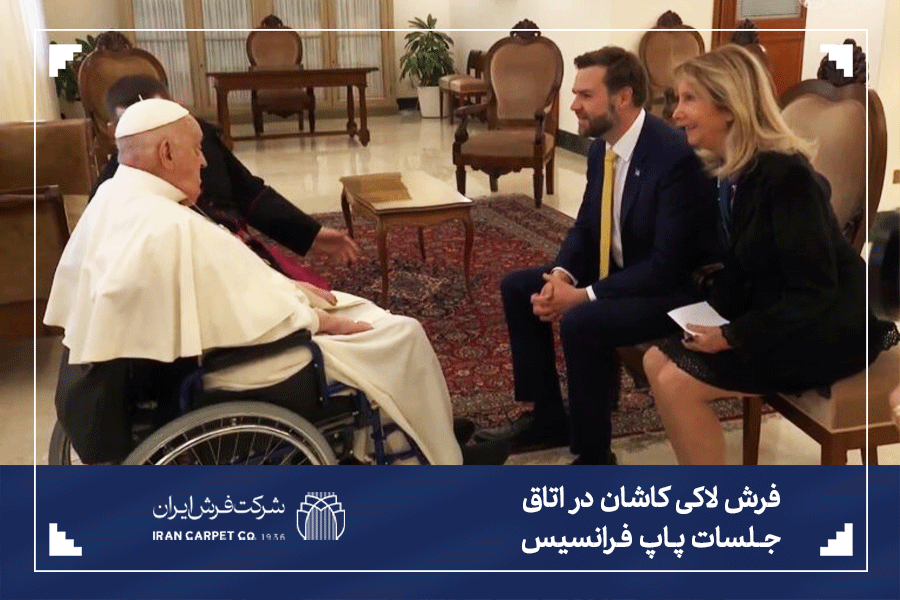
At the Vatican, a longstanding tradition calls for fine Persian carpets to be used at important official ceremonies. Among the most notable examples is their use at formal meetings and even at papal funerals.
 Carpet Industry News9
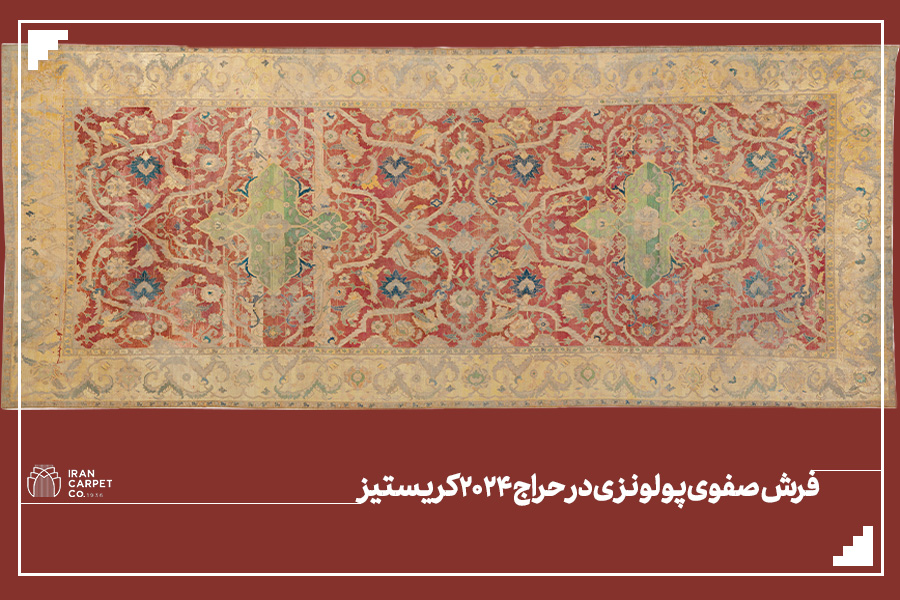
A large-format silk Polonaise carpet dating to the 17th century is to be offered at Christie’s October 2024 auction. Woven during the reign of the Safavid Shah Abbas the Great, it remained in a private Japanese collection until recently.
 Carpet Industry News
Pictorial weaving has a long history in Iranian handwoven textiles, including carpets. The art of pictorial carpet weaving in Iran reached its height in the 13th and 14th centuries AH, during the Qajar dynasty.