
Carpet Industry News
A Safavid Polonaise Carpet at Christie’s 2024 Auction
Oct 23, 20247 min readIran Carpet Company
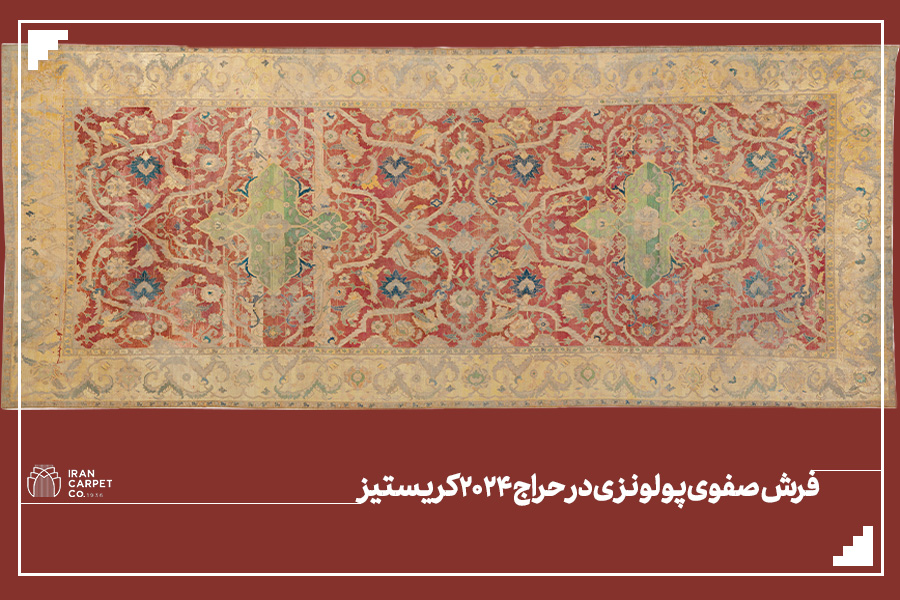
Woven around 400 years ago for the Safavid Shah Abbas, this is one of the largest known Polonaise carpets. It is being offered on the international market for the first time this October. The carpet first came to light at an auction in Osaka, Japan, in 2007. Louise Broadhurst, Christie’s International Head of Carpets and Rugs, says: “It is remarkable that until then the carpet was undocumented, unphotographed and essentially unknown to scholars in this field... This is an exciting new discovery, and it is in extraordinary condition.” This beautiful carpet was woven during the reign of Shah Abbas I, known as Shah Abbas the Great (1571–1629), the fifth Safavid shah and ruler of the Safavid Empire. Shah Abbas was one of the greatest enlightened rulers in Iranian history and a patron of the arts. He established workshops for painting, ceramics and carpet weaving in Isfahan, his new capital. In Isfahan, he created a neighbourhood called New Julfa, where Armenian weavers, renowned for their skill in silk weaving, worked in the royal workshops. At that time, silk carpets were woven exclusively for Shah Abbas the Great’s palaces or as gifts for visiting nobles and ambassadors. The group known as Polonaise carpets was woven from the late 16th century throughout the 17th century, using colourful silks, often with a cotton warp and silk weft. Polonaise carpets became renowned for their delicate patterns, balanced compositions and extensive use of gold and silver metal threads, which gave them a dazzling appearance.
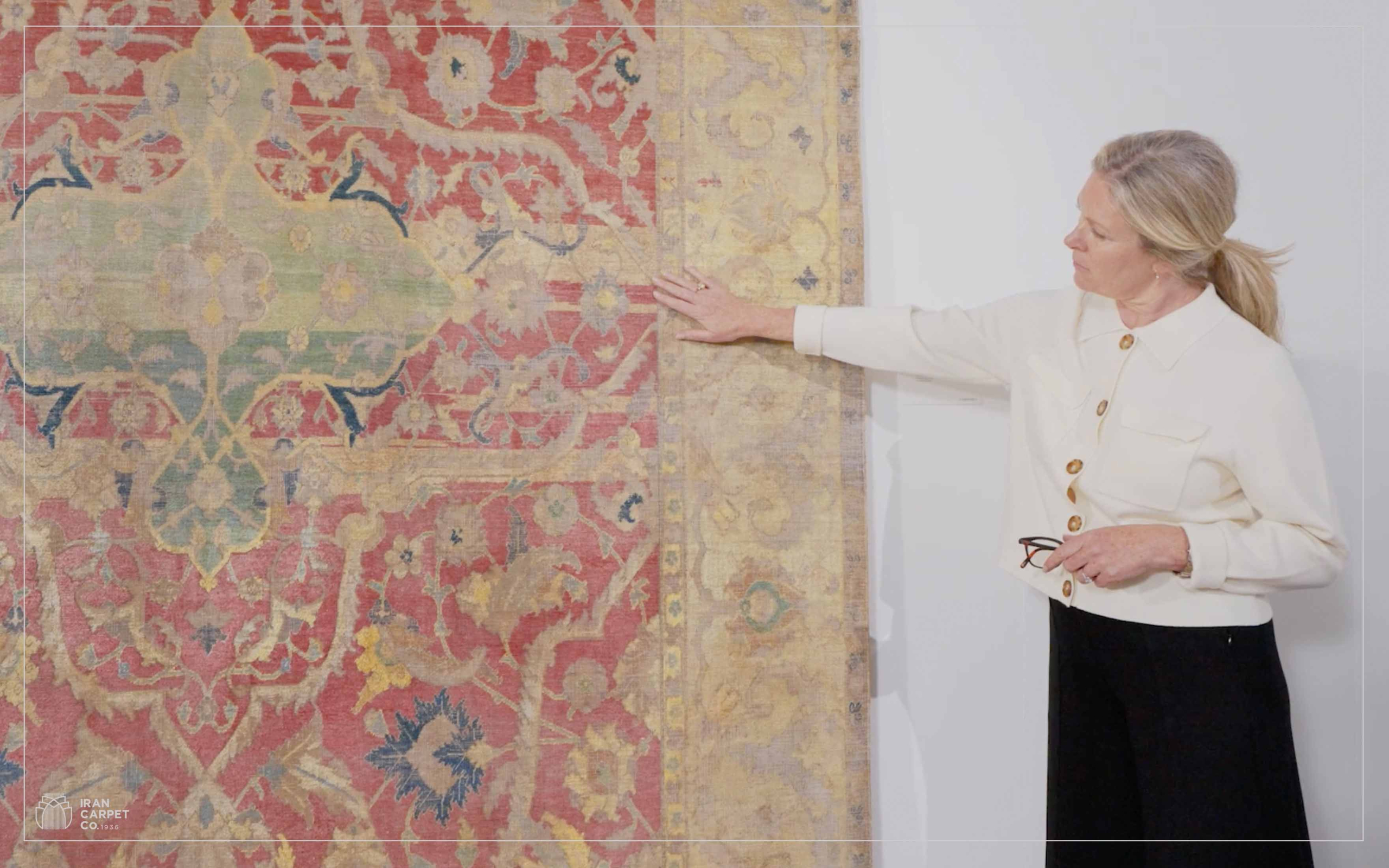 Louise Broadhurst, Christie’s International Head of Carpets and Rugs, presenting this Safavid Polonaise carpet
During the 17th century, Polonaise carpets were highly prized by European nobility. As a result, many surviving examples can be found in distinguished Western private collections or world-class museums. This carpet, however, made its way to Japan. According to Broadhurst, the term Polonaise was coined in 1878 at the Paris World’s Fair, where several examples belonging to a Polish prince named Ladislaus Czartoryski were displayed to the public for the first time. The prince’s coat of arms was embroidered on many of these carpets, leading visitors to mistakenly believe they had been woven in Poland and were Polish. This mistaken attribution persists to this day. The group consequently came to be known as “Polonaise,” the French word for Polish.
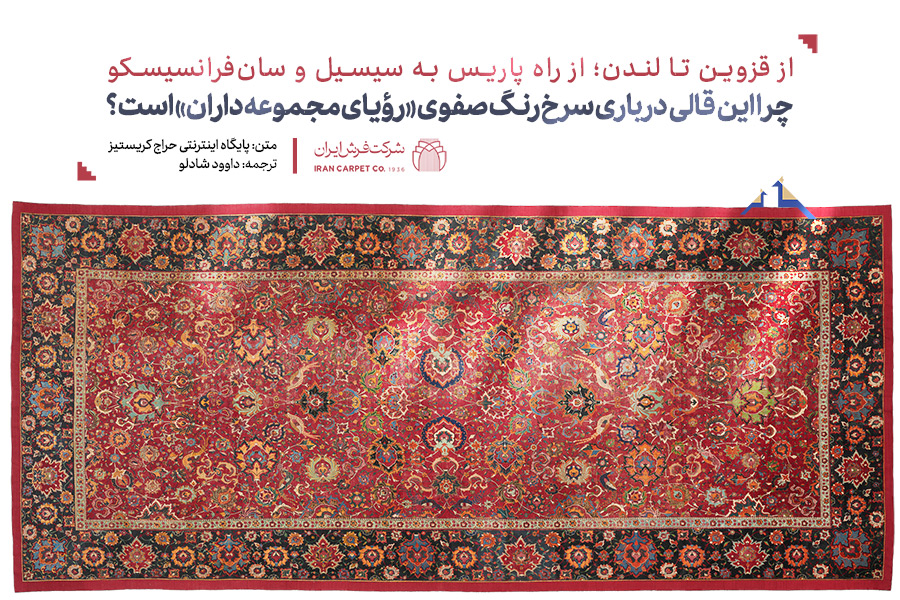
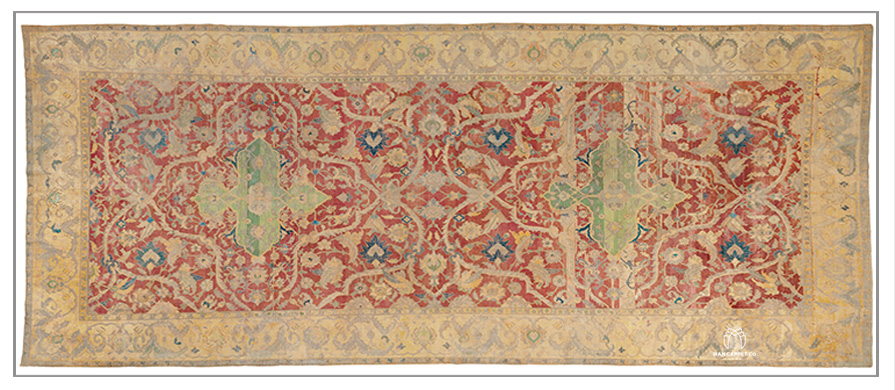 Safavid silk Polonaise carpet, probably woven in Isfahan, early 17th century | Dimensions: 545 × 224 cm
The carpet’s distinctive design features a red field enclosing flowers and leaves within medallions. Interestingly, no metal thread was used in this Polonaise example. Broadhurst believes it is likely to be among the earliest Safavid Polonaise carpets, and a forerunner of the Polonaise carpets in a variety of colours and woven with metal threads.
It may have reached Japan during the Edo period1 (1603–1868), when the country was governed by the Tokugawa shogunate. Broadhurst explains: “The Edo period is known for Japan’s severing of ties with the West. The only trading company allowed to continue operating there was the Dutch East India Company.” The Vereenigde Oostindische Compagnie, better known as the Dutch East India Company, had been trading with Japan since 1602. The company established a trading post at Hirado in 1609. At that time, and before the Portuguese were expelled from Japan, the Dutch were the only Europeans permitted to remain in the country, owing to their loyal attitude towards Japan’s central government and their flexibility on religious matters.
Historical records from the mid-16th century onwards show that Oriental textiles, including rugs and carpets woven with gold and silver threads, reached Japan as gifts for the shogun2 and senior officials. Broadhurst says: “They were particularly popular among military commanders.” As an example, she points to the jinbaori, or war surcoat, of the great shogun Toyotomi Hideyoshi, preserved at Kōdai-ji Temple in Kyoto and designated an Important Cultural Property.
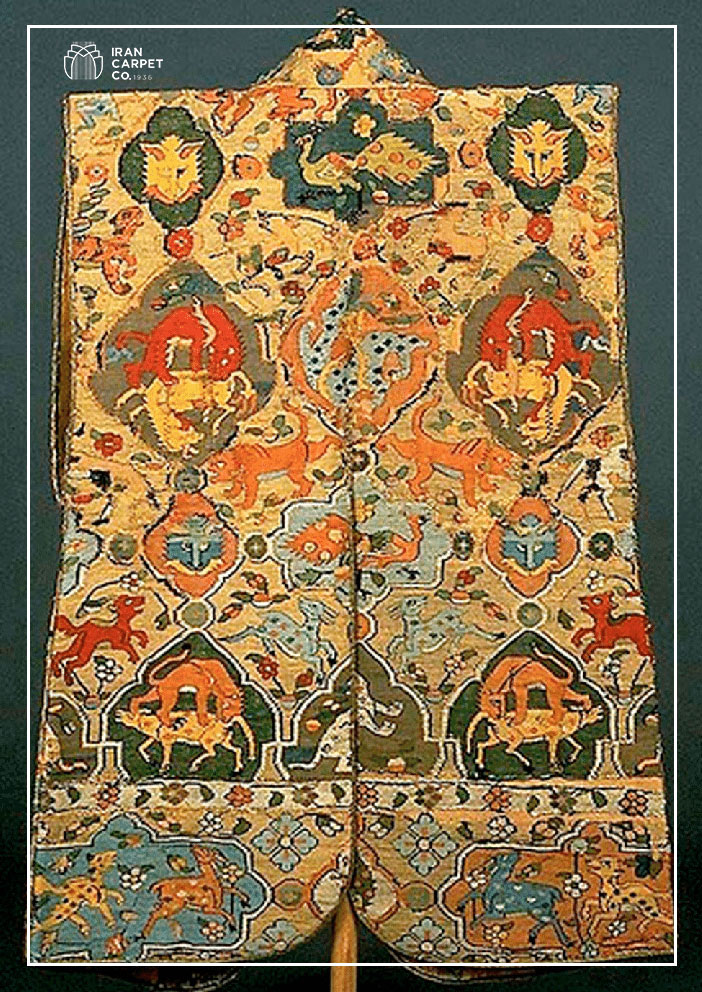 War surcoat of the great shogun Toyotomi Hideyoshi (1537–1598) | Silk flatweave, made in Japan, woven in Iran, probably Kashan
The carpet being offered at auction was probably purchased or commissioned by a wealthy Japanese family. It was kept for generations in a private residence, away from sunlight, and used only for ceremonial occasions. Emphasising the lasting vibrancy of the carpet’s red field, Broadhurst says: “What is astonishing about this carpet is its condition; it has not been restored, and the colours are as fresh as the day it was woven.” Most surviving Polonaise carpets have red fields dyed with fugitive safflower, which has faded to pale yellow over time. The rich colour of this carpet’s field, however, has neither weakened nor faded. Its unusual size—545 by 224 cm—is another feature that makes it exceptional. Most of the 300 or so known Polonaise carpets are much smaller, typically around 220 by 130 cm. This example belongs to a group of large-format carpets of which only 30 are known. At approximately 18 feet long, it is the second-longest recorded Polonaise carpet. Broadhurst says: “It is a very compelling carpet, and it could have dominated any room in which it was placed.”
Broadhurst added: “It is a privilege to bring this extraordinary carpet to the international auction market for the first time. Not only is it of exceptional quality, it is also a beautiful testament to the technical mastery of weavers during the golden age of Safavid art in Iran. This auction presents a rare opportunity for a collector to acquire a masterpiece of museum quality.”
Translation: Maryam Ghanbari Adevi Senior Handwoven Carpet Specialist Source: Christie’s website
1. The Edo period, also known as the Tokugawa period, is a period in premodern Japanese history spanning 1603 to 1868.
2. Shogun: the title of Japan’s military rulers for much of the period between 1185 and 1868. Although nominally appointed by the emperor, they were generally the country’s de facto rulers.
 Carpet Industry News10
At the Vatican, a longstanding tradition calls for fine Persian carpets to be used at important official ceremonies. Among the most notable examples is their use at formal meetings and even at papal funerals.
 Carpet Industry News
Pictorial weaving has a long history in Iranian handwoven textiles, including carpets. The art of pictorial carpet weaving in Iran reached its height in the 13th and 14th centuries AH, during the Qajar dynasty.
 Carpet Industry News2
Offered at Christie’s in October 2023, this red Safavid carpet was woven in Iran in the 16th century and entered the collection of Baron Edmond James de Rothschild (1845–1934) around 1876.