
Carpet Industry News
Research in the Service of Green Handwoven Carpet Production
Jan 13, 20205 min readIran Carpet Company
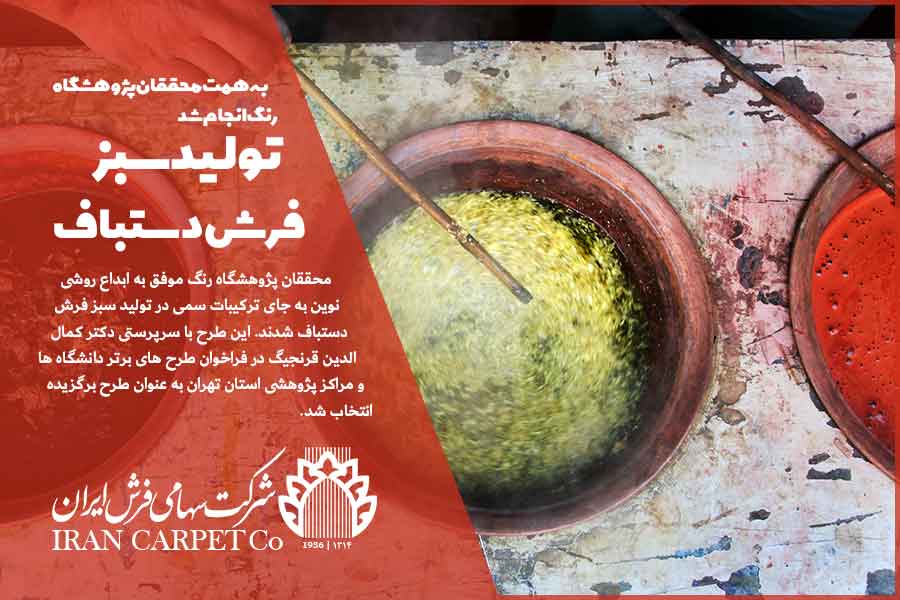
According to the public relations office of Iran Carpet Company, and as reported by the Color Research Institute, the project “Designing and Green Production of Handwoven Carpets Using New Technologies to Increase Exports”, led by Dr. Kamaleddin Ghoranjig, a faculty member of the Color Research Institute, was selected as an outstanding project in a call for leading projects from universities and research centers in Tehran Province, held in support of production.
According to the report, the use of environmentally compatible compounds to protect the environment and address pollution has grown significantly in recent years. Dyeing is one of the processes that causes substantial environmental pollution; in Iran, it is used in the production of handwoven carpets.
The presence of toxic substances in carpets has reduced exports. Accordingly, this project focuses on replacing toxic, environmentally polluting compounds with environmentally compatible materials in the green production of handwoven carpets, with the aim of increasing exports.
To this end, native plant-based dyes have been studied as coloring agents for carpets, and the extraction of these dyes has been optimized using the response surface method. The color and fastness properties of all dyed materials indicate that the extracted dyes can be used to dye wool yarn, offer acceptable fastness properties, provide consistent color strength, and deliver acceptable reproducibility.
The project has also successfully applied an antimicrobial treatment to a handwoven carpet produced using environmentally friendly methods. Its antimicrobial properties remained acceptably durable after ten washes, with no adverse effect on the color or fastness properties of the dyed materials.
The outcomes of this research, conducted in collaboration with faculty members, experts, and students of the Color Research Institute, the Islamic Art University of Tabriz, and the Iran National Carpet Center, include the green production of a Heris carpet, the publication of four articles in reputable international journals and one domestic research article, the presentation of more than four papers at international conferences, and the delivery of two training courses for carpet dyers.
The research project “Designing and Green Production of Handwoven Carpets Using New Technologies to Increase Exports” was selected as an outstanding project in a call for leading projects from universities and research centers in Tehran Province, held in support of production.
The selection followed the formation of a working group that held several meetings with representatives from Sharif University of Technology, Shahid Beheshti University, Amirkabir University of Technology, and Allameh Tabataba’i University, as well as representatives of the Tehran Governorate and the province’s Department of Industry, Mine and Trade. The meetings took place at the University of Tehran, the designated university for the province. After reviewing the submitted projects, five were selected as outstanding projects. Dr. Kamaleddin Ghoranjig’s project, “Designing and Green Production of Handwoven Carpets Using New Technologies to Increase Exports,” was among the five selected.
The use of environmentally compatible compounds to protect the environment and address pollution has grown significantly in recent years. Dyeing is one of the processes that causes substantial environmental pollution; in Iran, it is used in the production of handwoven carpets. Today, there is little doubt that most Iranian carpets are dyed with synthetic dyes. Some of these dyes are toxic and cause severe environmental pollution. The presence of toxic substances in carpets has reduced exports of this product. This project therefore focuses on replacing toxic, environmentally polluting compounds with environmentally compatible materials in the green production of handwoven carpets, with the aim of increasing exports. To this end, native plant-based dyes have been studied as coloring agents for carpets, and their extraction has been optimized using the response surface method. Extracts obtained from plants have ultimately been processed into powdered products that are easy to use, ready for dyeing, and consistent in color strength. The dyes produced were used to dye wool yarn, with the best dyeing results achieved using the method of mordanting first and dyeing afterward. The color and fastness properties of all dyed materials indicate that the extracted dyes can be used to dye wool yarn, offer acceptable fastness properties, provide consistent color strength, and deliver acceptable reproducibility. Materials dyed on a semi-industrial scale were used to produce a Heris carpet. The use of environmentally compatible materials to dye wool for handwoven carpet yarn proved highly successful in reproducing the color shades, lightness and saturation parameters, and overall color gamut of the Heris carpet design, closely replicating all of its colors. The project also successfully applied an antimicrobial treatment to a handwoven carpet produced using environmentally friendly methods. Its antimicrobial properties remained acceptably durable after ten washes, with no adverse effect on the color or fastness properties of the dyed materials. Another aspect of the project involved making wool fibers luminescent and using them to produce an environmentally compatible carpet.
 Carpet Industry News10
At the Vatican, a longstanding tradition calls for fine Persian carpets to be used at important official ceremonies. Among the most notable examples is their use at formal meetings and even at papal funerals.
 Carpet Industry News9
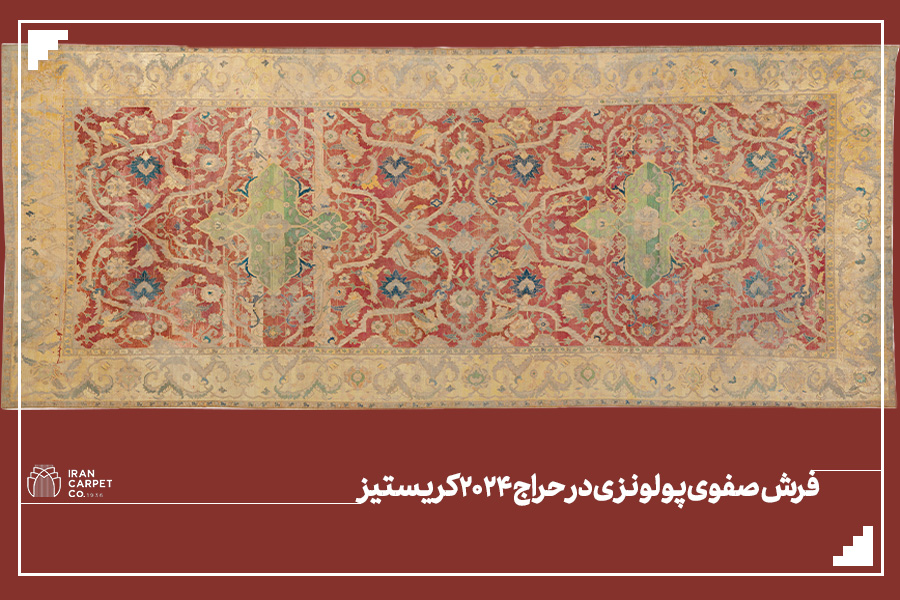
A large-format silk Polonaise carpet dating to the 17th century is to be offered at Christie’s October 2024 auction. Woven during the reign of the Safavid Shah Abbas the Great, it remained in a private Japanese collection until recently.
 Carpet Industry News
Pictorial weaving has a long history in Iranian handwoven textiles, including carpets. The art of pictorial carpet weaving in Iran reached its height in the 13th and 14th centuries AH, during the Qajar dynasty.