
History & Heritage
When the Fires of War Reached the Carpet Industry
Feb 2, 20203 min readIran Carpet Company
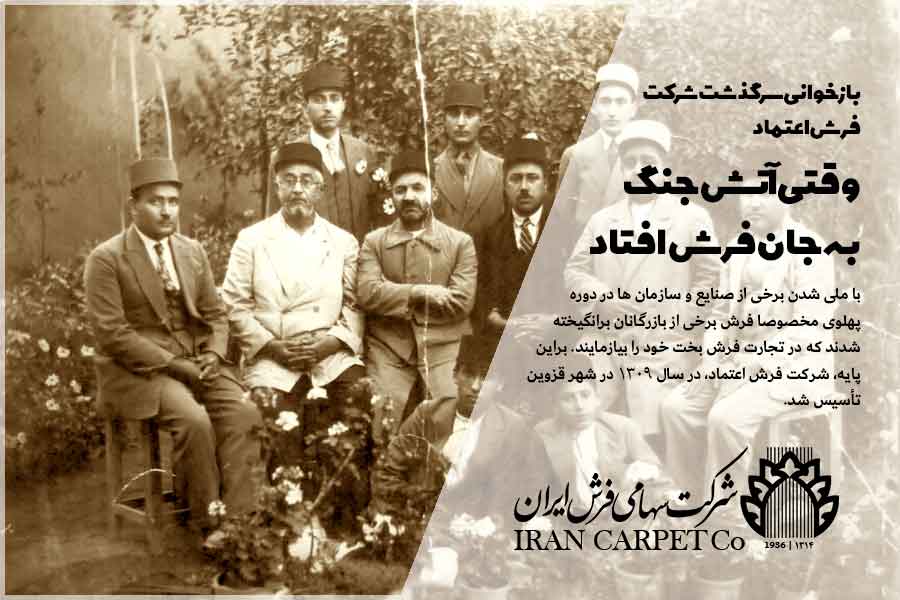
When legislation ended foreign control of Iran’s industries, banks, insurance, tobacco, and many other institutions and industries gradually began to be nationalized. In carpet production, domestic investors replaced foreign ones, and after the First World War, carpet production and exports flourished. This encouraged some merchants to try their hand at the carpet trade as well. It was in this context that Etemad Carpet Company, one of the most reputable private carpet-manufacturing factories, was established in Qazvin in 1309 SH (1930–31).
That year, several Qazvin investors, with the assistance of Seyyed Mojtaba Nabavi and Hajj Mehdi Motamedi Qazvini, and the support of several Tehran merchants—Hajj Mohammad Hojreh Katiraei, the Korous brothers, and Hajj Esmail Naji—established a large carpet-weaving factory called Etemad Company. The factory was set up in the Aqa Masum caravanserai, which had extensive loading yards, passageways, and warehouses. Many Qazvini, Azerbaijani, Kashani, Zanjani, and Araki artisans and craftspeople worked there. The factory’s products gained worldwide renown for the quality of their pile wool and weaving, their fast colors, and the beauty and variety of their designs and motifs. Their buyers, both in Iran and abroad, grew in number year by year, until the workforce was reported to have reached nearly 2,000, with more than 250 carpet looms. The finest surviving examples of Qazvin carpets are those woven at the Etemad factory between 1309 and 1320 SH (1930–31 to 1941–42). The Etemad carpets were so renowned that every year the factory’s entire output was presold in the American market.
The Etemad factory continued operating until 1320 SH (1941–42), the beginning of the Second World War. In 1323 SH (1944–45), following the arrival of Soviet forces in Iran, Qazvin investors—including Katiraei, Motamedi, Zanjanchi, and Amini—were exiled to Baku for six months. In the aftermath, their assets were also plundered, and the factory suffered heavy losses. They were exiled because the Soviets feared that they would support popular uprisings. After returning from Baku, Hajj Mehdi Motamedi sold the factory’s unfinished carpets to recoup its financial losses and abandoned carpet production.
Following the Etemad factory’s success with centralized carpet weaving, others also tried their hand at this approach, but none achieved comparable success. Iran’s target carpet markets—the United States and Europe—were in turmoil because of the war and the economic difficulties it caused. Meanwhile, domestic instability also deterred merchants from making large-scale investments.
 This photograph, taken in 1310 SH (1931–32), shows the investors and supervisors of Etemad Carpet Company in Qazvin.
This essay was published in the first issue of Torreh magazine
 History & Heritage
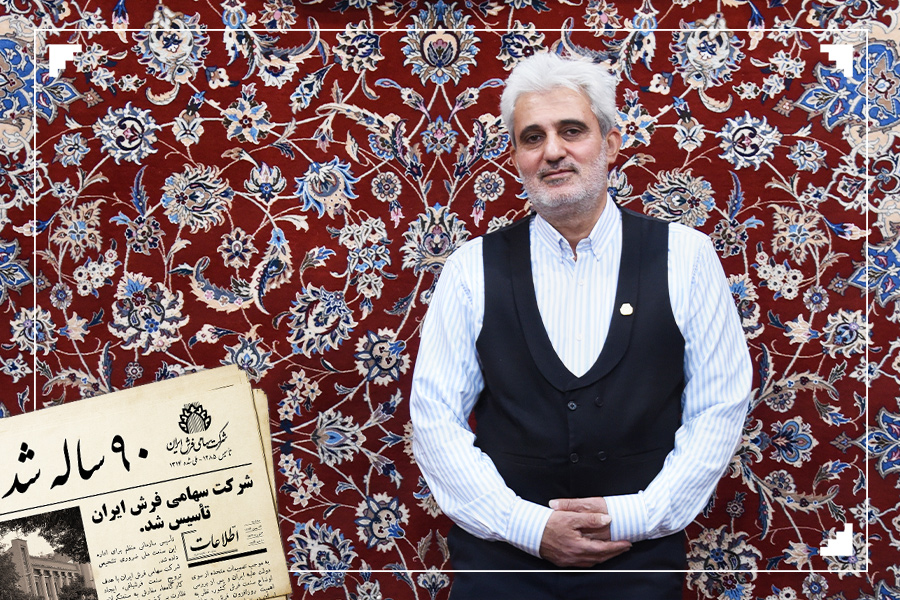
This interview was conducted to mark the 90th anniversary of the nationalization of Iran Carpet Company and to record and preserve the experiences and memories of its long-serving and veteran colleagues.
 History & Heritage
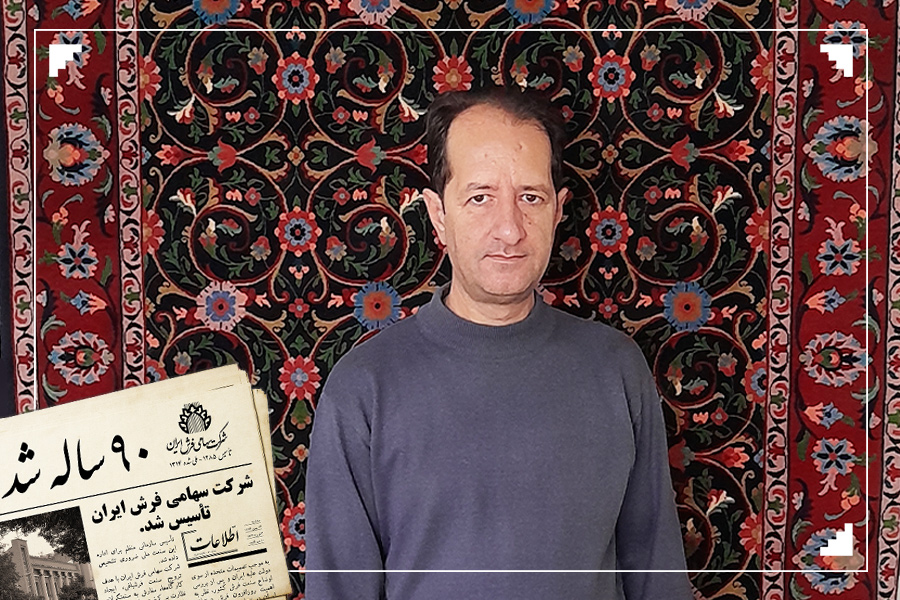
This interview was conducted to mark the 90th anniversary of the nationalization of Iran Carpet Company, and to record and preserve the experiences and memories of its veteran and long-serving colleagues.
 History & Heritage
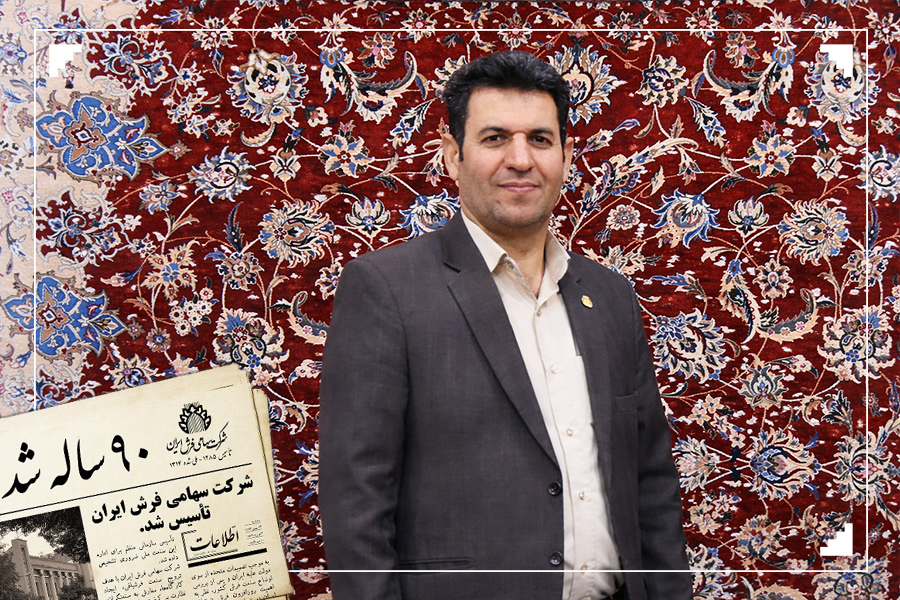
This interview was conducted to mark the 90th anniversary of the nationalization of Iran Carpet Company and to record and preserve the experiences and memories of its long-serving and pioneering colleagues.