90 Years of Iran Carpet: A Conversation with Mehdi Izadi
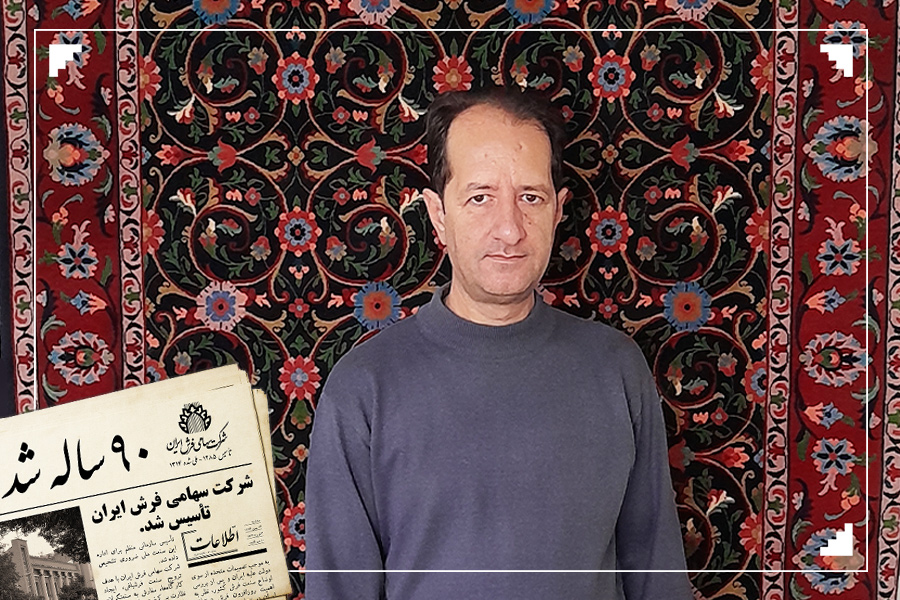
To mark the 90th anniversary of the nationalization of Iran Carpet Company, we have held a series of conversations with the company’s veteran colleagues—people who have devoted years of their professional lives to preserving, producing and elevating Iranian handwoven carpets. In this installment, we speak with Mr. Mehdi Izadi, Head of the Hamadan Branch of Iran Carpet Company, about his professional experience, workplace memories and perspective on the company’s journey over the decades.
- Please introduce yourself and tell us how you came to join Iran Carpet Company.
Greetings. I am Mehdi Izadi, from the city of Sonqor in Kermanshah Province. I studied carpet design and graduated from the first undergraduate cohort in carpet studies at the University of Kashan. Immediately after graduating, I began working at the company’s Hamadan Branch. I initially served as the technical affairs officer for carpets, and also contributed to carpet design and dyeing on occasion. Later, I became technical officer for the Abu Dhabi carpet project in Neyshabur, then technical affairs officer at the Kermanshah Branch, followed by Head of the Khorramabad Branch. I now serve as both accountant and Head of the Hamadan Branch.
- Do you remember anything from your first day at the company?
I remember my first day exactly: August 5, 2000. When I arrived in Hamadan, an old adobe wall with a tall brick entrance caught my attention. After entering the company, I went into the office of the late Mr. Ali-Akbar Babazadeh, the branch manager. After introducing myself and presenting my appointment letter, I started work the following day. I remember Mr. Babazadeh telling me that the company was not a good place for my talents to flourish. But I stayed for 27 years, with love and devotion to the company. I am glad that, in my own way, I was able to contribute, and proud to work for a company with a 90-year history.
- In your view, what is the most important reason customers trust Iran Carpet Company?
In my view, the main reason customers trust the company is its commitment, over decades of work, to authentic design, beautiful patterns in pleasing colours, the use of fine materials, and the engagement of skilled and dedicated people. It has also always upheld ethical principles and a customer-first approach. All these factors, under the Iran Carpet Company brand, have helped the company endure and inspired a commitment to making products of ever higher quality.
- What does Iran Carpet Company mean to you, and what place does it hold in your life?
To me, Iran Carpet Company is like the collected poetry of Hafez: everyone takes away a ghazal that speaks to them. People see only the carpets’ beautiful appearance—which I call poetry—but not the arduous stages of production: the weavers’ challenges, the work of technical inspectors, the production of raw materials, and the demanding process of making a carpet. One of the beauties of carpet is that people see the lovely shop window without knowing about the hard work behind the scenes.
- Tell us about some of your most lasting memories from your career.
I have many fond memories, but one of the most important dates to 2007, when I was working in Kermanshah. The company held a festival called “Bagh-e Gereh” (“Garden of Knots”), and I won first place in the design category. The company also gave me a prize. What made the memory special was not winning, but that the company later acquired the design and had it woven. When I saw the finished carpet, I felt indescribable joy—like the joy parents feel at the birth of a child. It was one of the best days of my life, and I will never forget it.
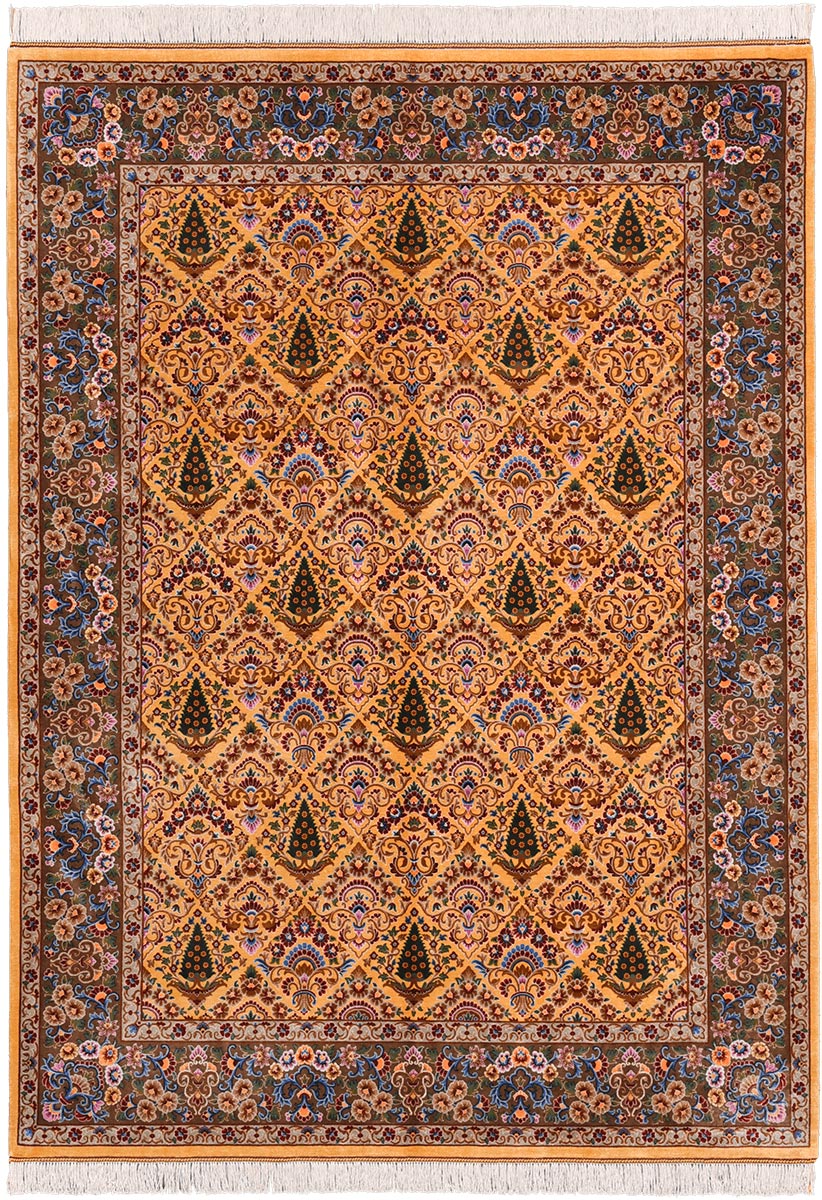 This carpet was woven based on a design by Mr. Mehdi Izadi. The original design won first place in the “Bagh-e Gereh” competition in 2007, and was then developed further by the Design and Colour Unit, including the addition of a cypress tree to the repeating pattern.
- What challenges did you face over the years?
There were many challenges: frequent transfers from one branch to another, working in four different provinces, the difficulties of production, and being away from my family. But all these challenges became valuable experiences and made me a better employee. One of my most rewarding experiences was serving as technical officer for the Abu Dhabi carpet project. Spending a year on the project in Neyshabur was like attending a university. I worked 16 hours a day, and the project helped me become a more expert carpet specialist and taught me to manage work more effectively. I am grateful that God gave me the opportunity to take part in this vast, international project.
- As a designer and carpet specialist, how do you view handwoven carpets?
My education and professional experience have taught me that a carpet is far more than an industrial product. It is both art and craft, rooted in Iran’s authentic culture and traditions; that is why it has endured for centuries. I see a carpet as a beautiful ghazal, composed by designers, painters, weavers and everyone involved in its making, through the art and culture of Iran. I have always thought of it as poetry, and I love it.
Related Reading
All Journal & Blog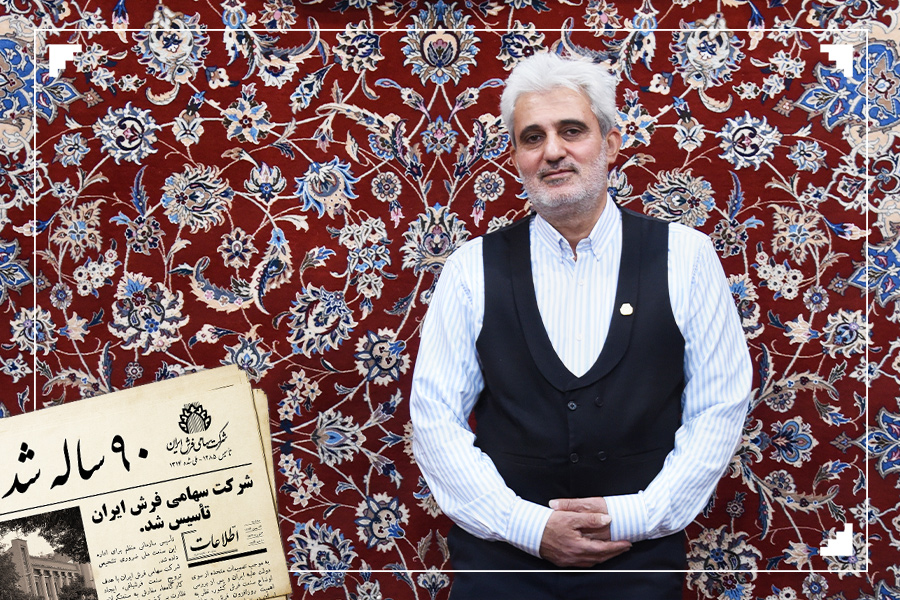 History & Heritage
Iran Carpet Company at 90: A Conversation with Abbas Hesari
This interview was conducted to mark the 90th anniversary of the nationalization of Iran Carpet Company and to record and preserve the experiences and memories of its long-serving and veteran colleagues.