
Patterns & Symbolism
The Weeping Willow Motif in the Kheshti Design
Aug 11, 20213 min readIran Carpet Company
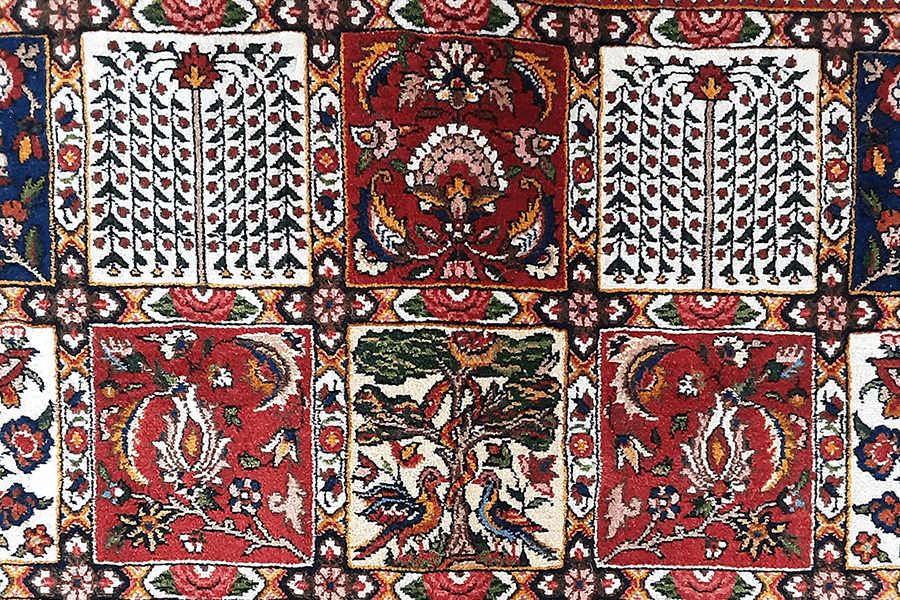
The Weeping Willow Motif in Kheshti Rugs of Chaharmahal and Bakhtiari Province
The tree is one of the most important and enduring decorative and mystical motifs in Iran’s traditional arts.
One example is the weeping willow, which appears in Iranian miniatures and works of art, particularly in handwoven carpets from certain regions. Here, we introduce this motif, with particular attention to the “Kheshti rug” of Chaharmahal and Bakhtiari Province. Today, the Kheshti design is among the most popular carpet styles among weavers and producers in Chaharmahal and Bakhtiari.
In some parts of the province, such as Saman, almost all weavers produce this design, generally in sizes of 2 × 3 or 3 × 4 metres. The finest Kheshti rugs, in terms of dyeing, the quality of their natural colours, the variety of designs and motifs, beauty and durability, are produced in Chaleshtor.
The weeping willow motif has been used in Kheshti rugs from the past to the present, undergoing striking and noteworthy changes in design and colour.
Within each block, the tree trunk is placed at the centre, with several branches hanging vertically from either side. The branches are usually arranged symmetrically on both sides of the trunk, with three to five on each side.
The weeping willow is woven in symmetrical or asymmetrical forms, with flowers or fruit, and with two or more panels, either grouped or separate. It may also be combined with birds and animals in adjoining blocks.
The weeping willow motif evokes the tree’s hanging branches in various forms and in an abstract manner, using angular geometric lines.
Alongside the weeping willow, one may also see cypress, poplar and pine trees, as well as occasional grasses and flowers.
In Chaharmahal and Bakhtiari, the weeping willow motif conveys a sense of vitality and movement. The variety and brilliance of its colours, together with the interplay of visual elements within each motif, are in their own way reminiscent of the designs found in Iran’s tribal kilims.
Today, more than 30 variations of the weeping willow motif are woven into Kheshti rugs in Chaharmahal and Bakhtiari Province.
Regarding tree designs, and the weeping willow in particular, the design’s increasingly geometric abstraction—especially in Chaleshtor—attests to the visual refinement of this motif.
Despite the preferences of buyers and their influence on the selection of carpet motifs in these regions, this design continues to reflect the traditional architectural ornamentation of historic buildings in the area.
As noted, however, most motifs are closely connected to the livelihoods and way of life of local residents, as well as to the surrounding natural environment.
 Patterns & Symbolism
Inspired by the Borujerdi House in Kashan, a distinguished example of Qajar architecture, this carpet shows how concepts such as plan, spatial organization, and architectural ornament can be reimagined through a carpet’s motifs, composition, and palette.
 Patterns & Symbolism2
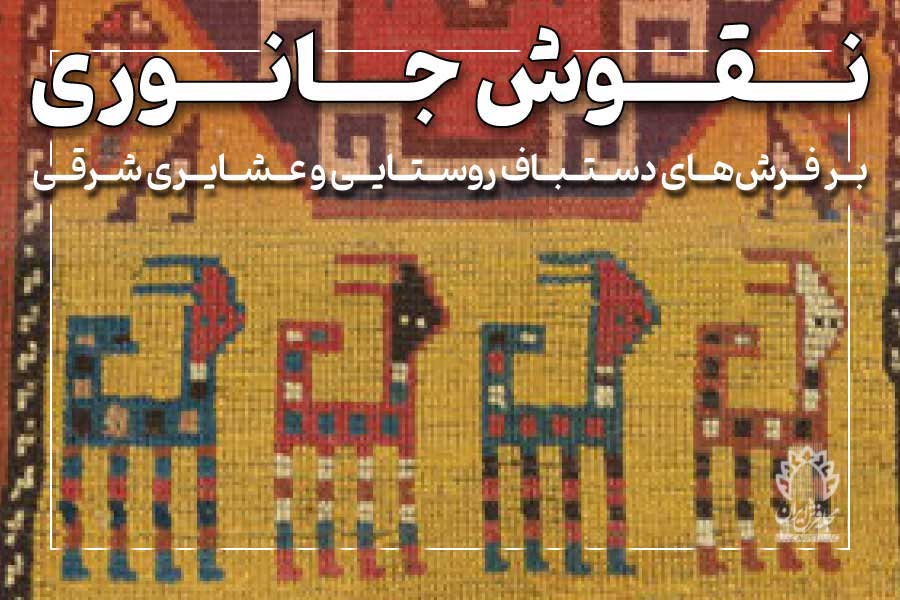
The lives of nomads and villagers have always been closely connected with nature and the animal world. They regarded certain animals as totems and embodiments of hidden qualities, and recorded their images in works of art such as carpets.
 Patterns & Symbolism9
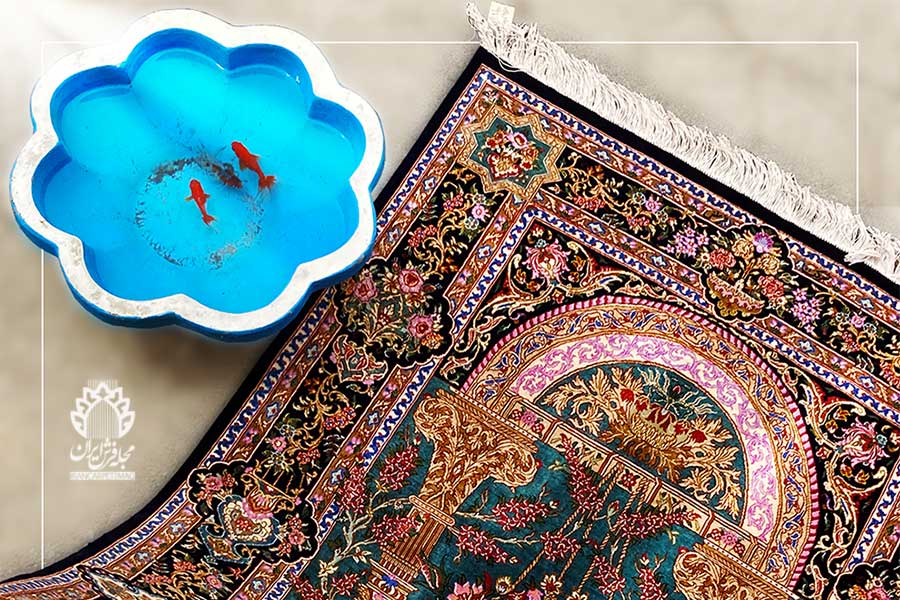
One of the most compelling features of Iranian handwoven carpets is the diversity of their designs and motifs. Beautifully balanced and carefully composed, these designs also carry a range of meanings. The Mehrabi design is one such example, and the subject of this article.