
History & Heritage
The Remarkable Lives of Cecil and Clara Edwards in Iran
Oct 24, 20236 min readIran Carpet Company
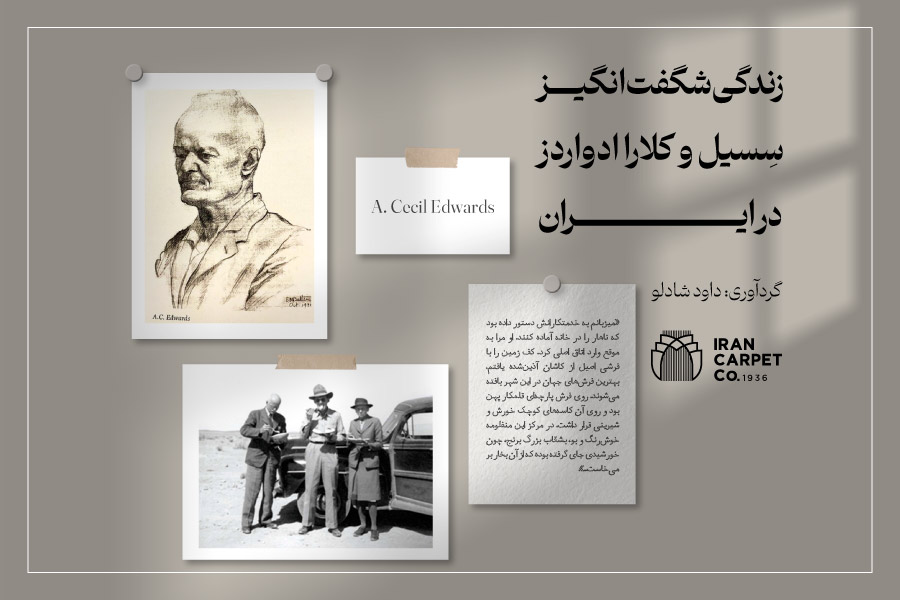
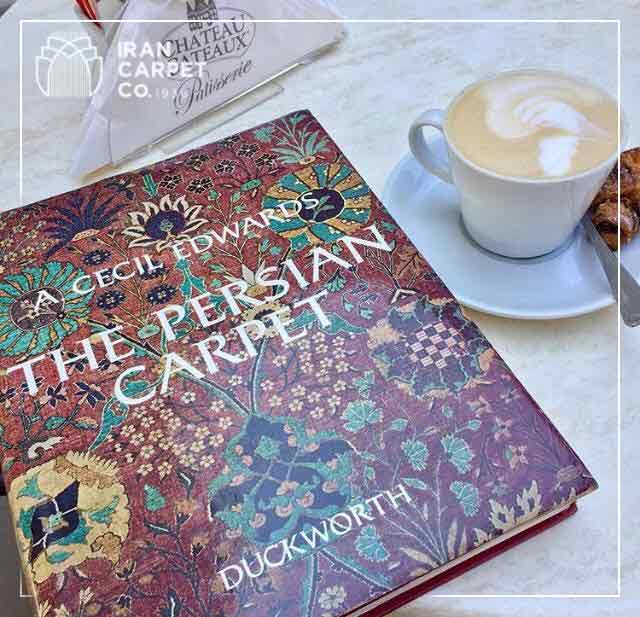
Although many books about Oriental carpets have been written since 1877, one is better known among Iranians than the others, thanks to Mahin-Dokht Saba’s Persian translation: The Persian Carpet, by Cecil Edwards. Published in 1953, it is a fairly comprehensive guide to the art and industry of Iranian carpet weaving, from its beginnings to the mid-twentieth century—a period when Iranian carpets attracted the interest of Western scholars and the wider public. One reason for the book’s appeal is the life and character of Cecil Edwards.
Arthur Cecil Edwards, of English descent, was born in Constantinople (Istanbul) in 1881 and married the American Clara Carey Case in 1909. They spent many years in Iran between 1900 and 1947, and so became thoroughly familiar with the geography of Iranian carpet production. Cecil belonged to that traditional generation of British experts who, in the late nineteenth century, set out to make their fortunes in the East with a mixture of good luck and boldness.
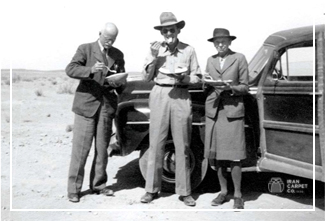 Edwards (left), with his wife Clara and Brian Haufner, on the road from Tabas to Ferdows. Source: Hali magazine
The Edwards story begins in Istanbul, where his uncle George Baker was the Ottoman Sultan’s official gardener, and another uncle, James Baker, was one of the founders of Oriental Carpet Manufacturers (OCM). At the time, OCM was one of the world’s most successful international carpet-trading companies. When it began operations in Smyrna (modern-day İzmir) in 1908, following the merger of six major carpet-producing companies, its initial capital stood at £400,000—a huge sum for the time.
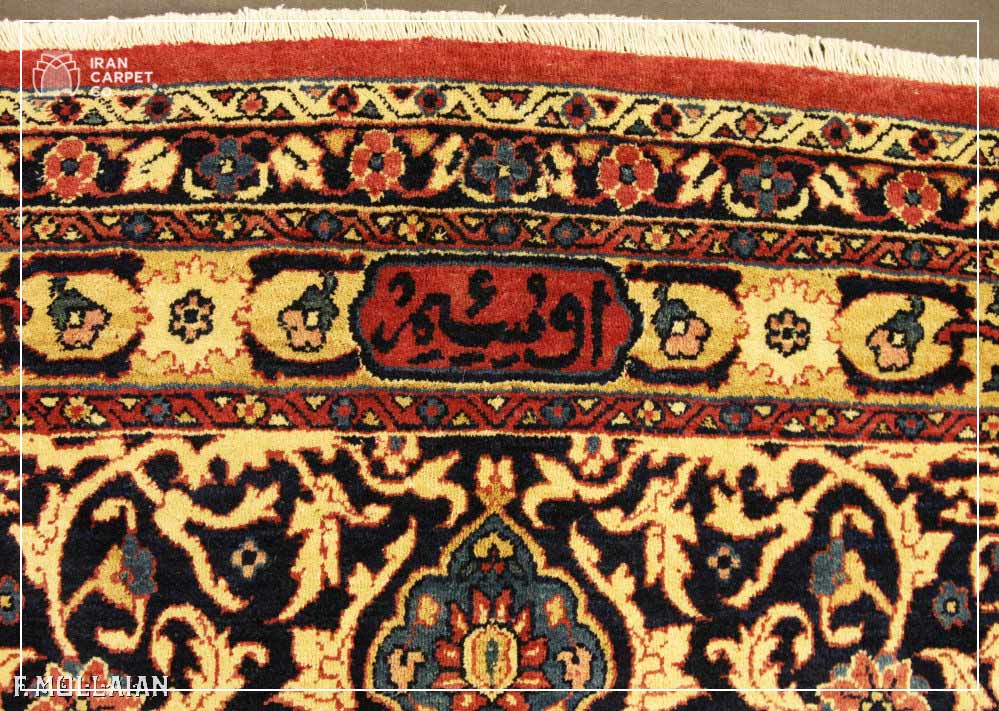 The OCM company mark woven into a carpet
Young Cecil Edwards was introduced to the company by his uncle and joined OCM, buying and producing carpets in Turkey and Iran before exporting them to the British market. Gradually, he focused more on Iran. He eventually arrived in Hamadan in 1911. His son, Arthur, was born in the same city in 1918. Cecil took charge of OCM’s production in Hamadan. At the time, most carpets in northwestern Iran were woven for export.
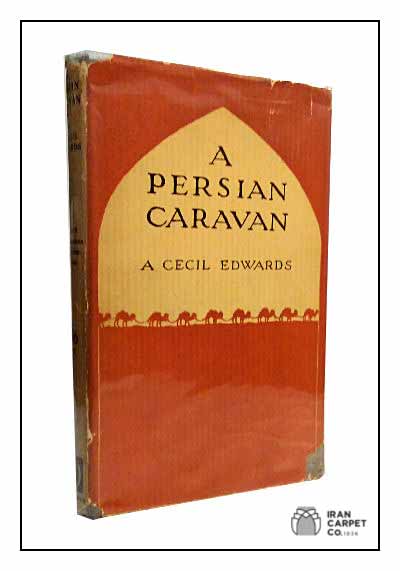 The Iranian Caravan, a book by Cecil Edwards
Cecil and his wife Clara were captivated not only by carpets but also by Iranian culture and art. They spent 12 years in Iran, travelling around the country and recording accounts of their observations and research. In sections of The Persian Carpet titled “Conversations,” for instance, Edwards offers engaging, more or less ethnographic stories about the lives of Iranians at the time. His spirit of adventure and gift for storytelling led to his first book, published in 1928: a collection of short stories titled The Iranian Caravan. He drew the collection’s many unusual characters—from Iranian noblemen to Russian officers and British missionaries—from people around him. He also occasionally alluded to a poem by Hafez.
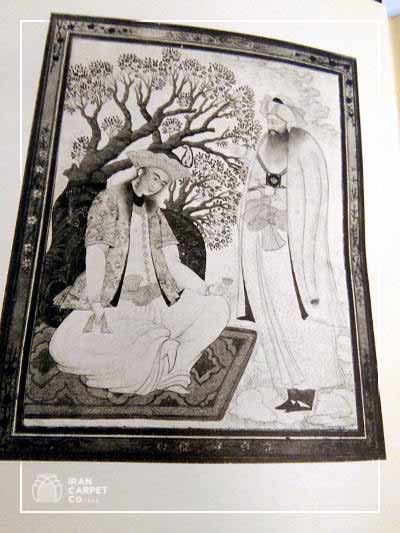 Interior pages from The Iranian Caravan
Although carpets were Edwards’s profession, he rarely writes about them in The Iranian Caravan, except when describing a luxurious setting. In one story, for example, an unnamed narrator visits a friend who had once been Minister of War: “My host had ordered his servants to prepare lunch at home. He ushered me into the main room at just the right moment. I found the floor adorned with a fine carpet from Kashan. The finest carpets in the world are woven in that city. A piece of printed calico had been spread over the carpet, with small bowls of stew and sweets set upon it. At the centre of this fragrant, colourful arrangement stood a large metal platter, like a sun, from which steam was rising…” It is interesting that Edwards calls Kashan carpets the finest in the world here, a view he repeats several times in The Persian Carpet. Indeed, some carpet scholars have faulted him for focusing too heavily on Kashan carpets.
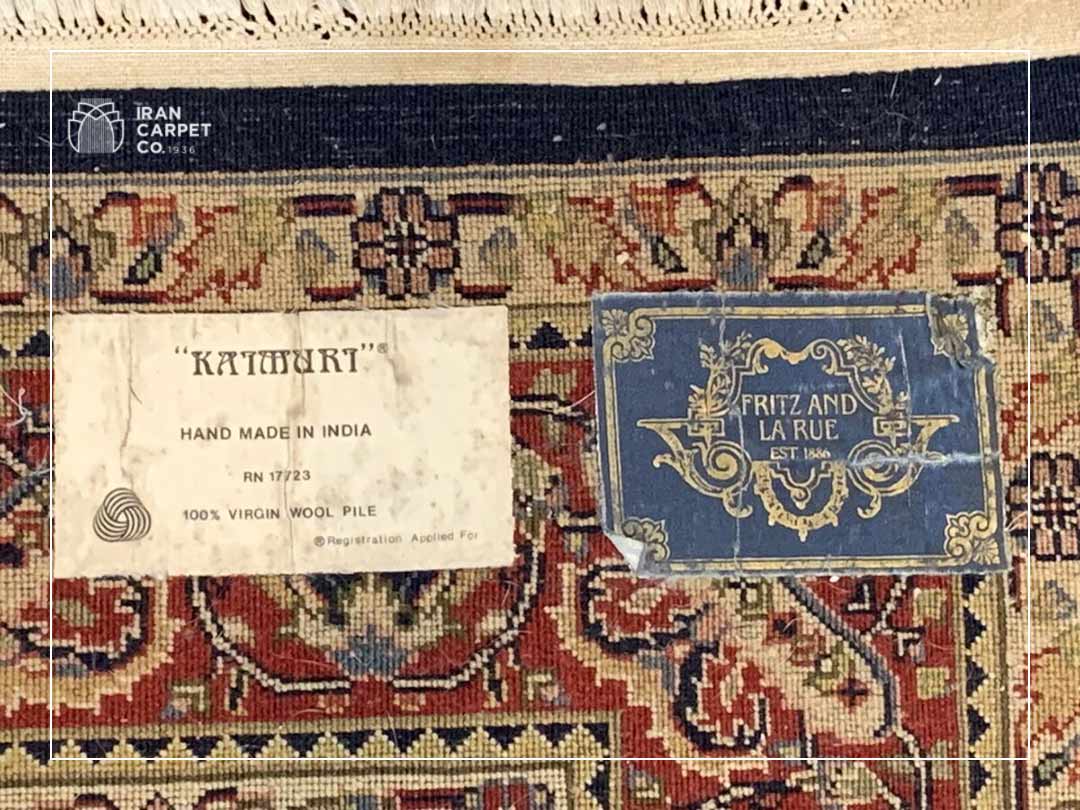 The Fritz and La Rue company mark
It is not clear exactly when Edwards decided to write a book about Iranian carpets. But when he and his family left Iran for London in 1923, the book was still a quarter of a century away from publication. In London, Edwards became managing director of OCM. Among his initiatives in that role was expanding the company’s market in the United States. In the years leading up to the Second World War, he partnered with Fritz and La Rue, one of the largest carpet importers in the American market, to bring OCM carpets to all the major department-store chains in the United States. By moving the production of Oriental carpets to India and manufacturing them cheaply for middle-class buyers, he was among the pioneers who helped popularize and globalize handwoven Oriental carpets.
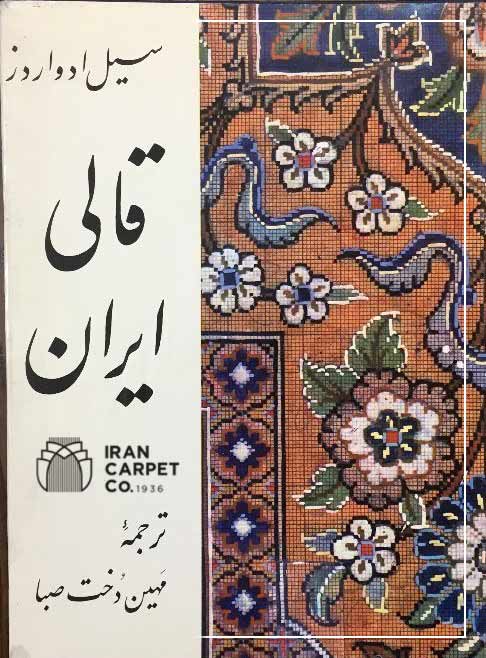
Even so, Edwards sought to pursue his intellectual and research interests alongside his commercial work. At last, in 1948, Cecil and Clara returned to Iran. The purpose was for Cecil to conduct research for his book, The Persian Carpet: A Survey of the Carpet-Weaving Industry of Persia. It was published five years later, in 1953. But Cecil and Clara were no longer young, and their health was precarious and worsening by the day. In her final years, Clara suffered from memory loss and, from 1951 until the end of her life, lived in isolation in a nursing home near Brighton.
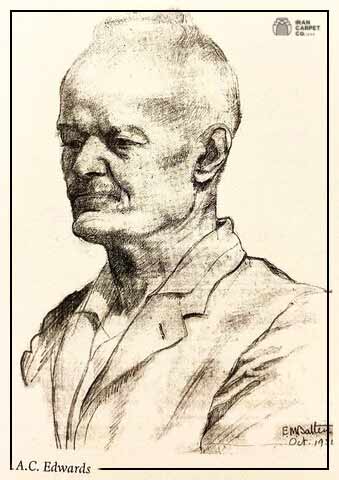
Cecil died in 1953, followed by Clara in 1955. Although The Persian Carpet is known under Cecil’s name, Clara Edwards was his companion throughout their travels and adventures. The book achieved greater success than the Edwardses had hoped for, but they did not live long enough to witness its success—even though they had lived through a remarkable era.
Compiled and translated by Dr Davoud Shadlou Faculty member, Department of Carpet, Shiraz University of Arts
 History & Heritage
This interview was conducted to mark the 90th anniversary of the nationalization of Iran Carpet Company and to record and preserve the experiences and memories of its long-serving and veteran colleagues.
 History & Heritage
This interview was conducted to mark the 90th anniversary of the nationalization of Iran Carpet Company, and to record and preserve the experiences and memories of its veteran and long-serving colleagues.
 History & Heritage
This interview was conducted to mark the 90th anniversary of the nationalization of Iran Carpet Company and to record and preserve the experiences and memories of its long-serving and pioneering colleagues.