
History & Heritage
A Look at Pazyryk: The World’s First International Carpet Journal
Apr 6, 20223 min readIran Carpet Company
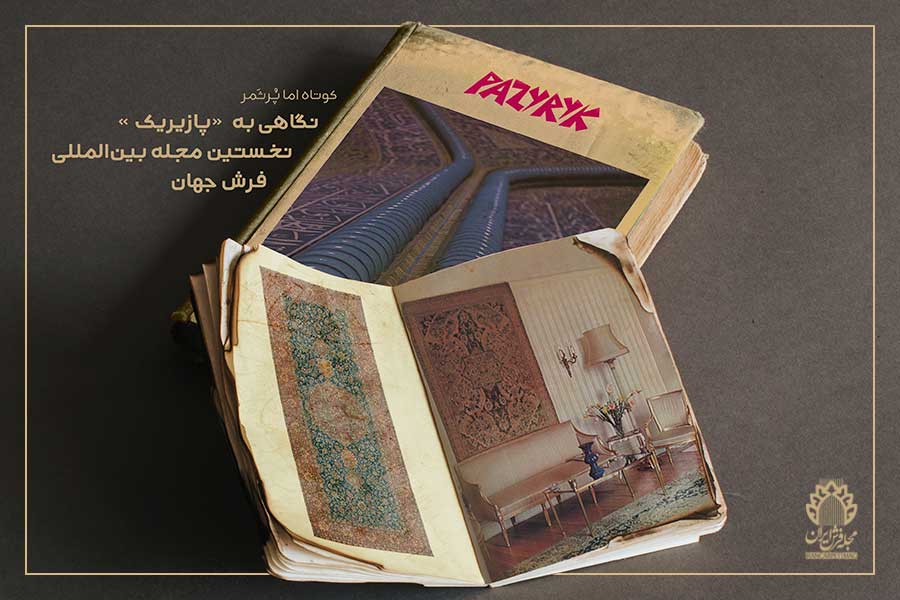
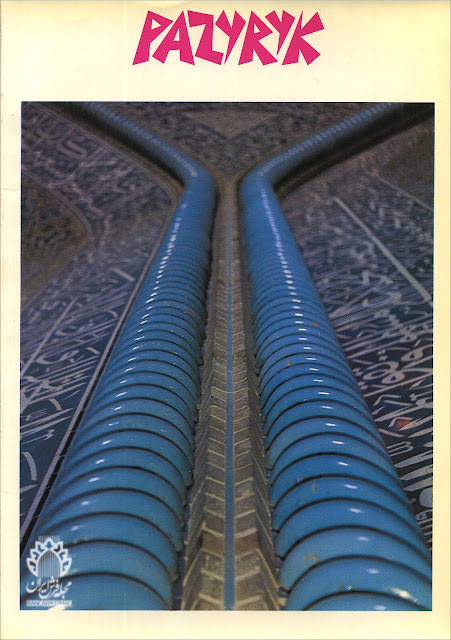
Gratz published the journal Pazyryk in English in Brussels in 1968. Although its first issue featured articles by such distinguished figures as Arthur Upham Pope (art historian), Idries Shah (Sufi teacher and writer), and Siavash Azadi (carpet scholar), Pazyryk was short-lived and did not continue beyond a single issue.
The journal also published a photograph of the living room in Edmund de Unger’s home, revealing valuable information for carpet researchers. De Unger was a celebrated collector of Islamic art and the founder of the Keir Collection. He wrote about his passion for carpets:
“My interest in Islamic art began with carpets. I was six years old the first time my father told me I must not walk on the carpets... Realising that I shared his interest in carpets, my father took me to museums; before long, we began buying carpets. Eventually, in some rooms of the house, we had three carpets layered one over another.”
De Unger’s carpet collection is among the most distinguished private collections of Oriental carpets. It includes a large number of Persian Safavid and Ottoman carpets (Holbein, Lotto, Ushak, and Transylvanian), as well as Indo-Mughal carpets, making it difficult to classify them all.
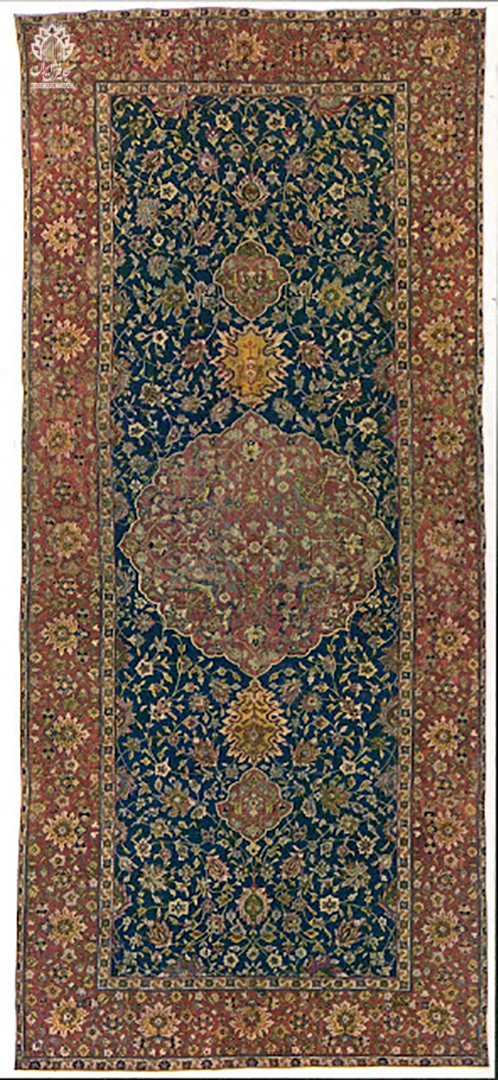
In the images above, a Polonaise carpet hangs on the wall, while a Safavid medallion carpet lies on the floor. No information about this Polonaise carpet was available before the first issue of Pazyryk was published; it is now held in the Keir Collection. Its mate is currently kept at the Berlin Museum. It was presented to Wilhelm von Bode (carpet scholar and founder of the Berlin Museum) by the Prince of Liechtenstein.
The medallion carpet shown in the photograph is also now held in the Keir Collection, where it is classified among Safavid medallion carpets from northwestern Iran. Its significance lies in the fact that it is the only carpet in the world whose design, motifs, and especially colours bear such a close resemblance to the Ardabil (Sheikh Safi) carpet. The virtuosity and refinement of the Ardabil carpet’s design, however, are not found in this example.
Although only one issue of Pazyryk was published, that single issue demonstrated just how much research potential a text or photograph can hold, and how much it can add to our knowledge. Ten years after Pazyryk appeared, the magazine Hali was launched and became an influential force; it is still published today.
Dr. Davoud Shadloo Faculty member, Department of Carpet, Shiraz University of Arts
 History & Heritage
This interview was conducted to mark the 90th anniversary of the nationalization of Iran Carpet Company and to record and preserve the experiences and memories of its long-serving and veteran colleagues.
 History & Heritage
This interview was conducted to mark the 90th anniversary of the nationalization of Iran Carpet Company, and to record and preserve the experiences and memories of its veteran and long-serving colleagues.
 History & Heritage
This interview was conducted to mark the 90th anniversary of the nationalization of Iran Carpet Company and to record and preserve the experiences and memories of its long-serving and pioneering colleagues.