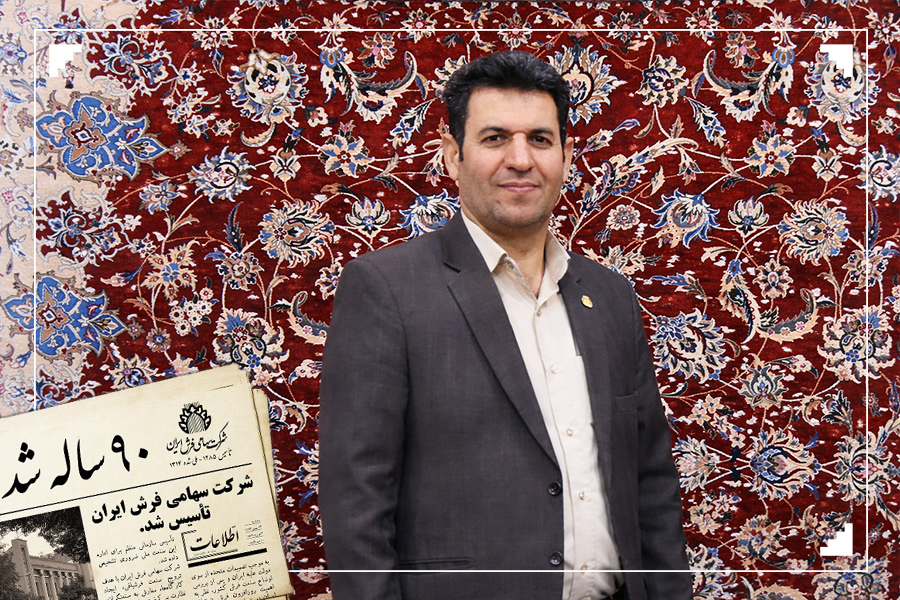
Iran Carpet Company at 90: A Conversation with Qasem Naddaf
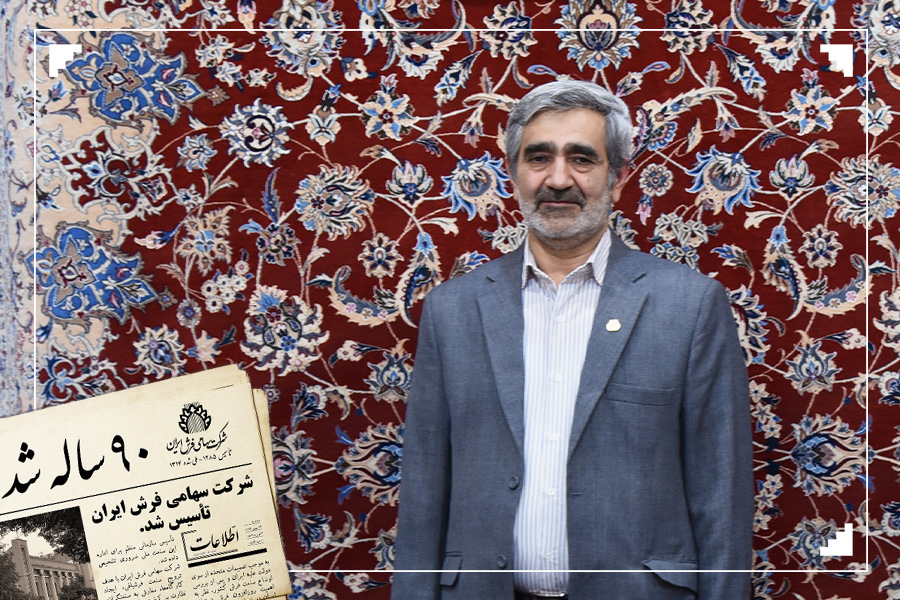
To mark the 90th anniversary of the nationalization of Iran Carpet Company, we have conducted a series of conversations with the Company’s veteran colleagues—individuals who have devoted many years of their professional lives to preserving, producing and advancing Iranian handwoven carpets. In this installment, we speak with Mr. Qasem Naddaf, Deputy Commercial Director of Iran Carpet Company, about his professional experience, workplace memories and perspective on the Company’s journey through decades of activity.
- Please introduce yourself and tell us how you came to know Iran Carpet Company and began working with it.
In the name of God. I am Qasem Naddaf. My first day at Iran Carpet Company was 18 Farvardin 1376 (April 7, 1997). I studied textile engineering at the University of Yazd. At the time, I was working with the Yazd Institute of Standards, where I contributed to developing standards for the wool used in handwoven carpets and for silk, as well as adapting international standards such as those of SGS for local use. Once drafted, these standards were sent to Tehran for approval. During the first term of Mr. Abed’s tenure as managing director, the Institute of Standards was asked to recommend a textile engineer, and I was introduced to the Company through this process. Following discussions, it was agreed that I would begin work at the Karaj factory as quality control officer.
- Please tell us about your responsibilities and experience at the Company.
At the Karaj factory, I served as head of the spinning unit and as quality control officer for the entire factory, where I worked until 1384 (2005–06). In 1384 and 1385 (2005–07), at the discretion of the management at the time, I transferred to the Company’s commercial division as Deputy Director of Domestic Trade. Later, an opportunity arose to work abroad, and I spent two years in Zimbabwe, in southern Africa, as production manager at a textile factory with a workforce of 4,000. After returning, I continued working with Iran Carpet Company. In subsequent years, following a change in management, I returned to the factory and, as deputy director of the factories, helped restart the spinning unit and revive the factory. I currently work in the Company’s commercial division as Deputy Commercial Director.
- During your career, what notable experiences and major projects stand out as turning points for Iran Carpet Company in terms of scale, quality or execution?
One of my most significant experiences was producing more than 300 tonnes of dyed and undyed hand-spun pile wool for the Company, as well as 160 tonnes for the Imam Khomeini Relief Committee in a single year—an achievement without precedent in the Company’s history in either quality or quantity. Major projects such as the Oman Carpet and the Abu Dhabi Carpet were also completed during this period. The raw materials for these projects were prepared at the Karaj factories, and, after being woven in Neyshabur, the carpets were finished and readied for shipment. The largest section of the Oman Carpet, for example, measured approximately 1,600 square metres and was completed through the initiative and round-the-clock efforts of the staff.
- In your view, what accounts for Iran Carpet Company’s success and distinction?
Iran Carpet Company is exceptional worldwide in the quality and methods of its production. It is an integrated enterprise that carries out every stage of carpet-making, from beginning to end. Everyone involved—from the weavers to the spinning, wool-washing, carpet-washing and repair teams—works with dedication and care. Honesty in sales, preserving customers’ trust and being transparent about any possible flaws in a carpet have always been among the Company’s guiding principles. Another reason for the Company’s success is the close, long-standing relationships between its sales staff and customers. Customers have trusted the Company across generations, and even carpets purchased decades ago are now sold at high prices at auctions.
- If you were to share one or more lasting memories from your career, what would you recall?
One of my most memorable experiences was the carpet fair in Milan, Italy. At the fair, Iran Carpet Company presented a small carpet to Italy’s Minister of Handicrafts, an event that received extensive media coverage in both Iran and Italy. After we had taught her, the minister herself wove several rows of a carpet, and she found the experience fascinating. Later, she sent me a postcard as a memento. Another lasting memory is completing the very large Oman Carpet. It is the world’s second-largest handwoven carpet. To finish the project in 1377 (1998–99), a 5,000-square-metre area at the Karaj factories was asphalted. While colleagues worked there during the day, wheeled transport carts were designed and forklifts used to move the carpet sections to the warehouse each night. The largest section measured 1,600 square metres. For the final shipment, a cargo plane was even chartered from Russia to transport the carpets safely to Oman. This project was an example of the Company’s ingenuity, solidarity and collective effort.
- Finally, what advice would you give to the younger generation working at Iran Carpet Company?
The Company’s newer generation of staff, and those working in the carpet industry, should strive to preserve customers’ trust, as their veteran colleagues have done. Honesty in production and sales has been one of the fundamental principles behind Iran Carpet Company’s success. At this Company, a carpet with a flaw has never been sold without informing the customer; any flaw has always been disclosed openly. Customers have therefore made their purchases with full knowledge and confidence, and this approach has built lasting trust. The Company’s sales staff have always maintained their relationships with customers and have continued to respond to their questions and needs even years after a sale. This personal and professional connection is one reason customers have remained loyal across generations. My advice to young people is to make honesty, commitment and genuine relationships with customers the guiding principles of their work, because the carpet industry’s greatest asset is the public’s trust.
Related Reading
All Journal & Blog History & Heritage
Iran Carpet Company at 90: A Conversation with Abbas Hesari
This interview was conducted to mark the 90th anniversary of the nationalization of Iran Carpet Company and to record and preserve the experiences and memories of its long-serving and veteran colleagues.