The History of Carpet Weaving in Heris Predates the Qajar Era
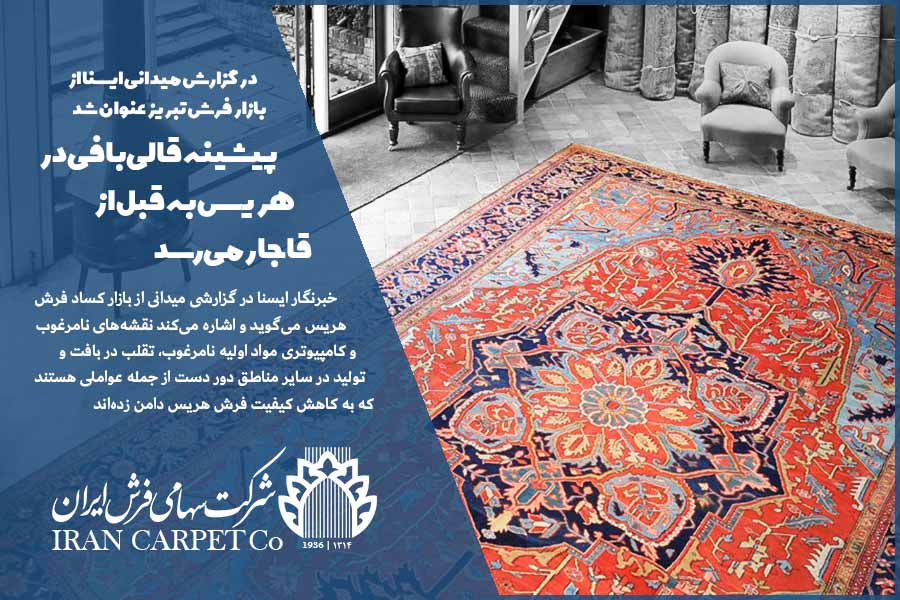
This is the story of an Iranian art that has earned worldwide renown and, with all its authenticity, graces museums and homes across the globe. The play of colors and appeal of Heris carpets have captivated even those who had turned away from their market. Yet these days, the slump in the Iranian carpet trade is weighing more heavily than ever on the warp and weft of Heris carpets, leaving merchants waiting for buyers.
According to the Public Relations Office of Iran Carpet Company, as reported by an ISNA correspondent, some carpet sellers say that Tabriz’s historic Mozafarieh Timcheh, with a history spanning several centuries, casts a long shadow over the handwoven carpet market. Even there, however, trade is far from brisk. Sellers and porters at the Mozafarieh carpet arcade say they have not had a sale in months.
Shahriar Market
Shahriar Carpet Market, one of Tabriz’s oldest handwoven carpet markets, is set in a traditional, historic building directly opposite the Maqbarat-o-shoara. Sellers there say that despite its nearly half-century history, the market is not as familiar to buyers as it should be. And although its carpets are of high quality—most of them Heris carpets—buyers show less interest in purchasing from Shahriar Market.
Babai, a carpet seller at Shahriar Market, attributes the lack of interest to inadequate publicity introducing the market to the public. “Even children know the Mozafarieh Market. Most businesses there open their shops at 10 a.m. and close at two in the afternoon.”
According to the seller, Shahriar has been a carpet market since 1354 SH (1975–76), when he was 10 years old. “The carpets here all come from nearby villages, and most are handwoven Heris carpets.”
Insufficient Publicity for Shahriar Market
Haj Asghar Abbaszadeh, another merchant who has sold carpets from the outset, says that the materials used to make carpets have become very expensive. “People have not been buying for some time, and the lack of exports has also brought the carpet market to a standstill. Without exports, the market cannot thrive.”
Like his fellow merchants, he believes that insufficient publicity has left Shahriar Carpet Market unknown to many. “No journalist has ever come here to report on or introduce this market. Carpet brokers also take customers from other cities to Mozafarieh, leaving no opportunity to introduce Shahriar Market.”
Noting that carpets at Shahriar Market are bought and sold directly, without intermediaries, he says: “When it comes to introducing and promoting the market, nothing has been done. But when it comes to taxes, we are treated no differently from other merchants.”
Help Restore Carpet Exports
Reza Asgharzadeh also expects officials to support carpet exports. “When the way to export is blocked and we have no sales, how can they expect us to pay taxes? When carpets were being exported, we had more room to maneuver. Weavers need money, too. They buy expensive materials and laboriously weave their carpets, but the carpets do not sell.”
Heris carpets appear to date back to the Qajar era—or at least to have gained greater recognition and standing during that period. Their exceptional palette, designs, and patterns are unlike those found in any other carpet.
Heris: A Historic Tradition for Contemporary Taste
Dr. Abdollah Mirzaei, a faculty member at the Faculty of Carpet at Tabriz Islamic Art University, also believes that documentary evidence places the history of Heris carpets in the Qajar period. “Many examples can be found in museums in Iran and abroad, as well as in private carpet collections. But given the region’s potential and Heris’s proximity to Tabriz, carpet weaving in this area may go back to before the Qajar era.”
In an interview with an ISNA correspondent, he identifies design and pattern as defining features of Heris carpets. “For more than a century, Heris carpets have drawn the attention of collectors and audiences in Iran and abroad as decorative carpets, without needing structural changes. Other distinguishing features include their palette, their full, thick pile, and their durability and long life.”
He describes the designs and patterns as markers of Heris carpet identity. “Even if just one example of these carpets were displayed anywhere in the world, its identity and authenticity—and its connection to Heris—would be clear. The Heris carpet-producing area, however, extends across a wide region from Ahar to Sharabian, Mehraban, and Kalanqa; carpets from these areas are known around the world as Heris carpets.”
The assistant professor at Tabriz Islamic Art University’s Faculty of Carpet discusses the distinctive color combinations of Heris carpets: “In the past, natural dyes were used to dye Heris carpets. Unfortunately, over roughly the past half-century, the use of poor-quality chemical dyes and inferior, chemically treated wool has increased, supplied by intermediaries as household producers have struggled financially to obtain quality materials. The problem is growing more severe. Today, the raw materials and dyes used are sourced from the Tabriz market rather than being produced locally as they once were.”
Commenting on the weaving technique of Heris carpets, Mirzaei says: “In terms of knot type, Heris carpets use the symmetrical Turkish knot; their structure is a two-weft la‘l-baft weave, and they are woven on vertical revolving looms. In the city of Heris and some nearby villages, knots are tied by hand without a hook, while in other areas a weaving hook is used. Local Heris experts and weavers have interpreted this difference as a distinguishing feature and an advantage of Heris carpets over those made in neighboring areas in the Heris style, although this claim is open to serious question. The carpet scholar adds that the ways the region’s climate, culture, and geography are reflected in its carpets are evident and deserve further study.
He adds: “Inferior, computer-generated designs, poor-quality materials, deceptive weaving practices, and production in other, distant regions are among the factors that have contributed to the decline in Heris carpet quality.”
Despite the distinctive qualities that set Heris carpets apart, rising carpet prices and closed export channels have left this handmade art weighing heavily on carpet traders and sellers.
Challenges and Solutions for Developing Handwoven Carpet Production and Markets
The head of the Carpet Office at the East Azerbaijan Department of Industry, Mine and Trade also told an ISNA correspondent that carpet exports in the first nine months of the current year had declined compared with the same period last year.
Naser Avishan went on to outline the challenges facing carpet exports: “These include rising raw-material costs due to exchange-rate fluctuations, higher wages and production costs, the failure to identify new export markets, insufficient promotion in target countries, and difficulties in repatriating export earnings.”
He cites restricted carpet exports, the failure to provide producers with financial resources such as low-interest loans, rising raw-material and production costs, and people’s inability to afford purchases as causes of the market downturn.
The head of the Carpet Office at the East Azerbaijan Department of Industry, Mine and Trade concludes: “Raw materials are distributed on the open market by traders in this sector. As raw-material costs, wages, and production costs have risen, carpet prices have also increased. With demand low, production has fallen as well, further limiting demand in domestic and foreign markets.”
According to this report, in 2015, officials from the World Crafts Council visited weaving workshops, dyeing facilities, the carpet market, and the Faculty of Carpet at Tabriz Islamic Art University. Tabriz was subsequently designated a “World Carpet Weaving City.”
ISNA; East Azerbaijan | Reporter: Nasrin Savar | Editor: Robab Teymouri
Related Reading
All Journal & Blog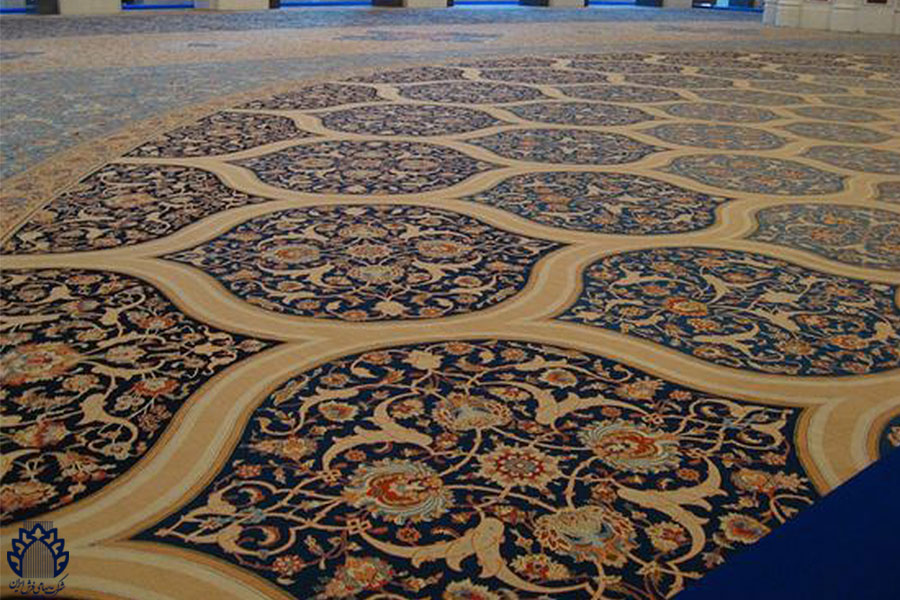 Interviews4
Carpet-Weaving Masterpieces by Iran Carpet Company
The carpet for the Sultan Qaboos Grand Mosque in Muscat is one of the large-format carpets produced by Iran Carpet Company. It was sent to Oman in 2000. On this occasion, we spoke with Reza Allahdad, who was the company’s Deputy for Production at the time.