From O.C.M. to Iran Carpet Company
During the Qajar era, demand in the West for Iranian handwoven carpets was growing. Yet Iran’s small-scale producers, working in a decentralized manner, could not meet the needs of global markets. Several multinational companies therefore invested in Iran’s carpet industry and took over its management and trade as well. Companies such as O.C.M.[1] established branches in the east, and Ziegler in the west of Iran.
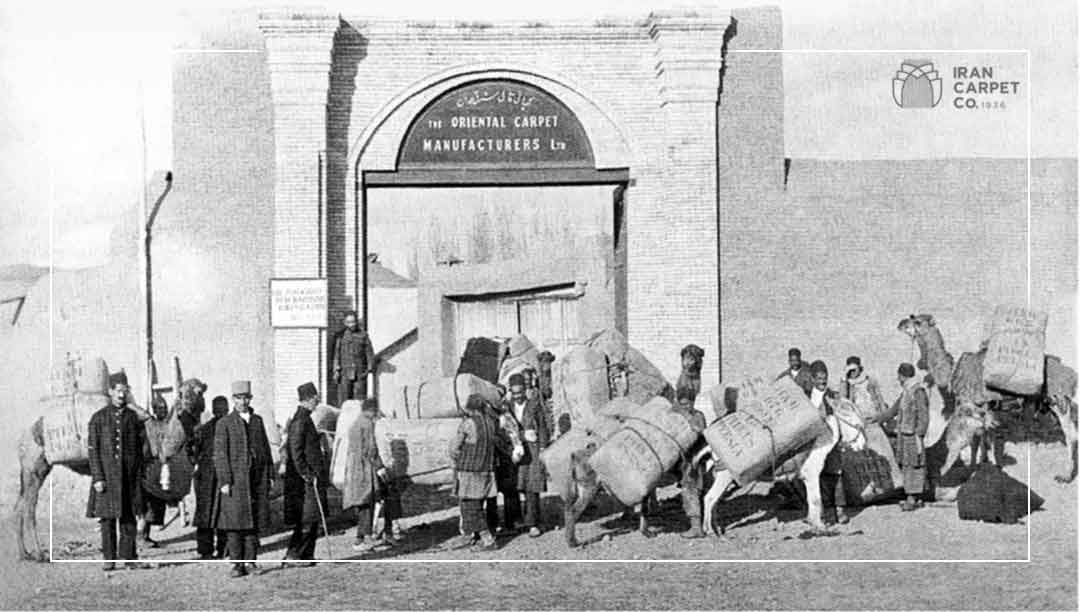 Hamedan, entrance to the branch, first decade of the 14th century SH
Many domestic producers and merchants, unable to compete with the monopoly, capital, and production capacity of multinational companies, were forced to abandon the carpet trade. These companies remained active into the early years of the Pahlavi era, but with the onset of the economic downturn in the West (1308 SH / 1929–30), they were compelled to leave Iran. This period coincided with Reza Shah’s policy of bringing Western enterprises under Iranian ownership. As a result of this policy, multinational companies transferred their assets to the Iranian government.
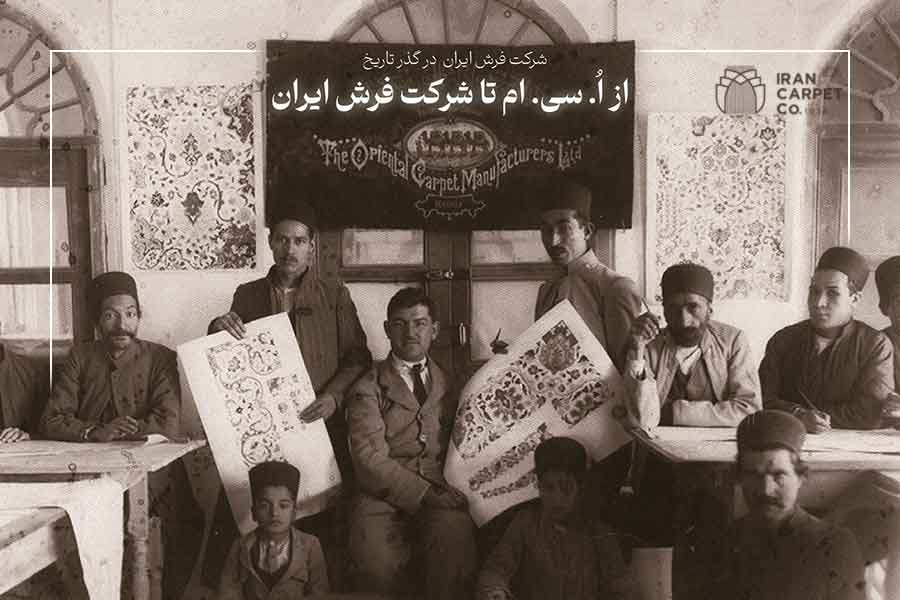
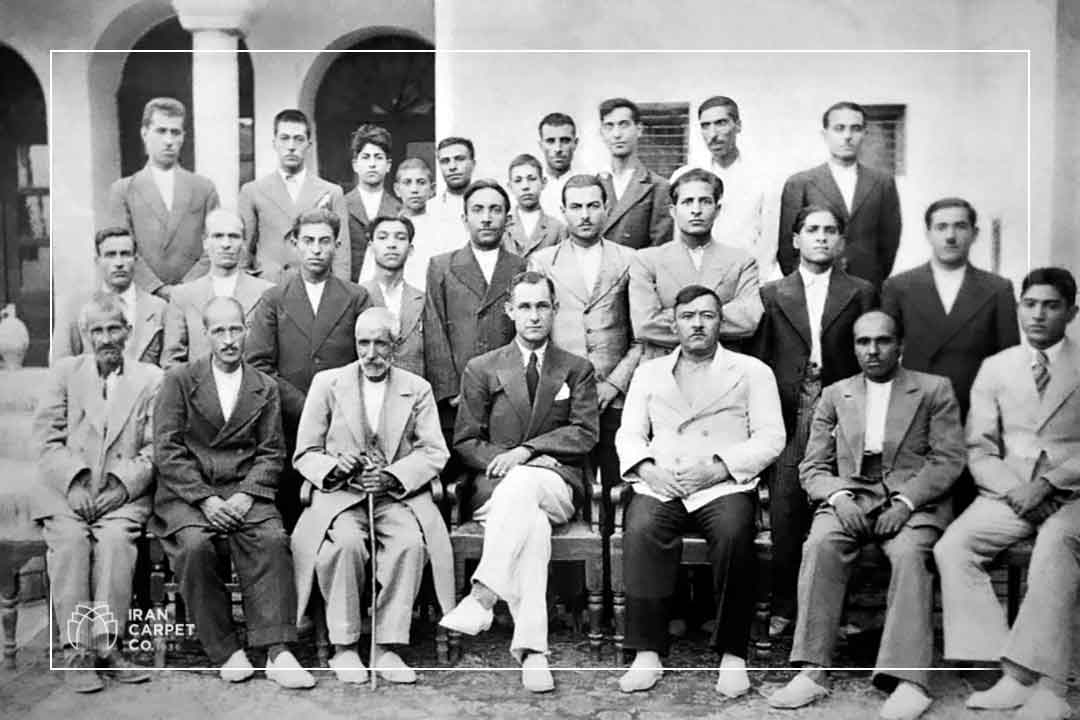 Artists in the design department of Iran Carpet Company, Kerman, 1311 SH / 1932–33
The government of the day determined that, under commercial law, an organization should be established in the form of a “company” to provide the services needed by Iran’s carpet industry while also engaging in production and trade. Accordingly, the articles of association of “Iran Carpet Company” were registered in 1314 SH (1935), with the aim of “promoting the carpet-weaving industry and other small handicrafts by establishing workshops, placing orders with artisans, undertaking all operations related to them, marketing their products at home and abroad, and providing any related guidance.”
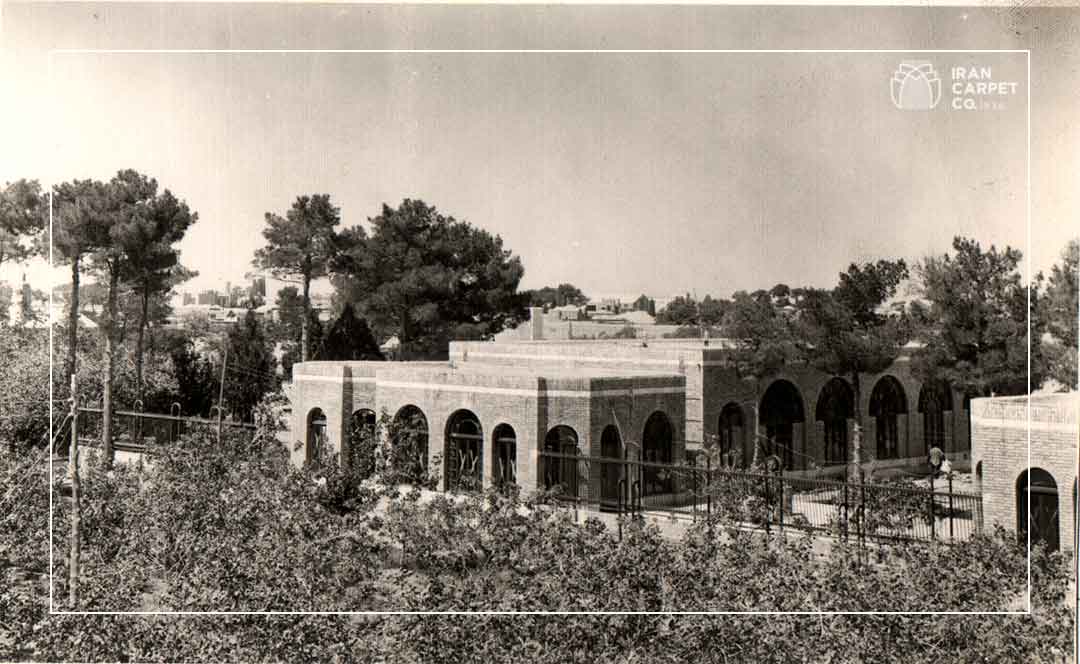 Exterior of the raw-material supply factory in Karaj, 1346 SH / 1967–68
At first, Iran Carpet Company operated under the supervision of the Agricultural and Industrial Bank. Its mission was to set standards and restore the declining quality of Iranian carpets. By 1354 SH (1975–76), it was weaving carpets in eight regions: Tehran, Tabriz, Mashhad, Kerman, Isfahan, Kermanshah, Hamedan, and Arak. In 1356 SH (1977–78), Iran Carpet Company accounted for two to three percent of the country’s total carpet production.
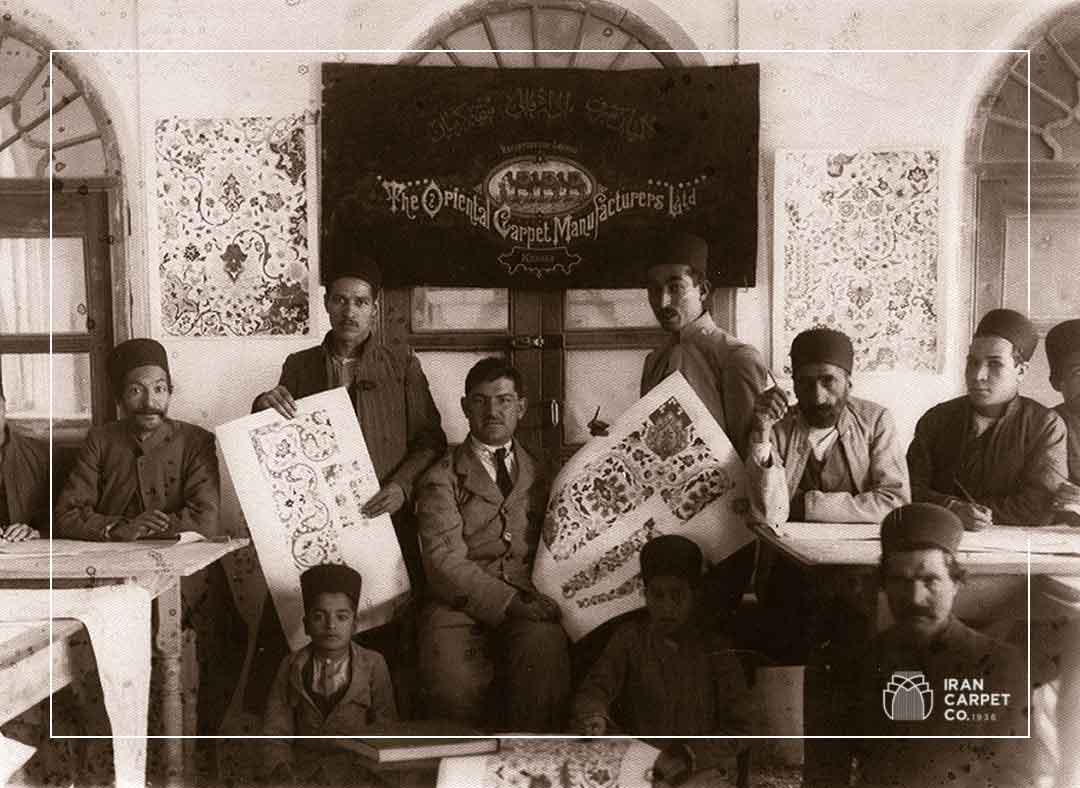 Iran Carpet Company design department, Kerman
Following the Islamic Revolution, Iran Carpet Company continued its work as before and remains active today. As part of the privatization of the state-owned sector, it was first transferred to Bank Tejarat in 1392 SH (2013–14), and then to the Melal Credit Institution in 1396 SH (2017–18). Iran Carpet Company now has active branches in 23 cities across Iran and weaves carpets in keeping with the traditions of each region.
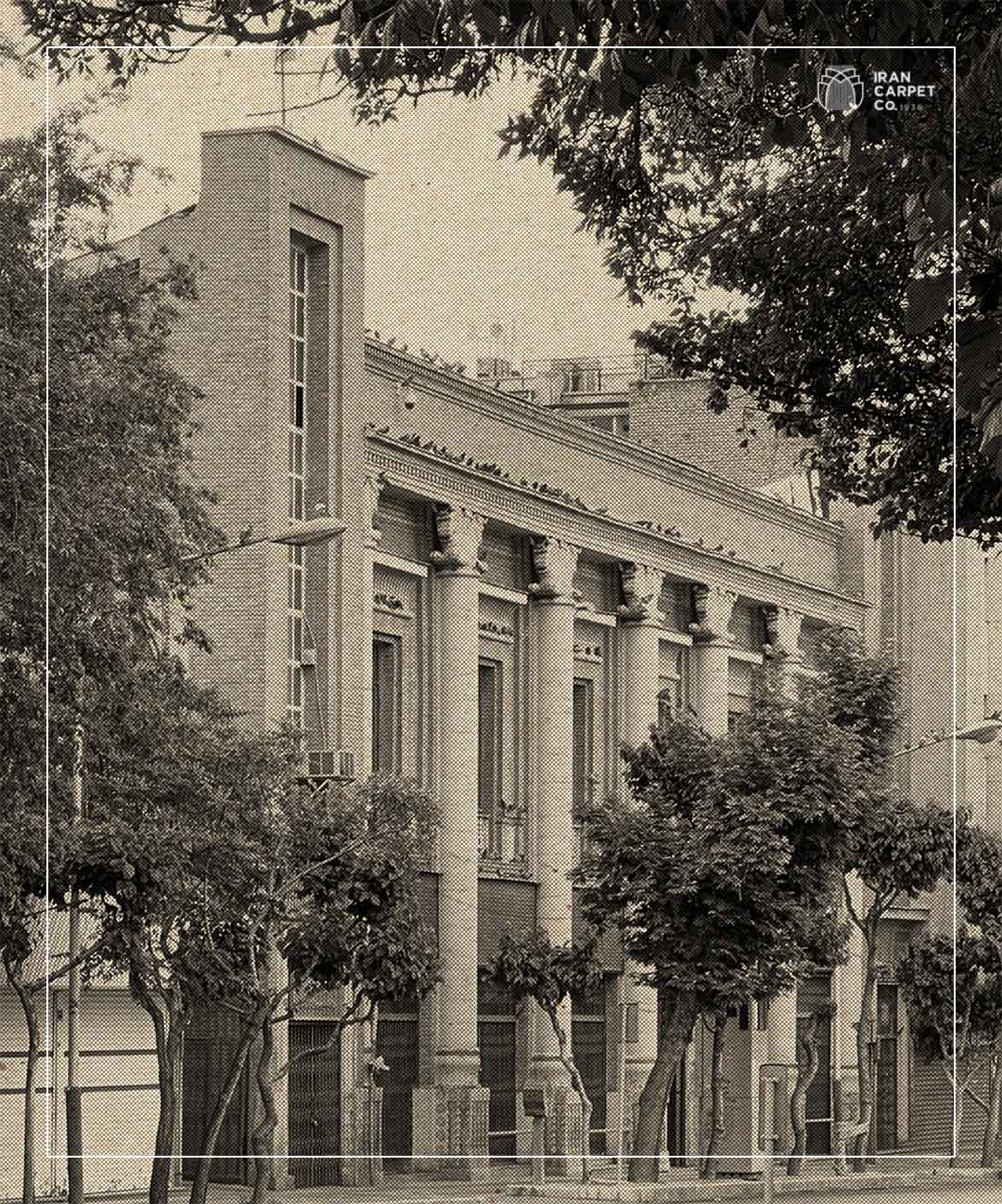 Iran Carpet Company headquarters, Tehran; Ferdowsi Street
OCM (Oriental Carpet Manufacture)