Cecil Edwards, the Oriental Carpet Manufacturers, and Hamadan Carpets
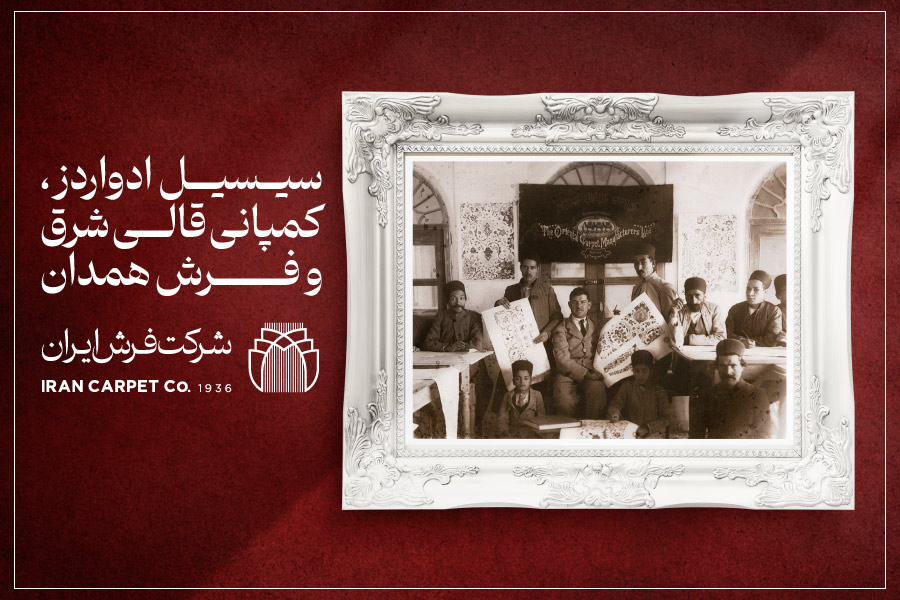
Cecil Edwards, an English trader, was an influential figure not only in O.C.M. (Oriental Carpet Manufacturers) but in the world of Oriental carpets as a whole. Instead of going to Oxford for training, Edwards joined Baker’s London branch, where he learned about selling carpets in the British market. He was sent from Constantinople to New York to gain experience in the important American market. On his return from the arduous sea voyage, he met the American Clara Case. They married in Maine, New England, and returned to Constantinople.
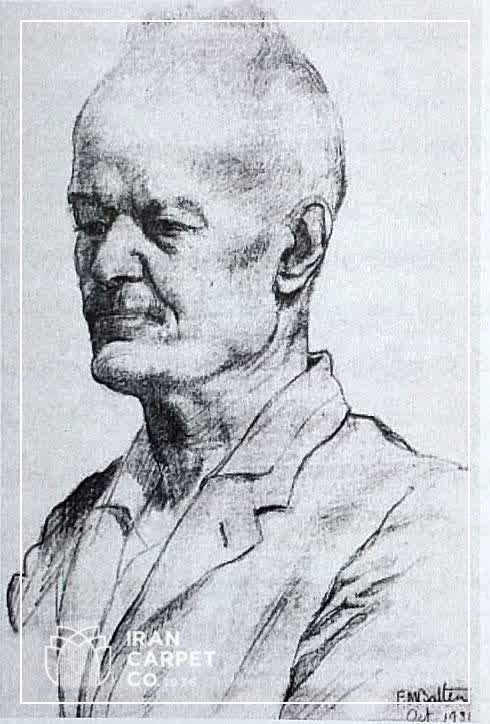 Cecil Edwards
In February 1910, Baker decided to enter the Iranian market. From London, he wrote to Percy Sykes, the British consul general in Mashhad, explaining that the company intended to cooperate with local partners and open a branch in Iran. Sykes asked George Baker to send someone to Mashhad to assess the market for himself. George Baker sent his brother Jim, along with Cecil and Clara Edwards, who had been married for eighteen months, from Constantinople to Iran.
O.C.M.’s employees, however, were not the first Europeans to establish a carpet business in Iran. The Manchester-based Ziegler Company had opened an office in Sultanabad (present-day Arak) in 1883, and for many years it prospered. Several American companies, including the Eastern Rug Company and N. Castelli & Brothers, had followed suit.
The story of the Hamadan branch
The Qajar dynasty had ruled Iran since 1796. The shahs’ rule was entirely autocratic. With no tax revenue of their own, they resorted to borrowing from Russia and Britain, which in return sought political concessions. Iran was caught between the expanding Russian Empire to the north and the British Empire in India. Both governments sought to present this division of influence as a means of preserving Iran’s independence, but the Iranian people were not convinced; they felt they had been betrayed.
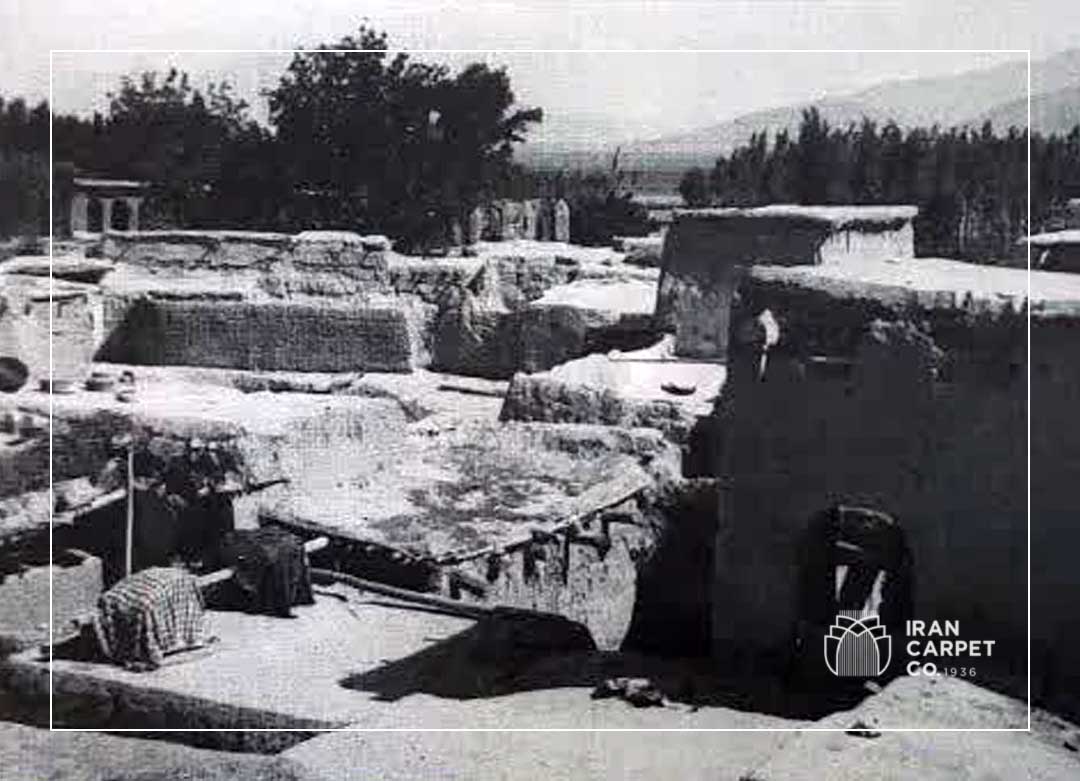 Rural area in Hamadan
It was in this atmosphere that Cecil and Clara Edwards set out for Iran, a country very different from the relatively orderly Turkey they had known. The Tehran market was disappointing: there were few carpets there suitable for sale. They stayed long enough to become somewhat acquainted with Iran, then set off for Hamadan.
A short time later, Edwards wrote to his mother-in-law in America:
Our business in Iran is taking shape slowly. We have been in Hamadan for nearly three months, and I have opened a branch office here, which will certainly become one of our most important offices in Iran, since this is a major carpet market…
Hamadan, on the route from Tehran to Baghdad, was an established market. The city was also close to Kermanshah, Iran’s principal wool market, where Kurdish shepherds raised their sheep in the surrounding mountains. The region still produces some of the finest, brightest carpet wool in Iran. Hamadan was also the largest center of British trade in Iran, importing £700,000 worth of goods a year—about £35 million in today’s money—much of it Manchester cotton. At the time, four other European companies were engaged in the carpet trade in Hamadan, along with major Iranian companies buying carpets for the Tabriz market.
Hamadan, which Edwards chose as O.C.M.’s base, was one of Iran’s most pleasant cities. In 1911, it was a large market town with a population of around 70,000. Its importance lay in its position as the first city reached after crossing the Zagros Mountains on the trade route from Baghdad and Kermanshah into the interior. The city’s bazaars consisted of spacious courtyards with fountains and shaded central gardens. Each bazaar caravanserai specialized in trading a particular kind of goods: carpets, wool, dyed yarn, spices, meat and vegetables, saddle-making, cotton textiles, and more. A little farther away, dyeing vats stood in the open air; farther still were the tanners and hide merchants, who brought sheep skins from the slaughterhouses and soaked them in a sulphur-based chemical solution to separate the wool from the hide.
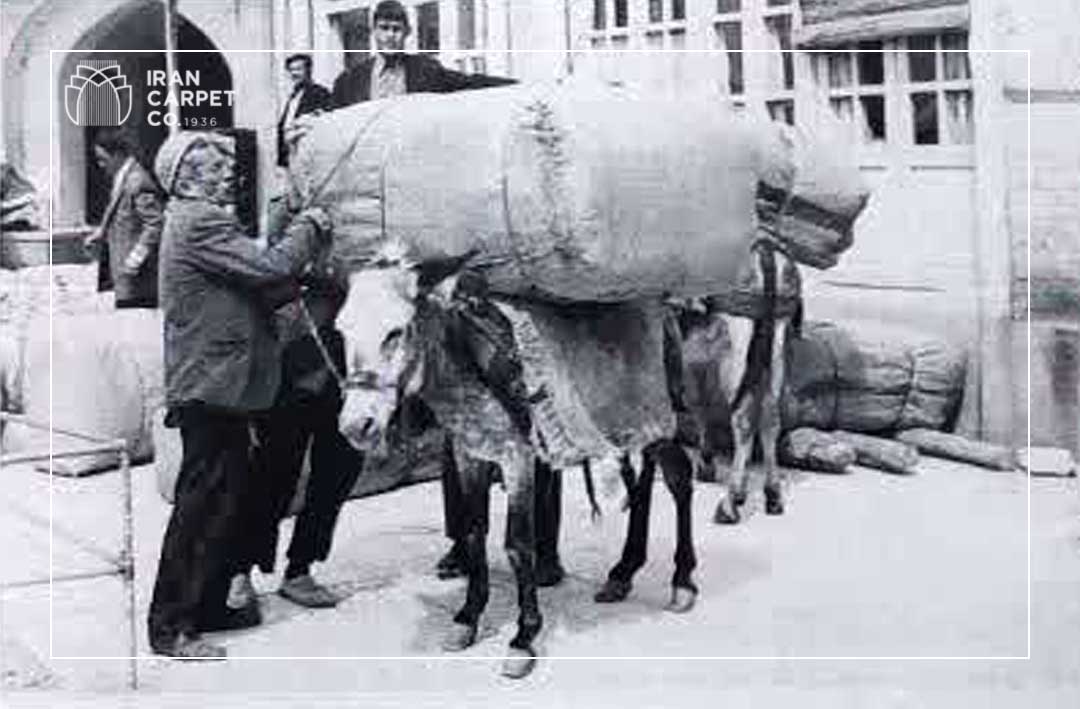 Carpets being loaded at O.C.M.’s premises in Hamadan
A small community of foreigners lived in Hamadan. The merchants represented British cotton exporters, while American carpet traders such as the Eastern Rug Company and Van Gassbeeck—both later absorbed into O.C.M.—bought whatever they could find in the market. Since Hamadan had no urban carpet-weaving tradition, Edwards decided to set up fifteen looms on a trial basis in a rented building. With no experienced weavers in the city, he had to begin with an elderly village woman, who taught the apprentices everything from scratch. Business in Hamadan was gradually taking shape.
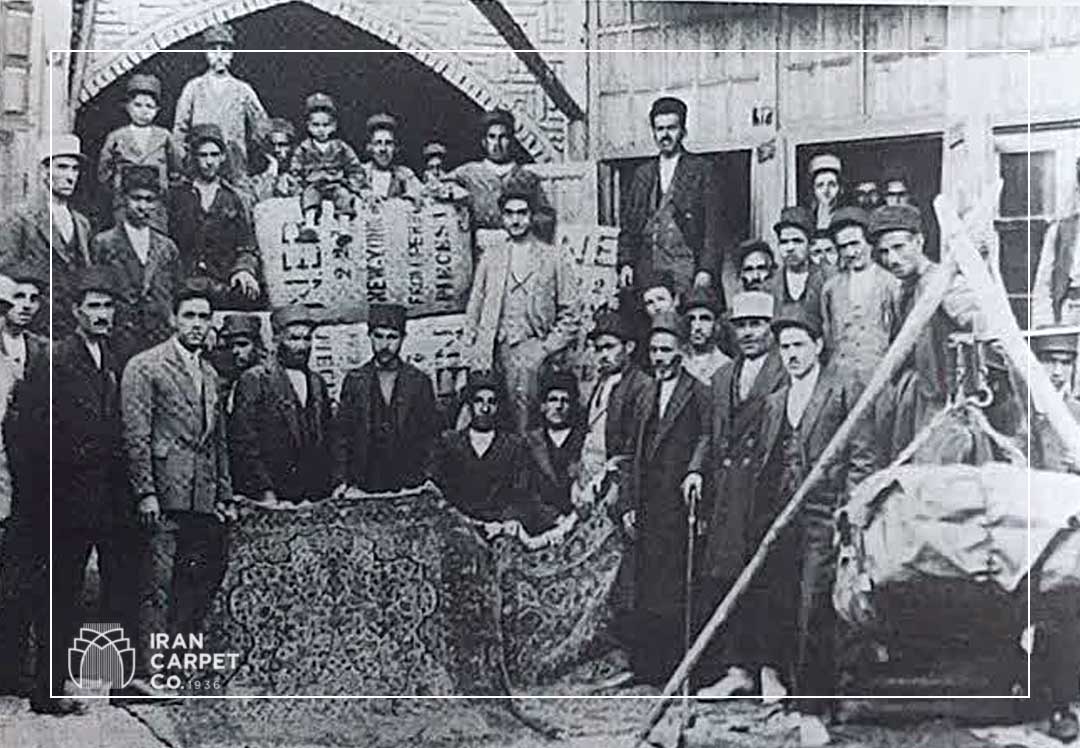 Mirza Kazem Caravanserai in Hamadan
Hamadan’s production was better than ever. To improve the quality of the Alvand carpets, Edwards bought hand-spun yarn from Khoy, near the Turkish border. He said it was like Merino wool. The rural industry was also making great strides: O.C.M. had one hundred carpet looms under contract in the Jowkar district, where very fine carpets were woven.
Edwards’s relief work in Hamadan after the First World War
After the First World War, the 1917 drought in Hamadan, combined with looting by Turkish and Russian troops and the hoarding of wheat by some landowners hoping to sell at high prices, led to famine. Typhus, typhoid, and cholera followed. In early May 1918, the Foreign Office sent funds for relief, and the army asked Edwards to take charge of procuring food. Edwards bought wheat from distant villages and persuaded fourteen bakeries to bake affordable daily bread for 20,000 people. He also arranged for soup to be served to about 1,400 children each day. In addition, he had a telegram sent from Baghdad to Hamadan announcing that large shipments of wheat were on their way from Mesopotamia. When the hoarders heard the news, they immediately opened their storehouses. Edwards was reprimanded by O.C.M. for this work, since his contract did not permit him to take it on.
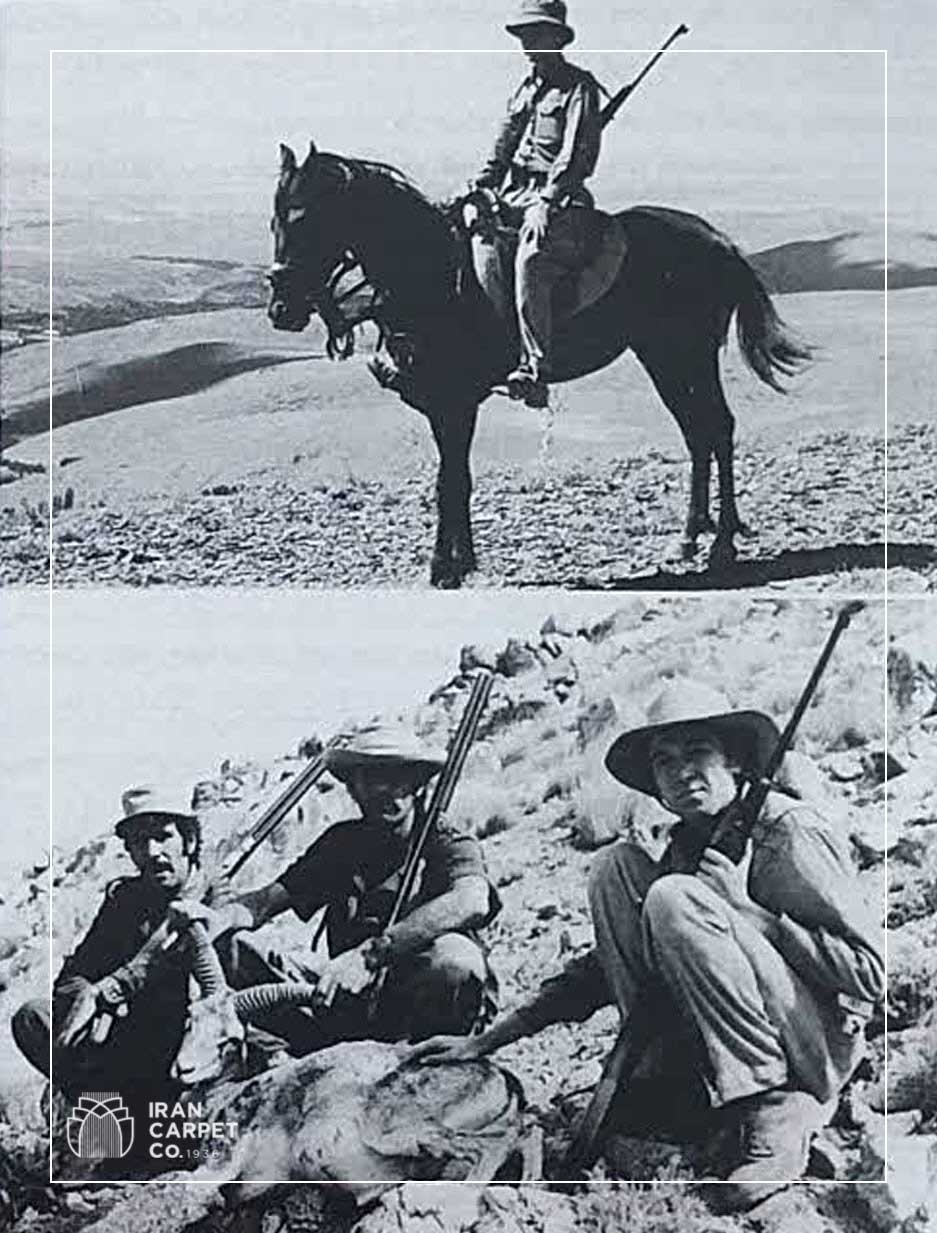 An O.C.M. buyer in Hamadan during a moment of leisure
Throughout his time in Iran, Edwards worked on a book about Persian carpets, titled The Persian Carpet. When the company’s office burned down in 1925, he had nearly completed all his notes; the fire destroyed his manuscript and personal belongings. The office was rebuilt and, this time, named “The Burnt Mansion.”
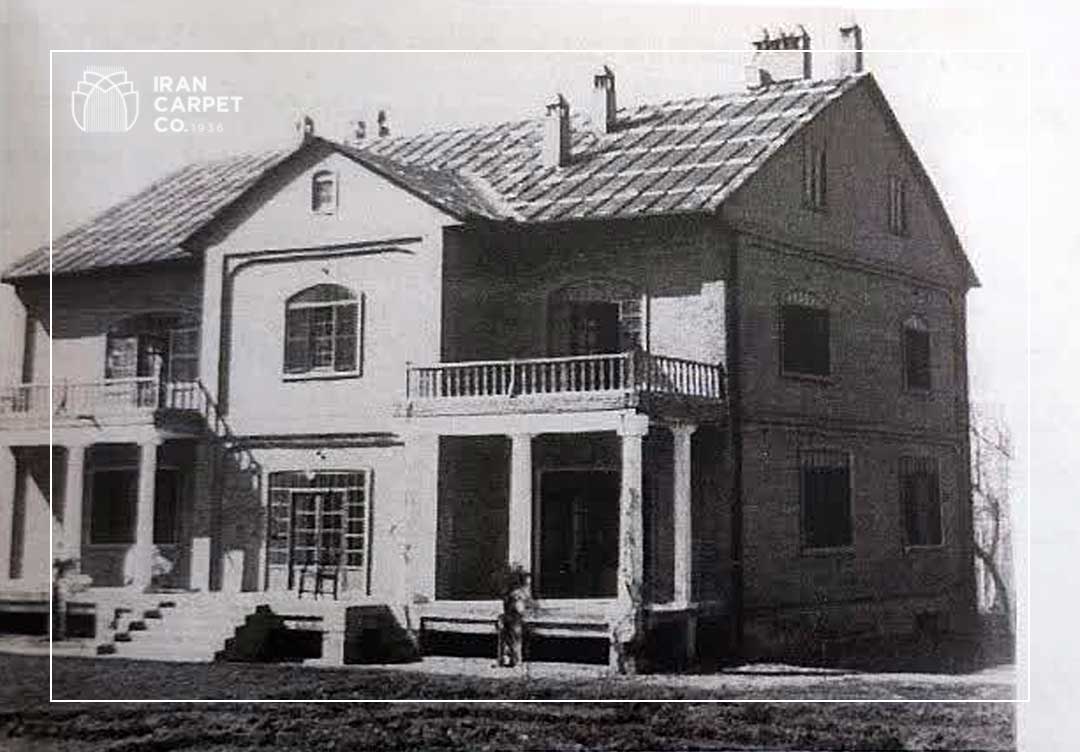 “The Burnt Mansion,” O.C.M.’s premises in Hamadan, rebuilt after the fire
In 1923, Clara and Cecil Edwards left Hamadan for London. There, Edwards became branch manager and later chairman of the board.
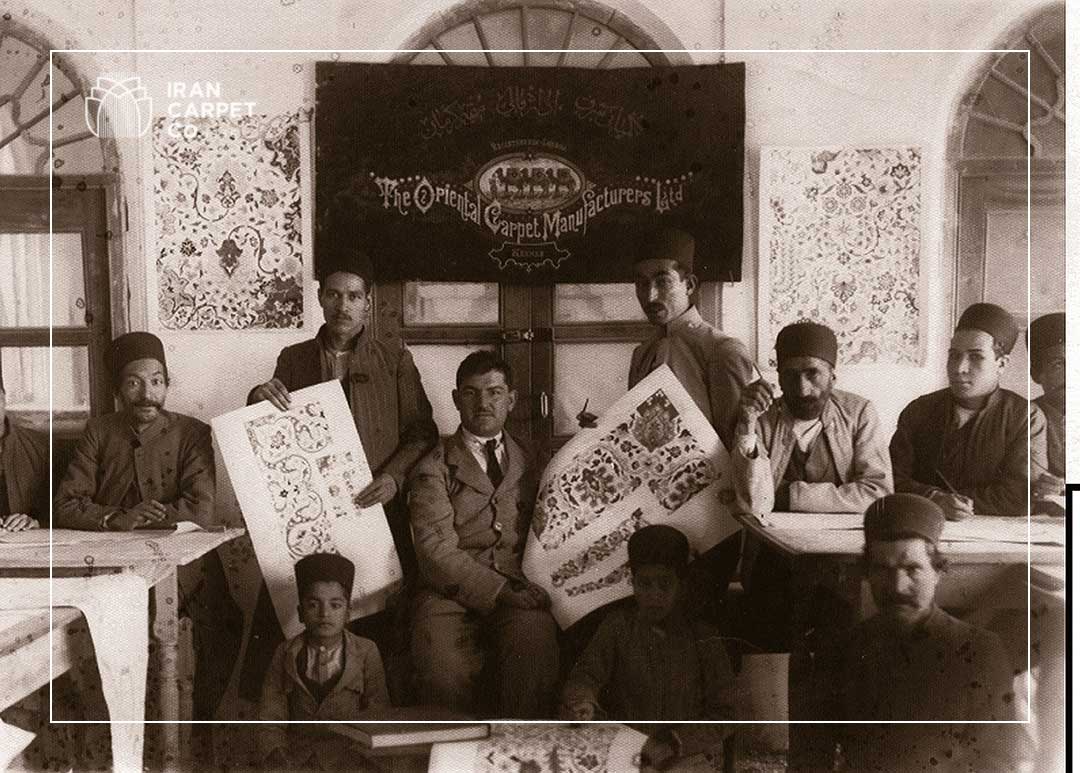
How Iran Carpet Company was established
In 1925, the young Ahmad Shah abdicated, and Reza Khan Pahlavi took his place on the throne. The effects of the economic crisis were also felt in Iran. In 1935, Cecil Edwards wrote an article for the Carpet Annual describing the hardship faced by carpet weavers at the time.
Carpet prices have fallen, production has declined, and unemployment among carpet weavers is widespread. Conditions in America and Europe in recent years have had a profound effect on Iran’s carpet industry. In the Hamadan region, where large quantities of inexpensive carpets were once woven, production may have fallen to less than one-fifth of its former level. In Sultanabad (Arak), virtually nothing is woven today except Sarouk carpets, and conditions are somewhat better. Unemployment among carpet weavers is rampant in Kerman. In Mashhad, the industry has come to a standstill. Tabriz may perhaps be more fortunate at this time…
It was in response to conditions like these that the idea of establishing Iran Carpet Company (I.C.C.) took shape. O.C.M. employees generally maintained that Reza Shah forcibly nationalized the company in 1935. Scattered historical records, however, suggest a different account.
Iran Carpet Company was established with government encouragement and a loan from the Iran Bank of Industry and Agriculture, which held 51 percent of the shares. The remaining shares were made available to the public. The company’s first chairman was Morteza Qazvini, one of the bank’s advisers, who had worked for years to revive the carpet industry. He was supported by Hossein Ala, Iran’s ambassador in London. London importers had persuaded Ala that the carpet industry had been undermined by the production of inferior carpets and needed to be rescued. Ala sent detailed reports to Tehran, arguing that an organization should be created to control the quality of exported carpets. This led to the establishment of Iran Carpet Company, which rented some of O.C.M.’s buildings.
Reyhaneh Kasiri Carpet specialist
For further information, please consult the following source:
Wayne Anthony; Yadollah Aghaabbasi and Zahra Aghaabbasi (2018). Three Camels Bound for Smyrna: A History of the Oriental Carpet Manufacturers. Academy of Arts Publications.
Related Reading
All Journal & Blog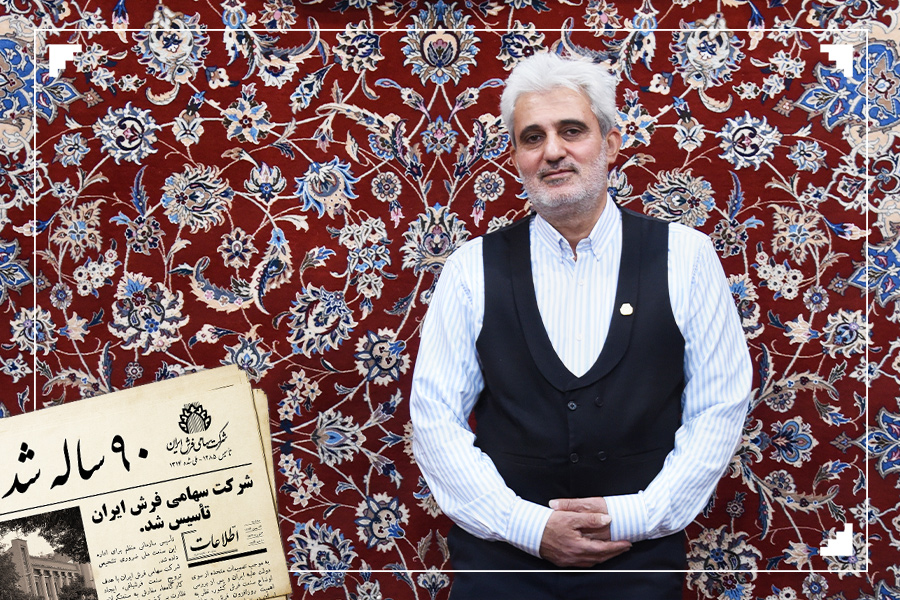 History & Heritage
Iran Carpet Company at 90: A Conversation with Abbas Hesari
This interview was conducted to mark the 90th anniversary of the nationalization of Iran Carpet Company and to record and preserve the experiences and memories of its long-serving and veteran colleagues.