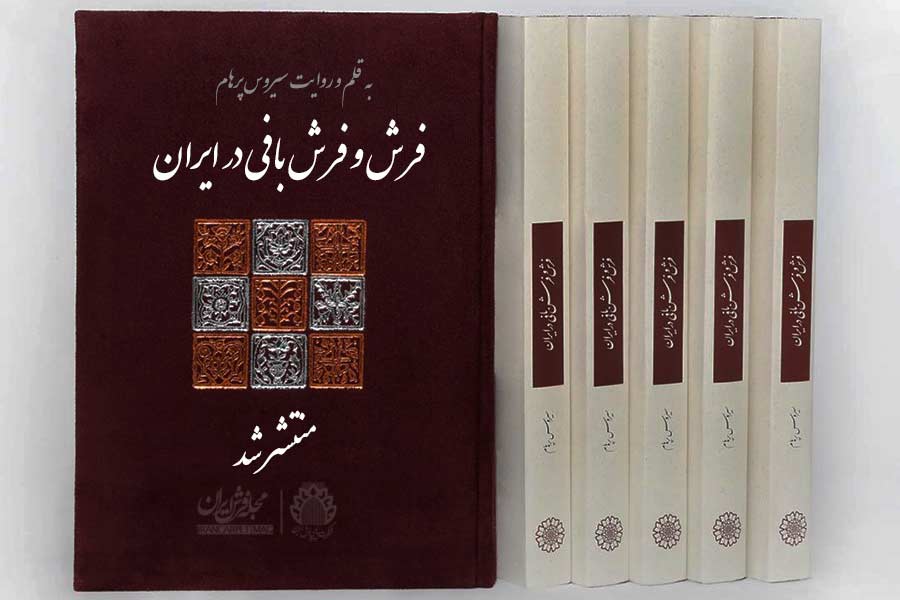
Carpet and Carpet Weaving in Iran Published
According to a report from Iran Carpet Company’s Public Relations Office, citing the Great Islamic Encyclopedia (Daba), few peoples have presented the many facets of their culture and art across centuries and ages—from the dawn of history to our own time—so beautifully and captivatingly before discerning eyes as the Iranian people have in the interwoven, colorful knots of warp and weft. The Persian carpet is a tableau of the breathtaking, soul-stirring splendor of gardens and orchards for which our country has been known since ancient times. Signs of other Iranian arts, such as painting and calligraphy, appear in it with astonishing delicacy. Thus, across East and West, the handwoven works of Iranian artists adorn the museums and homes of art lovers around the world.
Carpet and Carpet Weaving in Iran is organized into six chapters:
Chapter One: Types of Handwoven Carpets
- The word qālī
- The structure and technique of knotting
- Kilim and zilu
Chapter Two: Historical Introduction and Carpet Weaving in Iran before Islam
- The antiquity of carpet weaving
- Carpet fragments from before the Achaemenids
- The Pazyryk carpet
- Sasanian carpets
- Non-textile evidence and examples
- Written sources
- The Baharestan carpet
- Kilim weaving
- Zilu weaving
Chapter Three: Carpet Weaving from the Advent of Islam to the End of the 9th Century AH
- The early Islamic centuries
- The middle Islamic centuries
- Carpets in miniature painting
- Written sources on carpet weaving in the early and middle Islamic centuries
Chapter Four: The Golden Age of Carpet Weaving
- The “Ardabil carpets”
- The “Salting” group of carpets
- Origins and centers of flourishing
- The collection of 13 textiles from the tomb of Shah Abbas II
- The rise of the Persian carpet’s international standing
- Zilu weaving
Chapter Five: From the Afsharid Period to the Present
- The Qajar era
- International exhibitions
- Multinational companies
- Aniline dyes
- The Pahlavi period
- The Islamic Republic era
Chapter Six: Carpets and Other Tribal Handwoven Textiles
- Characteristics of tribal carpet weaving
- Types of tribal handwoven textiles
- Javāl (saddlebag)
- Khūrajīn, khūrajīneh, khūrajīnak (saddlebags)
- Gabbeh
- Jajim
Appendix: Sasanian carpet fragments in the Kuwait National Museum
The first edition of Carpet and Carpet Weaving in Iran, a 216-page book in quarto format, was published in a print run of 500 copies and is priced at 135,000 tomans. It was issued by the Publications Department of the Center for the Great Islamic Encyclopedia (Center for Iranian and Islamic Studies). Those interested in obtaining a copy may contact the Center for the Great Islamic Encyclopedia’s bookstore at 02122297677 or 09127362684.
Photo Album (9)
Related Reading
All Journal & Blog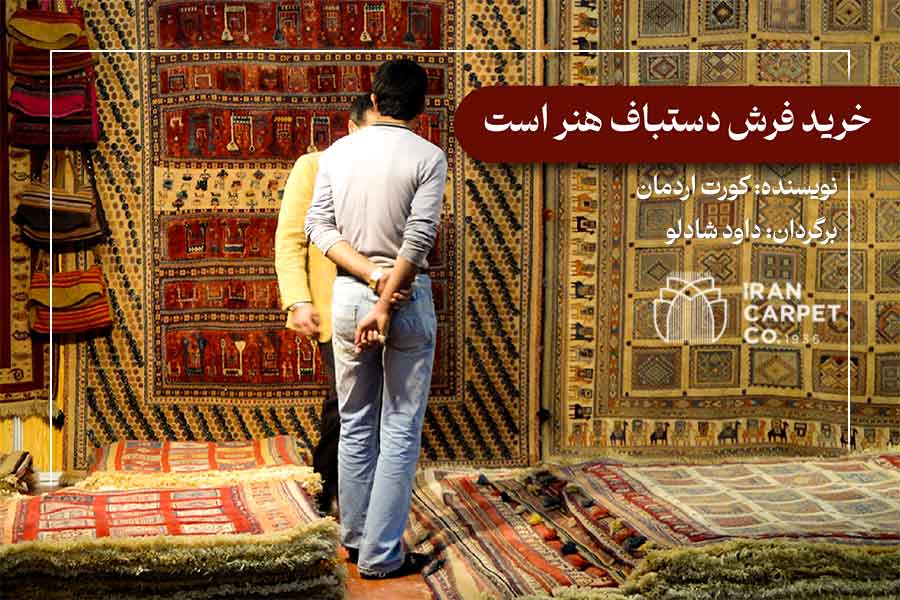 Books & Criticism
Buying a Handwoven Carpet Is an Art
When the editors of the journal asked me to write this article, this was not what they had in mind. What they wanted was a short, illustrated guide to buying a carpet; but this article is nothing of the sort.