
History & Heritage
A Look at the Cultural Foundations of Iran’s Handwoven Carpet
Oct 22, 201919 min readIran Carpet Company
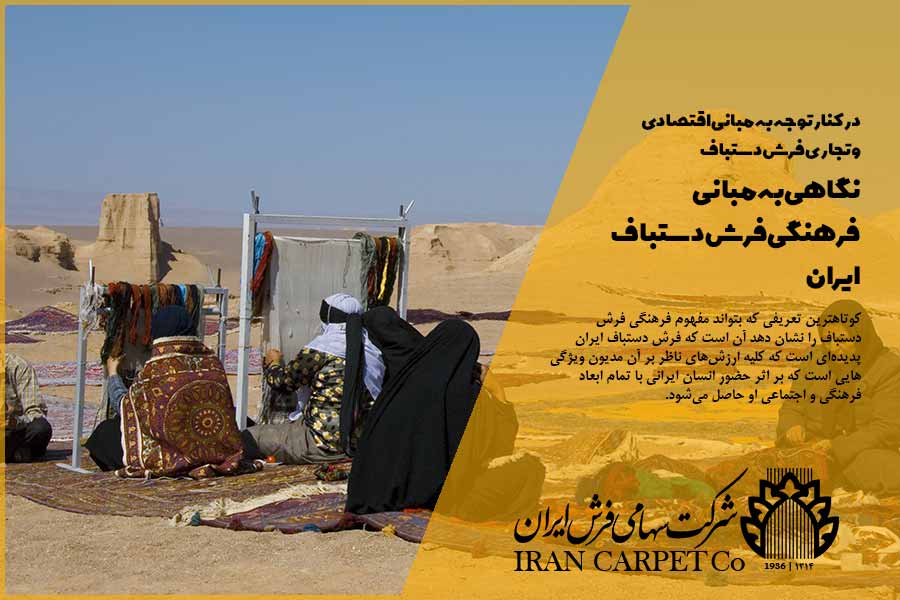
Despite its long history and deep roots in our land, the handwoven carpet is a relatively new subject in terms of thematic and content-based understanding, particularly from a scientific perspective. When we consider how undocumented and unusable our knowledge and information remain—even regarding the practical and experiential aspects of carpet production, despite our skill in this field (as can be seen in the recent generation of producers’ disregard for, and lack of awareness of, the qualitative and identity-bearing values of Iranian carpets)—we can regard the absence of reasoned, scientifically grounded attention to the social and cultural values of the handwoven carpet as both certain and regrettable. It should be noted that, setting aside the various economic, social, artistic, and cultural values that are our subject here, it would be simplistic to imagine that, in a world where scientific theories and analyses govern every aspect of human life, including the relationships between production, supply, and demand, we can send a product to world markets without considering the requirements that justify its quality. This is especially true of a product such as the carpet, for which cultural and artistic needs are inseparable from the very concept of quality ascribed to Iranian carpets. Because the economic value of the handwoven carpet in our country has in practice fostered a commercial and traditional outlook on its production, the meaning of identity, culture, and even art in this product has remained deeply obscure—except in name, and sometimes even then through a faulty understanding of what art or culture in a carpet entails. In some cases, erroneous definitions and understandings of art or culture in carpets have even caused considerable harm. Since the concept of culture, with its broad and boundless dimensions, seems in some ways unfamiliar and ambiguous in relation to the handwoven carpet, perhaps we can speak instead of the cultural place of the handwoven carpet—or, in other words, of the handwoven carpet in Iranian culture.
In this context, two questions may be examined: First, why does the Iranian carpet possess a cultural meaning that goes beyond its status as a commodity? Second, how can the foundations of this culture be explained?
First—Why does the Iranian carpet possess a cultural meaning beyond its status as a commodity? The briefest definition that conveys the cultural meaning of the handwoven carpet is this: Iran’s handwoven carpet is a phenomenon whose many values (economic value, employment, self-sufficiency, foreign-exchange earnings, and, ultimately, artistic standing) derive from qualities shaped by the presence of the Iranian people, in all their cultural and social dimensions. The clearest illustration of this definition can be seen by comparing the potential material and spiritual value of carpets produced in Iran in earlier times—owing to their authenticity, identity, quality, integrity, and other attributes—with the steep decline in the value of contemporary carpets. This decline stems from the diminished quality, the loss of identity in motifs and colours, flawed construction, the use of inferior raw materials, and distortions in the production process, all resulting from the fading of the human identity embedded in production. It is worth emphasising that Iran’s handwoven carpet is one of the world’s exceptional products, in which art is synonymous with a folkloric, popular, and communal character; these qualities undoubtedly underpin its material value. Although in this country the prevailing view regards carpets as having economic value, most people around the world who take pride in owning Iranian carpets speak of their incomparable beauty and splendour—qualities that place the handwoven carpet on a par with the world’s finest art forms. At least as attested by surviving paintings dating from the eleventh century, Iranian carpets adorned the great palaces of rulers around the world and were a source of pride and splendour for art lovers in the West. The beauty of their designs and colours inspired the admiration of great painters such as Rubens, Van Dyck, and Cézanne, as well as a later generation of artists including Monet, Paul Klee, and Mondrian. In his comprehensive survey of the masterpieces of Iranian art, Pope writes: “Among Westerners, Iranian art is known through the handwoven carpet more than through any other art.” This is apart from the grandeur and standing that Iranian carpets have held among the world’s artistic and valuable objects throughout history.
Second—How can the foundations of this culture be explained? Unfortunately, despite the many ways in which Iran’s handwoven carpet benefits the people of Iran, no comprehensive study has yet examined the reasons for its formation or its inherent potential values. Perhaps this is because the handwoven carpet is seen as a simple product that can be made easily and under any conditions, and therefore as something that requires no particular study or planning. Developments in recent years—in Iran, the decline in quality, the disappearance of many authentic production centres, and the destruction of motifs and colours; outside Iran, the loss of buyers (despite some views to the contrary, new markets and buyers for carpets are expanding, and the downturn has affected only Iranian carpets) and of those who appreciate them—show just how much misconception, or at least lack of understanding, has surrounded the handwoven carpet in Iran, and how much sound planning for it has been neglected. Technical and material quality is not the subject here, but, by way of example, we can briefly consider the crisis in foreign markets for Iranian carpets from an artistic perspective. According to some views, markets and new buyers are asking for new carpets. This argument implies that Iranian carpets should change their form to meet customer demand, alongside comparable products such as rugs, machine-made floor coverings, and, in some cases, patterned carpets. It should be understood that rugs and machine-made carpets are fundamentally intended for short-term, material use; their formal and surface beauty depends on the application of today’s advanced ideas and tools, and requires no cultural or identity-based background. Such carpets or floor coverings can be made by any producer in any country. Comparing them with Iran’s handwoven carpet—which is a cultural product and draws its identity and value directly from the presence of people with a particular historical and social heritage—is meaningless. Responding to buyers’ needs is unavoidable, but any change to the handwoven carpet must respect certain red lines; disregarding them would lead to the destruction of Iran’s carpet tradition. The conclusion is that the carpets we once sent to world markets—and whose surviving older examples are still recognised around the world as Iranian handwoven carpets—possessed an identity and distinctive qualities that other carpets on offer could seldom match. At the same time, it should be recognised that Iranian carpets, thanks to a dynamic and evolving visual culture, have been able to adapt to the tastes of people across different cultural periods, from the Safavid era to the Qajar era and the contemporary period. We can now begin to understand some of the reasons for Iran’s decline in world markets. Among the identifiable causes are carpets featuring repetitive motifs (medallion and corner designs, arabesques, European-style floral motifs, bouquets, the fish motif, and others), which are also easy to imitate; non-Iranian, unappealing colours; and declining quality (though quality is not our subject here). This is where we can grasp the intrinsic identity of Iranian carpets and the importance of the motifs and colours used by a culture. To understand how motifs and colours acquire cultural meaning in carpets, let us consider the value of these two qualities in Iran’s carpets of the past. Two glorious periods in the history of Iranian carpets, represented by dozens of outstanding and beautiful examples, bear witness to the potential artistic and economic value of this national product. The first is the Safavid era. There seems little need to discuss the quality and quantity of its carpets, whose importance in the history of world art and culture is widely recognised. The second period began after roughly two centuries of stagnation, in the late Qajar and early Pahlavi eras. With the expansion of commercial activity and the arrival of many foreign companies and producers—and later, Iranian ones—more skilled designers and master dyers also joined the profession. Although the output of this period may not have surpassed that of the Safavid era in quantity or quality, it was undoubtedly its equal and worthy of comparison with that golden age.
A comparison of these two periods reveals two fundamental points: The common feature of all these carpets is their use of Iranian designs and motifs, particularly local and regional motifs found across the country’s carpet-producing centres. They also made use of colours that unmatched Iranian masters—whether in workshops or in rural communities, working locally—created from a small number of familiar plants, guided by their refined sensibility, contemplative outlook, and innate understanding of colour. The use of local and native wools, together with the care, integrity, and commitment that ensured sound weaving (without an emphasis on fineness of weave), was the secret of these carpets’ excellence. With few exceptions, they were made for practical use and were able to preserve their beauty and durability over a long life. Safavid carpets were chiefly large-format, workshop-made pieces, produced with the involvement of skilled designers, pre-drawn patterns, and the supervision of master craftspeople. Despite their artistic value, outstanding motifs, and beautiful colours, they were seldom produced on a broad commercial scale; they were luxury and aristocratic works, often made to order. In carpets that emerged in the early years of the last century, alongside products of this kind, the main approach was a form of mass production using motifs whose Iranian authenticity and identity came from the rich, imaginative minds of Iran’s rural and nomadic communities, shaped by ethnic and regional characteristics and by historical, artistic, and narrative traditions. This kind of carpet weaving took place in more than twenty thousand carpet-weaving locations across Iran. In his book The Persian Carpet, Cecil Edwards—a trader and a knowledgeable, art-loving expert—illustrates a portion of it in the form of mostly small-format carpets: a remarkably beautiful, original, rich, authentically local, and at the same time highly commercial tradition of carpet weaving. Taken together, the characteristics of these two periods—and of other periods in which Iranian carpets enjoyed esteem, prestige, and value—show that the product exported around the world as Iran’s handwoven carpet consistently possessed an excellent quality structure and an extraordinarily broad range of beautiful Iranian motifs and colours. A—How structural qualities acquire intrinsic value The historical continuity of carpet production and the presence of people who valued this product in every period, amid changing tastes, point to a quality that goes beyond a purely material or commercial need. Here, we will try to trace how the carpet’s material structure and visual qualities—the foundations of its constructive development—have evolved towards an authentic artistic and cultural tradition. The following points show how simple material or technical qualities in a product can sometimes develop alongside artistic and aesthetic values and acquire cultural meaning. In defining the structure of Iranian carpets, the two criteria of longevity and durability underfoot—the principal measures used to justify their commercial value—are linked to the quality of the wool and other materials used, and to colourfastness. Practical experience, on which scientific theories themselves depend, has shown that Iranian wool, owing to its particular properties, is the most suitable fibre for use in Iranian carpets. In this respect, fine and soft imported wools can sometimes give a carpet a quality that works against its value. Nor should it surprise us to learn that the beautiful palette of Iranian carpets throughout the ages owes its lustre and splendour to a handful of local plants, such as madder, walnut husks, pomegranate peel, and grape leaves, as well as to other species that grow in Iran. The fastness and durability of these colours compare favourably with the finest industrial and chemical dyes of today. To this we should add the distinctive range of natural colours, which results from the uneven distribution of pigment (owing to the presence of different colours in a plant’s roots or to the conditions in which it grows) and produces varied colour effects over years of use. The remarkable effect of these natural, plant-based dyes, and their capacity to change over time and through wear—something Iranians recognised hundreds of years ago—is an undeniable value of Iranian carpets. For many reasons, both known and unknown, and with the agreement of most carpet experts and art connoisseurs, a carpet dyed with natural colour can easily be distinguished among hundreds dyed with industrial dyes. B—The artistic dimension of the carpet derives its value from two principles: design and colour tone (the inner character and quality of colour) B.1—Colour in the carpet The English scholar Hakluyt, who lived in the sixteenth century, tells a fellow countryman and merchant: “In Iran you will see carpets made of coarse wool, with cotton fringes at both ends. These are the finest carpets in the world, and their colours are the finest and most beautiful. You must go to that country and use every means at your disposal to learn from its people how they dye carpet yarn. For the yarn is dyed in such a way that rain, vinegar, and wine do not affect its colour. Once you have learned this art from them, you will discover its secrets and be able to apply it to carpet dyeing, with confidence in its lasting quality.” We find descriptions of this kind not only in Hakluyt, but later in the writings of Chardin and others. This may be the simplest evidence of why, in the modern world, chemical and industrial dyes—with their vast range of a thousand colours—have still been unable to rival the historical and cultural identity embodied in a limited palette. We can therefore state with confidence that the value of colour in Iranian carpets is an intrinsic one, reflecting the influence of the master dyer, their environment, thought, and way of seeing. This perspective and experience explain why a Kerman dyer working with, for example, madder produces a result entirely different from that of a Kurdish dyer using the same dye material. It is this perspective that allows a carpet coloured by the hand of an Iranian master dyer to stand alongside the works of the world’s great artists as a masterpiece of colour and dyeing. B.2—Design and pattern in the carpet A mistaken preconception holds that carpet designs and, by extension, their motifs can be identified and fixed completely, and can therefore be drawn and standardised by computer—and sometimes by a human agent. Setting aside the art of carpet design, which is in any case the product of human sensibility and experience and whose value is evident in urban and workshop-made carpets, it should be said that although carpet designs and motifs can be identified, their capacity to be fixed is not a measure of their value. The evidence is clear: designs such as the medallion and corner, various arabesques, the fish motif, and others are woven across different parts of Iran through natural cultural transmission, each with distinctive characteristics. More than a hundred variations of the fish motif alone can be found, even in rural areas. The clearest conclusion is that Iranian motifs and designs, shaped by cultural influences such as ethnicity, region, customs, and ritual, are precisely what give Iranian carpets their identity. It is through this cultural and historical transformation that Luri, Kurdish, Baluchi, Turkmen, and Armenian motifs—and, in urban carpets, Kermani, Isfahani, and Tabrizi motifs—can be distinguished. This valuable diversity makes it possible to tell a traditional design, such as an arabesque or Shah Abbasi floral design, woven in Khorasan from its Isfahani counterpart. This is the singular quality and one of the valuable capacities of Iranian carpets: it cannot be imitated by computers or by people working beyond Iran’s borders. Here we should also address the registration of Iranian motifs and designs, which many today consider one of the reasons Iran has lost its markets, because these motifs have been imitated. Although this issue requires extensive expert examination, I would simply recall, in light of what has been said above, that: - What can be imitated in other countries is only a particular kind of urban carpet with a set pattern. With the spread of printed patterns, this kind of imitation has become even easier for outsiders. It should also be understood that the harm caused by applying traditional carpet motifs to machine-made carpets is no less than that caused by their being copied by others. - The most important and richest part of Iranian motifs belongs to carpet weaving without a drawn pattern, or traditional weaving, based on local and regional designs and their naturally evolving diversity. If this part is harmed, strengthening our cultural capacity can ensure that there is no reason to fear imitation by outsiders. - Perhaps we need to answer the question: which historical and cultural reality do we mean when we speak of Iranian motifs? Ancient and historical Iran once encompassed many cities in Central Asia and Afghanistan that now lie beyond the borders of Iran, yet carpets with motifs resembling those of Iran’s traditional carpets are woven there in great variety and abundance. Consider Herat, one of the old cultural centres of Iran and the place where Kamāl al-Din Behzād, the great Iranian painter, flourished in the Herat school; the motifs of Iranian domes and carpets are part of that school’s artistic heritage. The same motifs were also prevalent in Turkmenistan, Azerbaijan, and, in the other direction, in Baghdad, Turkey, Syria, and some other places. - It may be possible to register specific designs by predominantly urban designers, with the endorsement of technical experts, as a way of supporting the great masters of this profession. In any case, Iranians are among the most skilled and capable handweavers of carpets whose motifs and designs emerge from the harmony and interweaving of a diverse, thoughtful culture rooted in the Iranian people. Their greatest value derives from the active, sensitive flow of the mind of a people with a distinct identity. In broad terms, if the diversity of motifs (in machine-made carpets or industrial designs) and industrial and chemical colours represents movement along a single dimension, according to their unlimited possibilities, then the diversity of motifs and relatively limited palette of Iranian plant dyes represents movement across a horizontal plane, shaped by the origins and place of production. The work is the result of nothing other than the presence of the Iranian people, with their particular characteristics and ways of thinking. All these definitions express the value of motifs and colours as cultural and identity-bearing concepts. We must accept that, in our time, the inevitable movement of rural and nomadic communities towards urban life, and changes in their outlook and understanding of life, have been major factors in the transformation of rural and nomadic motifs into urban ones—printed, graphic, and computer-generated designs. Yet there is no doubt that changing our traditional outlook on carpets and adopting scientific approaches, as other developed countries have done to preserve their valuable national and cultural traditions, is the only way forward. Emphasising the presence of Iranian designers, weavers, and dyers, and their traditional methods of work—for example, searching for lost motifs, using traditional and plant-based colours, and using repeat units as weaving models—alongside human and social support, and drawing on the sciences and knowledge that teach us how to preserve our arts and national heritage, may help save what remains of the tradition known as Iran’s handwoven carpet.
 History & Heritage
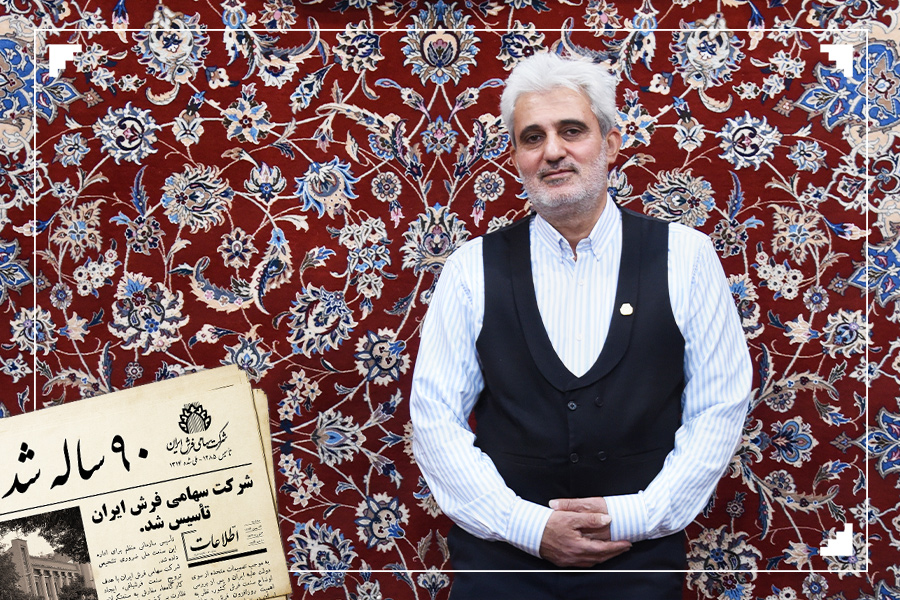
This interview was conducted to mark the 90th anniversary of the nationalization of Iran Carpet Company and to record and preserve the experiences and memories of its long-serving and veteran colleagues.
 History & Heritage
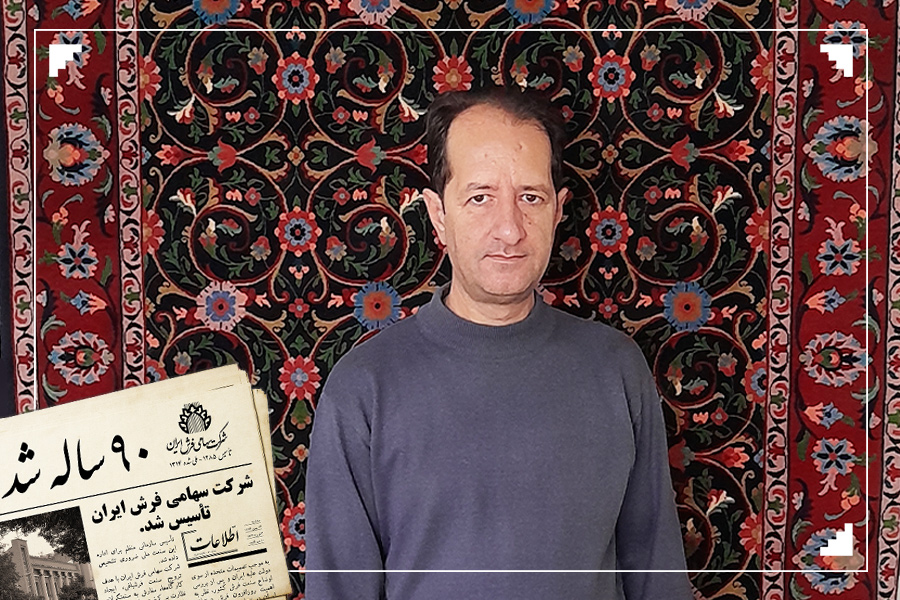
This interview was conducted to mark the 90th anniversary of the nationalization of Iran Carpet Company, and to record and preserve the experiences and memories of its veteran and long-serving colleagues.
 History & Heritage
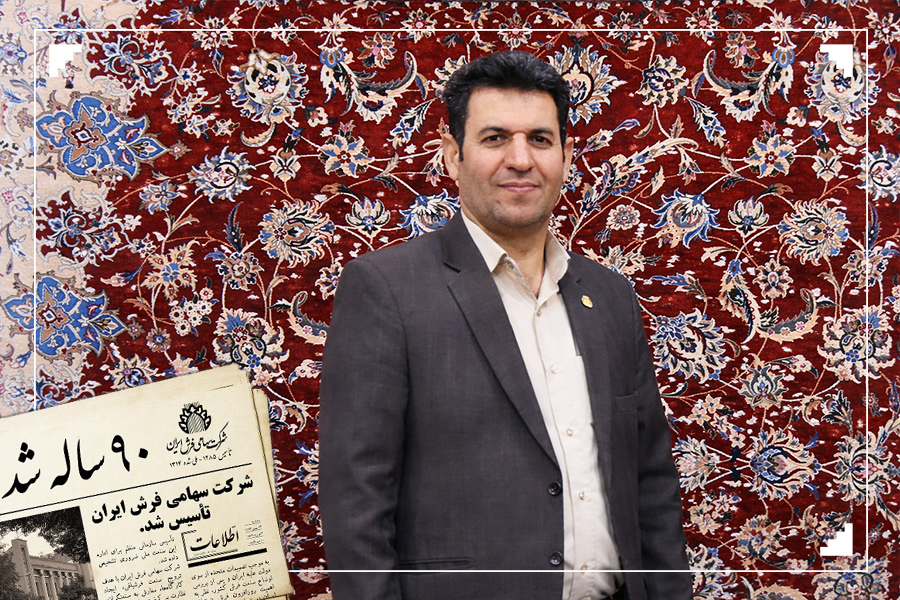
This interview was conducted to mark the 90th anniversary of the nationalization of Iran Carpet Company and to record and preserve the experiences and memories of its long-serving and pioneering colleagues.