
History & Heritage
A Gateway to the World of Persian Design
Jan 30, 20204 min readIran Carpet Company
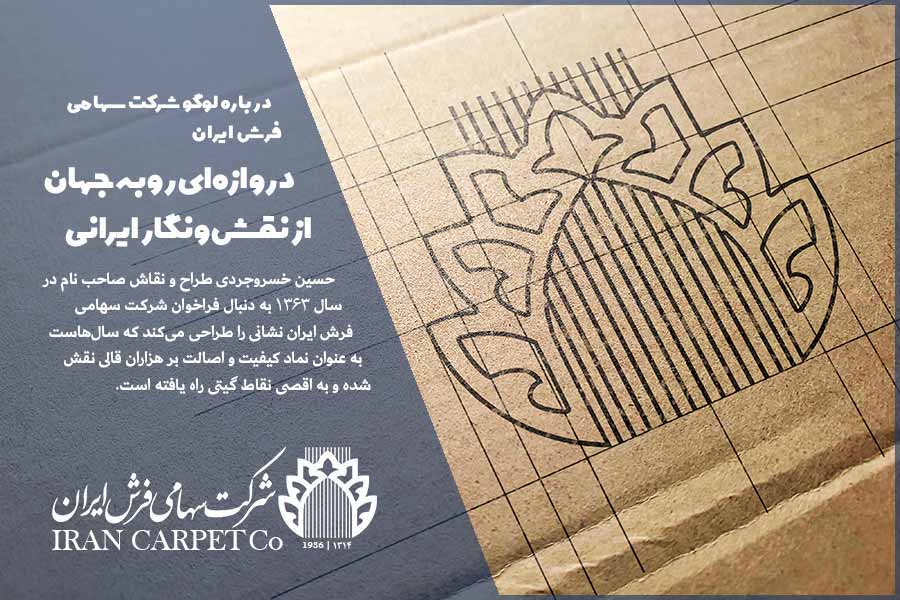
To mark 14 Bahman, the anniversary of Iran Carpet Company’s founding, we set out to learn more about the designer of its logo and explore its many dimensions. Our research shows that in the early years after the Revolution, following several decades of work in the handwoven carpet sector across different regions, Iran Carpet Company decided to commission and register a distinctive logo worthy of the name and reputation of Iranian carpets. According to accounts of the time, in early 1363 SH (1984), amid the Iran–Iraq War, Nader Gerami, a member of the company’s board at the time, was tasked with the project.
Gerami issued a call to graphic designers to take on the project. From among the submissions by various artists, the work of Hossein Khosrojerdi—then a young designer and painter, now a renowned painter—was selected as the logo of Iran Carpet Company.
Hossein Khosrojerdi was born in Tehran in 1957 (1336 SH). He received his diploma from the Tehran Boys’ School of Fine Arts in 1976 (1355 SH) and graduated from the Faculty of Fine Arts at the University of Tehran in 1985 (1364 SH). He describes his career this way: “My artistic work began when I entered the School of Fine Arts in 1973 (1352 SH). Of course, I had loved painting since childhood, and I continued my studies in the same field at the Faculty of Fine Arts at the University of Tehran. My second year at university coincided with the beginnings of the Revolution, and I began cultural and artistic activities alongside my friends. After the Revolution, we also played a role in establishing the Hozeh Honari. In addition to painting, drawing, caricature, and graphic design, I have worked in areas including set design, interior decoration, literature, cinema, and theatre. But my principal profession is painting, with a focus on contemporary people and their concerns.”
He received an honorary diploma at the Peace Exhibition in the Soviet Union and won first prize at the Sixth Fajr Film Festival for his poster for the film The Peddler. Khosrojerdi also received a Golden Plaque and a handwritten note from Seyyed Ruhollah Khomeini from the Art and Literature Center of the Sacred Defense Week. Alongside Habibollah Sadeghi, Kazem Chalipa, Naser Palangi, Iraj Eskandari, and several others, he became known as part of the Revolution-era painters, a group associated with the Art Bureau of the Islamic Propagation Organization. Among Khosrojerdi’s graphic design work are the logo of Hamshahri newspaper, the emblem of Islamic Azad University, the logo of Tehran’s Channel Five, and the logo of Iran Carpet Company.
 Master Hossein Khosrojerdi, designer of the Iran Carpet Company logo
The account by Master Hossein Khosrojerdi, who now lives and works in London, of how he was commissioned to design the logo is equally fascinating. Recalling the atmosphere of the time and the initial idea behind the design, he told the public relations office of Iran Carpet Company:
The Iran Carpet Company logo has remained unchanged over the years. It has been woven into the borders and fields of thousands of handwoven carpets as a symbol of quality and authenticity, and serves as a trusted assurance in the world of handwoven carpets for specialists, carpet enthusiasts, and connoisseurs everywhere.It was early in the war. I do not remember the exact date when the emblem was commissioned, but at the very beginning of the project, Mr. Nader Gerami of Iran Carpet Company proposed that I create one. As the designer of this emblem, I set out to identify the most essential visual signs associated with the subject and bring them together in a conceptual form. I drew on the carpet’s warp threads as its fundamental structure and its flowers as the most effective visual signs of the carpet. For the symbol of Iran Carpet Company, I chose the simplest sign: an ark, or portal, with an Iranian-Islamic arch, and combined these elements in a balanced composition. While observing the principles of carpet-flower design, I sought to create a petal that could sit at the top of the emblem and signify the life and flourishing of this vital national industry.
 History & Heritage
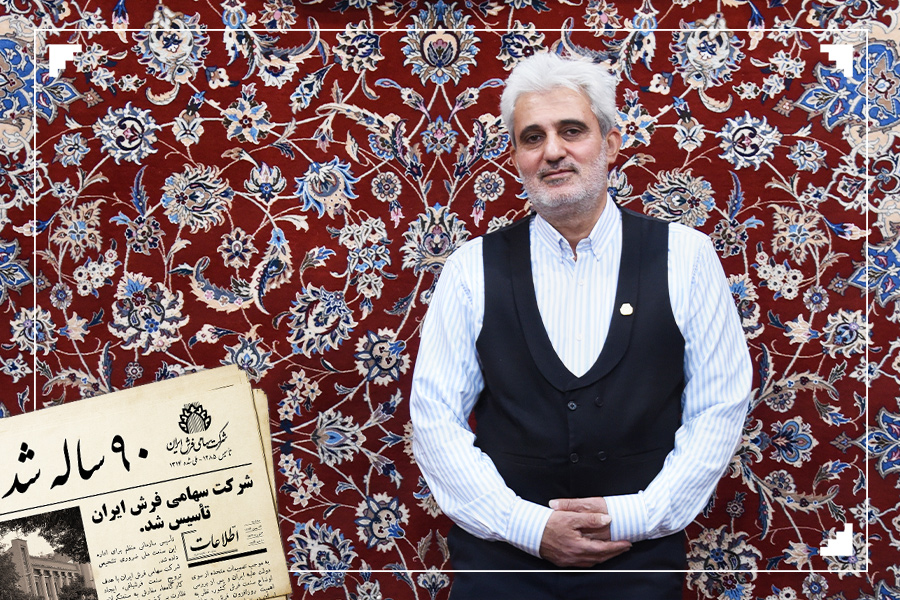
This interview was conducted to mark the 90th anniversary of the nationalization of Iran Carpet Company and to record and preserve the experiences and memories of its long-serving and veteran colleagues.
 History & Heritage
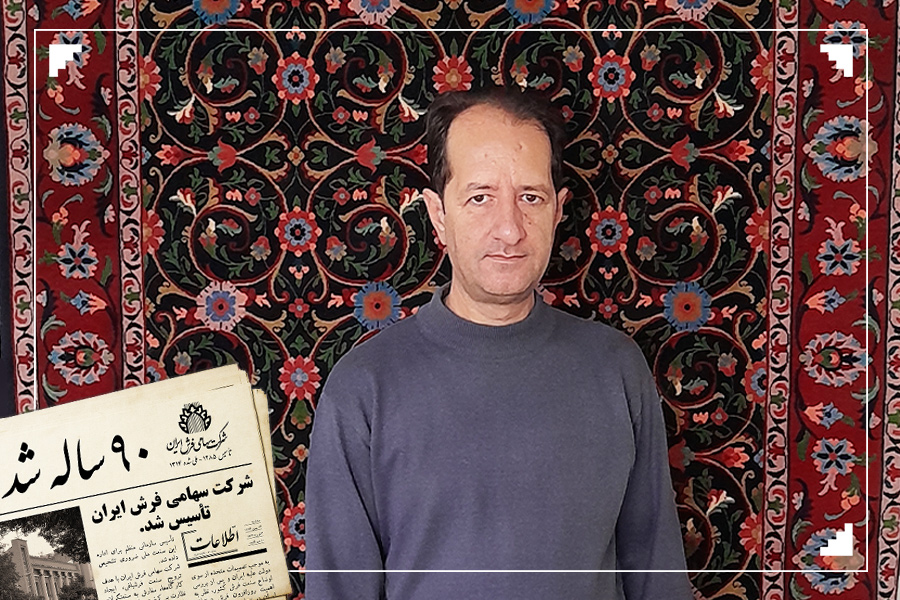
This interview was conducted to mark the 90th anniversary of the nationalization of Iran Carpet Company, and to record and preserve the experiences and memories of its veteran and long-serving colleagues.
 History & Heritage
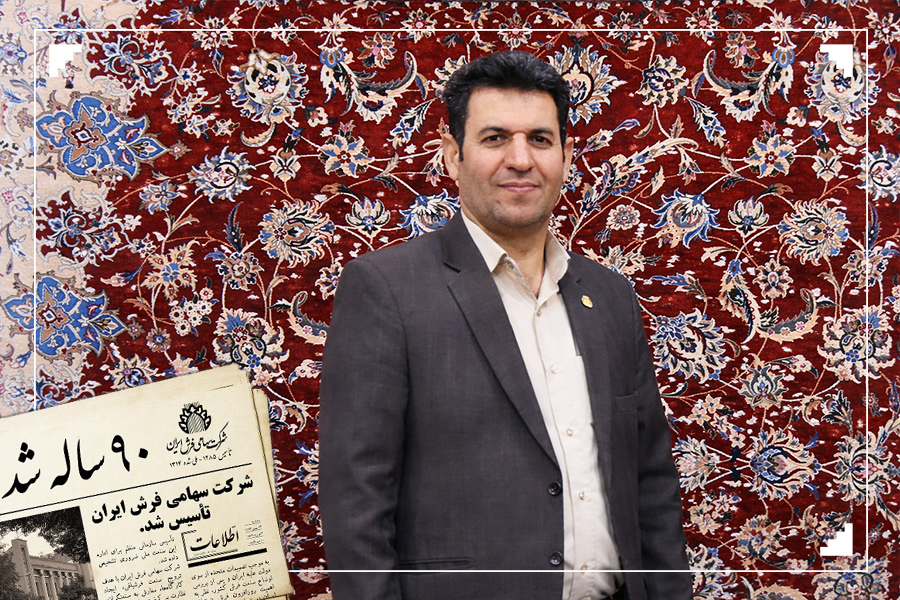
This interview was conducted to mark the 90th anniversary of the nationalization of Iran Carpet Company and to record and preserve the experiences and memories of its long-serving and pioneering colleagues.